


 Location
 Login
Login
TL;DR:
- Choosing the right vehicle depends on the trail technicality, distance from services, and cargo needs. Short-wheelbase 4x4s excel on rocky, steep terrain, while body-on-frame SUVs and midsize trucks handle payloads and long-range trips. Prioritize appropriate drivetrain, ground clearance, and tires for your trail tier to ensure capability and safety.
For mountain trails, short-wheelbase dedicated 4x4s with low-range gearing lead the pack for technical routes, midsize trucks handle payload and long-range trips, and high-clearance AWD crossovers cover forest roads and moderate access trails. The Jeep Wrangler, Toyota Tacoma, and Subaru Outback each represent one of those tiers, and picking the wrong class costs you capability where it counts most.
Quick TL;DR checklist:
- Drivetrain: Part-time 4WD with low range for technical trails; AWD for forest roads and light dirt
- Ground clearance: 8.5 inches minimum for moderate trails; 10+ inches for rocky or technical routes
- First upgrade: Replace highway tires with all-terrain tires before any other modification
Table of Contents
- What are the best vehicles for mountain trails?
- Which vehicle class fits your mountain trail needs?
- Mechanical features that actually matter on mountain trails
- How trail difficulty should drive your vehicle choice
- How to equip and prepare any vehicle for mountain trails
- How to buy a used vehicle for mountain trails
- How these recommendations were formed
- Fuel efficiency and range on remote mountain trails
- Modifications and upgrades that actually improve trail performance
- Key Takeaways
- The case for buying the right trim, not the right badge
- Importjunkies has trail-ready utility vehicles ready to order
- Useful sources and further reading
What are the best vehicles for mountain trails?
The right vehicle depends on three things: how technical your trails get, how far you travel from services, and how much gear or passengers you carry. Answer those questions before you look at a single spec sheet.
Trip profile questions to ask yourself:
- What is the hardest trail type you plan to run regularly (dirt road, rocky singletrack, shelf road)?
- How far are you from the nearest town or cell signal?
- Do you need to tow a trailer, haul a bed full of gear, or carry four passengers?
Drivetrain rules of thumb:
- AWD is enough for forest roads, slushy mountain passes, and light dirt trails where you never lose traction entirely
- Part-time 4WD with a low-range transfer case is necessary when you face steep grades, loose rock, or mud where wheel spin is likely
- Locking differentials become critical on uneven terrain where one wheel lifts off the ground
Altitude and engine performance: naturally aspirated engines lose roughly 3% of their power per 1,000 feet of elevation gain. A turbocharged engine compensates by maintaining boost pressure at altitude, which is a real advantage on Colorado or Sierra Nevada passes above 10,000 feet.
Red flags when shopping:
- Ground clearance below 7.5 inches on a vehicle marketed for trails
- Factory highway tires with no all-terrain option in the trim package
- No skid plate protection under the engine or transfer case
| Feature | AWD Crossover | Part-Time 4WD with Low Range |
|---|---|---|
| Best for | Forest roads, winter passes, light dirt | Rocky trails, steep grades, technical terrain |
| Ground clearance | 8–9 inches typical | 9–10.8 inches (factory off-road trims) |
| Tire type needed | All-season or all-terrain | All-terrain or mud-terrain |
| Recovery gear priority | Moderate | High |
Which vehicle class fits your mountain trail needs?
Understanding the categories first saves you from buying a capable-sounding badge on a vehicle that cannot actually do the job.
Short-wheelbase dedicated 4x4s are purpose-built for technical terrain. The Jeep Wrangler Rubicon ships with 10.8 inches of ground clearance and a 43.9-degree approach angle from the factory, plus front and rear locking differentials. The Ford Bronco with the Sasquatch package reaches up to 11.6 inches of clearance and adds beadlock-capable wheels and 35-inch tires. These are the rigs you want when the trail gets rocky, steep, or narrow.
Midsize trucks and overland-focused trims handle payload and distance. The redesigned Toyota Tacoma TRD Pro runs a hybrid powertrain producing 326 horsepower, with improved breakover and departure angles plus a metal skid plate. Factory Trailhunter trims include ARB Old Man Emu suspension, an onboard air compressor, and all-terrain tires, saving buyers an estimated $15,000–$20,000 in aftermarket upfit costs. If you need a bed for recovery gear, a rooftop tent, or a spare tire carrier, a truck platform makes more practical sense than an SUV.
Body-on-frame SUVs split the difference between passenger comfort and serious capability. The Toyota 4Runner received a full redesign for 2025, keeping its body-on-frame chassis and adding a Trailhunter trim alongside the TRD Pro. The Jeep Grand Cherokee with the Trailhawk package gives you a more comfortable daily driver that still handles moderate technical terrain. These suit buyers who want one vehicle for both the trail and the school run.
High-clearance AWD wagons and crossovers cover the majority of mountain access roads and moderate trails. The Subaru Outback’s 8.7 inches of ground clearance and Symmetrical AWD with X-Mode make it a reliable choice for forest roads, slushy passes, and light dirt trails. The Subaru Forester and RAV4 Woodland Edition follow a similar formula. These vehicles appear consistently on car-camping and adventure trim buyer guides for good reason: they handle 80% of mountain driving without the fuel penalty or daily-driving compromises of a dedicated 4x4.
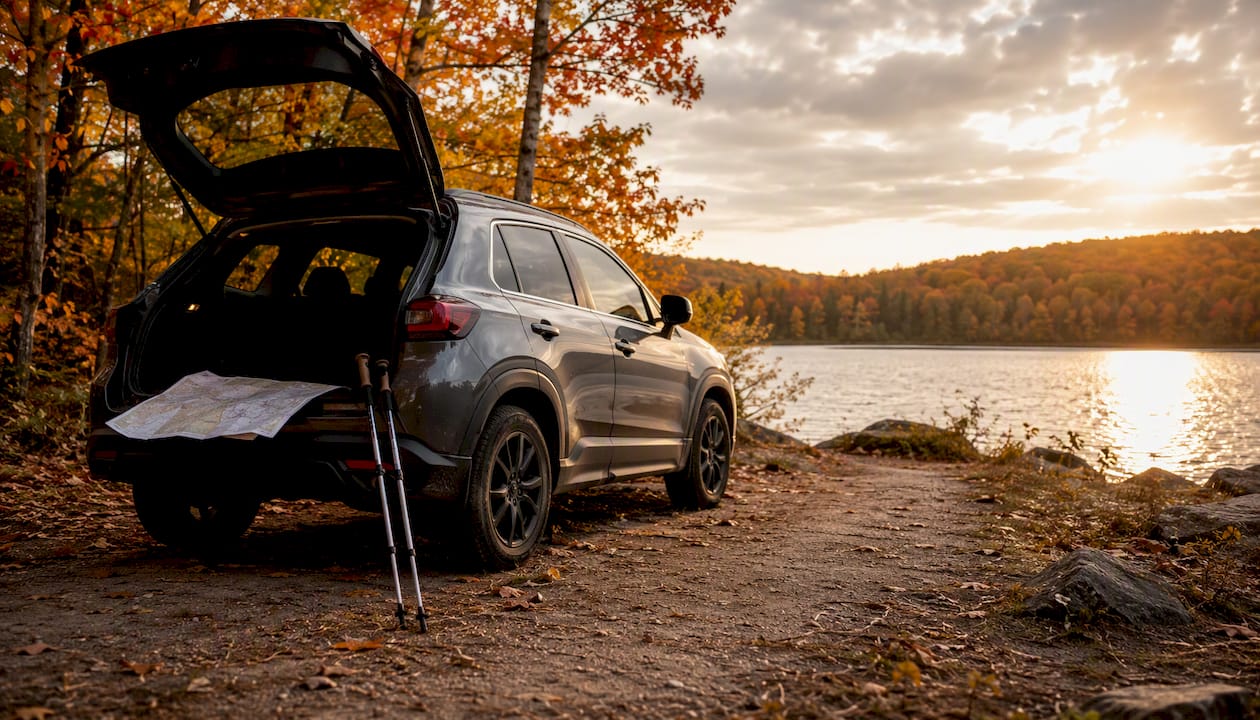
EVs and PHEVs work on maintained mountain roads and campground access routes, but remote technical trails expose their limits. Cold weather reduces battery range noticeably, charging infrastructure thins out quickly above certain elevations, and recovery from a dead battery in the backcountry is far more complicated than running out of gas. The Rivian R1T addresses some of this with a Max Pack battery option and adjustable air suspension, but range anxiety on a remote trail is a real planning factor.
Mechanical features that actually matter on mountain trails
Marketing terms like “trail-rated” and “adventure-ready” tell you almost nothing. These are the specs that determine whether a vehicle handles a trail or gets stuck on it.
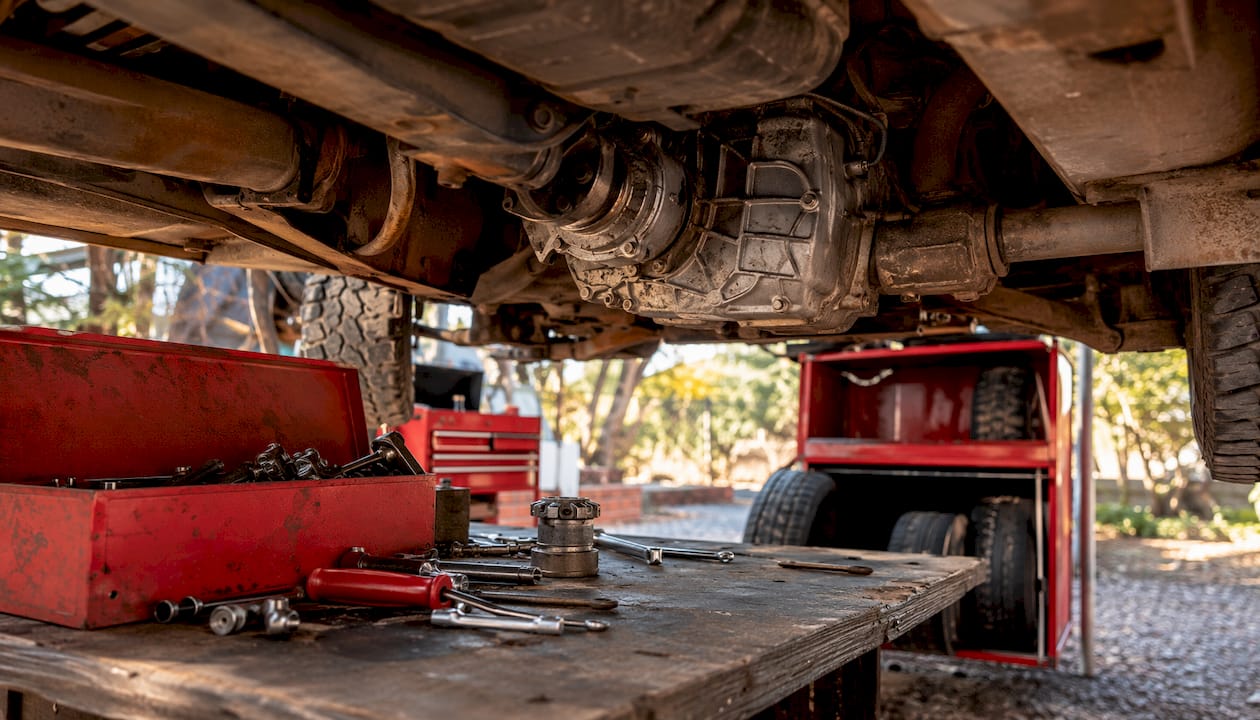
Low-range transfer cases and lockers: A low-range transfer case multiplies torque at low speeds, which is what you need for crawling over rocks or descending steep grades without riding the brakes. Electronic traction control systems work well on moderate terrain, but they cannot substitute for a mechanical locker when one wheel is completely off the ground. Factory overland trims now ship with locking differentials as standard equipment, saving buyers thousands over aftermarket installations.
Geometry over horsepower: Approach and departure angles, plus breakover geometry, determine whether your bumpers and frame clear obstacles. A vehicle with a 36-degree approach angle clears a ledge that would crumple the front bumper of a truck with 50 more horsepower but a shallower angle. Experienced builders prioritize these numbers above almost everything else.
Tires first, everything else second: Tires are the single most significant upgrade for mountain-trail reliability. AWD and 4WD systems are ineffective when paired with standard highway tires on loose, steep, or mud-slicked surfaces. All-terrain tires offer a usable balance between trail grip and highway manners. Mud-terrain tires maximize traction in loose conditions but wear faster on pavement and generate more road noise. Dedicated winter tires are the right call for seasonal mountain passes where ice is the primary hazard.
Pro Tip: Check whether the factory skid plate covers the transfer case and fuel tank, not just the engine. Many base trims protect only the engine; the transfer case is equally vulnerable on rocky terrain.
Braking on descents: Long descents can cause brake overheating, which is a genuine hazard on mountain trails. Low-range gearing provides engine braking that reduces how hard the service brakes work. Hill descent control, available on most modern off-road trims, automates this process. If you are buying used, test the low-range engagement before you commit.
How trail difficulty should drive your vehicle choice
| Trail tier | Description | Drivetrain needed | Min. clearance | Tire type | Key features |
|---|---|---|---|---|---|
| Tier 1: Access road | Graded dirt, mild grades, no obstacles | AWD or 2WD | 8.7 in | All-season or all-terrain | Good tires, hill start assist |
| Tier 2: Moderate dirt trail | Loose gravel, ruts, water crossings, moderate grades | AWD or part-time 4WD | 8.7 in | All-terrain | Skid plates, traction control |
| Tier 3: Technical singletrack | Rocky, steep, uneven surfaces, shelf roads | Part-time 4WD with low range | 10 in | All-terrain or mud-terrain | Lockers, low range, skid plates |
| Tier 4: Rock crawl / Class 4+ | Boulders, ledges, extreme grades | Part-time 4WD with low range + lockers | 11+ in | Mud-terrain or rock-specific | Full skid protection, recovery gear, winch |
Buying hint by tier: If most of your routes are Tier 2, prioritize tires and skid protection over a suspension lift. A lift without better tires and underbody protection is a cosmetic upgrade, not a capability upgrade. Tier 3 and 4 buyers should verify locking differentials and low-range gearing before anything else.
How to equip and prepare any vehicle for mountain trails
A capable vehicle with no preparation is still a liability on a remote trail. This checklist covers what to check and what to carry.
Pre-trip inspection checklist:
- Check engine oil, coolant, brake fluid, and transfer case fluid levels
- Inspect brake pad thickness and look for any brake fluid leaks
- Test 4WD engagement in both high and low range before leaving pavement
- Check tire pressure and inspect sidewalls for cuts or bulges
- Verify all lights work, including reverse and brake lights
Essential recovery and safety kit:
- Kinetic recovery strap rated for at least 1.5 times your vehicle’s weight
- Hi-lift jack or bottle jack with a base plate for soft ground
- Folding shovel for digging out from mud or snow
- Tire plug kit and portable air compressor (or CO2 inflator for emergencies)
- First-aid kit sized for backcountry use
- Communication: a satellite communicator (Garmin inReach or SPOT) for areas without cell service
Tire pressure strategy: Airing down to 20–25 PSI on rocky or sandy trails increases the tire’s contact patch and dramatically improves traction. Carry a quality pressure gauge and a portable inflator so you can air back up before returning to pavement.
Pro Tip: Always air back up to highway pressure before driving at speed on pavement. Running low tire pressure at highway speeds generates heat that can cause a blowout.
Seasonal adjustments: Winter mountain driving adds battery concerns for EVs and hybrids, where cold temperatures can reduce range by 20–40%. Carry tire chains even if you have AWD, since many mountain roads legally require them during winter conditions. Check the specific trail’s seasonal closure status with the relevant land management agency (U.S. Forest Service or Bureau of Land Management) before you go.
How to buy a used vehicle for mountain trails
Used trail vehicles can be excellent value or expensive problems. The difference comes down to how carefully the previous owner maintained and used it.
What to inspect before you buy
- Frame and underbody: Look for fresh undercoating applied over rust, bent frame rails, or cracked welds near the suspension mounts. Rock scrapes on skid plates are normal; deep gouges or missing plates are a warning sign.
- Axle and differential seals: Check for oil weeping around the axle flanges and differential covers. A small seep is manageable; a wet, dripping seal means an immediate repair bill.
- Suspension components: Grab each front wheel at 9 and 3 o’clock and try to rock it. Any play indicates worn tie rod ends or ball joints. Bounce each corner; more than one or two rebounds means worn shocks.
- Transfer case engagement: Test 4WD high and low range during the test drive. Grinding, hesitation, or failure to engage cleanly is a red flag.
- Skid plate condition: Heavily dented or cracked skid plates tell you the vehicle has been pushed hard. That is not automatically bad, but it means the rest of the drivetrain has seen stress too.
Service history red flags:
- Frequent front-end alignment or steering component work suggests repeated hard impacts
- A recent large suspension lift with no receipts or shop documentation
- Mismatched tires (different brands or sizes on the same axle)
- Aftermarket wiring that is not neatly routed or labeled
Questions to ask the seller:
- “Do you have service records?” A seller who cannot produce any records for a trail vehicle is a concern.
- “Has this been used off-road regularly, and on what type of terrain?”
- “Why are you selling it now?” Answers like “upgrading” or “moving” are normal; vague answers about mechanical issues deserve follow-up.
Age and budget tradeoffs: Older body-on-frame trucks and SUVs (a late-1990s to mid-2000s 4Runner or Tacoma, for example) offer proven mechanical simplicity and strong aftermarket support, but they lack modern safety features like stability control and hill descent control. Newer factory off-road trims cost more upfront but often arrive with lockers, skid plates, and appropriate tires already installed, reducing the money you need to spend on modifications immediately after purchase.
How these recommendations were formed
The vehicle recommendations and rules of thumb in this guide draw from several types of sources.
Sources and inputs used:
- Journalist drive tests from outlets including Road & Track and Car and Driver, which conduct real-world off-road evaluations with instrumented testing
- Overland roundups that compare factory adventure trims on actual trail surfaces, including geometry measurements and ground clearance figures
- Manufacturer specification tables for approach angles, breakover geometry, and ground clearance across trim levels
- Dealer and altitude-driving guides addressing engine power loss at elevation and the turbocharged advantage on high-elevation routes
- Buyer guides focused on mixed-use adventurers who combine daily driving with weekend trail use
Why trim choice matters more than badge: A base-trim Tacoma and a Tacoma Trailhunter are very different vehicles in terms of trail capability, even though they carry the same name. The same principle applies to the Bronco (base vs. Sasquatch), the 4Runner (SR5 vs. TRD Pro), and the Wrangler (Sport vs. Rubicon). Always compare trim-level specs, not just model names.
Fuel efficiency and range on remote mountain trails
Range planning matters more on mountain trails than on any other type of driving. Steep grades, low-range crawling, and high-altitude conditions all increase fuel consumption beyond what the EPA window sticker suggests.
A turbocharged midsize truck running in low range on a technical trail can consume fuel at two to three times its highway rate. For remote routes, carry a fuel range calculation based on your worst-case consumption, not the average. A common rule among overlanders is to plan for a full tank at the trailhead and treat 50% remaining as the turnaround point on out-and-back routes.
For EVs, cold mountain temperatures and sustained climbing loads reduce range more than almost any other condition. The Rivian R1T’s Max Pack option addresses this with extended capacity, but even so, charging infrastructure in remote mountain areas remains sparse. PHEVs offer a practical middle ground: electric range for approach roads and gas backup for the trail itself.
Carry a minimum of one gallon of extra fuel in an approved container on any route that takes you more than 50 miles from the nearest gas station. On longer expeditions, a roof-mounted or bed-mounted auxiliary fuel tank is worth the investment.
Modifications and upgrades that actually improve trail performance
The modification that delivers the most capability per dollar is almost always tires. After that, the priority order depends on your trail tier.
Tier 1 and 2 upgrades (highest return on investment):
- All-terrain tires: the single biggest capability jump for any stock vehicle
- Skid plates for the engine, transfer case, and fuel tank
- A quality portable air compressor and tire deflators
Tier 3 and 4 upgrades (for technical and rock-crawl use):
- Suspension lift (2–3 inches is the practical sweet spot for most trail use without compromising daily drivability)
- Aftermarket locking differentials if the factory trim does not include them
- A front or rear winch rated at 1.5 times the vehicle’s gross weight
- Rock sliders to protect the rocker panels on shelf roads and ledges
What to avoid: Cosmetic lifts without matching tires and suspension components create a vehicle that looks capable but handles worse than stock. A 4-inch body lift with no suspension upgrade and the same highway tires is money spent on appearance, not performance. Approach and departure angles improve with a proper suspension lift and smaller-diameter, taller-sidewall tires, not with a body lift alone.
Locking differentials are the upgrade that experienced trail drivers consistently rank as the most transformative for technical terrain. If your vehicle does not have them from the factory and you plan to run Tier 3 or 4 trails regularly, an aftermarket locker installation is worth prioritizing over a lift kit.
Key Takeaways
The most capable vehicle for mountain trails combines the right drivetrain for your trail tier, appropriate tires, and a pre-trip inspection routine before you leave pavement.
| Point | Details |
|---|---|
| Match drivetrain to trail tier | AWD covers Tier 1–2; part-time 4WD with low range is required for Tier 3–4 technical routes. |
| Tires before any other mod | All-terrain tires on a stock vehicle outperform a lifted truck on highway rubber on real trails. |
| Geometry beats horsepower | Approach angle, departure angle, and breakover clearance determine obstacle clearance more than engine output. |
| Inspect used vehicles carefully | Check frame welds, axle seals, transfer case engagement, and skid plate condition before buying. |
| Importjunkies for trail-ready utility vehicles | Importjunkies carries ATVs, UTVs, and utility vehicles with 4x4 and hi/low gears suited to trail and mountain use. |
The case for buying the right trim, not the right badge
The most consistent mistake I see buyers make is choosing a vehicle by model name and then discovering the base trim cannot do what they planned. A Wrangler Sport and a Wrangler Rubicon are not the same vehicle for trail purposes. The Rubicon has locking differentials, a disconnecting front sway bar, and 10.8 inches of ground clearance. The Sport has none of those things. The same gap exists between a Tacoma SR5 and a Tacoma Trailhunter, or a Bronco base and a Bronco with the Sasquatch package.
If your budget does not stretch to the right factory trim, a slightly older vehicle in the correct trim level is almost always a better choice than a newer base model. The off-road vehicle benefits of a properly equipped rig compound over time: lower recovery costs, less drivetrain stress, and better resale value. Buy the capability you actually need, not the nameplate.
Importjunkies has trail-ready utility vehicles ready to order
If you want capable, affordable off-road utility vehicles without the dealership markup, Importjunkies sells ATVs, UTVs, and lifted utility vehicles directly to the public at wholesale pricing. The 400cc 4x4 UTV with snow plow and dump bed delivers genuine 4x4 capability with hi/low gears and a dump bed, making it a practical choice for mountain property work, trail access, and seasonal snow clearing. For buyers who want an electric option, the Renegade Edition lifted utility golf cart handles light off-road terrain and trailhead logistics with zero emissions.

Browse the full ATV and UTV catalog at Importjunkies to find the right machine for your terrain, budget, and use case. Every listing includes specs, pricing, and direct checkout, so you can compare ground clearance and drivetrain options without leaving the page.
Useful sources and further reading
These are the primary sources used to build this guide. Each one covers a specific angle worth reading if you want to go deeper on a particular vehicle or topic.
- Best vehicles for mountain driving — Denver Car Choice: Covers altitude-related engine power loss, brake fade on descents, and the distinction between mountain road driving and technical trail driving. Useful for understanding what changes at elevation.
- Best Overland Vehicles 2026 — 4WDTalk: Detailed factory trim comparisons with ground clearance figures, approach angles, and factory locker availability across current models. The geometry tables are particularly useful for comparing trims side by side.
- Best cars, trucks, and SUVs for camping — Kelley Blue Book: Practical buyer perspective on mixed-use vehicles that balance trail capability with cargo space and daily drivability.
- Best Off-Road Trucks and SUVs for 2025 — Road & Track: Real-world drive evaluations ranked by capability tier, from rock crawlers to lighter-duty adventure trucks. Good for understanding how vehicles perform in actual testing rather than on spec sheets.
- Best 4x4 SUVs for 2026 — Car and Driver: Instrumented test results covering acceleration, handling, and off-road performance across roughly 200 data points per vehicle. Reliable for objective comparisons.
- What are the best cars to take hiking? — Best Selling Cars Blog: Covers tire selection alongside vehicle choice, with practical notes on the Jeep Wrangler, Subaru Outback, and Toyota 4Runner for trail access and hiking use.
- Top 7 vehicles for car camping in 2026 — Luno: Adventure trim buyer guide focused on crossovers and wagons that mix daily driving with weekend trail use.
Recommended
- Best ATV for Trail Riding: What to Buy – Saferwholesale || Import Junkies || Great Sports
- Your guide to every type of off-road vehicle – Saferwholesale || Import Junkies || Great Sports
- Why Opt for Off-Road Transportation: Family Guide – Saferwholesale || Import Junkies || Great Sports
- All-Terrain Vehicle Features List: 2026 Buyer’s Guide – Saferwholesale || Import Junkies || Great Sports


