


 Location
 Login
Login
For most 48V golf carts, the smartest conversion is a single-unit LiFePO4 drop-in battery matched to your cart’s exact voltage. You get triple the cycle life of lead-acid, a lighter cart, and almost zero maintenance once it’s wired in. Before you order anything, measure your battery tray and confirm your system voltage. That fifteen minutes of homework saves you from a return shipment.
TL;DR:
- Most 48V lithium golf cart batteries are single-unit drop-ins that replace six lead-acid batteries, providing longer cycle life and lighter weight.
- Proper fitment requires measuring your battery tray and verifying your cart’s voltage to prevent costly returns or installation issues.
- Installing a lithium kit involves disconnecting the old batteries, mounting the new one securely, and using a dedicated charger compatible with LiFePO4 chemistry.
- The cost range depends on capacity, with 65Ah packs suitable for shorter distances and 105Ah packs offering 25-35 miles per charge, paying off through a lifespan of over ten years.
- A certified lithium battery recycler and correct wiring, fusing, and BMS setup are critical for environmental safety and long-term battery health.
Table of Contents
- What Is Lithium Golf Cart Conversion, and Which Kit Fits Your Cart?
- How Do You Confirm Your Cart’s Voltage and Tray Fit?
- What’s Involved in Installing a Lithium Conversion Kit?
- How Much Does a Lithium Conversion Cost, and What’s the Payback Time?
- What Fuse, Cable, and Mounting Specs Actually Matter?
- Why Do You Need a Dedicated LiFePO4 Charger and BMS?
- What Do Warranties Cover, and What Keeps a Pack Healthy?
- How Do Top Lithium Golf Cart Brands Compare on Reliability?
- Do You Need Other Upgrades Beyond the Battery Itself?
- How Does Lithium Maintenance Compare to Lead-Acid Over Time?
- What Happens to Old Lithium Batteries Environmentally?
- Where Can You Buy a Lithium Golf Cart Conversion Kit?
- What Should You Expect From Returns and Customer Support?
- Import Junkies Perspective: Why We Stock Conversion-Ready Batteries
- Buy Now: Import Junkies Conversion-Ready Products
- Sources
- FAQ
What Is Lithium Golf Cart Conversion, and Which Kit Fits Your Cart?
A lithium golf cart conversion means replacing your lead-acid battery bank with lithium iron phosphate (LiFePO4) cells, either as one large drop-in unit or as a multi-battery kit wired to match your existing configuration. The category dominates the conversion market for good reason: LiFePO4 cells handle 2,000 to 5,000 charge cycles before they degrade meaningfully, while flooded lead-acid batteries in daily golf cart use often need replacement within three to five years.
Some retailers stock the PowerStar 48V 105Ah LiFePO4 as a recommended option for 48V carts. Such units may ship with a compatible charger option, come with mounting hardware, and be built as a single-box replacement, so you’re not splicing together six separate 8V batteries and hoping the wiring diagram matches your cart. For a lot of owners converting for the first time, that simplicity is worth more than a marginal price difference.
Beyond the PowerStar, here’s how the rest of the market breaks down by kit type:
- Single-unit drop-in kits (like PowerStar and similar offerings from Eco Battery): one sealed battery replaces your entire bank, wired to the existing terminals with minimal rework. Best for owners who want the fastest install and the biggest weight reduction, since a single 48V unit can weigh 60 to 70% less than the flooded lead-acid bank it replaces.
- Multi-battery or modular kits from brands like ALLIED Lithium and BOLT Lithium: these use two or more smaller lithium batteries wired in series or parallel to match odd tray configurations. Best for carts with unusual battery compartments or owners who want to phase the upgrade over two purchases.
- OE and cart-specific conversions from names like MODZ Battery and Trojan Lithium: these often bundle wiring harnesses, brackets, and sometimes dealer installation, aimed at owners who want a warranty-backed, turnkey job rather than a DIY afternoon.
Price and install difficulty track fairly closely with kit type. Single-unit drop-ins tend to sit in the middle price band with the easiest install. Modular kits can run cheaper per battery but take longer to wire correctly. OE-branded conversions often carry the highest price tag because labor and harness kits are bundled into the purchase.
How Do You Confirm Your Cart’s Voltage and Tray Fit?
Before ordering any lithium kit, run through these checks:
- Identify your system voltage. Most golf carts run 36V or 48V. Check the label on your current batteries or count them: six 6V batteries wired in series typically means 36V; six 8V or four 12V batteries usually means 48V.
- Measure the battery tray. Record length, width, and depth, plus the height clearance under the seat. A single-unit replacement needs to physically fit where six batteries used to sit.
- Check mounting anchor points. Confirm your tray has usable boltholes or hold-down brackets compatible with the new battery’s mounting hardware.
- Verify onboard charger (OBC) compatibility. Some older carts have a built-in charger wired directly to the pack. In those cases, an OBC bypass is commonly required so the lithium BMS isn’t fighting a lead-acid charging profile.
- Plan for 12V accessories separately. Lights, radios, and USB ports tapped off the main pack should run through a dedicated DC-DC converter instead of pulling straight from the lithium battery, which protects both the accessory circuit and the BMS from unexpected load spikes.
Single-unit 48V LiFePO4 packs commonly replace six 8V or eight 6V lead-acid batteries in one swap, which is why fit verification matters more than voltage math alone.
What’s Involved in Installing a Lithium Conversion Kit?
Here’s the install sequence most kits follow, whether you’re doing it in your garage or having a shop handle it:
- Disconnect the negative terminal first, then the positive, on your existing lead-acid bank. This order matters for shock and short-circuit prevention.
- Remove the old batteries and clean the tray of corrosion or acid residue.
- Inspect existing wiring and connectors for wear, then confirm gauge sizing matches the new battery’s discharge rating (most 48V carts need 2 to 4 AWG cable for main runs).
- Mount the new battery using the supplied brackets, securing it against movement in any direction.
- Install the main fuse close to the battery’s positive terminal, before running cable to the controller.
- Connect positive, then negative, mirroring the removal order in reverse.
- Run initial commissioning, charging the pack to full using the kit’s dedicated charger before regular use.
A straight drop-in swap usually takes one to two hours for someone comfortable with basic hand tools, but if you’re unsure or want professional help, consider Car Battery Replacement at Home: Mobile Service or DIY. Tray modifications or OBC bypass work can push that to a half day, and that’s the point where calling in a shop starts making financial sense versus burning a Saturday.
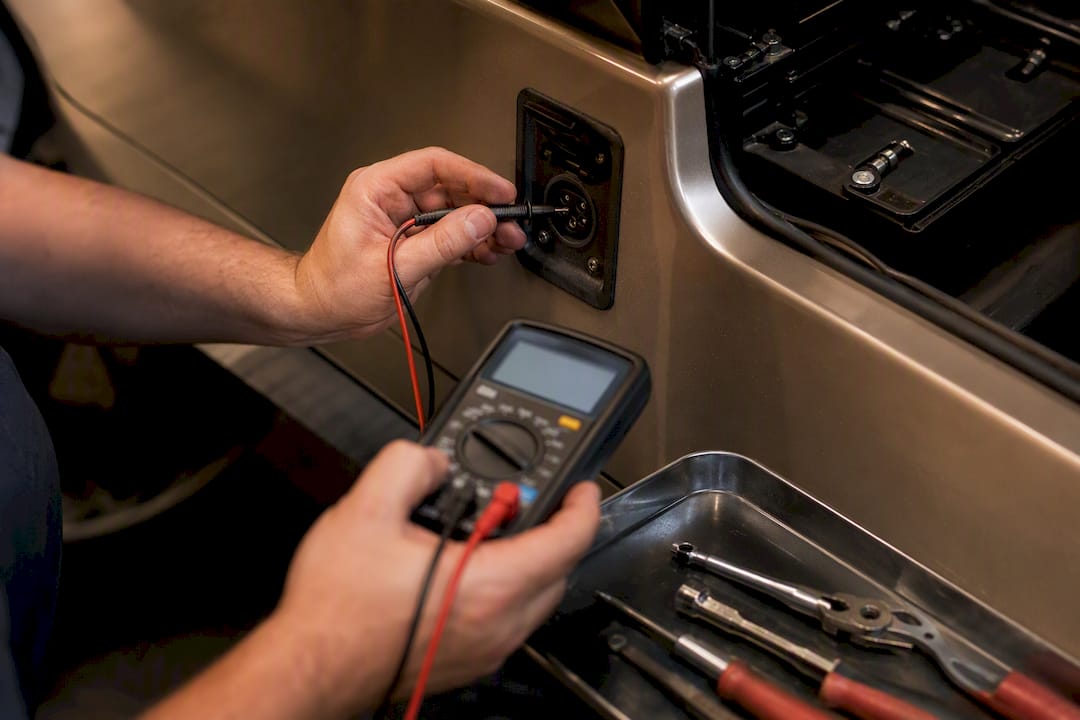
Pro Tip: Before you bolt anything down permanently, connect the new battery temporarily and test your OEM charge port voltage along with how the BMS responds under a light load. Catching a mismatch before final mounting saves you from unbolting everything twice.
How Much Does a Lithium Conversion Cost, and What’s the Payback Time?
Entry-level single-unit kits typically start in the lower price band and include basic mounting hardware, while mid-range packs like the PowerStar 105Ah add a bundled charger. Premium OE conversions with harnesses and dealer install sit at the top of the range.
Range and capacity scale predictably:
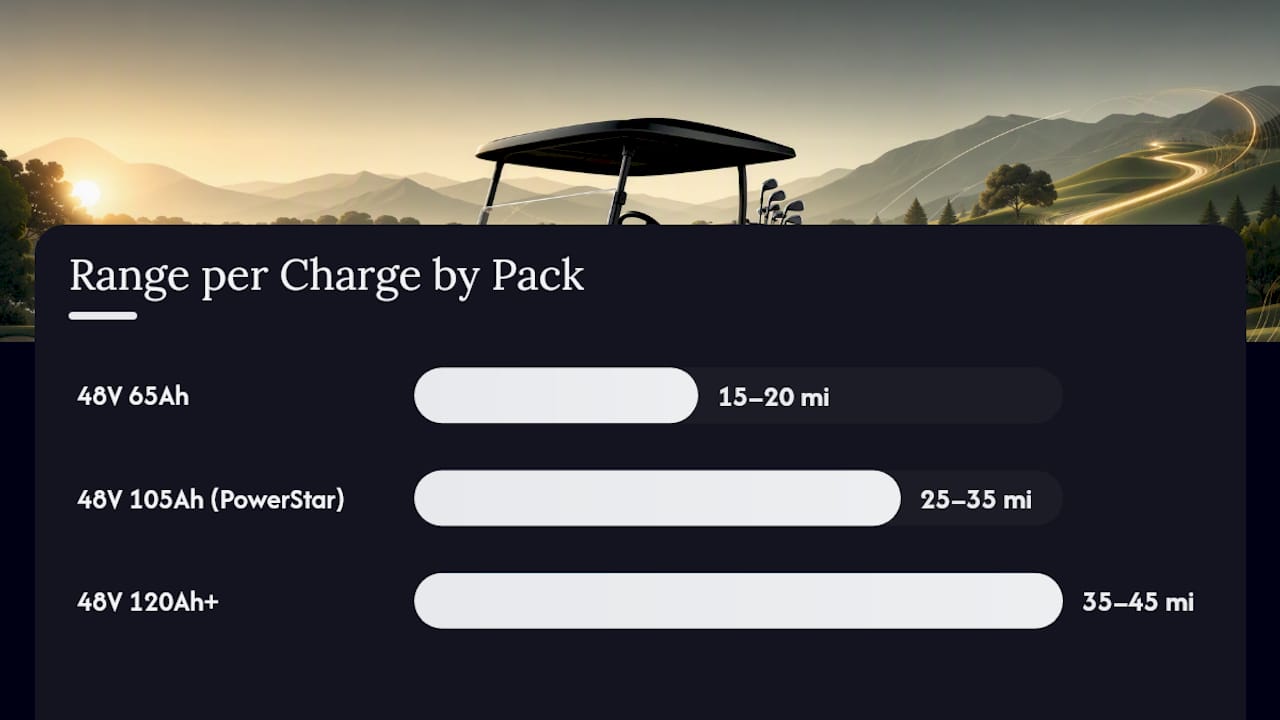
- A 48V 65Ah pack suits lighter carts or shorter courses, typically good for 15 to 20 miles per charge depending on terrain and passenger load.
- A 48V 105Ah pack, like the PowerStar, extends that to roughly 25 to 35 miles under similar conditions.
- A 48V 120Ah+ pack pushes toward 35 to 45 miles, useful for utility carts or heavy daily rounds.
These figures shift with hills, cargo weight, and tire pressure, so treat them as planning estimates rather than guarantees.
The real financial case for conversion is cycle life. Vendor and field data on LiFePO4 in golf cart applications consistently point to multi-thousand-cycle ratings and a useful life of ten years or more under normal use, compared to lead-acid packs that often need replacement every three to five years. Run a simple break-even calculation: if a lead-acid replacement costs you a new set every four years and a lithium pack lasts twice that long or more, the lithium premium often pays for itself by year three or four, especially for carts used daily on a course rather than occasionally in a driveway. Some sources break down these lifecycle numbers further in guides to golf cart operating costs.
What Fuse, Cable, and Mounting Specs Actually Matter?
Get these details wrong and you’re looking at heat damage or worse, not just a poorly performing cart:
- Place the main DC fuse as close to the positive terminal as possible. Manufacturer guidance from Victron Energy recommends fusing right at the source to limit fault current in any downstream short.
- Size cables for the discharge rating, not just the average draw, to keep voltage drop low enough that you’re not losing usable power to resistance.
- Use the supplied brackets and tie-downs. A battery that shifts under acceleration or braking is a hazard, not a minor annoyance.
- Respect temperature limits. Most BMS units cut off charging below freezing to protect the cells, so cold-climate owners should plan charging windows accordingly.
Why Do You Need a Dedicated LiFePO4 Charger and BMS?
LiFePO4 batteries charge on a constant current, constant voltage (CC/CV) profile that’s different from the profile your old lead-acid charger uses. Plugging in an old charger doesn’t just charge slowly. It can trigger repeated BMS protective disconnects or, in worse cases, degrade the pack over time, according to WattCycle’s installation guidance.
- A 48V LiFePO4 pack typically needs a charger with a full charge voltage around 58.4V, matched to the pack’s rated amperage.
- Confirm the BMS covers over-voltage, under-voltage, overcurrent, and temperature cutoff protections, plus cell balancing.
- Look for remote disconnect or EFS (electronic fuse system) features on higher-end kits, which add a layer of protection beyond the basic fuse.
First charge matters more than most buyers realize. Commissioning guidance from Lithionics recommends running the initial charge to full with no loads active, using the kit’s own charger, so the BMS can properly calibrate state-of-charge from the start.
What Do Warranties Cover, and What Keeps a Pack Healthy?
Most lithium golf cart batteries carry warranties in the two to five year range, typically covering cells, the BMS, and internal electronics against defects. Read the fine print on what voids that coverage.
- Store the battery charged, not empty, if the cart sits idle more than two weeks. Deep discharge storage is one of the fastest ways to shorten cycle life.
- Check terminal torque and do a visual inspection every few months for corrosion or loose connections.
- Update BMS firmware if your kit supports it and the manufacturer releases updates.
- Avoid the warranty killers: using an incompatible lead-acid charger, physical damage from improper mounting, or unauthorized disassembly of the battery case.
Compared to lead-acid, which needs regular watering and equalization charges, lithium maintenance is close to hands-off. Some sources cover the broader maintenance contrast in golf cart battery types guides.
How Do Top Lithium Golf Cart Brands Compare on Reliability?
| Brand | Nominal Voltage | Typical Warranty | Best For |
|---|---|---|---|
| PowerStar 48V 105Ah (Import Junkies) | 48V | Manufacturer-backed, charger included | Buyers wanting a ready-to-fit, mid-capacity pack with charging bundled in |
| Eco Battery | 48V (bundle options) | Varies by bundle | Owners comparing bundled battery and charger packages |
| ALLIED Lithium | 48V modular options | Varies by model | Carts needing modular or phased upgrades |
| BOLT Lithium | 48V | Varies by model | Buyers prioritizing modular configurations over single-unit swaps |
| MODZ Battery | 48V (OE-style kits) | Varies by kit | Owners wanting bundled harness and mounting kits |
| Trojan Lithium | 48V | Varies by model | Buyers wanting a turnkey, dealer-style conversion |
Reliability across this category tracks closely with how well the BMS is specified and how clearly the manufacturer documents fitment. A pack with vague voltage cutoff specs or no published fitment list is a bigger risk than one with a slightly higher price tag and full documentation. That’s the real differentiator buyers should weigh over marketing claims about capacity alone. When you’re comparing options, ask each brand directly for their BMS spec sheet and fitment list rather than relying on generic product descriptions.
Do You Need Other Upgrades Beyond the Battery Itself?
In most cases, a same-voltage swap needs no controller changes at all. Where you’ll run into extra work is connector types and charging infrastructure, not the drive system.
Older carts sometimes use proprietary battery connectors that don’t match standard lithium kit terminals, which means you’ll either need an adapter harness or a bit of re-terminating with properly sized lugs. Check this before your kit arrives so you’re not waiting on a part mid-install.
Controllers themselves are largely voltage-agnostic within a class. A 48V controller doesn’t know or care whether it’s drawing from lead-acid or lithium cells, as long as the nominal voltage matches. Where controllers can get tripped up is on carts with aggressive low-voltage cutoffs tuned for lead-acid’s gradual voltage sag. Lithium holds voltage flatter across its discharge curve, then drops sharply near empty, so some owners report their controller cutting power earlier or later than expected until the cutoff threshold is adjusted or the BMS handles it internally.
The charging side is where real modification happens. As covered earlier, an onboard charger wired for lead-acid profiles typically needs a bypass or full charger swap. Budget for that as part of the conversion cost, not as an afterthought discovered after your old charger throws an error code.
How Does Lithium Maintenance Compare to Lead-Acid Over Time?
Lead-acid batteries demand a maintenance routine most owners underestimate until they’ve lived with lithium. Flooded lead-acid needs regular watering to keep electrolyte levels above the plates, periodic equalization charges to prevent sulfation, and terminal cleaning to fight corrosion buildup from off-gassing. Skip any of those steps for a season and you’ll shorten the battery’s already limited lifespan.
Lithium flips that equation. There’s no watering, no off-gassing, and no equalization charge required. The maintenance list shrinks to occasional terminal torque checks and a visual inspection for physical damage.
The lifespan gap is where the real cost story shows up. Lead-acid packs in regular golf cart use commonly need replacement every three to five years, while properly maintained LiFePO4 packs are commonly rated for a decade or more of service. That difference compounds. Over a ten-year ownership window, a lead-acid owner might buy two to three full battery sets, while a lithium owner buys one.
The other lifespan factor worth naming: depth of discharge tolerance. Lead-acid batteries suffer permanent capacity loss when regularly discharged below 50%. Lithium packs tolerate discharge to 80% or even deeper without the same degradation penalty, meaning you get more usable capacity out of the same rated Ah number in daily practice.
What Happens to Old Lithium Batteries Environmentally?
Lithium batteries carry a different environmental profile than lead-acid, and it cuts both ways. Lead-acid batteries have one of the highest recycling rates of any consumer product, with established collection networks at nearly every auto parts store and battery retailer. Lithium recycling infrastructure is younger and less universally available, though it’s expanding as electric vehicle and golf cart adoption grows.
The upside is that lithium batteries don’t contain lead or sulfuric acid, meaning the disposal risk profile is fundamentally different. LiFePO4 chemistry specifically is considered one of the more environmentally stable lithium formulations since it doesn’t use cobalt, which is the material most associated with problematic mining practices in other lithium-ion chemistries.
For disposal, never throw a lithium golf cart battery in regular trash or a standard recycling bin. Most manufacturers and retailers, including specialty battery sellers, can direct you to a certified lithium battery recycler or take-back program. Some kit manufacturers include recycling guidance directly in their installation paperwork, which is worth holding onto even after the battery outlives its warranty. If your retailer doesn’t have a clear answer on recycling, that’s a reasonable flag on how seriously they’ve thought through the product’s full lifecycle.
Where Can You Buy a Lithium Golf Cart Conversion Kit?
You’ve got three realistic sourcing paths: direct-to-consumer retailers, brand-authorized dealers, and general marketplace listings.
Direct retailers like Import Junkies sell conversion-ready batteries straight from the manufacturer’s catalog, which usually means clearer fitment documentation and a single point of contact if something goes wrong. Authorized dealer networks, common with brands like Trojan Lithium and MODZ Battery, often bundle installation service alongside the battery purchase, which suits buyers who’d rather not handle the wrench work themselves.
General marketplaces carry lithium golf cart batteries too, but buyer beware applies more heavily there. Listings sometimes lack clear BMS specifications, fitment guides, or even a real warranty contact, since third-party sellers can resell without manufacturer backing. If a listing doesn’t name the BMS protections or publish a fitment list for your cart brand, that’s worth treating as a warning sign rather than a minor omission.
Whichever path you choose, cross-check the seller’s stock against your voltage and tray measurements from earlier in this guide before you commit to a purchase.
What Should You Expect From Returns and Customer Support?
Return policies on lithium golf cart batteries vary more than most buyers expect, largely because these are heavy, specialized items that most retailers can’t easily restock once shipped. Look for a clearly stated return window, typically 30 days for an unused or defective unit, and confirm whether return shipping costs fall on you or the seller.
Customer support quality tends to separate serious kit sellers from marketplace resellers fast. A retailer that can answer specific fitment questions before you buy, tell you exactly which charger ships with a given model, and walk you through a BMS fault code after the sale is worth more than a few dollars of savings elsewhere. Some retailers handle fitment questions directly through support channels tied to their product lines, which matters most in the first thirty days when commissioning issues, if they happen, tend to surface.
Before buying from any seller, ask directly: what’s the return window, who covers return freight, and is there a phone or chat line for post-purchase troubleshooting? A seller who dodges those questions is telling you something about the support you’ll get after checkout.
Import Junkies Perspective: Why We Stock Conversion-Ready Batteries
Some sellers list certain kits first because they solve the problem most buyers actually have: they want one battery that fits, one charger that works, and mounting hardware that doesn’t require a trip to the hardware store. That’s not the flashiest pitch in this category, but it’s the one that gets carts back on the course fastest. If unsure whether your tray or charger setup matches a unit, reaching out to support before ordering can save a return shipment.
— Gary
Buy Now: Import Junkies Conversion-Ready Products
If you’ve read this far, you already know what a good lithium conversion looks like: correct voltage, a battery that fits your tray, and a charger that won’t fight your BMS. The PowerStar 48V 105Ah LiFePO4 checks all three boxes, with a charger option and mounting hardware included, so you’re not sourcing extra parts after checkout.
If you’re weighing a full cart upgrade instead of a battery swap, Import Junkies also carries the 48V Renegade Edition electric golf cart, already built around lithium-ready electrical systems. Either way, don’t guess on fitment. Contact our support team with your cart’s model and tray dimensions before you place an order, and we’ll confirm compatibility so your conversion goes right the first time.
Sources
For wiring, fusing, and mounting details, consult the Victron Energy installation manual and your kit manufacturer’s own manual for torque specs and commissioning steps.
- Victron Energy — Lithium SuperPack NG installation manual
- Lithionics Battery general installation guide
- WattCycle DIY guide — installing LiFePO4 batteries
FAQ
Is It Worth Converting a Golf Cart to Lithium Batteries?
For most owners who use their cart regularly, yes. The longer cycle life and near-zero maintenance typically offset the higher upfront cost within three to four years compared to repeated lead-acid replacements.
How Much Does It Cost to Convert a Golf Cart to Lithium?
Costs vary by kit type and capacity, with single-unit drop-ins like the PowerStar 105Ah sitting in the mid-range band and OE-style bundled conversions costing more due to included harnesses and labor.
Can I Just Put a Lithium Battery in My Golf Cart?
Only if the voltage matches exactly and your tray, charger, and wiring are compatible. Mismatched voltage or an incompatible onboard charger can damage the battery’s BMS or cause charging failures.
What Are the Downsides of Using a Lithium Battery in a Golf Cart?
The main downsides are higher upfront cost, sensitivity to cold-temperature charging cutoffs, and the need for a dedicated LiFePO4 charger rather than your old lead-acid unit.


