


 Location
 Login
Login
TL;DR:
- Vehicle marketplaces unify multiple sellers, offering buyers a wider selection and transparent pricing. They handle secure payments, vehicle verification, and faster transactions, especially for recreational vehicles like golf carts and ATVs. Buyers should verify escrow systems and avoid off-platform payment requests to prevent fraud.
An e-commerce vehicle marketplace is defined as a digital platform that aggregates multiple independent vehicle sellers and buyers, enabling research, comparison, and purchase of vehicles in one place. Unlike a single-brand dealership website, a true marketplace hosts inventory from private sellers, dealerships, and wholesale retailers simultaneously. This structure gives you access to a far wider selection than any one seller can offer. Whether you are shopping for an ATV, a golf cart, or a utility vehicle, understanding how these platforms work is the first step to making a confident purchase.
What is an e-commerce vehicle marketplace and how does it differ from a dealership site?
An e-commerce vehicle marketplace is a multi-seller online platform where buyers can browse, compare, and transact across inventory from many independent sellers at once. A single-brand dealership website shows only that dealer’s stock. A marketplace shows inventory from dozens or hundreds of sellers, all searchable through one interface.
The distinction matters for recreational and utility vehicle buyers. If you want to compare three different electric golf carts across five price points, a marketplace gives you that view instantly. A dealership site forces you to visit multiple websites and manually reconcile pricing yourself.
Marketplaces also operate as neutral third parties. They manage payment flows, handle dispute resolution, and maintain regulatory compliance in ways that a standard dealership website does not. That neutrality is what makes large-dollar vehicle transactions feel safer online. Platforms built on ACES/PIES data standards use structured vehicle data to match buyers with the right listings accurately, which is a technical requirement that general retail platforms do not face.
How does a vehicle marketplace work for buyers and sellers?
The buyer and seller experience on a vehicle marketplace follows a clear sequence. Understanding each step helps you move through a purchase without surprises.
- Browse and filter. You enter your search criteria, typically year, make, and model (YMM), along with price range, mileage, and condition. Advanced platforms save these search profiles so you get alerts when matching inventory appears.
- Review verified listings. Quality platforms display VIN-decoded vehicle history, odometer disclosure, and write-off flags directly on each listing. Verified listing data accelerates buyer decisions and reduces the time you spend second-guessing a seller’s claims.
- Contact or transact. You can message sellers, request additional photos, or proceed directly to checkout. Many platforms integrate financing applications so you can get pre-approved without leaving the site.
- Complete the transaction. Digital contracts are sent before pickup or delivery. For platforms handling vehicle handover, e-contracts before pickup are standard practice, with physical handover typically completed within one to three days of deposit.
- Receive your vehicle. Delivery logistics vary by platform. Some coordinate shipping directly; others facilitate local pickup with the seller.
On the seller side, onboarding typically requires identity verification, business licensing documentation for dealerships, and listing creation with structured vehicle data. Manual seller onboarding of 50–100 verified sellers at launch is considered a baseline for marketplace liquidity. Without enough sellers, buyers find thin inventory and leave.
Pro Tip: Before you commit to any platform, check whether it uses escrow or a managed payment system. Platforms that route funds through a neutral payment layer protect you if a transaction goes wrong.
What are the key features that make a vehicle marketplace effective?
The features a platform offers determine whether you can make a confident buying decision or end up frustrated by incomplete information. The best online vehicle buying platforms share a consistent set of capabilities.
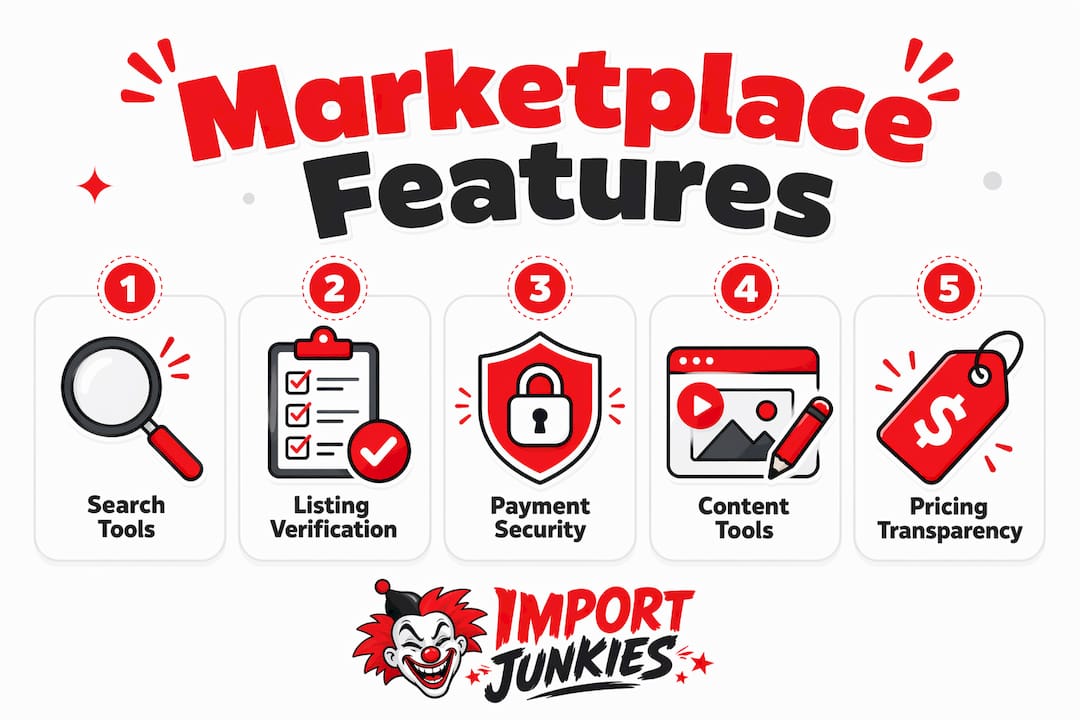
Search and filtering tools
Advanced search filters go beyond basic keyword entry. Effective platforms let you filter by year, make, model, mileage range, price, drivetrain type, and specific features like towing capacity or seating configuration. Saved search profiles notify you when new inventory matches your criteria. This is especially useful when shopping for specialty vehicles like UTVs or electric golf carts, where inventory turns over quickly.
Listing verification and transparency
- VIN checks decode a vehicle’s full history including accidents, title status, and prior ownership.
- Odometer disclosure flags discrepancies between reported and actual mileage.
- Write-off history identifies vehicles previously declared total losses by insurers.
- Outstanding finance checks confirm whether a vehicle carries an existing lien.
Platforms that display these data points prominently earn more buyer trust. Listing verification directly reduces browsing time because buyers do not need to chase down information from sellers manually.
Transaction and payment infrastructure
Secure payment processing and escrow services are non-negotiable for high-value purchases. Escrow holds funds until physical delivery is verified, which protects both buyer and seller from fraud. Integrated financing tools let you apply for a loan, check rates, and get approved within the same platform session. You can read more about structuring off-road vehicle financing before you start shopping.

Content and discovery tools
Photo galleries with multiple angles, short video walkthroughs, and specification tables all reduce uncertainty. Some platforms now use AI-powered recommendation engines that surface vehicles matching your browsing behavior. These tools are particularly valuable for recreational vehicle buyers who may not know exactly which ATV or scooter model fits their use case.
Pro Tip: Always cross-reference a platform’s listed price against at least two other sources. Marketplace pricing tools give you a baseline, but wholesale retailers like Importjunkies often list below standard market rates because they sell direct to the public.
What are the benefits of using an online vehicle buying platform?
Buying a vehicle through an online platform offers concrete advantages over traditional dealership visits. These benefits are especially pronounced for recreational and utility vehicle buyers who need access to specialized inventory.
- Wider selection in one place. A marketplace aggregates inventory from many sellers simultaneously. Research shows 69% of buyers on some vehicle platforms had not previously considered the specific dealer they ultimately purchased from. That figure shows how much marketplace browsing expands your options beyond your local area.
- Transparent pricing. Side-by-side price comparisons across multiple sellers remove the guesswork from negotiation. You see the market rate before you contact anyone.
- Reduced sales pressure. Digital transactions let you research at your own pace. There is no salesperson following you around a lot. You can find discount powersports deals without time pressure.
- Access to specialty vehicles. Local dealerships rarely stock a full range of electric golf carts, ATVs, scooters, and utility trucks. Online platforms give you access to these categories regardless of your location.
- Faster transaction cycles. E-contracts, digital financing, and integrated logistics compress the buying timeline significantly. What once took a week of back-and-forth can close in 24–72 hours on a well-built platform.
- Financing options in one session. Integrated lenders let you apply, get approved, and finalize terms without visiting a bank or a dealership finance office separately.
The shift from dealership visits to digital platforms reflects a genuine change in how buyers prefer to research and purchase vehicles. Convenience and transparency are the two factors driving that shift most consistently.
What should you watch out for when using vehicle marketplaces online?
Online vehicle platforms carry real risks alongside their benefits. Knowing the warning signs protects your money and your personal information.
- Unverified escrow services. Fraudsters sometimes create fake escrow sites that mimic legitimate payment processors. Independently verify escrow compliance before transferring any funds, even if the platform claims to manage payments securely.
- Incomplete listings. A listing without a VIN, photos, or mileage disclosure is a red flag. Legitimate sellers on reputable platforms provide full documentation upfront.
- Pressure to pay outside the platform. Any seller asking you to wire money, use gift cards, or pay through a third-party app not affiliated with the marketplace is almost certainly running a scam.
- Too-good-to-be-true pricing. A vehicle listed at 40% below comparable listings with no explanation warrants serious scrutiny. Check the seller’s review history and listing age before proceeding.
- Identity exposure risks. Avoid sharing your Social Security number, driver’s license, or bank account details with sellers directly. Legitimate platforms handle identity verification through their own secure systems.
Platforms that prominently display payment protection via escrow and managed payment flows reduce fraud risk significantly. Still, no platform eliminates it entirely. Your best defense is understanding how the payment system works before you commit.
Pro Tip: Run a reverse image search on any vehicle photos in a listing. Scammers frequently reuse photos from legitimate listings on other platforms. If the same image appears under a different seller’s name elsewhere, walk away.
Key Takeaways
An e-commerce vehicle marketplace connects multiple independent sellers and buyers on one platform, giving you broader selection, transparent pricing, and faster transactions than traditional dealership shopping.
| Point | Details |
|---|---|
| Marketplace vs. dealership site | Marketplaces aggregate many sellers; dealership sites show only one seller’s inventory. |
| Verified listings build trust | VIN checks, odometer disclosure, and write-off history flags reduce buyer risk and speed up decisions. |
| Escrow protects large transactions | Funds held in escrow until physical delivery verification prevent fraud in high-value purchases. |
| Specialty vehicle access | Online platforms stock ATVs, golf carts, scooters, and UTVs that local dealers rarely carry. |
| Watch for fraud signals | Unverified escrow, off-platform payment requests, and incomplete listings are the top warning signs. |
What I’ve learned after years of watching buyers navigate vehicle platforms
The biggest mistake I see buyers make is treating all vehicle marketplaces as equivalent. They are not. A platform’s payment infrastructure tells you more about its trustworthiness than its homepage design ever will. If a platform cannot clearly explain how it holds and releases funds, that is a problem worth taking seriously before you spend thousands of dollars.
The shift away from dealership lots is real and largely positive for buyers. You get more information, more options, and less pressure. But the digital format also creates distance between you and the physical vehicle, and that distance is where fraud finds its opening. The buyers who do best online are the ones who treat verification as a non-negotiable step, not an optional extra.
For recreational and utility vehicles specifically, the online marketplace model is a genuine advantage. Specialty inventory like electric golf carts, UTVs, and scooters simply does not exist in most local markets at competitive prices. Platforms that sell direct to the public, like Importjunkies, cut out the traditional dealer markup entirely. That pricing difference is real money, not a marketing claim. If you want to compare golf carts the smart way, start with platforms that publish full specifications and pricing without requiring you to “call for a quote.”
The future of vehicle e-commerce will include conversational search and AI-assisted recommendations. Those tools will make the browsing experience faster. The fundamentals of a good transaction, verified listings, secure payments, and clear delivery terms, will not change.
— Gary
Importjunkies: browse recreational and utility vehicles direct
Importjunkies operates as a wholesale retailer selling directly to the public, which means you get competitive pricing on electric golf carts, ATVs, scooters, and utility vehicles without the traditional dealer markup.
The catalog includes options across a wide range of use cases, from golf course operators and outdoor enthusiasts to small business owners who need a capable utility vehicle. The 48V Electric Golf Cart 4 Seater Renegade Edition is one of the most popular listings, combining utility and recreational capability in a single platform. For buyers who need off-road capability with winter functionality, the 200cc ATV with Snow Plow offers a practical, ready-to-ship option. Every product page includes pricing, images, and a direct checkout path so you can move from research to purchase without friction.
FAQ
What is an e-commerce vehicle marketplace?
An e-commerce vehicle marketplace is a digital platform that aggregates inventory from multiple independent sellers, allowing buyers to browse, compare, and purchase vehicles in one place. It differs from a dealership website by offering multi-seller inventory and neutral transaction management.
How does a vehicle marketplace work for buyers?
Buyers search and filter listings by year, make, model, price, and condition, then review verified vehicle data before completing a transaction through integrated payment and financing tools. Physical handover typically occurs within one to three days of deposit on well-structured platforms.
What vehicle marketplace features matter most?
The most critical features are VIN-based listing verification, escrow-backed payment processing, advanced YMM search filters, and integrated financing options. These four elements directly determine how safe and efficient your buying experience will be.
Are online vehicle marketplaces safe for large purchases?
They are safe when the platform uses escrow or a managed payment system that holds funds until delivery is verified. Buyers should independently confirm escrow legitimacy and avoid any seller requesting payment outside the platform.
Where can I buy recreational vehicles through an online platform?
Importjunkies sells electric golf carts, ATVs, scooters, UTVs, and utility vehicles direct to the public at wholesale pricing. You can browse the full catalog and complete your purchase entirely online at importjunkies.com.
Recommended
- Types of Electric Cargo Vehicles: A 2026 Buyer’s Guide – Saferwholesale || Import Junkies || Great Sports
- How to get utility vehicles for less: a buyer’s guide – Saferwholesale || Import Junkies || Great Sports
- How to Compare E-Bike Models: 2026 Buyer’s Guide – Saferwholesale || Import Junkies || Great Sports
- Small Business Vehicle Selection Guide for 2026 – Saferwholesale || Import Junkies || Great Sports


