


 Location
 Login
Login
TL;DR:
- Modern vehicles include five distinct powertrain types, affecting how consumers shop and drive. Battery electric vehicles run solely on rechargeable batteries, offering zero emissions and varying ranges, while plug-in hybrids combine electric and gas engines for versatility. Fuel cell electric vehicles generate power from hydrogen, producing only water vapor as a byproduct.
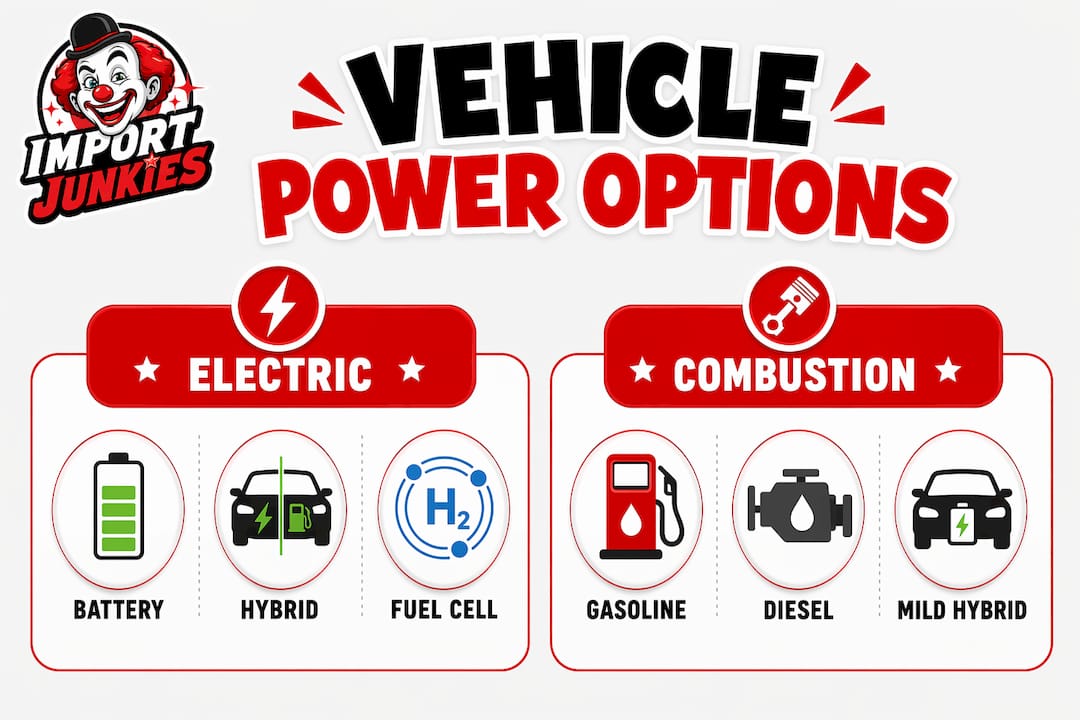
Modern vehicles run on five distinct powertrain types, and knowing the difference between them changes how you shop, budget, and drive. Here is a quick breakdown of what you are actually choosing between:
- ICE (Internal Combustion Engine): Burns gasoline or diesel to generate power. No electric motor involved.
- BEV (Battery Electric Vehicle): Runs entirely on electricity stored in a large battery pack. Zero tailpipe emissions.
- PHEV (Plug-in Hybrid Electric Vehicle): Combines an electric motor with a gas engine. You can charge it externally for electric-only driving.
- HEV (Hybrid Electric Vehicle): Pairs a gas engine with an electric motor, but the battery charges itself. No plug required.
- MHEV (Mild Hybrid Electric Vehicle): A gas engine with a small electric assist motor. Cannot drive on electricity alone.
- FCEV (Fuel Cell Electric Vehicle): Generates electricity onboard from hydrogen. Emits only water vapor.
Each type draws from a different energy source, uses different components, and suits different driving needs. The sections below break each one down in detail.
How battery electric vehicles actually work
BEVs are the purest form of electric transportation. There is no combustion engine anywhere in the vehicle. Power comes entirely from a rechargeable battery pack that feeds one or more electric motors, which then drive the wheels.

The motor types you will encounter most often are AC induction motors, brushless DC motors (BLDC), and permanent magnet synchronous motors (PMSM). Each converts electrical energy into mechanical power through electromagnetic interaction between a stator and a rotor, a process fundamentally different from burning fuel. Electric motors convert electrical energy into mechanical power using electromagnetic fields, while combustion engines convert thermal energy from burning fuel.
Battery chemistry matters more than most buyers realize. Most modern BEVs use lithium-based cells, with three main chemistries in play: lithium manganese cobalt oxide (NMC), lithium nickel-cobalt-aluminum oxide (NCA), and lithium iron phosphate (LFP). NMC and NCA batteries offer higher energy density and longer range but cost more. LFP batteries are heavier and have lower energy density, but they tend to be more durable and less expensive.
Regenerative braking recaptures energy normally lost during braking and feeds it back into the battery, which is why BEVs often perform better in city driving than on the highway.
Charging options for BEVs:
- Level 1: Standard 120-volt outlet, adds 2–5 miles of range per hour
- Level 2: 240-volt outlet, adds 10–20 miles per hour, common at workplaces and shopping centers
- DC fast charging: Located along interstates, can charge an EV to most of its capacity in under an hour
“New BEVs typically have a driving range that varies widely depending on battery size and driving conditions, and this range can be affected by extreme cold or hot weather due to energy needed for cabin and battery temperature management.” — U.S. Energy Information Administration
Pro Tip: About 75% of EV owners charge at home. If you are considering a BEV, check your home’s electrical panel capacity before purchasing. A Level 2 charger installation is worth the upfront cost for daily convenience. See Importjunkies’ EV charging setup guide for what to expect.
PHEVs and HEVs: what sets them apart
These two powertrain types look similar on paper but behave very differently in practice.
PHEVs carry both an electric motor and a gas engine, plus a battery large enough to support meaningful electric-only driving. You plug them in to charge, just like a BEV. The electric-only range on current PHEVs typically runs from 8 to 45 miles before the gas engine takes over. For someone commuting under 30 miles a day, that means running almost entirely on electricity while keeping the gas engine as a backup for longer trips. PHEVs eliminate range anxiety by providing gasoline backup when the battery depletes.
PHEVs operate in two main configurations. In parallel mode, both the engine and motor can drive the wheels directly. In series mode, the engine generates electricity for the motor, which does all the driving. Some vehicles switch between both depending on speed and battery charge.
HEVs also combine a gas engine with an electric motor, but the battery is never plugged in. It charges through the engine and regenerative braking only. The electric motor assists during acceleration and low-speed driving, reducing fuel consumption, but the gas engine always remains the primary power source.
Key differences at a glance:
- PHEVs have larger battery packs and require external charging
- HEVs have smaller batteries and are fully self-charging
- PHEVs produce zero tailpipe emissions in electric-only mode
- HEVs reduce fuel use but always burn some gasoline
- PHEVs suit drivers with predictable short daily commutes plus occasional long trips
- HEVs suit drivers who want better fuel economy without changing their refueling habits
MHEVs and FCEVs: the other two powertrain types
Mild Hybrid Electric Vehicles (MHEVs) are the most modest form of electrification. A small electric motor assists the gas engine during acceleration and helps restart it more smoothly, but it cannot power the vehicle on electricity alone. There is no electric-only driving mode. The benefit is real but limited: reduced engine load, marginally better fuel economy, and a lower purchase price than a full hybrid. MHEVs offer a cost-effective step toward fuel efficiency without requiring any change to your charging habits or daily routine.
Fuel Cell Electric Vehicles (FCEVs) take a completely different approach. Instead of storing electricity in a battery, they generate it onboard by combining compressed hydrogen with oxygen in a fuel cell stack. The only byproduct is water vapor. FCEVs refuel at hydrogen stations in about five minutes, similar to a gas stop, but hydrogen infrastructure in the U.S. remains limited, concentrated mostly in California.
MHEV and FCEV highlights:
- MHEVs use a 48-volt electrical system in most current designs
- MHEVs do not require a charging port or special infrastructure
- FCEVs carry no large external battery to plug in
- FCEVs produce zero tailpipe emissions, like BEVs
- Hydrogen fueling stations remain scarce outside select U.S. markets
- FCEVs are currently most practical for fleet operators near hydrogen infrastructure
What makes an electric powertrain tick
The powertrain is the full system that generates and delivers power to move the vehicle. It includes the engine or motor, the transmission, and the components connecting them. The drivetrain is a subset of that, covering only the parts that transmit power to the wheels, excluding the motor or engine itself. Understanding powertrain vs drivetrain differences matters when comparing repair costs and component warranties.
Electric powertrains stand out because the motor delivers torque instantly, from a complete stop, with no delay. Gas engines build torque as RPM rises, which is why a turbocharged engine needs a moment to spool up. Torque drives initial acceleration and towing capacity; horsepower determines sustained speed. A diesel engine like the 6.6-liter Duramax V8 produces 910 lb-ft of torque, making it a towing benchmark, while electric motors in performance BEVs can match or exceed that figure with no warm-up time.
Key electric powertrain components:
- Electric motor: Converts electrical energy to mechanical rotation via electromagnetic fields
- Battery pack: Stores energy in lithium-based cells; voltage architecture ranges from 400-volt to 800-volt systems in current vehicles
- Power electronics/inverter: Converts DC battery power to AC for the motor
- Regenerative braking system: Recovers kinetic energy during deceleration and returns it to the battery
- Thermal management system: Keeps battery and motor within safe operating temperatures
Higher-voltage 800-volt architectures, found in newer performance EVs, charge faster and lose less energy as heat compared to 400-volt systems.
Comparing vehicle power options side by side
Lifecycle emissions from EVs remain lower than gasoline vehicles, especially when electricity comes from renewable sources like solar or wind. That said, the comparison shifts depending on your local grid mix, driving habits, and how often a PHEV owner actually plugs in.
| Power type | Charging/refueling | Emissions | Driving range | Maintenance |
|---|---|---|---|---|
| ICE (gas) | Gas station, 5 min | Highest tailpipe emissions | — | Oil changes, spark plugs, exhaust system |
| ICE (diesel) | Diesel pump, 5 min | High NOx, lower CO2 than gas | — | Fuel filters, DEF fluid, higher service cost |
| BEV | Level 1/2/DC fast charge | Zero tailpipe emissions | 114–450 miles | No oil changes; brake pads last longer due to regenerative braking |
| PHEV | Plug-in plus gas station | Zero in electric mode; gas emissions beyond electric range | 8–45 miles electric, then gas range | Two systems to maintain; more complex than HEV or BEV |
| HEV | Gas station only | Lower than ICE; no plug-in benefit | Comparable to gas vehicles | Simpler than PHEV; battery self-maintains |
| MHEV | Gas station only | Slightly lower than standard ICE | Comparable to gas vehicles | Similar to ICE; minor added electrical components |
| FCEV | Hydrogen station, refueling time similar to gas stops | Zero tailpipe (water vapor only) | Typical driving range is comparable to many gasoline vehicles | Low mechanical complexity; hydrogen system requires specialized service |
For everyday commuters, a BEV or PHEV typically offers the lowest operating cost over time. If you drive long distances regularly and lack charging access, an HEV or MHEV delivers fuel savings without any infrastructure changes. FCEVs remain a strong option for fleet operators with hydrogen access, but they are not yet practical for most individual buyers in the U.S.
If you want a practical look at how these powertrain differences play out in a specific vehicle category, the electric vs gas comparison in golf carts is a useful real-world example.
Key Takeaways
Each major vehicle powertrain type draws from a different energy source, suits different driving patterns, and carries distinct cost and maintenance profiles that should guide your buying decision.
| Point | Details |
|---|---|
| BEV range varies widely | New BEVs offer 114–450 miles per charge depending on battery size and conditions. |
| PHEV electric range is limited | PHEVs deliver 8–45 miles on electricity before the gas engine takes over. |
| MHEVs cannot drive on electricity alone | The small assist motor improves fuel economy but provides no electric-only mode. |
| FCEVs emit only water vapor | They generate electricity from hydrogen onboard, but U.S. hydrogen infrastructure remains limited. |
| Lifecycle emissions favor BEVs | EV lifecycle emissions stay lower than gasoline vehicles, especially on renewable-heavy grids. |
See electric power in action at Importjunkies

Understanding the powertrain is one thing. Owning a vehicle that puts it to work is another. Importjunkies carries a full lineup of electric utility vehicles built around the same BEV principles covered above. The 48V Electric Golf Cart Renegade Edition is a four-seater utility UTV that runs on a 48-volt electric powertrain, zero emissions, no oil changes, and instant torque from the moment you press the pedal. If you are ready to put electric power to practical use, browse the full selection at Importjunkies.
Recommended
- Why Choose Gas vs Electric: A 2026 Buyer’s Guide – Saferwholesale || Import Junkies || Great Sports
- Future of Electric Vehicles 2026: What You Need to Know – Saferwholesale || Import Junkies || Great Sports
- Electric Vehicle Setup Guide for Homes and Businesses – Saferwholesale || Import Junkies || Great Sports
- Scooter types guide: Choose the right model in 2026 – Saferwholesale || Import Junkies || Great Sports


