


 Location
 Login
Login
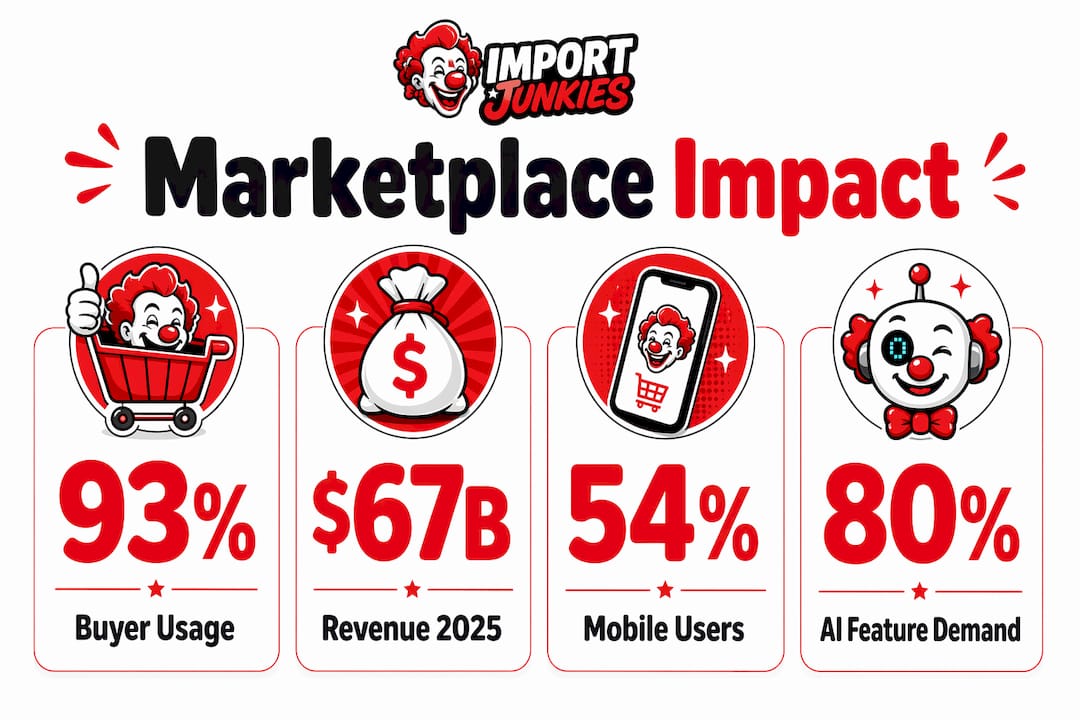
Online vehicle marketplaces now dominate the car buying journey from the very first click. Online vehicle marketplaces are now the dominant first step for car buyers, with 61% beginning their journey there and 93% using them throughout the process, ahead of visiting manufacturer websites. That is not a trend. That is the new baseline for automotive retail in 2025.
Platforms like Cars.com have become the connective tissue between consumers and dealerships, giving buyers pricing data, inventory access, and reviews in one place. Research from Clarivoy, a leader in identity-based targeting for automotive marketers, confirms that these marketplaces influence the majority of vehicle sales, not just the research phase. SHIFT, which built its model around direct-to-consumer used car sales, demonstrated how far digital platforms can push the transaction itself. Together, these examples show that the digital marketplace is not a supplement to traditional car buying. It is the primary channel.
- Most engaged buyers use automotive marketplaces during their path to purchase, with 61% making a marketplace their first stop ahead of search engines and OEM sites, while a smaller share visit manufacturer websites.
- Marketplaces provide pricing, reviews, and inventory in one destination, reducing the need to visit multiple sources
- Clarivoy’s research confirms that dealers who wait for leads rather than engaging on marketplaces are already missing the majority of active shoppers
How consumer behavior has shifted toward digital vehicle platforms
Buyers are no longer browsing dealership lots first and going online second. The sequence has reversed. Consumers increasingly go directly to large online marketplaces after seeing an advertisement, skipping search engines and brand websites entirely. The preference is clear: one destination that delivers pricing, reviews, and inventory without requiring five separate searches.
A Cox Automotive study of 2,310 buyers found that 72% visited a third-party website during their buying journey. Mobile is accelerating this further. Over half of car shoppers now use their phones more than desktops for vehicle research, and 83% prefer completing more shopping steps remotely, up from 72% in 2022.
Stat to know: 93% of engaged auto buyers use online marketplaces during their path to purchase, and 61% make one their very first stop, according to Clarivoy’s marketplace-first research covering over 160 million sessions.
- Shoppers prefer a single destination for pricing, reviews, and product details
- Multi-site comparisons are common, but the marketplace is almost always the anchor
- Mobile adoption is reshaping when and how buyers research, often during commutes or evenings at home
- Younger buyers, particularly Millennials and Gen X, show the highest comfort with digital-first car shopping
- Trust in marketplace data, including dealer ratings and vehicle history, drives confidence before any in-person visit
How online marketplaces are reshaping dealers and automotive retail
Dealers who treat online marketplaces as optional are losing ground fast. The importance of online car sales is no longer theoretical. Research shows that dealers using marketplaces as their primary matching engine achieve 3 to 6 times greater sale efficiency and extract 20% to 50% more surplus per transaction compared to private sellers. That gap comes from three advantages: better inventory selection, superior matching with distant buyers, and stronger negotiating position.
Marketplace exposure also affects pricing across the board. Studies show that internet-enabled price transparency reduces vehicle purchase prices by about 1.5%, which equals roughly 22% of a dealer’s average gross profit margin per vehicle. Dealers who understand this dynamic use it to their advantage by competing on transparency rather than fighting it.
The challenge for most dealerships is channel integration. Inventory listed online must match what is physically available, and pricing shown on a marketplace must align with what the showroom quotes. A mismatch at that handoff erodes the trust that the marketplace built. Dealers who solve that problem retain buyers; those who do not send them back to the listing page to find a competitor.
- Marketplace-first strategies connect dealers with buyers at the top of the purchase funnel, not just at the bottom
- Geographic reach expands significantly through online listings, allowing dealers to attract buyers from outside their immediate area
- Showroom visits increasingly serve as final verification rather than the starting point for negotiation
- 67% of consumers still prefer some personal consultation during the purchase, confirming that digital and in-person channels must work together
- Dealers who ignore marketplaces lose visibility precisely when buyers are most actively searching
Pro Tip: If you are a dealer, prioritize your marketplace listings with accurate photos, current pricing, and complete vehicle details. Buyers who arrive at your showroom from a marketplace listing have already done their research. They are closer to buying than a cold walk-in, and they expect the in-person experience to match what they saw online.
How AI and mobile technology are transforming the marketplace experience
AI is not a future feature in vehicle marketplaces. It is already in use, and buyers want more of it. 80% of vehicle buyers and sellers are open to using AI tools to assist with vehicle comparisons, listing discovery, and review summaries. Among that group, 44% specifically want AI-powered comparison tools, 40% want help finding listings, and 36%–39% want AI to summarize dealer and vehicle reviews.

The practical impact is faster decision-making. Buyers who can compare three vehicles side by side, read summarized reviews, and get personalized recommendations in minutes are less likely to stall mid-funnel. Platforms that deliver this experience shorten the research phase and move buyers toward contact or purchase more efficiently. For dealers, that means higher-quality leads arriving with more information and clearer intent.
Mobile is the delivery mechanism for all of this. With 54% of shoppers using phones more than desktops for car shopping, marketplaces that are not optimized for mobile are losing buyers before they even see the inventory.
What the future of online vehicle marketplaces looks like
The US online car sales industry is generating $67.2 billion in revenue in 2025, growing at a 4.5% compound annual growth rate. That growth is not slowing. Inventory normalization, expanding digital tools, and rising consumer comfort with remote transactions are all pushing the market forward despite broader economic headwinds.
Physical dealerships are not disappearing, but their function is changing. Showrooms are being remodeled into trust-building environments focused on final vehicle verification rather than price negotiation. The negotiation increasingly happens online, informed by marketplace data, before the buyer ever walks through the door. Dealers who redesign their in-person experience around this reality will retain buyers; those who still treat the showroom as the primary sales floor will struggle.

Expect AI capabilities to expand further, with more personalized listing recommendations, predictive pricing tools, and virtual vehicle walkthroughs becoming standard. The line between researching online and buying online will continue to blur, particularly for used vehicles and specialty categories. You can read more about how this shift is playing out in vehicle direct sales across different vehicle types.
Importjunkies and the growing world of specialty vehicle ecommerce
The marketplace-first model does not stop at traditional cars and trucks. Specialty vehicle categories, including off-road vehicles, golf carts, ATVs, and utility vehicles, are following the same trajectory. Importjunkies operates at the center of this shift, offering a direct-to-consumer platform built specifically for buyers who want transparent pricing and detailed listings without the friction of traditional retail.
The dynamics in niche vehicle ecommerce share a lot with the broader auto market, but with some important differences. Buyers in these categories often have very specific use cases, whether that is a golf course operator needing a four-seat utility cart or an outdoor enthusiast looking for a capable ATV. Detailed product information, clear specifications, and competitive pricing matter even more when the buyer cannot easily comparison-shop at a local lot.
Importjunkies addresses this by listing full specifications, pricing, and images for every vehicle, giving buyers the same transparency that marketplace research provides for traditional car shoppers.
- Specialty vehicle buyers rely on online platforms even more heavily than traditional car buyers, given limited local inventory
- Transparent pricing removes the guesswork that has historically made niche vehicle purchases difficult
- Direct-to-consumer wholesale pricing gives buyers access to competitive rates without dealer markup layers
- Detailed listings with photos and specs reduce the need for an in-person visit before purchase
Pro Tip: When shopping for a specialty vehicle like a golf cart or ATV online, treat the listing like a dealer visit. Check the specs, confirm the warranty terms, and verify what is included in the purchase price. A complete listing is a sign the seller is serious about transparency.
How to protect yourself from fraud on online vehicle marketplaces
Fraud is a real risk in online vehicle transactions, and knowing the warning signs protects you before any money changes hands. The most common schemes involve listings with prices well below market value, sellers who refuse to allow an inspection, and requests for wire transfers or gift cards as payment. Legitimate marketplaces and sellers do not pressure you to skip verification steps.
Established platforms like Cars.com use listing verification processes and dealer credentialing to reduce fraudulent inventory. Still, no platform eliminates risk entirely, so your own due diligence matters. Always verify the vehicle identification number (VIN) through a service like the National Highway Traffic Safety Administration’s VIN lookup tool before committing. For used vehicles, a third-party inspection from a certified mechanic is worth the cost, even when buying through a reputable marketplace.
Payment method matters too. Credit cards and escrow services offer more protection than wire transfers. If a seller insists on an untraceable payment method, that is a clear signal to walk away. You can also learn more about buying powersports online safely to apply the same principles to specialty vehicles.
Tips for getting the most out of online vehicle marketplaces
Using a marketplace well takes more than typing in a search and scrolling through results. Buyers who get the best deals and avoid problems treat the platform as a research tool, not just a listing directory.
Start with a clear budget that accounts for taxes, registration, and any delivery fees before you compare prices. Marketplace listings often show the vehicle price alone, and the total cost can shift meaningfully once fees are added. Filter by certified or inspected inventory when the option exists, since those listings carry a baseline quality assurance that unverified private listings do not.
Read dealer reviews on the marketplace itself, not just the dealer’s own website. Third-party ratings reflect actual buyer experiences and often surface patterns, both positive and negative, that a dealer’s own marketing will not show. When you find a vehicle you are serious about, use the marketplace’s pricing data to understand whether the listed price is above or below the market average for that make, model, year, and mileage. Understanding dealer markup helps you interpret that data accurately before you negotiate.
Finally, do not skip the in-person step for a major purchase. 86% of buyers still choose to see the vehicle in person before buying, and for good reason. The marketplace gets you to the right vehicle. The in-person visit confirms it.
Key Takeaways
Online vehicle marketplaces now drive the majority of car buying decisions in the US, with 93% of engaged buyers using them and 61% starting there, making a marketplace-first strategy non-negotiable for both consumers and dealers in 2025.
| Point | Details |
|---|---|
| Marketplace dominance | 93% of engaged buyers use online marketplaces during their purchase, and 61% make one their first stop. |
| Dealer efficiency gains | Dealers using marketplaces match buyers 3–6 times more efficiently and extract 20%–50% more surplus than private sellers. |
| AI and mobile adoption | 80% of buyers are open to AI shopping tools, and 54% use phones more than desktops for vehicle research. |
| Pricing transparency | Marketplace-enabled price discovery reduces vehicle purchase prices by about 1.5%, equal to 22% of dealer gross margin. |
| Importjunkies for specialty vehicles | Importjunkies offers transparent pricing and detailed listings for golf carts, ATVs, and utility vehicles, applying the same marketplace-first model to specialty vehicle buyers. |
The part of this shift most people are still underestimating
The conversation around digital marketplaces tends to focus on convenience, and that framing undersells what is actually happening. Marketplaces are not just making car shopping easier. They are redistributing power in the transaction. Buyers arrive at dealerships already knowing the invoice price, the market average, and what comparable vehicles sold for last month. That is a structural change, not a preference shift.
What dealers and specialty vehicle sellers need to understand is that the showroom visit is now the closing step, not the discovery step. Buyers who walk in from a marketplace listing have already made most of their decision. The in-person experience either confirms their choice or sends them back online to find a better option. Sellers who treat that visit as a negotiation starting point are misreading the room entirely.
For niche categories like off-road vehicles and utility carts, this dynamic is even more pronounced because local inventory is thin. A buyer shopping for a 4-seat electric golf cart in a mid-size market may have one or two local options and dozens online. The marketplace wins by default, which means the quality of your online listing is your primary sales tool, full stop.
Importjunkies carries the specialty vehicles most marketplaces overlook
If you have been shopping for a golf cart, ATV, or utility vehicle and found that the major auto marketplaces give you three listings and a lot of dead ends, that is a gap Importjunkies was built to fill. The platform sells directly to the public at wholesale pricing, with no dealer markup layers between the manufacturer and your driveway.
The inventory covers electric and gas-powered golf carts, ATVs, scooters, utility trucks, and trikes, all listed with full specifications, pricing, and images. The 48V Electric Golf Cart 4 Seater Renegade Edition is one example of the kind of specialty vehicle you will not find on a traditional auto marketplace. Checkout is straightforward, customer service is US-based, and the pricing reflects what a wholesale buyer would expect. For outdoor enthusiasts, golf course operators, and small business owners who need a utility vehicle without the runaround, Importjunkies is worth a direct look.
Recommended
- Future of Electric Vehicles 2026: What You Need to Know – Saferwholesale || Import Junkies || Great Sports
- Vehicle Direct Sales Explained: A 2026 Buyer’s Guide – Saferwholesale || Import Junkies || Great Sports
- Why Purchase Wholesale Vehicles: Save More in 2026 – Saferwholesale || Import Junkies || Great Sports
- Must-Have Recreational Vehicles 2026: Top Picks Guide – Saferwholesale || Import Junkies || Great Sports


