


 Location
 Login
Login
Golf cart tire sizes describe three numbers: overall tire diameter, tread width, and rim diameter. The stock baseline on most factory carts is 18x8.50-8, meaning an 18-inch-tall tire on an 8-inch rim. The rule that matters most: overall diameter, not rim size, decides whether a tire fits without rubbing.
A few numbers to keep handy before you shop:
- Common rim diameters run 8", 10", 12", 14", and 15".
- Overall tire height typically falls between 18" and 23" on non-lifted carts.
- Stepping up to a 20 to 24 inch tire often adds 2 to 4 MPH of top speed, but usually at the cost of a little acceleration.
Key Takeaways
Overall tire diameter, not rim size, is the single factor that determines whether a golf cart tire fits without rubbing or handling problems.
| Point | Details |
|---|---|
| Stock baseline size | Most factory carts ship with 18x8.50-8, roughly 18 inches tall and 8 inches wide. |
| Diameter beats rim size | Always check overall height first; rim diameter alone won’t tell you if a tire fits. |
| Lift threshold | Diameter increases under 2 inches over stock usually skip the lift; beyond that, plan on 3 to 6 inches of lift. |
| Speed tradeoff | Larger tires can add 2 to 4 MPH but often reduce acceleration and stress the drivetrain. |
| Measure twice | Measure mounted diameter at two points and average them to avoid sidewall compression errors. |
Table of Contents
- Common Golf Cart Tire and Wheel Sizes at a Glance
- How Do You Read a Golf Cart Tire Size Code?
- How Do You Measure a Golf Cart Tire and Rim Correctly?
- What Fitment and Clearance Issues Should You Check?
- Which Tread Type Fits Your Golf Cart Best?
- Does Tire Size Change Speed and Handling?
- What Should You Confirm Before Buying Replacement Tires?
- Metric-to-Standard Conversion Chart for Quick Fitment Checks
- What I’ve Learned Buying and Selling Golf Cart Tires
- Frequently Asked Questions
- Sources
Common Golf Cart Tire and Wheel Sizes at a Glance
Most sizing confusion clears up once you see the common options side by side. The chart below covers what ships stock, what fits without modification, and what pushes you into lift territory.
| Tire Size | Approx. Overall Height | Typical Rim | Common Use |
|---|---|---|---|
| 18x8.50-8 | 18" | 8" | Factory stock, turf-friendly |
| 205/50-10 | ~18" | 10" | Low-profile street look |
| 215/50-12 | ~19" | 12" | Street cruising, smoother sidewall |
| 20x10-10 | 20" | 10" | Mild all-terrain, no lift needed |
| 22x10-10 | 22" | 10" | Off-road, usually needs a lift |
| 23x10-14 | 23" | 14" | Lifted, aggressive off-road look |
A 205/50-10 sits almost exactly at stock height, so it swaps onto most carts with zero fuss. Anything in the 22 to 25 inch range is a different story. That’s the point where you’re almost always shopping for a lift kit alongside the tires, not just the tires themselves.
- Stock height tires around 18 to 19" generally fit most carts without modification.
- Tires around 20 to 20.5" often fit without a lift, but clearance should be verified.
- Tires 22" and taller typically require a lift kit to fit properly.
How Do You Read a Golf Cart Tire Size Code?
Golf cart tires get labeled two different ways, and knowing which format you’re looking at saves you from ordering the wrong set. The standard format reads like 23x10.5-12: overall diameter, tread width, then rim diameter, all in inches. The metric format reads like 215/50-12: tread width in millimeters, aspect ratio as a percentage, then rim diameter in inches.
Here’s how to decode each one:
- Standard format (23x10.5-12): 23 inches tall, 10.5 inches wide, mounted on a 12-inch rim.
- Metric format (215/50-12): 215mm wide, with a sidewall height equal to 50% of that width, on a 12-inch rim.
- Convert metric to inches: Multiply 215mm by 0.50, convert that sidewall height to inches, then double it and add the 12-inch rim to estimate overall diameter.
Run that math on a 205/50-10 and you land close to 18 inches overall, nearly identical to the stock 18x8.50-8. That’s why two tires with completely different-looking codes can be interchangeable.
Pro Tip: Rim diameter tells you almost nothing about fitment on its own. Two tires can share a 10-inch rim and still differ by three or four inches in overall height, so always check the diameter math before you check the rim number.
How Do You Measure a Golf Cart Tire and Rim Correctly?
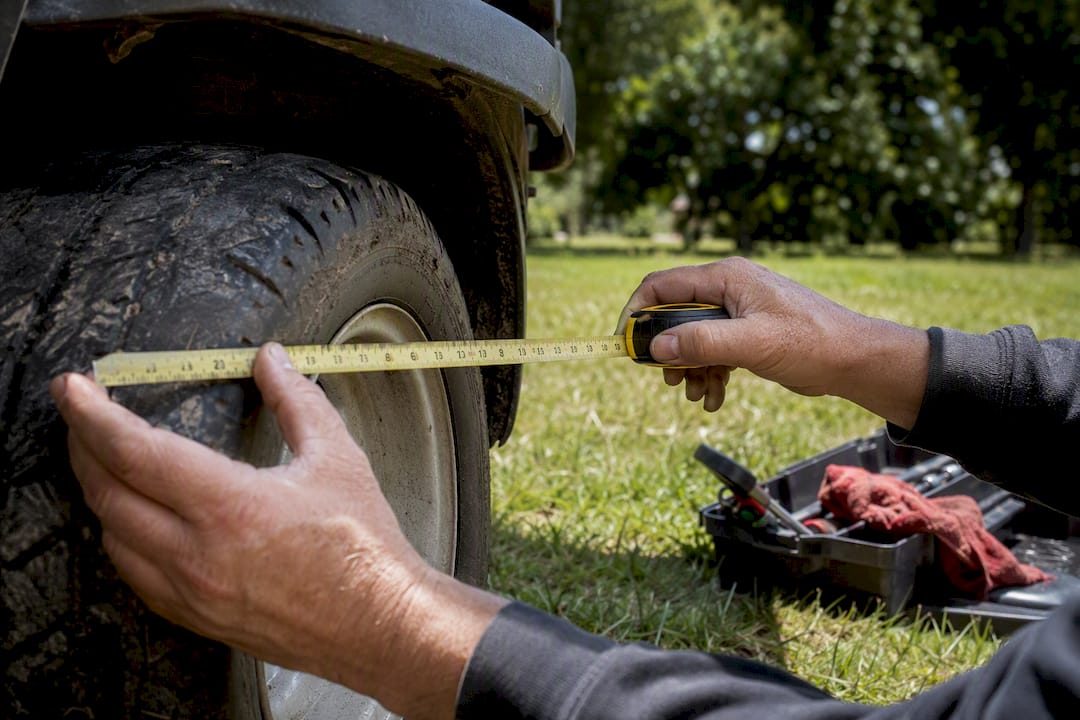
Grab a tape measure and follow this sequence before you order anything:
- Measure overall diameter from the ground to the top of the tire while it’s mounted and inflated, or lay it flat and measure across if it’s off the cart.
- Measure tread width at the widest point of the tire, not at the sidewall.
- Confirm rim diameter by measuring bead to bead across the wheel, then note the bolt pattern.
The most common mistake is measuring a tire that’s been sitting unmounted, since sidewalls compress differently under load and can read up to half an inch short. Metric aspect-ratio math trips people up too. A small rounding error in the percentage calculation can throw your estimate off by an inch or more.
Pro Tip: Measure the diameter twice, at two different points around the tire, and average the two numbers. A slightly out-of-round tire or a soft spot in the tread can throw off a single reading.
What Fitment and Clearance Issues Should You Check?
Overall diameter is the number that decides whether a tire fits, but width, wheel offset, and steering stops all play a role once you go beyond stock size. A tire that’s tall enough to clear the fender might still rub the frame in a tight turn if it’s also wider than stock, or if the wheel’s backspacing pushes it outward.
Before installing anything larger than stock, check the wheel and tire sizing basics to ensure proper fitment.
- Overall diameter against your cart manufacturer’s maximum tire height.
- Tread width against fender well clearance at full steering lock.
- Wheel offset or backspacing, especially on wider replacement wheels.
- Suspension travel under load, since a tire that clears empty can rub with passengers aboard.
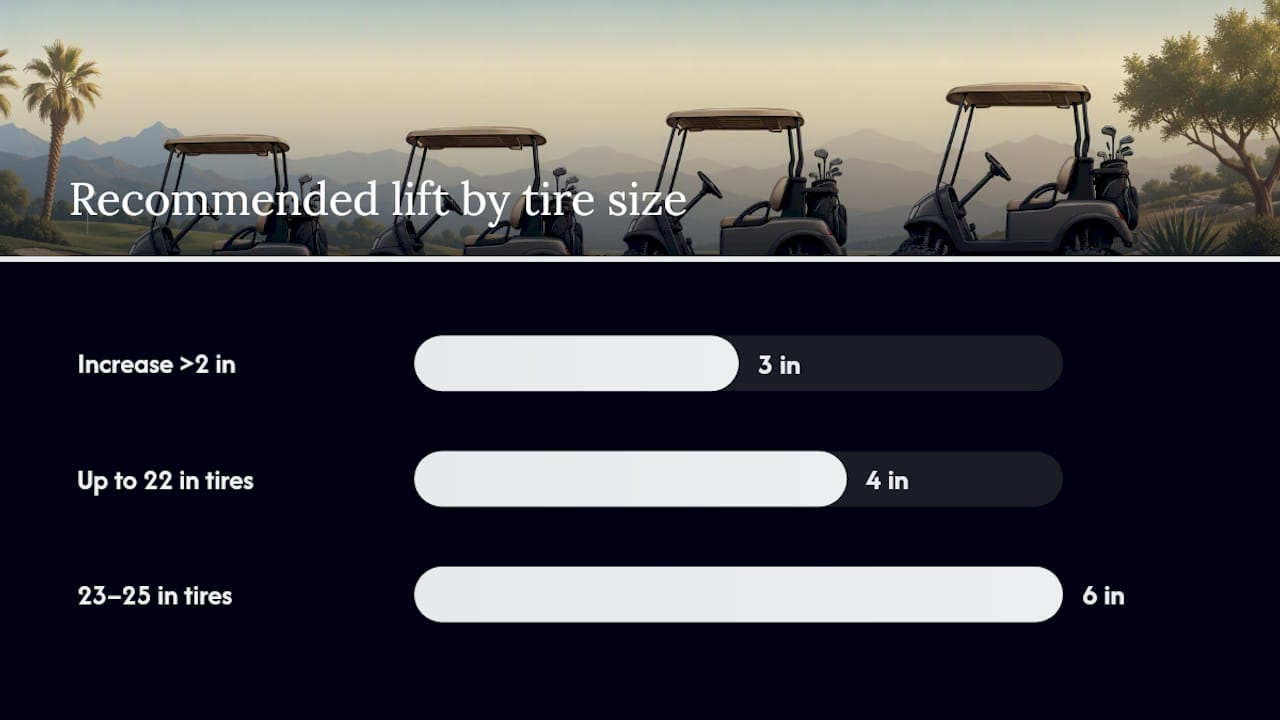
A useful rule of thumb: if the diameter increase is under about 2 inches over stock, most carts handle it without a lift. Push past that and you’ll likely need 3 to 6 inches of lift depending on the size jump, with 4-inch lifts commonly supporting up to 22-inch tires and 6-inch lifts opening the door to 23 to 25 inch setups. Skip that step and you risk rubbing on turns, uneven tread wear, and a cart that pulls oddly at speed.
Which Tread Type Fits Your Golf Cart Best?
Tread pattern matters as much as size once you know your fitment window. Each type trades off ride comfort, traction, and turf friendliness differently:
- Turf/sawtooth tread: Best for golf courses, won’t tear up grass, softest ride.
- Street radials: Best for neighborhood cruising and paved paths, smooth and quiet.
- All-terrain tread: Best for mixed gravel, dirt, and light trails without sacrificing daily usability.
- Mud/sand tread: Best for hunting trips or beach use, aggressive grip but rougher ride on pavement.
- Solid or foam-filled tires: Best for commercial and course-maintenance carts that can’t afford a flat.
Golf-course operators almost always stick with turf tread for the traction-without-damage tradeoff, while weekend cruisers tend to prefer the quieter ride of street radials.
Does Tire Size Change Speed and Handling?
A taller tire spins slower at the same wheel RPM, which pushes top speed up. Bumping from stock 18" tires to a 22 to 24 inch tire commonly adds 2 to 4 MPH on many carts, but that gain isn’t free.
- Bigger tires mean more rotating mass, so acceleration off the line often feels softer.
- Motors and drivetrain components work harder to spin larger tires, especially uphill or with passengers.
- Steering response can loosen slightly with wider, taller tires unless offset is dialed in correctly.
Pro Tip: If you want the bigger-tire look without sacrificing pep, stay within a couple inches of stock diameter. The visual difference is noticeable, but the drivetrain barely notices the extra load.
What Should You Confirm Before Buying Replacement Tires?
Run through this list before you check out, whether you’re buying online or standing in a shop:
- Overall diameter matches your cart’s maximum height rating.
- Rim diameter matches your current wheels, or you’re buying wheels and tires as a set.
- Tread width clears the fender well at full steering lock.
- Load rating covers your cart’s passenger and cargo capacity.
- DOT rating is confirmed if the cart will run on public roads under LSV rules.
- Return policy covers a size that turns out to rub or not clear.
Ask your installer three questions up front: does this size need a lift, will the fenders need trimming, and what pressure do you recommend for this tire and load combination. If ride comfort matters more than looks, lean toward a comfort-sized metric tire; if turf protection matters most, stay with a sawtooth tread regardless of diameter.
Metric-to-Standard Conversion Chart for Quick Fitment Checks
| Metric Code | Approx. Overall Height | Typical Rim |
|---|---|---|
| 205/50-10 | ~18" | 10" |
| 205/50-10 | 18 inches | 10" |
| 215/50-12 | ~19" | 12" |
| 215/50-12 | ~20" | 12" |
Before ordering, run three quick checks: confirm your current overall diameter, confirm rim diameter and bolt pattern, and confirm whether your fender clearance allows for any height increase at all.
Pro Tip: If your cart already has aftermarket wheels or a lift installed, call a shop instead of ordering online. Non-stock setups often have offset or backspacing quirks that a size chart alone won’t catch.
What I’ve Learned Buying and Selling Golf Cart Tires
Double-check overall diameter before anything else. It’s the number that decides whether your afternoon involves bolting on new tires or filing a return request. Keep one stock-size tire in the garage as a spare even after you upgrade, since it saves you from being stranded if a replacement takes a week to ship. And always write down your bolt pattern before ordering wheels. Guessing costs more than the shipping label.
Call a shop if your cart already has a lift or aftermarket wheels installed. Order online with confidence if you’re staying close to stock dimensions. If you’re weighing new tires against a whole new cart, Import Junkies carries lifted models with factory wheel and tire packages already sized correctly, which skips the fitment math altogether.
Frequently Asked Questions
What is the most common golf cart tire size? The most common factory size is 18x8.50-8, standing about 18 inches tall on an 8-inch rim.
Do bigger tires make a golf cart faster? Yes, generally. A jump to 20 to 24 inch tires can add 2 to 4 MPH of top speed, though acceleration often softens as a tradeoff.
Can I put 22-inch tires on a golf cart without a lift? Usually not without checking clearance carefully. Most carts need at least a 3 to 4 inch lift to safely clear 22-inch tires without rubbing.
How do I convert a metric golf cart tire size to inches? Multiply the width in millimeters by the aspect ratio percentage to get sidewall height, convert to inches, double it, then add the rim diameter.
Does rim size matter as much as tire diameter for fitment? No. Overall tire diameter is the limiting factor for clearance, while rim diameter mainly needs to match your hub and bolt pattern.
Sources
- Golf Cart Tire Size Chart: Best Tires & Wheels (2026)
- Golf Cart Tire Sizing Explained - A Complete Guide
Recommended
- Golf Cart Buying Guide for Smart Buyers – Saferwholesale || Import Junkies || Great Sports
- Golf cart features: a complete buyer’s guide for 2026 – Saferwholesale || Import Junkies || Great Sports
- How to inspect used golf carts: a step-by-step guide – Saferwholesale || Import Junkies || Great Sports
- The Right Golf Cart Seat Upgrade for Comfort, Style, and Fit – Saferwholesale || Import Junkies || Great Sports


