


 Location
 Login
Login
Infrared saunas have real, documented benefits, but they’re more modest than the marketing suggests. Clinical trials show measurable improvements in blood pressure, cardiac markers, and pain scores for specific groups, especially people who can’t tolerate the heat of a traditional sauna. Long-term longevity data, however, still favors traditional saunas. If you’re on heart medication, pregnant, or managing a serious cardiovascular condition, talk to your doctor before you start a routine.
TL;DR:
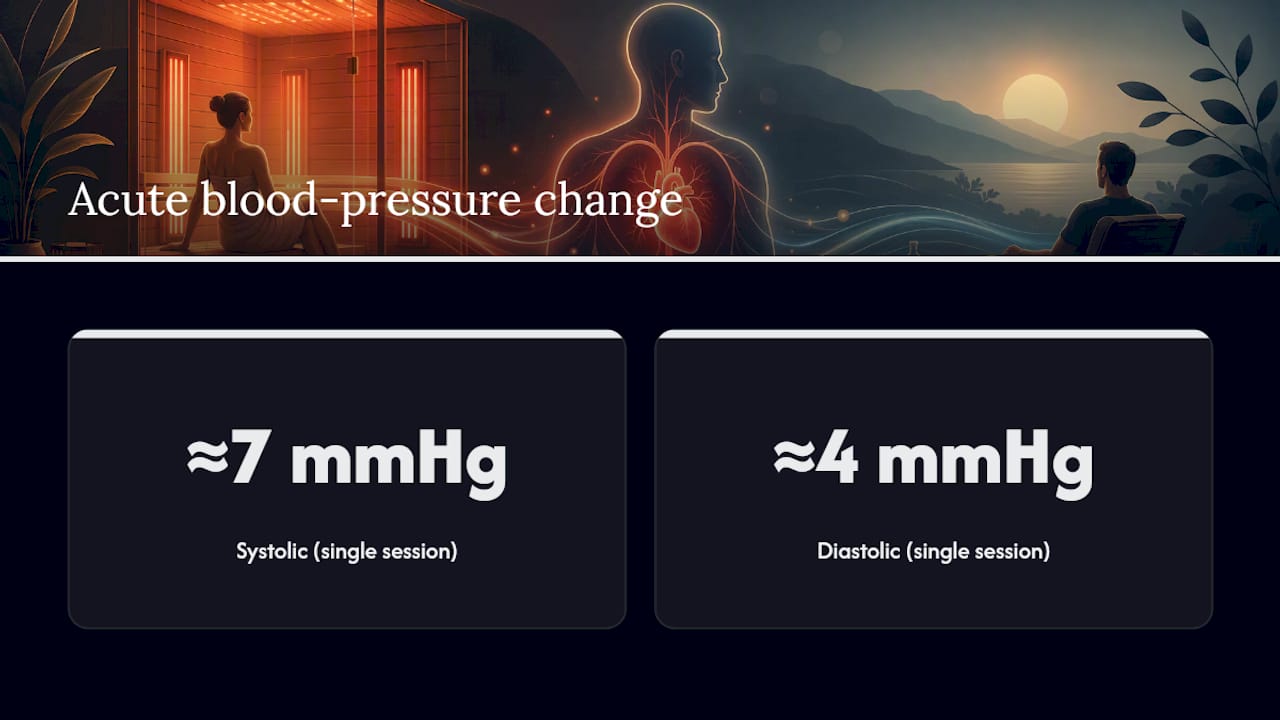
- Infrared saunas provide modest but real cardiovascular benefits, such as blood pressure reductions of around 7 mmHg systolic and 4 mmHg diastolic after one session.
- Their effectiveness for muscle recovery and pain relief is supported, though results are less pronounced than traditional saunas, with benefits mainly seen in studies on inflammatory markers and soreness.
- The strongest evidence exists for cardiovascular effects in heart failure patients, with limited long-term data on longevity benefits compared to traditional sauna use.
- Overuse without proper hydration or monitoring can cause dehydration, low blood pressure, or dizziness, especially in pregnant women or those with heart conditions.
- The clinical evidence does not support infrared saunas for weight loss or detoxification, as effects like fat burning are minimal and unproven over the long term.
Table of Contents
- Infrared Sauna Benefits Start With How the Heat Actually Works
- What the Evidence Actually Supports, Category by Category
- How Strong Is the Research, Really?
- Getting the Most Out of a Session Without Overdoing It
- Who Should Be Careful With Infrared Saunas
- Who Actually Benefits Most From Using One
- A Buyer’s Note From Import Junkies
- Sources
Infrared Sauna Benefits Start With How the Heat Actually Works
Traditional saunas heat the air around you, which then heats your skin. Infrared saunas skip that step. They use infrared light, mostly in the far-infrared spectrum, to warm your body directly, the way sunlight warms your skin without warming the whole yard around you.
That mechanical difference changes the whole experience. Traditional saunas typically run at high temperatures, often around 170°F to 200°F, while infrared cabins run at lower temperatures, generally cooler than traditional saunas, yet you still sweat heavily because the heat is working on your tissue instead of the room. That lower air temperature is why infrared sessions tend to run longer than traditional sessions, and why people who find dry heat unbearable often tolerate infrared just fine.
What the Evidence Actually Supports, Category by Category
The health benefits of infrared saunas break down unevenly. Some outcomes have solid trial data behind them. Others are riding on borrowed credibility from traditional sauna research or from sweat alone.
Cardiovascular effects. This is where infrared has its strongest clinical footing. Comparative studies report acute systolic blood pressure reductions of roughly 7 mmHg and diastolic drops near 4 mmHg after a single infrared session, smaller than the acute drops seen in some traditional sauna trials, but real. Separate trials on far-infrared protocols document improved endothelial function and exercise tolerance in cardiac and peripheral vascular patients.
Muscle recovery and pain relief. Reviews covering sauna-based interventions, including infrared subsets, found reductions in delayed-onset muscle soreness and creatine kinase, a blood marker of muscle damage. Infrared’s pain-score improvements on standard scales tend to run more modest than what traditional dry saunas produce, but the direction of the effect holds up across multiple studies.
Relaxation and sleep. This is the benefit most people notice first and can least quantify. Heat exposure lowers cortisol and shifts the nervous system toward a parasympathetic, rest-and-digest state, which is consistent with the sleep and mood improvements users commonly report. The trial data here is thinner than the cardiovascular research, mostly observational rather than randomized.
Skin and circulation. Infrared exposure increases peripheral blood flow and skin perfusion, but the evidence is genuinely modest, more physiologically plausible than clinically proven at scale.
Weight loss and detox claims. This is where you should be skeptical. Sweating removes trace amounts of certain metals, but the clinical significance of that is unclear, and there’s no strong evidence that infrared sessions produce sustained weight loss. Any calorie burn from an elevated heart rate during a session is real but small, nowhere near a substitute for exercise.
A randomized trial of chronic heart-failure patients (WAON-CHF) found far-infrared therapy improved cardiac index and reduced B-type natriuretic peptide, a key marker of heart strain, in a controlled clinical setting.
How Strong Is the Research, Really?
The strongest infrared sauna research comes from cardiac trials, not wellness studies. The WAON-CHF protocol is the standout: it’s randomized, it targets a specific, measurable clinical population, and it produced results that held up under scrutiny. That matters because heart-failure patients often can’t tolerate the heat stress of a traditional 190°F sauna, making infrared a genuinely useful alternative rather than just a gentler version of the same thing.
Compare that to the longevity data behind traditional Finnish saunas. Large cohort studies, tracking thousands of people over decades, link frequent traditional sauna use to lower cardiovascular and all-cause mortality. Nothing comparable exists for infrared. No large, long-duration cohort has tracked infrared users the same way, so any claim that infrared saunas extend your life is getting ahead of the data.
Most infrared-specific research shares the same weaknesses:
- Small sample sizes, often a few dozen to a few hundred participants
- Short follow-up windows, frequently weeks rather than years
- Mixed protocols that sometimes combine infrared with other interventions, muddying which effect caused which result
The practical read: the cardiac and pain-relief findings are credible enough to act on. The detox, weight-loss, and anti-aging claims you’ll see in marketing copy are running well ahead of what any controlled trial has actually shown.
Getting the Most Out of a Session Without Overdoing It
Infrared sauna benefits depend heavily on how you use the thing, not just whether you own one.
- Start short and build gradually. Begin with shorter sessions at lower cabin temperatures, then work up to longer durations as your tolerance improves.
- Match frequency to your goal. General wellness use tends to land around 3 to 4 sessions a week; recovery-focused use might follow a harder workout instead of a fixed schedule.
- Hydrate before and after. You lose fluid and electrolytes through sweat, so drink water and consider an electrolyte source, especially for longer sessions.
- Cool down deliberately. A short cold shower or a few minutes at room temperature afterward helps your body reset and can enhance the relaxation effect.
- Don’t sauna daily without paying attention to how you feel. Overuse without monitoring hydration and energy levels is how people end up lightheaded.
Pro Tip: Wear minimal, breathable clothing during your session. Infrared energy penetrates skin directly rather than warming air around you, so more exposed skin surface means more effective heat absorption.
Who Should Be Careful With Infrared Saunas
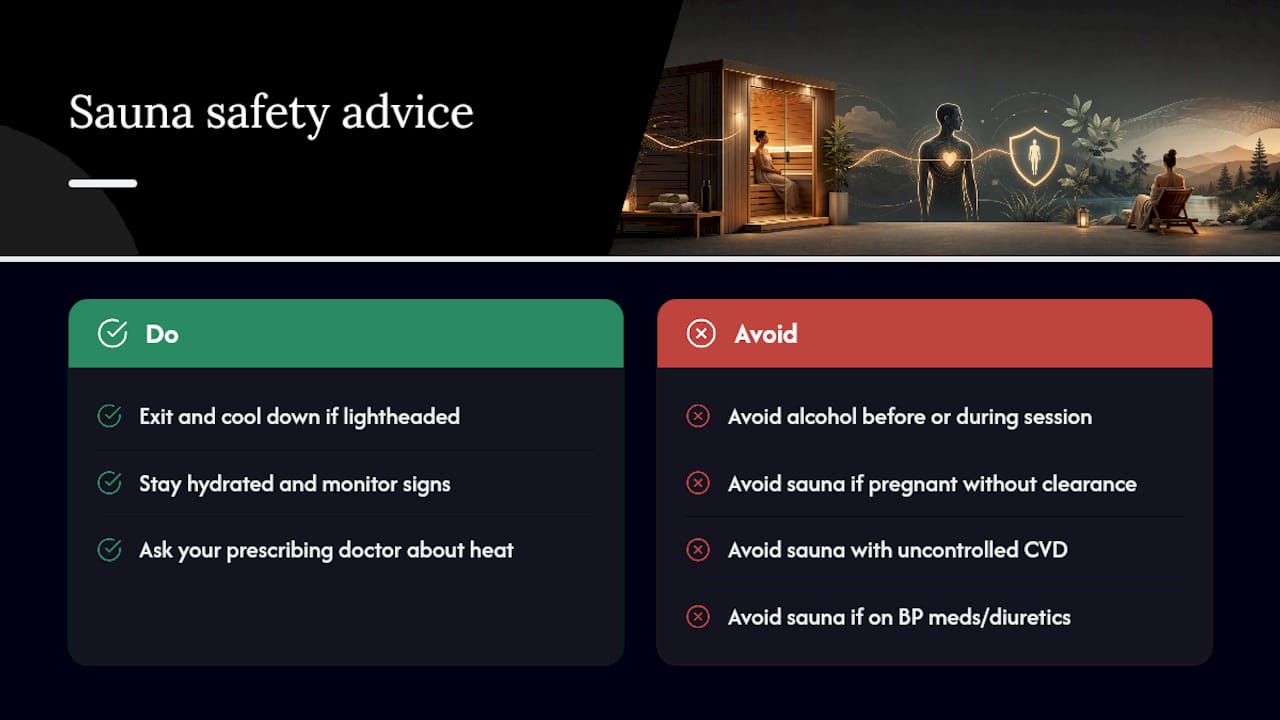
The most common risks are dehydration, low blood pressure, and dizziness, all manageable if you pay attention to your body. If you feel lightheaded, get out and cool down.
Certain groups need medical clearance first: pregnant people, anyone with uncontrolled cardiovascular disease, and people taking antihypertensives or diuretics, since those medications already lower blood pressure or fluid volume. Alcohol before or during a session compounds the dehydration risk and blunts your ability to notice warning signs. When in doubt, ask your prescribing doctor how your specific medication interacts with heat exposure.
Who Actually Benefits Most From Using One
Infrared saunas make the most sense for people who can’t tolerate high heat, anyone chasing muscle recovery or relaxation, and select clinical populations using them under medical guidance. Expect modest, real improvements, not a cure. Traditional saunas still have the stronger long-term mortality evidence. Try supervised sessions, track how you respond, and loop in your doctor if you have existing health concerns.
A Buyer’s Note From Import Junkies
Importjunkies sells infrared saunas because the clinical case, while not overhyped, is real enough to matter, especially for heat-sensitive users. If you’re shopping, our Home Sauna Buying Guide and Portable Infrared Sauna Review cover sizing and setup. Questions on installation or electrical safety? Our customer service team can help before you buy.
— Gary
This article is general information, not a substitute for advice from a qualified doctor. Consult a qualified healthcare professional about your own circumstances before acting on anything here.
Sources
- Far-infrared saunas for treatment of cardiovascular risk factors
- Hussain & Cohen 2018 systematic review (summary indexing sauna-related outcomes)
- Comparative studies and reviews on sauna cardiovascular responses
- Laukkanen cohort and related long-term sauna mortality research


