


 Location
 Login
Login
Expect to pay roughly $5,000 to $15,000 landed for an imported kei truck, with most buyers settling near $7,000 to $10,000 for a solid 4WD example. Dealer-ready inventory across the country typically runs between about $6,000 and $12,000, all fees included, with no import wait.
- Tight budget, willing to wait: import it yourself and land it closer to the low end.
- Want it running in your driveway next week: buy from a U.S. dealer and accept the convenience premium.
- Either way: call your state DMV before you commit. Title and road-use rules for kei trucks vary enough that the same truck can be street-legal in one state and off-road-only two states over.
Key Takeaways
Landed kei truck costs in the U.S. typically fall between $5,000 and $15,000, with dealer-ready trucks running $6,000 to $12,000 and state registration rules determining whether that price tag actually buys a street-legal vehicle.
| Point | Details |
|---|---|
| Know your real price band | Budget $5,000 to $15,000 landed for imports, or $6,000 to $12,000 for dealer-ready inventory. |
| Auction price isn’t final cost | Add ocean freight, 25% customs duty, broker fees, and domestic transport before comparing numbers. |
| Match configuration to use | 4WD, dump beds, and low mileage add real value only if they fit how you’ll actually use the truck. |
| Confirm state rules first | Titling and road-use rules vary by state, so check your DMV before you commit to a purchase. |
| Consider a no-import alternative | Import Junkies offers ready-to-use utility vehicles for buyers who want to skip import logistics altogether. |
Table of Contents
- Mini Truck Prices: Dealer-Ready vs. Imported-Landed Ranges
- What Actually Moves the Price on a Kei Truck
- How Much Does It Really Cost to Land a Kei Truck in the U.S.?
- Import Yourself, Use a Broker, or Buy From a Dealer?
- Check Your State’s Rules Before You Buy
- What Owning a Kei Truck Costs You Every Year
- Are Kei Trucks Getting More Expensive Over Time?
- New Mini Trucks vs. Used: Which Actually Makes Sense?
- Do Financing Options Change What You’ll Actually Pay?
- The Real Lesson in All This Pricing Data
- Sources
Mini Truck Prices: Dealer-Ready vs. Imported-Landed Ranges
The two numbers you’ll see thrown around, an auction price and a dealer sticker, describe completely different stages of ownership, and confusing them is how buyers end up $3,000 over budget.
- Dealer-ready inventory typically lists standard four-wheel-drive kei trucks in the $6,000 to $12,000 range, with specialty builds, low-mileage recent imports, or trucks fitted with dump beds pushing past that ceiling.
- Imported, self-landed trucks hit a sweet spot around $5,000 to $10,000 all in for many buyers once you add auction cost to landed fees, though low-mileage or modified trucks climb higher.
- The auction price alone is a trap. A truck that sells for $2,500 at a Japanese auction house can easily cost double that once it clears customs, and dealer prices swing regionally because shipping costs and state compliance work aren’t uniform coast to coast.
Treat any listing price as the opening number, not the answer, until you know what else is baked in.
What Actually Moves the Price on a Kei Truck
Model choice sets the baseline, but configuration and condition do the heavy lifting on final price.
Suzuki Carry, Daihatsu Hijet, Honda Acty, and Subaru Sambar are the models you’ll see most often in U.S. dealer inventory, and pricing gaps between them usually come down to supply in a given region rather than any one brand being objectively better.
Beyond the badge, a few features consistently move the number:
- 4WD adds real value for buyers who plan to use the truck off pavement or in snow.
- Dump beds and PTO attachments push prices up because they widen the truck’s use case for farm and property work.
- Jumbo cab and factory air conditioning matter more to daily drivers than collectors.
- Low mileage (relative to a kei truck’s typical lifespan) commands a real premium, though configuration should match your actual use case rather than chasing a spec sheet.
Condition is where deals go bad. Frame rust underneath the bed, seized suspension components, and signs of hard commercial use are the tells that predict expensive repairs down the road.
Pro Tip: When you’re scrolling listing photos, zoom in on the frame rails and under-bed area first. That’s where rust hides longest and costs the most to fix once it’s found.
How Much Does It Really Cost to Land a Kei Truck in the U.S.?
An auction win in Japan is just the opening bid on your total cost. Here’s what stacks on top of it before the truck ever touches U.S. pavement.
| Cost Component | Typical Range or Note |
|---|---|
| Auction/export fee | $1,000–$7,000 depending on grade and mileage |
| Japan inland transport | Moves the truck to the export port |
| Ocean freight (RORO) | Varies by port and carrier |
| U.S. customs duty | 25% on light trucks, the so-called “Chicken Tax” |
| Customs broker fee | Fixed or percentage-based, varies by broker |
| Port handling and domestic transport | Coast-to-coast delivery adds cost |
| State tax, title, and registration | Set by your state, not federal rules |
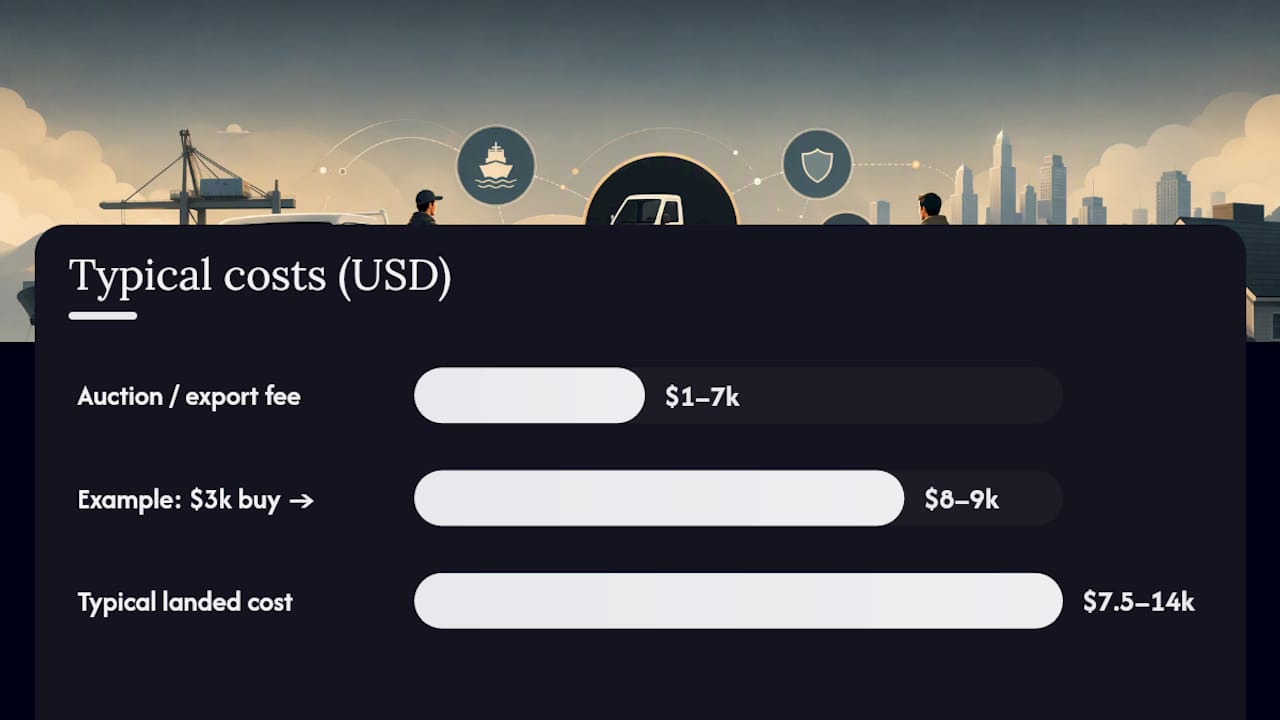
Auction prices can run as low as $1,000 to $7,000, but once you add ocean freight, that 25% customs duty, broker fees, and domestic transport, the math changes fast. A $3,000 auction win can land closer to $8,000 or $9,000 once every line item clears.
A full landed-cost breakdown for many buyers generally runs $7,500 to $14,000 for a solid used example, once vehicle price, shipping, duty, and fees are all counted. West coast buyers often pay less in freight than east coast buyers, since most kei truck shipments arrive through Pacific ports first.
Import Yourself, Use a Broker, or Buy From a Dealer?
Three paths get you to the same driveway, and each trades money for time differently.
- DIY import. You review the auction sheet, arrange the exporter, hire a customs broker, and handle port pickup yourself. Buyers who go this route often save $1,000 to $3,000 compared to dealer pricing, but you’re the one chasing paperwork and coordinating logistics across two countries and a shipping timeline that can stretch six to ten weeks.
- Importer or shipping broker. This is the middle path. You still pay more than pure DIY, but the broker handles auction bidding, freight booking, and customs clearance so you’re not learning international shipping on your first purchase.
- U.S. dealer. You pay the highest price of the three, but you get immediate pickup, a truck that’s already titled or ready to title, and someone local to call if something’s wrong. For buyers who value their time over squeezing out every dollar of savings, the dealer markup often makes sense.
Check Your State’s Rules Before You Buy
Titling and registration rules for kei trucks are set state by state, and some states restrict street use or add inspection requirements that others don’t touch at all. Don’t assume your neighbor’s out-of-state kei truck means yours will register the same way at home.
Before you commit to a purchase, run these checks:
- Confirm your state DMV’s specific rules on kei truck titling and road use.
- Pull the VIN and title history to rule out prior salvage or flood titles.
- Ask about emissions exemptions, since many states waive standard testing for kei trucks but not all.
- Check for speed-limit or highway-access restrictions tied to low-speed vehicle classifications.
- Call your insurer before you buy to confirm they’ll actually write a policy for it.
What Owning a Kei Truck Costs You Every Year
Sticker price is only half the budget conversation. The ongoing costs are where kei trucks separate themselves from full-size pickups, usually in your favor.
- Insurance: typical annual costs for kei trucks often land in the low hundreds to low thousands, depending heavily on your state and how the vehicle gets classified for registration.
- Maintenance: parts availability has improved as more kei trucks hit U.S. roads, though you’ll still lean on specialty importers for some components rather than a standard auto parts counter.
- Fuel: these trucks sip gas compared to full-size pickups, and moderate use rarely runs up a meaningful annual fuel bill.
Annual ownership costs for a kei truck typically undercut a comparable full-size pickup or UTV by a wide margin, which is a big part of why they’ve caught on with property owners and small operators who need utility, not a truck payment that eats their budget.
Why Import Junkies Knows This Market
Import Junkies has built its catalog around exactly the kind of buyer asking these price questions.
- We sell utility vehicles, ATVs, and specialty equipment directly to individual buyers and small operators, the same audience weighing a kei truck purchase.
- This article was written by Gary, drawing on current U.S. dealer and import pricing data.
- If you’re still deciding what to buy, our guide on what a mini truck actually is and how it’s used is a useful next stop, and our state registration walkthrough covers the paperwork side in detail.
Are Kei Trucks Getting More Expensive Over Time?
Prices have trended upward as demand from U.S. buyers has grown faster than the supply of clean, low-mileage trucks coming out of Japanese auctions. A decade ago, kei trucks were a niche import mostly known to farmers and off-road hobbyists. Now they’re competing with UTVs and compact pickups for the same buyer, and that competition has pushed prices up on both the dealer and import side.
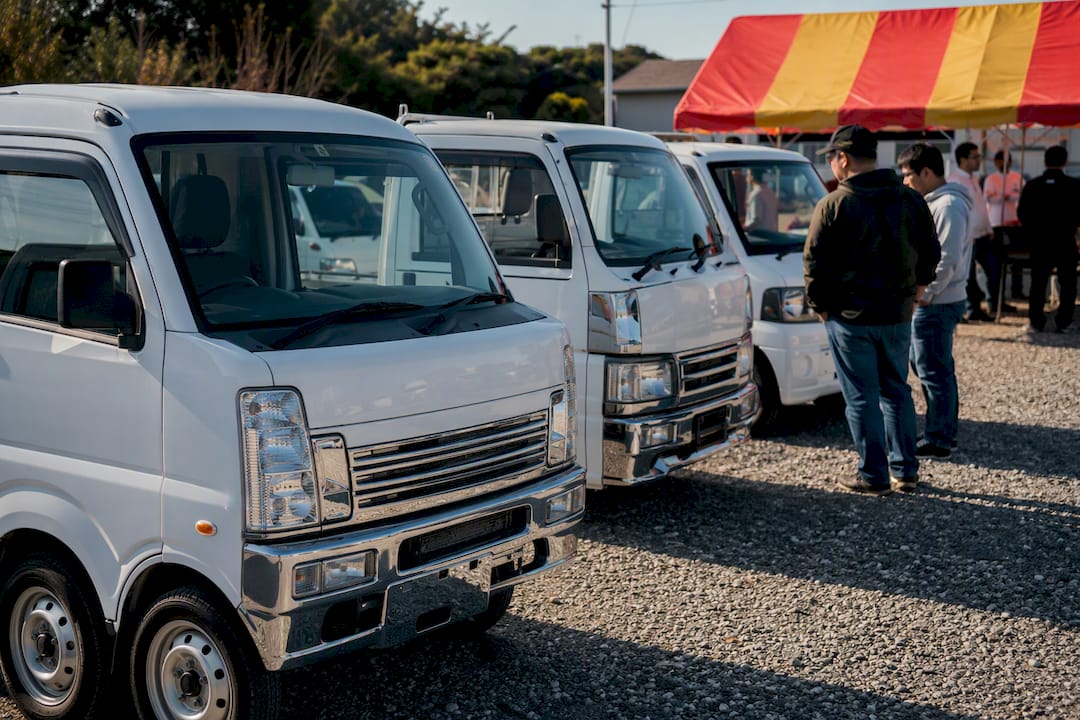
Depreciation works differently than it does on a typical American vehicle. A kei truck that’s already 15 to 20 years old when it clears the 25-year import exemption doesn’t lose value the way a new pickup does in its first five years. Most of the steep depreciation already happened in Japan, long before the truck ever crossed the Pacific. What you’re buying in the U.S. has often stabilized in value, and clean, low-mileage examples can hold their price for years rather than sliding every model year like a typical used car.
That stability cuts both ways for buyers. You won’t catch the truck at its cheapest by waiting for a model year to “age out,” since kei trucks don’t follow that curve. But you also won’t watch your investment evaporate the way it might with a conventional used truck. If anything, well-maintained kei trucks with desirable configurations, 4WD, dump beds, low mileage, have held or slightly increased in resale value as U.S. import volume has tightened supply on the best examples.
New Mini Trucks vs. Used: Which Actually Makes Sense?
There’s no real “new” market for kei trucks in the U.S. the way there is for a Ford Ranger or Toyota Tacoma. Japanese kei trucks only become eligible for U.S. import once they clear the 25-year exemption rule tied to federal vehicle safety standards, which means every kei truck you’ll find for sale here is, by definition, used.
What buyers actually compare is “recently imported and low-mileage” versus “older and well-worn.” A truck that’s just cleared the import window with under 40,000 miles will command a real premium over a truck that’s been sitting on a U.S. dealer lot for a few years racking up domestic mileage. The newer-to-import truck typically costs more upfront but needs less immediate maintenance investment.
The tradeoff comes down to your tolerance for wear versus your tolerance for waiting. A truck with higher mileage and some cosmetic wear can save you a few thousand dollars, but you’re inheriting whatever the previous owner didn’t fix. A fresher import costs more but gives you a longer runway before you’re budgeting for suspension work or engine attention.
Do Financing Options Change What You’ll Actually Pay?
Financing a kei truck is harder to arrange than financing a standard new or used car, and that gap changes the real cost of ownership more than most buyers expect. Many mainstream auto lenders won’t finance kei trucks at all because of their import status and lower resale comparables, which pushes buyers toward dealer in-house financing, personal loans, or paying cash.
Dealer financing, where it’s available, often carries a higher interest rate than what you’d get on a conventional used car loan, since lenders treat these trucks as a higher-risk category. That rate difference matters more on a kei truck than it would on a $30,000 pickup, because even a few points of extra interest on a $9,000 purchase adds up as a percentage of the total price.
Buyers who import themselves rarely have a financing option at all during the transaction, since auction houses and shippers typically expect payment upfront. That reality pushes DIY importers toward cash or a personal loan secured before the purchase even starts, rather than financing tied to the vehicle itself. If financing matters to your budget, a U.S. dealer purchase is usually the more realistic path, even with the higher sticker price factored in.
The Real Lesson in All This Pricing Data
The conventional advice you’ll find on kei truck pricing tends to fixate on the auction number, as if that’s the price you’re actually paying. It isn’t, and treating it that way is how buyers end up blindsided by a bill that’s nearly double what they expected. The auction price is closer to a deposit than a final cost.
What the numbers actually support is this: the smartest first move isn’t hunting for the cheapest auction listing. It’s deciding, honestly, whether you have the time and patience to manage an import yourself. If you don’t, stop pricing auctions and start pricing dealers, because the “savings” from DIY import evaporate fast once you count your own hours spent coordinating brokers and shippers.
The other underrated factor is state rules. Buyers spend weeks comparing $500 price differences between listings, then get blindsided by a state that won’t title the truck for street use at all. Price research means nothing if the truck can’t legally do what you bought it to do. Check your DMV rules before you fall in love with a listing.
— Gary
A Faster Path to a Utility Vehicle Without the Import Wait
If the landed-cost math and broker logistics above sound like more hassle than you want to take on, Import Junkies gives you a way to skip the import pipeline entirely. Rather than tracking auction sheets and customs paperwork across two countries, you’re buying a titled, ready-to-use utility vehicle directly, with pricing and specs listed upfront.
We carry ATVs, utility vehicles, and other work-ready equipment built for the same jobs buyers turn to kei trucks for, hauling, property work, and small commercial use, without the wait for a truck to clear a Pacific shipping route. That said, if you specifically need a kei-class mini truck’s compact footprint or cab configuration, the import or dealer routes covered above still make sense. But if you want something road-ready now, browse our current inventory and see what’s available for immediate purchase.
Sources
- How much does a Kei truck cost? (MotorTrend)
- How Much Does a Kei Truck Cost? (Carmanji)
- Kei truck: Models, cost, legality & buying guide (PlanetPosting)
Recommended
- How to get utility vehicles for less: a buyer’s guide – Saferwholesale || Import Junkies || Great Sports
- What Is a Mini Truck? Features, Uses, and Buying Tips – Saferwholesale || Import Junkies || Great Sports
- Best Motortrike.com Alternatives in the US for 2026 – Saferwholesale || Import Junkies || Great Sports
- Utility trucks vs. golf carts: which delivers more value? – Saferwholesale || Import Junkies || Great Sports


