


 Location
 Login
Login
For a traditional wet sauna or an outdoor unit, western red cedar is the safest bet thanks to its natural rot resistance and signature aroma. For infrared saunas or anyone sensitive to scent, hemlock, basswood, or aspen make more sense because they run nearly odorless. If you need serious dimensional stability outdoors, thermally modified wood earns its higher price tag.
TL;DR:
- Western red cedar provides superior rot resistance and antimicrobial benefits, making it ideal for outdoor and wet saunas, and lasts 10 to 20 years with proper maintenance.
- Hemlock is the most common odorless option for infrared saunas, offering a lower cost but requiring more ventilation to prevent mold and discoloration.
- Light, low-resin woods like basswood, aspen, and poplar are best suited for dry, indoor saunas and should be avoided in outdoor or high-moisture environments.
- Thermally modified woods like thermo-aspen and thermo-spruce offer enhanced dimensional stability and moisture resistance, suitable for premium outdoor sauna builds.
- Avoid knotty pine and other high-resin softwoods that can leak sap, splinter, or become hazardous under repeated heating cycles.
Table of Contents
- Why Wood Choice Matters for Sauna Heat and Moisture
- Western Red Cedar: The Go-To for Wet and Outdoor Saunas
- Hemlock: The Neutral-Scent Workhorse for Infrared Builds
- Basswood, Aspen, and Poplar for Sensitive Users
- Nordic Spruce, Alder, and Traditional European Choices
- Thermally Modified Wood and Eucalyptus for Premium Builds
- Woods to Avoid or Use With Caution
- Which Wood Fits Which Sauna Type?
- How to Choose Sauna Wood: A Practical Checklist
- Maintaining Sauna Wood for a Longer Lifespan
- Import Junkies Product Examples and Editorial Background
- An Honest Take on Sauna Wood Tradeoffs
- Ready to Compare Sauna Models Built With These Woods?
- Sources
- FAQ
Why Wood Choice Matters for Sauna Heat and Moisture
Sauna wood works harder than almost any other lumber in your house. A traditional sauna swings between room temperature and 150 to 195 degrees Fahrenheit, often with humidity levels that spike when water hits the rocks. That constant expansion and contraction stresses joints, warps flat panels, and eventually opens up cracks in species that can’t handle the cycling.
Resin and natural oils inside the wood determine a lot of what happens next. Cedar’s oils fend off mold and mildew, but they also release a strong scent when heated. That’s a feature for some sauna-goers and a problem for others, particularly people with respiratory sensitivities or fragrance allergies. Low-resin species like hemlock and basswood skip that tradeoff entirely, at the cost of some natural rot resistance.
Not every board in a sauna does the same job, either:
- Bench wood touches bare skin at the highest temperatures in the room, so it needs to stay splinter-free and comfortable even after years of use.
- Wall and ceiling paneling sees less direct contact but more moisture exposure, especially near the heater and door.
- Sourcing quality matters as much as species. Kiln-dried, clear-grade, sauna-rated lumber resists warping far better than construction-grade boards pulled from a home center rack.
Get the grade wrong and even the “right” species will disappoint you.
Western Red Cedar: The Go-To for Wet and Outdoor Saunas
Western red cedar has led sauna-wood recommendations for decades, and the reasoning holds up. The wood contains natural compounds called thujaplicins that give it rot resistance and antimicrobial properties most other softwoods simply lack. That matters most in a wet sauna, where steam and standing moisture would rot a less resistant species within a few seasons.
Cedar saunas built with well-maintained wood commonly last 10 to 20 years or longer, according to industry comparisons of sauna wood species, a real advantage for anyone building an outdoor unit that faces rain and freeze-thaw cycles year-round.
The aroma is where opinions split. Many people love the smell walking into a fresh cedar sauna. Others find it overwhelming, especially in an enclosed infrared cabin where airflow is limited. If you’re not sure how you’ll react, spend twenty minutes in a cedar sauna at a gym or spa before committing to a full build. That’s a cheap way to avoid an expensive regret.
Cedar’s low density also means the wood heats up slower and holds less residual heat against skin than denser hardwoods, which makes benches genuinely comfortable to sit on bare. Expect to pay a premium over hemlock or basswood, generally justified for wet, outdoor, or high-humidity builds where rot resistance actually gets used. For indoor infrared cabins with tight ventilation, that premium buys you less benefit since decay risk is already lower.
Care is straightforward: wipe down benches after each session, let the room air out fully between uses, and avoid harsh cleaners that strip the natural oils doing the protective work.
Hemlock: The Neutral-Scent Workhorse for Infrared Builds
Hemlock, sometimes labeled Canadian hemlock or Tsuga species, has become the default wood for infrared saunas and budget wet-sauna kits for one simple reason: it’s nearly odorless. That makes it the practical choice for shared gyms, spas, or households with a member who reacts badly to strong wood scents.
Cost is the other draw. Hemlock typically undercuts cedar on price while still delivering a smooth, splinter-resistant surface. That combination explains why so many entry-level and mid-range sauna kits, including hemlock-built infrared models like the 3-4 person Canadian hemlock infrared cabin, lean on this species.
The tradeoff shows up in moisture management. Hemlock lacks cedar’s natural antimicrobial oils, so it depends more heavily on airflow and drying between sessions:
- Ventilation matters more here than with cedar because hemlock has no built-in defense against mold or discoloration in damp conditions.
- Wet saunas need consistent drying routines to keep hemlock paneling from staining over time.
- Infrared saunas are naturally drier, which plays to hemlock’s strengths since there’s less standing moisture to manage.
- Bench surfaces stay comfortable thanks to hemlock’s fine, even grain, though it’s slightly denser than cedar and can feel a touch warmer underfoot.
Pick hemlock when odor neutrality and price matter more than maximum rot resistance, particularly for infrared use where the drier environment plays to its strengths.
Basswood, Aspen, and Poplar for Sensitive Users
When even hemlock’s faint scent is too much, basswood, aspen, and poplar sit at the bottom of the aroma scale among common sauna woods. These species carry very little resin or extractive content, which is exactly why allergy-prone users and infrared sauna owners gravitate toward them.
Infrared cabins run at lower temperatures, typically 120 to 150 degrees Fahrenheit, in drier conditions than a traditional steam-heavy wet sauna. That’s a good match for these lighter species, since the wood heats and cools quickly without the moisture cycling that would otherwise expose their weaker rot resistance.
- Aspen is prized in Scandinavian sauna traditions for its light color and quick heat response.
- Basswood offers a similarly clean look with a slightly softer surface underfoot.
- Poplar tends to be the most budget-friendly of the three but shows wear faster in heavy-use settings.
None of these woods should go anywhere near a wet sauna’s splash zone or an outdoor build exposed to rain. They’re built for dry, indoor, climate-controlled environments, and expect to replace boards sooner than you would with cedar if you push them outside that role.
Nordic Spruce, Alder, and Traditional European Choices
Finnish sauna culture built its reputation on spruce long before cedar entered the conversation in North America. Nordic spruce brings a pale, tight grain and a subtle, clean scent that many traditionalists consider the authentic sauna smell, distinct from cedar’s heavier aroma.
Alder shows up frequently on benches in European-style builds because it stays cool enough to sit on comfortably while resisting splintering better than some softer species. It also takes stain and finishing well if you want a more uniform look across a room.
For most North American buyers, spruce and alder are worth seeking out only if you’re specifically chasing an authentic Finnish-style build or already have a supplier relationship with European lumber. Otherwise, cedar and hemlock cover the same practical ground with easier sourcing.
Thermally Modified Wood and Eucalyptus for Premium Builds
Thermal modification changes wood at a structural level by heating it under controlled, low-oxygen conditions, which improves dimensional stability and moisture resistance compared to the same species untreated. The process essentially locks in stability that untreated lumber can’t match through cycling heat and humidity.
Thermo-aspen and thermo-spruce are the two versions showing up most often in premium sauna builds, and they solve a real problem: getting cedar-like resistance to warping from species that don’t naturally have it.
- Thermo-aspen works well for exposed outdoor cladding where budget cedar alternatives are limited.
- Thermo-spruce brings improved outdoor performance to a species that would otherwise struggle with sustained moisture exposure.
- Eucalyptus is notably dense with some antimicrobial qualities, but it can release a stronger, more medicinal aroma than cedar when heated, so test it the same way you’d test cedar before committing.
Expect a price premium of roughly 30 to 60 percent over untreated versions of the same species, which only pays off if you actually need that outdoor durability or heavy-use stability.
Pro Tip: If you’re building an outdoor sauna in a climate with real freeze-thaw cycles, thermo-treated wood often outperforms untreated cedar on stability even though cedar wins on natural rot resistance. Ask your supplier for both options before you decide.
Woods to Avoid or Use With Caution
Knotty pine and similar high-resin softwoods show up in cheap sauna kits, and they cause problems fast. The knots heat unevenly and can pop or leak sap as the wood expands, leaving sticky patches exactly where bare skin makes contact.
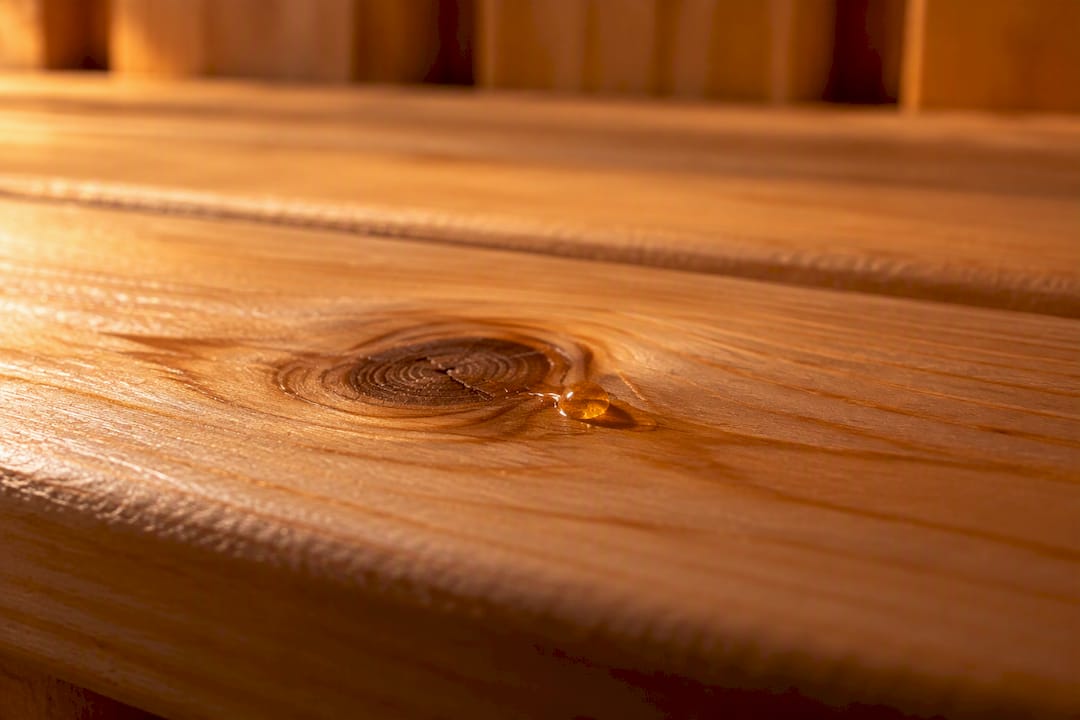
Splinters are the other issue. Pine’s grain doesn’t hold up the same way cedar or hemlock does under repeated heat cycling, and rough spots that develop over time turn benches into a hazard rather than a comfort feature.
If pine is all that’s available or budget forces the issue, restrict it to exterior cladding away from benches and seating, and insist on clear, knot-free grades rather than construction-grade lumber. That won’t make pine a great sauna wood, but it limits the damage.
Which Wood Fits Which Sauna Type?
Matching wood to sauna type is the fastest way to cut through the options. Comparative scorecards consistently favor cedar for outdoor durability and moisture resistance, while hemlock wins on cost, and that pattern holds across most builds worth considering.
- Traditional wet sauna: Cedar for both benches and walls; the natural rot resistance earns its cost here.
- Outdoor sauna: Cedar for exposed surfaces, or thermo-treated aspen or spruce if budget is tighter and stability matters more than aroma.
- Infrared sauna: Hemlock or basswood for walls and benches, since low resin content and quick heat response suit the drier, lower-temperature environment.
- Scent-sensitive household: Basswood or aspen throughout, even if it means sacrificing some of cedar’s natural durability.
- Shared gym or spa sauna: Hemlock benches for cost control, paired with cedar walls if the budget allows a hybrid build.
A quick example: a family building a backyard wet sauna used twice a week in a rainy climate should lean cedar top to bottom. A single owner adding a compact infrared cabin to a spare bedroom, by contrast, gets more practical value from hemlock or basswood, since moisture resistance matters far less indoors.
How to Choose Sauna Wood: A Practical Checklist
Buying sauna wood, or a prebuilt sauna, gets a lot easier once you answer a handful of questions upfront. Work through them in order and the right species usually becomes obvious.
- What type of sauna are you building? Wet, infrared, and outdoor units each favor different species, as covered above.
- How often will it get used? Heavy daily use wears bench wood faster than occasional weekend sessions, favoring cedar or hemlock over softer species.
- Is it indoor or outdoor? Outdoor builds need either cedar’s natural resistance or a thermally modified alternative.
- Does anyone in the household have scent sensitivities? If yes, rule out cedar and eucalyptus before you look at anything else.
- What’s the actual budget? Cedar costs more upfront but can save money over a decade of avoided repairs in wet or outdoor conditions.
- What does the supplier actually guarantee? Ask about species origin, kiln-dried status, grade and knot specification, and return policy before you buy.
Ask suppliers directly whether boards are sauna-grade and kiln-dried, not just “cedar” or “hemlock” with no further detail. Grade matters as much as species, and a vague answer is a red flag.
Pro Tip: Keep a few matching spare boards from your original build, especially for bench wood, so a future repair doesn’t leave you hunting for a color and grain match years later.
Maintaining Sauna Wood for a Longer Lifespan
Ventilation after every session is the single habit that extends sauna wood life the most, since poor airflow increases the risk of mold and discoloration, particularly in species like hemlock that lack cedar’s natural oils. Leave the door open and let the room fully dry before closing it up again.
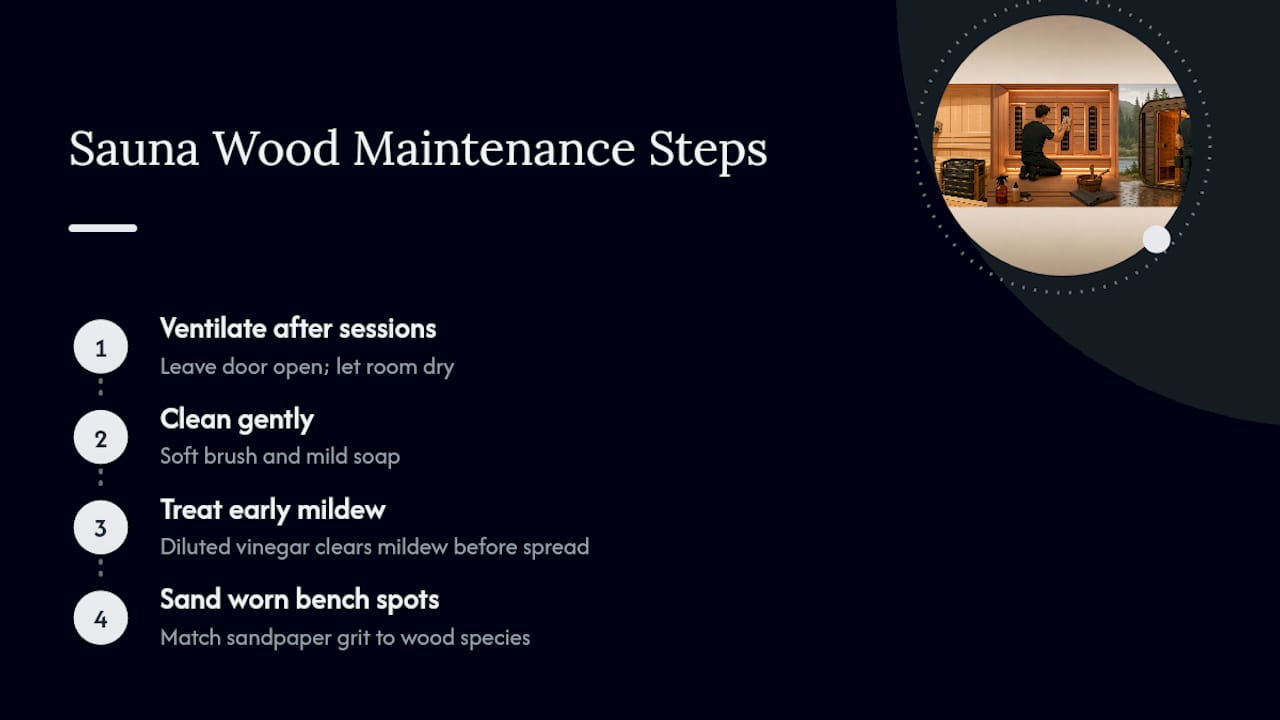
Skip harsh chemical cleaners on benches. A soft brush and mild soap handle most buildup without stripping the wood’s natural protective oils. If you spot early mildew, a diluted vinegar solution usually clears it before it spreads into the grain.
Sanding worn bench spots restores a smooth surface, but match the grit to the species. Hardwoods like eucalyptus need finer sandpaper than softer cedar or basswood to avoid gouging.
Lifespan varies widely by species and care. Cedar routinely reaches 10 to 20 years with regular maintenance, while untreated hemlock or basswood often needs bench replacement sooner, particularly in humid climates or high-use commercial settings.
Import Junkies Product Examples and Editorial Background
Reading about wood species only gets you so far, so it helps to see the material specs on an actual sauna listing. Import Junkies stocks hemlock-built units, including an outdoor hemlock barrel sauna built for wet and dry use, and a corner infrared cabin in Canadian hemlock sized for three to four people. Both list construction details you can compare directly against the species profiles above.
Editorial coverage of sauna models and materials on the Import Junkies blog, including this guide, comes from Gary, whose related writing digs into sauna sizing and installation alongside wood selection. If you’re cross-shopping models, start with the best home sauna options roundup, then check individual product pages for the specific species, dimensions, and heater specs before you commit to a purchase.
An Honest Take on Sauna Wood Tradeoffs
Most buyers overthink this decision by treating it as a search for the objectively best species, when it’s really a question of matching wood to how you’ll actually use the sauna. Cedar deserves its reputation, but paying its premium for a bone-dry infrared cabin is money spent on rot resistance you’ll rarely test. If cedar’s scent is a question mark for you or anyone in your household, sit in one before you buy rather than after. And whatever species you choose, spend the extra effort matching bench wood to your heaviest-contact areas. That’s where wear shows up first, and where a cheap substitution costs you the most.
— Gary
Ready to Compare Sauna Models Built With These Woods?
Reading species profiles is useful, but at some point you need to see actual dimensions, heater specs, and price tags side by side. You can compare listed specs on saunas sold direct to the public, avoiding guesses from showroom brochures.

The main sauna and steam shower catalog is the fastest starting point if you want to browse wet, infrared, and outdoor models side by side, including the hemlock builds referenced throughout this guide. If you already know you want a hemlock infrared cabin sized for three to four people, the Canadian hemlock corner model is worth a direct look at its specs and price. Have a question about how a specific wood species will hold up in your climate or usage pattern? A customer service team can walk through build-specific details before you buy, so you’re not left guessing after the order ships.
Sources
- Sauna wood types compared: hemlock vs cedar vs basswood | Sweat Decks
- An Expert Guide to the Best Wood for Saunas | Garage Gym Reviews
- Cedar vs. Hemlock Sauna Wood: Which Is Better for Outdoor Saunas? | Sun Home Saunas
- Best Sauna Wood Types: A Complete Guide to Choosing the Right Wood | Haven of Heat
FAQ
What Type of Wood Is Best for a Sauna?
Western red cedar is the best overall choice for traditional wet and outdoor saunas because of its natural rot resistance and antimicrobial oils. For infrared saunas or scent-sensitive users, hemlock or basswood is usually the better fit since both run nearly odorless.
What Is the 200 Rule for Saunas?
This isn’t a standard wood-grading or construction rule within sauna building; definitions of a “200 rule” vary by source and none of them tie specifically to wood selection. If you’ve seen it referenced for temperature or session timing, check with the specific sauna manufacturer since usage guidelines differ by model and heater type.
Can You Use Any Wood in a Sauna?
No. High-resin softwoods like knotty pine cause sap leaks, sticky surfaces, and splinters at sauna temperatures, and pressure-treated lumber releases chemicals that make it unsafe for heated enclosed spaces. Stick to sauna-rated species like cedar, hemlock, basswood, or thermally modified wood instead.
Which Type of Wood Is Better for a Sauna, Hemlock or Aspen?
Both are low-aroma, budget-friendly choices, but they suit slightly different needs. Hemlock offers a bit more density and durability for benches, while aspen heats and cools quickly, making it a strong fit for infrared cabins where fast, even heat response matters most.


