


 Location
 Login
Login
Most consumer scooters typically reach speeds between 15 and 25 mph, with performance electric models and 150cc gas scooters capable of 30 to over 60 mph in GPS-tested runs. Extreme performance builds have surpassed speeds near 90 mph under controlled conditions, but such speeds are uncommon for everyday riding. Local speed caps, battery charge, and rider weight all pull real-world speed below the spec sheet, which is exactly why speed-tested figures matter more than marketing claims.
TL;DR:
- Most consumer scooters in the 20 to 25 mph range are powered by 350 to 800 watt motors with larger lithium batteries, suitable for everyday commuting.
- GPS-tested speeds usually fall within 2 to 5 mph of manufacturer claims when test conditions are controlled and disclosed, but real-world speeds are typically lower due to rider weight, terrain, and battery charge.
- Extreme performance electric scooters and high-displacement gas models can surpass 60 mph, but these are specialized builds not intended for general street use or casual riders.
- Real-world factors such as rider weight, terrain, wind, tire condition, and firmware limits significantly reduce achievable top speeds compared to spec sheet ratings.
- Prioritizing cruising speed, safety features, and legal speed caps is more practical for daily use than focusing solely on top speed numbers.
Table of Contents
- Scooter Top Speed by Class: Kids to Extreme Performance
- Why GPS-Tested Speeds Rarely Match the Spec Sheet
- What Actually Changes Your Top Speed on the Road
- How Fast Do 50cc and 150cc Gas Scooters Go?
- Legal Speed Caps and Safe Cruising Speeds
- How to Match Top Speed to Your Actual Use Case
- Why Trust This Speed Data
- How Top Speed Affects Battery Life and Range
- Does Scooter Design Affect How Fast It Can Go?
- Electric vs. Gas Scooters: Which Actually Goes Faster?
- Does Maintenance Really Change Your Top Speed?
- Speed Numbers Matter Less Than People Think
- Find a Scooter Matched to Your Speed and Use Case
- Sources
- FAQ
Scooter Top Speed by Class: Kids to Extreme Performance
Scooter top speed breaks into five rough bands, and knowing which one you’re shopping in saves you from either overpaying for power you’ll never use or underbuying for a commute that needs more punch.
Kids’ scooters typically cap between 5 and 10 mph, governed by small 100 to 250 watt motors and battery packs sized for short rides around a driveway or park. Entry-level adult electric scooters usually run 15 to 18 mph off a 250 to 350 watt motor, built for short errands rather than daily transportation. Commuter-class scooters step up to 20 to 25 mph, powered by 350 to 800 watt motors with larger lithium packs that support real range at that pace, and this is the tier where most consumer electric scooters cluster according to market data.
Performance scooters push into 30 to 50+ mph territory, running dual motors in the 1,000 to 2,000 watt range with higher voltage battery systems built for sustained speed rather than just peak bursts. Extreme and hyper models are a different animal entirely: some GPS-tested units have topped 60 to 90+ mph using motorcycle-grade components, off-road tires, and hydraulic braking. Weight and price climb right alongside the speed in every tier.
Here’s roughly what you’ll find shopping each band:
- Kids/entry-level (5 to 18 mph): lightweight folding frames, single small motor, budget lithium packs, $150 to $400 range
- Commuter (20 to 25 mph): mid-size folding or step-through frames, 8 to 10 inch pneumatic tires, $500 to $1,200 range
- Performance (30 to 50 mph): dual motors, off-road or street-performance tires, hydraulic disc brakes, $1,200 to $3,000+ range
- Extreme (55 to 90+ mph): motorcycle-scale components, seated or standing hybrid frames, specialized testing required before street use
Why GPS-Tested Speeds Rarely Match the Spec Sheet
A scooter rated for 30 mph on paper often runs closer to 26 to 28 mph in an independent test, and that gap isn’t a defect. It’s physics meeting real conditions. Manufacturer numbers usually come from a lightweight test rider, a fully charged battery, and flat pavement, none of which describes your actual commute.
Four variables drive most of the difference between claimed and measured speed:
- Rider and cargo weight above the manufacturer’s test baseline
- Any incline, even a gentle 3 to 5 percent grade
- Battery state of charge, since voltage sags as the pack drains
- Firmware speed limiters that cap output below the motor’s mechanical ceiling
Independent GPS testing controls for these variables by running scooters at a consistent rider weight, full charge, and flat surface, which is why tested top speeds typically land within a few mph of manufacturer claims when the methodology is tight. Look for test reports that disclose rider weight, surface type, and charge level. If a review just repeats the box claim, it’s marketing, not measurement.
Statistic Callout: GPS-verified testing generally shows a tighter gap for top speed than for range claims, often within 2 to 5 mph of the advertised number when test conditions are controlled and disclosed.
What Actually Changes Your Top Speed on the Road
The number on the listing page is a ceiling, not a promise. What you actually hit depends on a handful of real-world factors you can check before you buy.
- Rider weight and cargo. A 220 pound rider will lose several mph compared to a 160 pound test rider on the same scooter, and a backpack or cargo rack adds more drag on the motor.
- Battery charge and health. Voltage sag on a partially drained pack lowers peak output, and an aging battery with reduced capacity struggles to sustain top speed even when freshly charged, since battery sag alone can shave several mph off a scooter’s ceiling.
- Terrain, wind, and tire condition. Headwinds, hills, and underinflated or worn tires all rob speed, sometimes more than the motor spec would suggest.
- Firmware and gear settings. Many scooters ship in a restricted “eco” or “street legal” mode, with a separate performance mode unlocking several additional mph.
- Motor wattage and voltage. Higher voltage battery systems paired with higher wattage motors generally produce a higher realistic top speed, since voltage largely determines how fast the motor can spin and wattage determines how much load it can push through.
Pro Tip: Ask any seller for the tire pressure and battery charge level used during their advertised top-speed test. If they can’t answer, treat the number as a ceiling you’ll rarely reach.
How Fast Do 50cc and 150cc Gas Scooters Go?
Gas scooters follow a more predictable curve than electric models, because displacement and factory restrictions set firm limits. A 50cc scooter in stock form is built to stay under moped classification, and that legal boundary shapes its entire speed profile.
- 50cc scooters: factory-restricted units commonly top out near 28 to 30 mph, while derestricted versions can reach 45 to 50 mph, though removing the restrictor often bumps the vehicle out of moped classification and into motorcycle licensing requirements
- 125cc to 150cc scooters: typically run 55 to 65 mph, putting them within range of small motorcycles and usually requiring a motorcycle endorsement or specific license class depending on your state
- Classification matters more than the number: a scooter that crosses from moped to motorcycle status can trigger registration, insurance, and helmet law changes even if the speed difference feels small
Check your state’s exact moped versus motorcycle cutoff before buying, since the line isn’t identical everywhere, and our street-legal scooter guide breaks down the classification differences in more detail.
Legal Speed Caps and Safe Cruising Speeds
Your scooter’s ceiling and your legal cruising speed are two different numbers, and confusing them is how riders end up with a ticket or a crash. Many U.S. municipalities set operational caps for electric scooters, commonly in the 15 to 20 mph range on public roads and bike lanes, regardless of what the scooter can technically do.
For daily riding, aim for a cruising speed rather than a top speed. A comfortable, controllable pace generally sits at 60 to 75 percent of a scooter’s rated maximum, which also happens to be the range where efficiency and battery life hold up best. That means a scooter rated at 25 mph is most livable in the 15 to 19 mph window for regular commuting.
Before you ride at anything close to top speed, run this checklist:
- Confirm your city’s or state’s posted speed cap for e-scooters or mopeds
- Wear a helmet rated to DOT or equivalent standard, not a bike-only shell for higher-speed rides
- Inspect brake response and tire tread before every high-speed session
- Check suspension and steering play, since wear here gets dangerous fast above 20 mph
Pro Tip: If you’re shopping for a commuter scooter, our scooter safety guide covers the gear and pre-ride checks that matter most once you’re actually riding near that top-speed number.
How to Match Top Speed to Your Actual Use Case
Buying for top speed alone is how riders end up with a scooter that’s either overkill or underpowered for the life they actually lead. Work through these questions before you commit to a model.
- How far is your commute, and what’s the terrain? A flat 2 mile commute needs far less motor than a hilly 8 mile route with stop-and-go traffic.
- What speed do you actually need to sustain, not just hit once? A 20 mph cruising speed covers most urban commuting; anything faster is really about acceleration and hill climbing, not top-end bragging rights.
- What does your local law allow? There’s no point buying a 45 mph scooter if your city caps street use at 20 mph.
- What’s your riding experience level? High-speed scooters demand more braking skill and reaction time than a first-time rider typically has.
- What questions should you ask the seller? Request GPS test logs if available, ask what conditions the demo ride used, and confirm the battery warranty terms in writing.
Weigh the trade-offs honestly: a higher top speed usually means more weight, shorter range at that speed, more maintenance on brakes and tires, and sometimes higher insurance costs if it crosses into moped or motorcycle territory. Our step-by-step scooter comparison guide walks through how to weigh these trade-offs against your budget.
Why Trust This Speed Data
This breakdown draws on GPS-verified test reports and manufacturer specifications across electric and gas scooter categories, cross-checked against municipal speed regulations. Importjunkies also publishes an electric scooter buying guide with spec comparisons, and our team can pull additional test details on request for any model in the catalog.
How Top Speed Affects Battery Life and Range
Pushing a scooter to its top speed drains the battery faster than cruising at a moderate pace, and the relationship isn’t linear. Wind resistance increases with the square of speed, so going from 15 to 25 mph doesn’t just add a little more drain, it can nearly double the power draw needed to maintain that pace.
That’s why a scooter rated for 20 miles of range at a 25 mph max often delivers closer to 30 or 35 miles if you cruise at 15 to 18 mph instead. The motor works less per mile, the battery discharges more evenly, and you avoid the voltage sag that comes with sustained high-load riding. Riders who consistently run their scooter near its top speed also tend to see faster long-term battery degradation, since heat buildup under heavy load accelerates wear on lithium cells.
If range matters more to you than raw speed, look for scooters with a wide gap between rated top speed and recommended cruising speed. That gap usually signals a motor and battery pairing built for endurance rather than sprint performance, which matters more for daily commuting than a number you’ll rarely use.
Does Scooter Design Affect How Fast It Can Go?
Motor wattage sets the ceiling, but design decides how much of that ceiling you actually reach. Frame geometry, weight distribution, and aerodynamics all shape real-world top speed, sometimes by several mph on otherwise identical drivetrains.
A low, seated performance scooter cuts wind resistance far more effectively than an upright standing model, which is part of why extreme speed builds favor a motorcycle-style seated stance over the classic standing kick-scooter shape. Wider, more upright handlebars catch more wind at speed, while a narrower, more aggressive riding position lets a rider tuck down and reduce drag. Wheel size matters too: larger wheels roll over rough pavement more efficiently and maintain momentum better, while smaller wheels accelerate quickly but bleed speed faster on imperfect surfaces.
Total weight distribution affects stability at speed as much as raw acceleration. A scooter with the battery mounted low and centered tends to hold its line better above 25 mph than one with weight concentrated near the handlebars. None of this changes the motor’s mechanical limit, but it changes how much of that limit you can safely and efficiently use on a real road.
Electric vs. Gas Scooters: Which Actually Goes Faster?
At the entry and commuter level, electric wins on convenience but gas often wins on raw top-end. A typical electric commuter scooter tops out around 20 to 25 mph, while a stock 50cc gas scooter reaches a similar 28 to 30 mph, giving gas a modest edge even in its most restricted form.
The gap widens further up the scale. A 125cc to 150cc gas scooter routinely hits 55 to 65 mph, a speed band that electric scooters only reach in specialized extreme or hyper models built with motorcycle-grade components and price tags to match. For most buyers, that means gas scooters deliver higher top speed per dollar spent, while electric scooters deliver lower running costs, less maintenance, and a much simpler ownership experience.
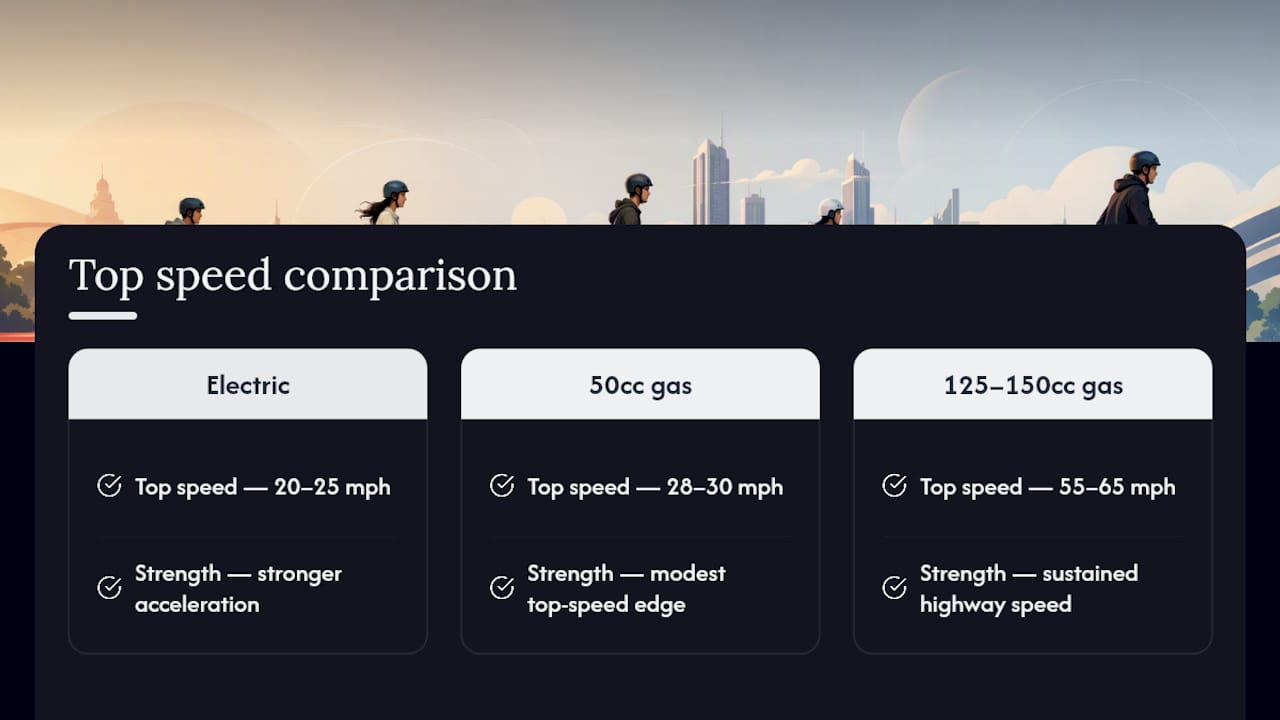
Acceleration tells a different story. Electric motors deliver full torque instantly, so even a modest electric scooter often feels faster off the line than a comparable small-displacement gas scooter, even when its top speed is lower. If your priority is quick starts through city traffic, electric has the edge. If your priority is sustained highway-adjacent speed, gas scooters in the 150cc class still lead the pack.
Does Maintenance Really Change Your Top Speed?
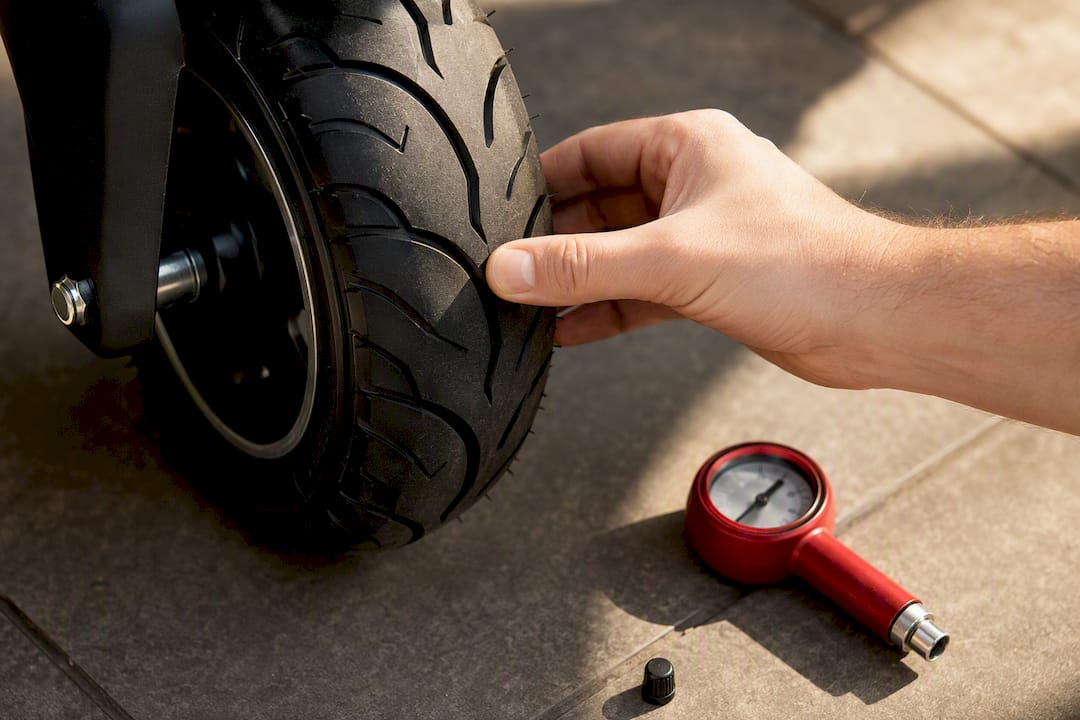
A neglected scooter loses top speed long before the motor itself fails. Tire condition is the single biggest maintenance factor: underinflated tires increase rolling resistance and can cost a rider several mph, while worn tread reduces the traction needed to actually use the power the motor is producing.
Chain or belt tension on gas scooters, and drivetrain cleanliness on electric models, also play a role. A gas scooter running a stretched or poorly lubricated chain loses power transfer between the engine and rear wheel, quietly capping top speed well below its rated potential. Electric scooters suffer a similar effect when bearings or bushings wear down, adding friction the motor has to fight against.
Battery maintenance matters just as much for electric riders. A pack that’s rarely fully charged, frequently deep-discharged, or exposed to extreme heat loses capacity over time, and that capacity loss shows up first as reduced top speed under load, before it shows up as reduced range. Brake drag from a poorly adjusted caliper or improperly seated disc is a less obvious culprit, but it can rob several mph by adding constant resistance the motor never overcomes.
Basic upkeep, correct tire pressure, clean drivetrain, properly adjusted brakes, and a battery kept in its healthy charge range, usually recovers most of the top speed a neglected scooter seems to have lost.
Speed Numbers Matter Less Than People Think
The scooter industry sells top speed like it’s the whole story, and that’s where most buyers get misled. A 65 mph rating on a box means almost nothing if your city caps riding at 20 mph or your commute is three miles of stop-and-go traffic. The number that actually predicts satisfaction is cruising speed paired with range at that pace, not the peak figure a scooter hits once on a closed course.
Where conventional advice falls short is treating top speed as a proxy for quality. It isn’t. A scooter with a modest 22 mph ceiling but excellent brakes, stable geometry, and a battery that holds its charge curve will serve most commuters better than a 40 mph model that feels twitchy at half that speed. Prioritize the cruising band, the braking system, and tire quality first. Let top speed be the tiebreaker, not the headline, when you’re comparing options side by side.
— Gary
Find a Scooter Matched to Your Speed and Use Case
There are online platforms that serve as alternatives to shopping scattered listings for scooter specs. Instead of piecing together claimed top speeds from a dozen different sellers, you get detailed specs, images, and pricing in one catalog, with wholesale pricing built in.

Every scooter listing spells out motor wattage, battery specs, and rated top speed so you can match the numbers in this guide to an actual model before you buy. If a listing doesn’t answer your question, customer service teams at retailers can often walk you through demo-ride options and battery warranty terms. Our electric scooter buying guide and commuter scooter picks are built to help you narrow the search by the speed band and use case that actually fits your commute.
Ready to compare models by spec instead of guesswork? Browse the full catalog at Importjunkies and filter by the top-speed range that matches your riding plans.
Sources
For test methodology and legal speed limits, see the speed-tested rankings from eRideHero and electric scooter speed and legal limits.
- How Fast Do Electric Scooters Go? Speed & Legal Limits
- How Fast Can an Electric Scooter Go? Real Speeds Explained
- The 13 Fastest Electric Scooters in 2026 (Speed Tested)
- Engineerskill
- How Fast Do Electric Scooters Go?
FAQ
What Scooter Goes 70 MPH?
Reaching speeds of 60 to 90+ mph on a scooter typically requires an extreme-class electric model with motorcycle-grade dual motors and high-voltage battery systems, or a derestricted gas scooter well beyond standard 50cc or 150cc factory limits. These builds fall outside typical consumer or commuter categories and usually require specialized testing and licensing.
Can a 150cc Scooter Go 70 MPH?
Most 150cc gas scooters top out around 55 to 65 mph in stock form. A lighter rider, favorable terrain, and a well-tuned engine could push some models faster, but speeds above this range are uncommon for stock 150cc scooters.
Can a Scooter Go 100 MPH?
Reaching 100 mph requires a purpose-built extreme performance electric scooter or a heavily modified gas model, neither of which represents typical consumer scooters. Standard commuter and performance scooters, even high-end electric models reaching 30 to 50+ mph, fall well short of that threshold.
Which Scooter Goes 90 MPH?
Only specialized hyper-performance electric scooters, built with motorcycle-scale motors and battery systems, have been GPS-tested above 90 mph, and these represent a small, high-cost niche rather than mainstream commuter or performance categories. If raw top speed near that range is your goal, expect a price and weight far beyond typical commuter scooters, and check retailers’ catalogs for current performance model availability and specs.
What Is a Good Top Speed for a Commuter Scooter?
A commuter scooter with a 20 to 25 mph top speed generally covers urban riding well, since comfortable cruising sits around 60 to 75 percent of max speed for most riders. That puts practical daily cruising closer to 15 to 19 mph, which also tends to preserve battery range and component life.


