


 Location
 Login
Login
TL;DR:
- Off-road vehicles are designed to operate on challenging terrain inaccessible to standard cars. They provide benefits such as improved traction, remote access, and utility capabilities, especially when used with proper training. Selecting the right vehicle class and mastering safe techniques maximize their recreational and practical advantages.
Off-road vehicles are defined as motorized vehicles engineered to operate on unpaved, uneven, or otherwise challenging terrain that standard passenger cars cannot handle. The benefits of off-road vehicles span two major categories: recreational access and practical utility. Whether you’re driving a UTV across a muddy trail, navigating a rocky hillside in a 4x4 truck, or hauling equipment on a farm with an ATV, these vehicles deliver capabilities that no standard vehicle can match. This guide breaks down exactly what those advantages are and how to get the most from them.
What are the core benefits of off-road vehicles?
Off-road vehicles provide access to remote terrain that is completely inaccessible to conventional cars and trucks. That single capability is the foundation of every other advantage they offer. High ground clearance keeps the undercarriage above rocks, roots, and ruts. Specialized suspension absorbs impacts that would damage a standard vehicle’s frame. Locking differentials and four-wheel drive systems distribute power evenly to all wheels, maintaining forward momentum on surfaces where a two-wheel drive vehicle would simply stop.
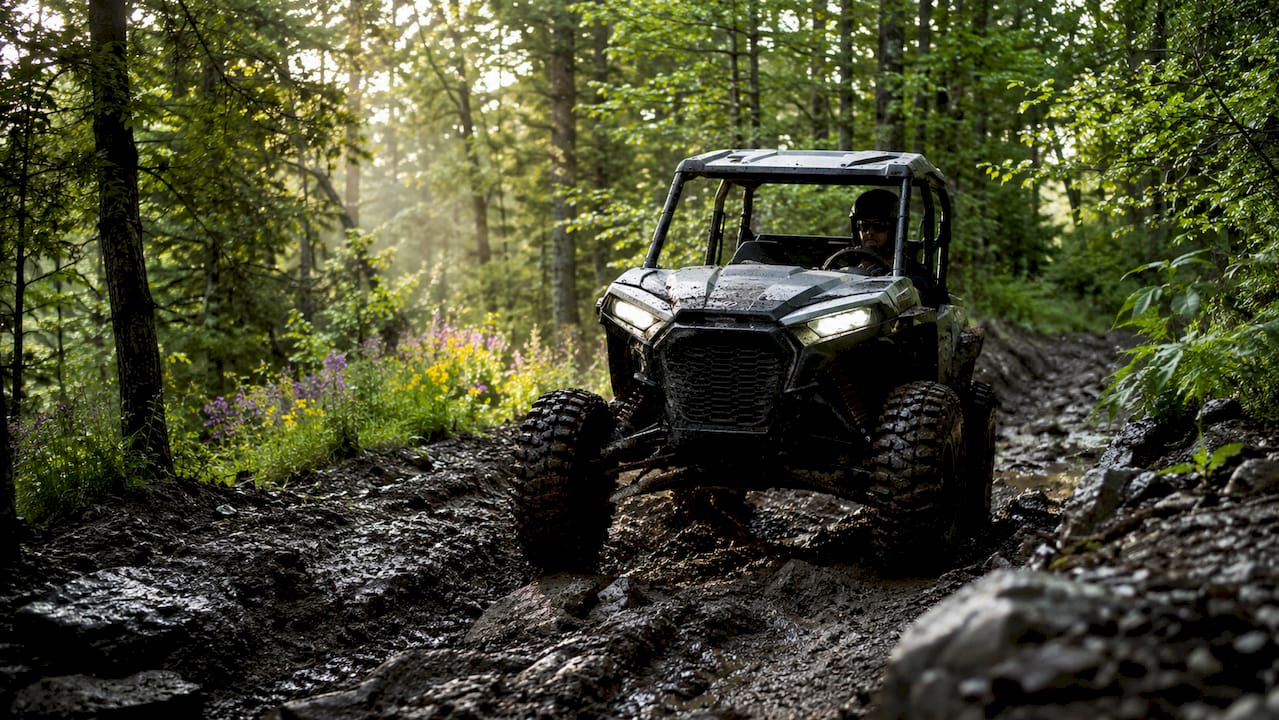
The industry uses the term “all-terrain vehicles” as a formal category, but the broader group includes UTVs (utility terrain vehicles), ATVs (all-terrain vehicles), and 4x4 trucks. Each class serves a different purpose, and the off-road vehicle benefits you get depend heavily on which type you choose. Recreational users typically prioritize maneuverability and speed. Utility users prioritize payload, towing capacity, and attachment compatibility.
How do off-road vehicles improve traction and control?
Traction is the single most critical factor in off-road driving. AWD and 4WD systems solve the core problem of wheelspin by sending torque to whichever wheels have the most grip. On dry pavement, this makes little difference. On mud, sand, snow, or loose rock, it is the difference between moving forward and getting stuck.
Several features work together to deliver that control:
- Locking differentials force both wheels on an axle to spin at the same speed, preventing one wheel from spinning freely while the other sits idle.
- Aggressive tread tires channel mud and debris away from the contact patch, maintaining grip on loose surfaces.
- Long-travel suspension keeps all four tires in contact with uneven ground, which is critical for steering and braking.
- High ground clearance prevents the vehicle frame from dragging on obstacles, which can cause sudden stops or loss of steering.
- Low-range gearing multiplies torque at low speeds, giving you precise throttle control on steep inclines.
Pro Tip: Slow down before you think you need to. Off-road driving is technique-based at low speeds, not a test of horsepower. Controlled throttle input preserves traction far better than momentum.
Off-road driving focuses on controlled handling at low speeds rather than raw speed. That principle applies whether you’re crossing a creek bed or climbing a gravel slope. Riders who understand this avoid the most common mistake: applying too much throttle and losing traction entirely.
UTV vs. ATV vs. 4x4: which type fits your needs?
The advantages of off-road vehicles change significantly depending on the vehicle class. Choosing the wrong type means leaving real capability on the table. The table below compares the three primary categories across the features that matter most.
| Vehicle Type | Typical Payload | Towing Capacity | Best Use Case | Attachment Support |
|---|---|---|---|---|
| UTV | 500–1,500 lbs | 1,000–2,000 lbs | Farm, worksite, group recreation | Plows, mowers, dump beds |
| ATV | 100–400 lbs | 500–1,200 lbs | Trail riding, hunting, light utility | Racks, sprayers, small plows |
| 4x4 Truck | 1,500–3,000 lbs | 5,000–12,000 lbs | Mixed road and trail, heavy hauling | Trailers, winches, lift kits |
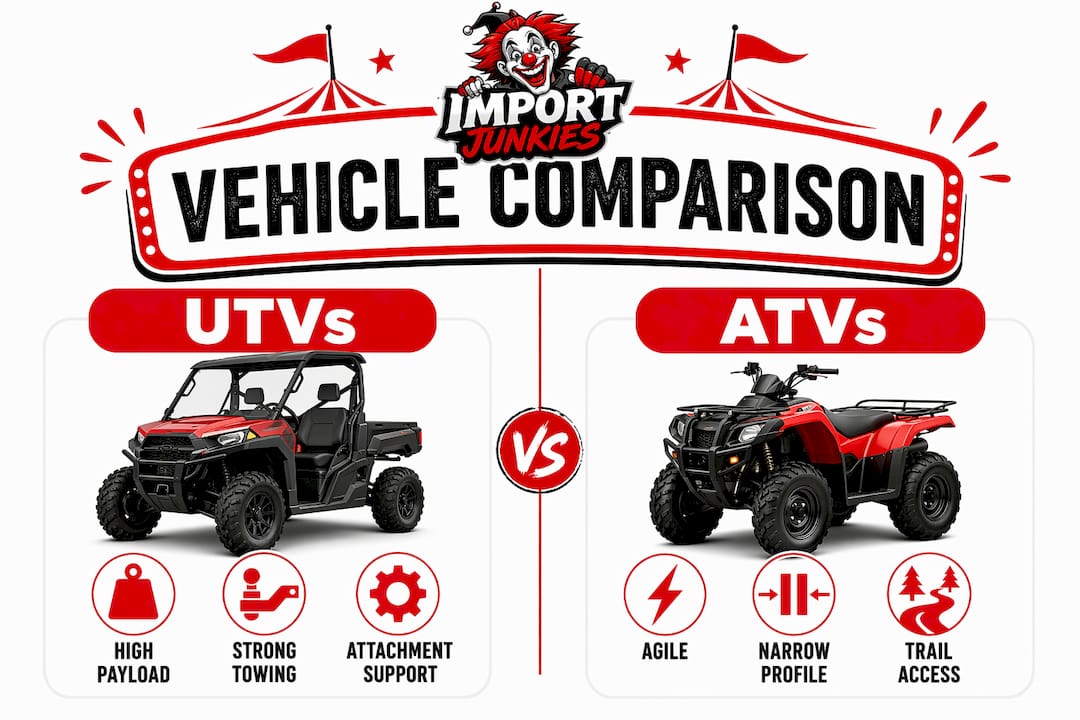
UTVs provide significantly higher hauling and towing capacity than ATVs, which makes them the preferred choice for farms, ranches, and worksites. That capacity advantage translates directly into productivity. A UTV fitted with a plow attachment clears a driveway or trail in one pass. The same vehicle with a dump bed hauls gravel, mulch, or feed without a second trip.
ATVs trade raw capacity for agility. Their narrower profile and lighter weight let them navigate trails and terrain that a UTV simply cannot fit through. For hunters covering dense woodland or trail riders covering technical singletrack, that maneuverability is worth more than payload. You can read a full breakdown of UTV features and uses to understand which class fits your specific situation.
4x4 trucks occupy a different category entirely. They handle highway driving and off-road terrain equally well, which makes them the most versatile option for users who need both. The tradeoff is cost, fuel consumption, and the fact that they cannot access the narrowest trails.
What are the recreational advantages of off-road vehicles?
The recreational case for off-road vehicles is straightforward: they take you places you cannot go on foot or in a standard car, and they do it efficiently. Here are the top recreational advantages, ranked by how frequently they come up among serious outdoor users:
- Remote access for camping and hunting. Off-road vehicles carry gear and passengers to backcountry campsites, hunting blinds, and fishing spots that are miles from the nearest road. That access alone justifies ownership for many users.
- Sightseeing in protected and natural areas. Many national forests and BLM lands permit off-road vehicle use on designated trails, opening up terrain that hikers rarely reach.
- Group adventure and community. Off-road riding is a social activity. Clubs, organized trail rides, and group camping trips build a community around shared experience. The outdoor adventure benefits of group riding extend well beyond the trail itself.
- Physical and mental recovery. Time spent outdoors on technical terrain requires focus and physical engagement. Many riders report genuine stress relief from a day on the trails, separate from any fitness benefit.
- Skill development and challenge. Learning to read terrain, manage traction, and recover a stuck vehicle builds real competence. That progression keeps experienced riders engaged long after the novelty wears off.
For buyers exploring options across different terrain types, a rebuilt vehicle buyer’s guide focused on Utah outdoor adventures offers useful context on matching vehicle capability to specific environments.
Why does professional training maximize off-road vehicle benefits?
Training is where most off-road vehicle owners leave value on the table. The vehicle’s capability is fixed at purchase. Your ability to use that capability is not. Professional off-road driver training reduces accidents, cuts vehicle damage, and ensures you are operating within safe limits rather than guessing.
The core skills covered in structured training include:
- Pre-use safety inspections that catch mechanical issues before they become trail-side failures.
- Terrain assessment to identify safe lines, avoid soft ground, and recognize rollover risk before committing to a slope.
- Recovery techniques including winching, traction boards, and safe towing procedures when a vehicle gets stuck.
- Vehicle-specific handling that accounts for your exact wheelbase, ground clearance, and suspension travel.
Improper off-road driving techniques commonly lead to mechanical failure and increased maintenance costs. Incline misuse is one of the most frequent causes. Approaching a slope at the wrong angle or with too much speed transfers stress to the drivetrain and suspension in ways that accumulate into expensive repairs.
Certifications like BORDA and LANTRA represent the recognized standard for professional off-road competence. They are particularly relevant for commercial operators in forestry, construction, agriculture, and emergency response, where off-road vehicles serve multiple sectors and operator errors carry real liability. For recreational users, completing a structured course through a provider certified by these bodies gives you a foundation that self-teaching rarely delivers.
Pro Tip: Take your training on the vehicle you actually own. Familiarity with your specific machine’s weight, turning radius, and throttle response builds control that transfers directly to real-world use.
UTV courses build confidence through hands-on experience with emergency handling and terrain-specific techniques. Even experienced riders report measurable improvement in control after completing a structured program.
Key takeaways
Off-road vehicles deliver their full value only when you match the right vehicle class to your terrain, load requirements, and skill level.
| Point | Details |
|---|---|
| Vehicle class determines capability | UTVs haul and tow more; ATVs offer agility; 4x4 trucks handle mixed road and trail use. |
| Traction depends on multiple systems | AWD, locking differentials, aggressive tires, and low-range gearing work together, not independently. |
| Remote access is the primary benefit | High ground clearance and specialized suspension open terrain that standard vehicles cannot reach. |
| Training reduces cost and risk | Professional courses cut mechanical failures, accidents, and recovery expenses over the vehicle’s life. |
| Recreational and utility uses overlap | The same UTV that clears snow in winter can carry camping gear and passengers in summer. |
What i’ve learned after years around off-road vehicles
The most common mistake I see buyers make is treating off-road capability as a single feature rather than a system. They focus on engine size or tire diameter and overlook the suspension travel, differential type, or gearing range that actually determines what the vehicle can do. A 400cc engine in a vehicle with poor suspension and open differentials will underperform a 300cc machine with a well-tuned drivetrain on technical terrain.
The second mistake is buying more vehicle than the situation requires. A full-size UTV is genuinely useful on a farm or large property. On a narrow trail system, it becomes a liability. I have watched riders struggle through terrain that a lighter ATV would have handled in half the time. Matching the vehicle to the actual use case is not a compromise. It is the correct decision.
Training is the part most buyers skip entirely, and it is the part that pays back the most. Not because off-road driving is inherently dangerous, but because beginners often underestimate vehicle capabilities in both directions. They either push too hard and damage the vehicle, or they hold back unnecessarily and miss what the machine can actually do. A single day of structured instruction fixes both problems.
The off-roading advantages that matter most are not on the spec sheet. They are in the habits you build around inspection, route planning, and controlled technique. Those habits protect your investment and keep you riding longer.
— Gary
Find the right off-road vehicle at Importjunkies

Importjunkies carries a direct selection of utility and off-road vehicles built for both recreational and work use. The 400cc 4x4 UTV with snow plow and dump bed is one of the most versatile options in the catalog, combining four-wheel drive, a functional dump bed, and a front-mounted snow plow in a single machine. For buyers who need a lighter option, the 200cc UTV with snow plow delivers the same attachment flexibility at a lower price point. Both models ship directly from Importjunkies with competitive wholesale pricing and no dealer markup.
FAQ
What makes off-road vehicles different from standard cars?
Off-road vehicles use four-wheel drive or all-wheel drive systems, higher ground clearance, and specialized suspension to handle terrain that standard vehicles cannot navigate. These features allow access to mud, sand, loose rock, and steep inclines.
What are the main off-road vehicle uses for recreational buyers?
Recreational buyers use off-road vehicles primarily for backcountry camping, hunting access, trail riding, and group adventure trips. The ability to reach remote locations that are inaccessible by foot or standard vehicle is the primary draw.
Are utvs or atvs better for utility work?
UTVs are better for heavy utility work because they carry larger payloads and support attachments like plows, mowers, and dump beds. ATVs are better for tasks requiring maneuverability in tight or narrow terrain.
Does professional training actually improve off-road performance?
Yes. Structured training teaches terrain assessment, recovery techniques, and vehicle-specific handling that directly reduce accidents and mechanical failures. Certifications like BORDA and LANTRA confirm competence for both recreational and commercial operators.
What is the most important safety habit for off-road driving?
Pre-use safety inspections are the most critical habit. Checking tire pressure, fluid levels, and mechanical condition before each ride prevents the majority of trail-side failures and costly recoveries.
Recommended
- Why Off-Road Vehicles Matter for Outdoor Adventures – Saferwholesale || Import Junkies || Great Sports
- Your guide to every type of off-road vehicle – Saferwholesale || Import Junkies || Great Sports
- Utility Vehicles Explained: Uses, Types, and Right Fit – Saferwholesale || Import Junkies || Great Sports
- What is an off-road utility truck? A guide for buyers – Saferwholesale || Import Junkies || Great Sports


