


 Location
 Login
Login
The main types of vehicles for delivery operations fall into five groups: cargo vans, box or straight trucks, pickups and other light trucks, cargo bikes and scooters, and specialized vehicles like reefers and flatbeds. Cargo vans handle dense urban parcel routes best. Box trucks win when you’re moving furniture or appliances. Pickups fit rural routes with lighter, irregular loads. Cargo bikes dominate tight city cores where parking is impossible. Specialized vehicles step in only when the cargo demands it, like frozen food or hazardous materials.
Before picking one, run through these signals:
- Route density (stops per mile)
- Average parcel size and weight
- Delivery frequency per shift
- Curb access and parking restrictions
- Whether cargo needs temperature control
GVWR callout: Gross vehicle weight rating splits fleets into three legal tiers: light-duty (under 14,000 lbs), medium-duty (14,001 to 26,000 lbs), and heavy-duty (over 26,000 lbs), according to FMCSA’s commercial driver’s license standards. Cross into medium-duty territory and you’re often looking at different licensing and insurance requirements.
Key Takeaways
Vehicle selection for delivery operations should follow route density and cargo profile first, with GVWR class and total cost of ownership determining the licensing and budget guardrails around that choice.
| Point | Details |
|---|---|
| Match size to route, not max load | Choose vehicle capacity based on average parcel volume and stops per mile, not worst-case scenarios. |
| Know your GVWR thresholds | Light-duty stays under 14,000 lbs, medium-duty runs 14,001 to 26,000 lbs, heavy-duty exceeds that. |
| Factor total cost of ownership | Fuel, maintenance, insurance, and downtime typically outweigh sticker price over the vehicle’s life. |
| Upfit before upsizing | A van with a reefer or liftgate upfit can sometimes replace a larger truck purchase. |
| Consider electric utility options | Importjunkies offers electric utility vehicles and compact cargo trucks suited to low-speed, short-range delivery routes. |
Table of Contents
- Why Vehicle Choice Drives Last-Mile Performance
- Vehicle Classes and GVWR Thresholds That Change the Rules
- The Main Types of Delivery Vehicles and Where Each One Fits
- How to Choose the Right Vehicle for Your Routes
- What Actually Drives Your Total Cost of Ownership
- When Upfits and Special Equipment Change the Decision
- Real-World Delivery Vehicle Options From Importjunkies
- What Fleet Managers Get Wrong About Vehicle Selection
- Find the Right Delivery Vehicle at Importjunkies
- Frequently Asked Questions
- Sources
Why Vehicle Choice Drives Last-Mile Performance
The vehicle you put on the road shapes on-time delivery rates, cost per stop, and how satisfied your customers end up feeling. Pick wrong, and you’ll feel it in fuel bills and missed windows before you feel it anywhere else.
Delivery vehicles carry several operational jobs at once:
- Enabling efficient multi-stop routing without wasted mileage
- Protecting cargo from damage, weather, and theft
- Supporting driver comfort over long shifts (entry height, seat position, visibility)
- Fitting into the streets, alleys, and loading docks your routes actually use
A grocery chain prioritizes speed and multiple daily stops. A pharmaceutical distributor prioritizes temperature stability above almost everything else. An appliance retailer needs payload capacity and a liftgate more than agility. Telematics and routing software matter here too. The best van in the world underperforms on a route built without real stop-sequencing data behind it.
Vehicle Classes and GVWR Thresholds That Change the Rules
Gross vehicle weight rating is not a spec sheet footnote. It determines what license your driver needs, what your insurance costs, and in some states, what roads you can legally drive on.
The FMCSA breaks GVWR into three bands: light-duty vehicles stay under 14,000 lbs, medium-duty vehicles run from 14,001 to 26,000 lbs, and heavy-duty vehicles exceed 26,000 lbs, per FMCSA’s CDL standards. Cross 26,001 lbs GVWR (or pull a trailer that pushes combined weight past that line) and a commercial driver’s license typically enters the picture, along with stricter driver qualification files and hours-of-service tracking.
Insurance and registration usually scale with class too. A light-duty van registers and insures like a personal vehicle in most states. A medium-duty box truck often lands in a commercial bracket with higher premiums, even if it’s rarely fully loaded.
A few quick checks before you buy or lease:
- Find the manufacturer’s GVWR plate, usually on the driver’s door jamb
- Confirm your state DMV’s commercial registration cutoff, since thresholds vary by state
- Ask your insurer how GVWR class affects your premium before you sign anything
- Calculate payload (GVWR minus curb weight), not just cargo box size
Check your own vehicle class requirements and confirm licensing rules with your state DMV before committing to a heavier vehicle than your routes actually need.
The Main Types of Delivery Vehicles and Where Each One Fits
Nine categories cover almost every delivery scenario you’ll run into: cargo vans, multi-stop step vans, box/straight trucks, pickups and light trucks, cargo bikes and e-bikes, scooters and motorcycles, refrigerated vehicles, flatbeds, and emerging electric options.
Cargo vans remain the default choice for parcel and retail delivery because they balance cargo protection, driver ergonomics, and the ability to squeeze through city traffic, a combination WEX’s fleet research points to as the reason vans dominate retail fleets. Most sit in the light-duty class, typically 200 to 500 cubic feet of cargo space, and handle anywhere from small boxes to moderately bulky items. They struggle with anything oversized, like a washing machine or a stack of lumber.
Step vans (also called multi-stop vans) trade some speed for walk-in access. Drivers step directly from the cab into the cargo area, which shaves seconds off every stop. Bread routes, beverage distribution, and high-frequency parcel runs use these heavily.
Box trucks and straight trucks move up into medium-duty territory, often 16 to 26 feet of box length with GVWR between 14,001 and 26,000 lbs. They’re built for appliance delivery, furniture, pallet-based freight, and any load too big or heavy for a van. The tradeoff is maneuverability. A 26-foot box truck cannot navigate a downtown alley the way a cargo van can, according to Trackobit’s breakdown of logistics fleet vehicle types.
Pickups and light trucks fill a gap vans and box trucks can’t: open-bed cargo, uneven loads, and rural routes where pavement quality and route length matter more than tight cornering. They’re common for contractor deliveries, agricultural supply runs, and small businesses that don’t have consistent enough volume to justify a dedicated commercial van.
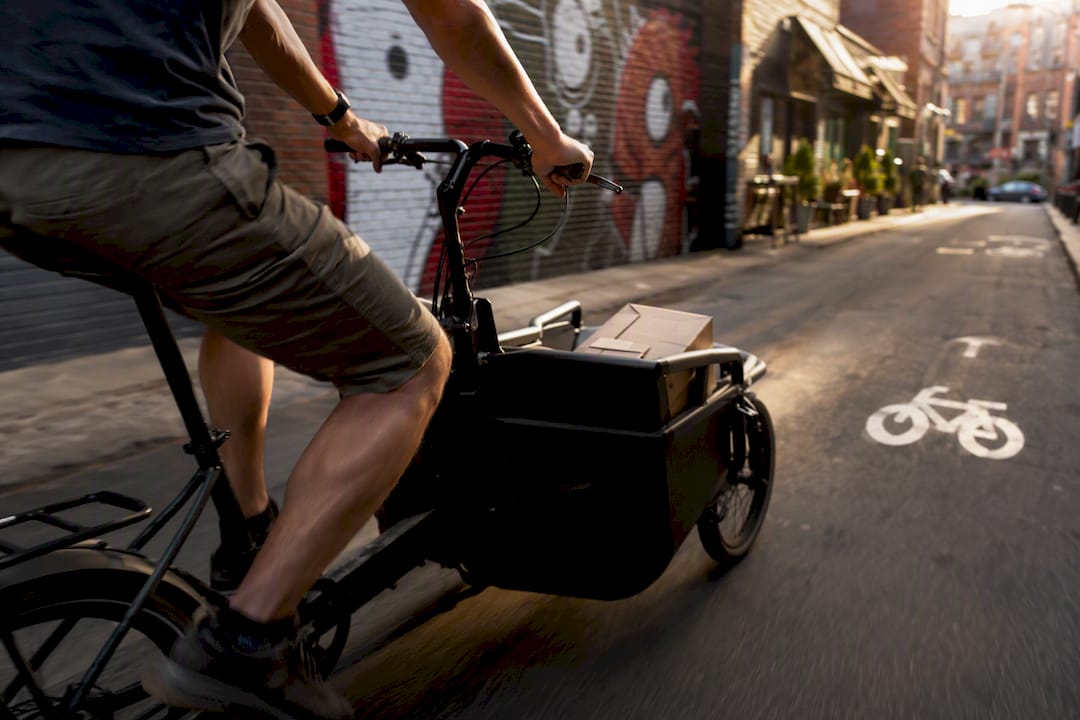
Cargo bikes and e-bikes own the densest urban cores, where a van simply can’t park and a scooter can’t carry enough. No parking search, no fuel cost, and they can use bike lanes to bypass gridlock entirely. Payload tops out low, usually under 150 lbs, which limits them to food delivery, small parcels, and courier work.
Scooters and motorcycles split the difference between bikes and vans. Faster than a bike, more nimble than any four-wheeled vehicle, but limited to what fits in a delivery box on the back. The Rideshare Guy’s vehicle roundup notes that many gig platforms explicitly allow scooters in city cores, and individual drivers often lean on compact or hybrid cars for the same reason vans don’t make sense for one-off runs.
Refrigerated (reefer) vehicles exist because some cargo simply cannot ride in an uncontrolled cargo box. Grocery, pharmaceutical, and food-service deliveries depend on them, and the reefer unit itself often costs more than the base vehicle.

Flatbeds and tanker/specialty vehicles cover the outliers: construction materials, liquids, oversized equipment. Most delivery operations never need one, but the ones that do have no substitute.
Electric delivery vehicles are gaining ground fast in urban fleets, trading fuel stops for charging stops and offering lower per-mile energy costs in exchange for range planning.
Pro Tip: *Don’t size your van for your heaviest possible day.
How to Choose the Right Vehicle for Your Routes
Size your fleet around route density and average package volume, not around the biggest load you could theoretically haul. Lallis & Higgins’ fleet guidance makes this point directly: buying maximum capacity by default drives up per-stop costs and kills maneuverability on dense routes.
Work through this checklist before you buy or lease:
- Map route density. Count stops per mile on your busiest routes.
- Measure average package dimensions and weight. Not your biggest package, your typical one.
- Calculate average payload per shift. This tells you real capacity needs, not theoretical ones.
- Factor in parking and curb restrictions. A vehicle that can’t legally stop near your delivery point is useless no matter its specs.
- Check driver licensing and GVWR requirements. Confirm whether your candidate vehicle pushes drivers into a different qualification tier.
- Run the numbers on total cost of ownership and resale value. Purchase price is one line item among several.
Ask yourself these questions before finalizing anything:
- Do you need a liftgate for heavy or bulky items?
- Does any portion of your cargo need refrigeration?
- Can your routes support an electric vehicle’s range and charging needs?
- Will seasonal volume spikes require a rental option instead of a permanent fleet addition?
A rough TCO estimate should include fuel or energy cost per mile, scheduled maintenance, insurance premiums by class, expected depreciation, and downtime cost when a vehicle is in the shop instead of on the road. Consult a moving truck size guide if you’re still unsure how cubic footage translates to real cargo capacity for bulkier items.
What Actually Drives Your Total Cost of Ownership
Operating costs, fuel or energy, maintenance, insurance, and downtime, typically outweigh the sticker price over a vehicle’s working life. A cheaper van that breaks down twice a year costs more than a pricier one that doesn’t.
The main cost drivers to track:
- Fuel or energy cost per mile, which varies significantly by vehicle class and drivetrain
- Scheduled maintenance intervals tied to mileage and GVWR class
- Unscheduled repairs, which climb sharply once a vehicle passes 100,000 miles
- Tire wear, especially on heavier vehicles carrying consistent loads
- Telematics and diagnostics subscriptions that flag problems before they become breakdowns
- Insurance premiums, which scale with vehicle class and cargo type
- Driver-related costs, including training for any vehicle requiring a CDL
Pro Tip: Build your preventive maintenance schedule around GVWR class, not a generic calendar. Heavier vehicles need more frequent brake and suspension checks than light-duty vans doing the same mileage. A structured maintenance program catches small issues before they turn into missed delivery windows.
Electric vehicles cut fuel costs meaningfully but shift some of that savings into charging infrastructure and route planning around range. For dense, predictable routes, the trade often favors electric. For long regional hauls, it can still be a stretch. A breakdown of operating expenses versus insurance premiums is worth reviewing before you commit to either path.
When Upfits and Special Equipment Change the Decision
A smaller van with the right upfit can sometimes replace a truck you’d otherwise need to buy. Refrigeration units, liftgates, shelving, and cargo restraints all change what a “small” vehicle can actually handle.
Common upfits worth evaluating:
- Refrigeration or reefer units for temperature-sensitive cargo
- Liftgates for heavy or bulky items that can’t be hand-carried
- Interior shelving and racking to organize multi-stop routes
- Interior lighting and 12V power outlets for nighttime or early-morning runs
- Side doors or roll-up doors for faster loading access
- Tether points and cargo restraints to prevent shifting loads
Cold-chain reliability is where purpose-built reefers earn their keep over aftermarket retrofits. A dedicated reefer unit holds temperature more consistently than a bolted-on system, and for pharmaceuticals or frozen food, that consistency is the whole job. Telematics and security upfits, GPS tracking, door sensors, remote locks, add real value but also add a line item to your maintenance and insurance budget, so factor that in before assuming an upfit pays for itself immediately.
Real-World Delivery Vehicle Options From Importjunkies
Small fleets and campus-style operations often need something lighter than a commercial van but sturdier than a bicycle. Importjunkies carries several options built for exactly that gap, as concrete examples rather than a complete market survey.
- Electric utility vehicles suited to low-speed, short-range delivery loops
- Compact electric cargo trucks for tight urban or campus routes
- E-bikes and scooters for parcel-scale last-mile runs
A 48V electric utility golf UTV works well for gated communities, resorts, or campus deliveries where speed limits are low and distances are short. For slightly heavier short-range cargo, an electric cargo truck fills the gap between a bike and a van.
What Fleet Managers Get Wrong About Vehicle Selection
Most fleet decisions get made backward. A manager sees a worst-case load, a bulky furniture order or a holiday volume spike, and buys capacity for that outlier instead of the daily average. That single instinct is probably the most expensive mistake in this entire guide.
The conventional advice, “buy bigger to be safe,” ignores what oversizing actually costs: worse fuel economy on every ordinary day, harder parking on every urban route, and often a GVWR class jump that pulls in licensing and insurance costs you didn’t need. The data on route-density-driven sizing backs this up consistently. Vehicles chosen for the busiest possible day sit underutilized on every other day, and underutilized capacity is money parked in the garage.
What actually works is treating vehicle choice as a portfolio decision, not a single purchase. Most operations do better running two or three vehicle types, a van fleet for daily volume, a rented box truck for occasional bulky orders, rather than one oversized vehicle trying to do everything. Start with your average stop, not your hardest one.
Find the Right Delivery Vehicle at Importjunkies
Importjunkies gives small fleets and independent operators a direct path to delivery-ready vehicles without the markup and wait times of a traditional dealership network. If this guide has you leaning toward a lighter, low-speed option for campus routes, gated communities, or dense short-range delivery loops, that’s exactly where Importjunkies’ electric utility vehicles and compact cargo trucks fit.

Every listing on the site includes specs, images, and wholesale pricing upfront, so you can compare cargo capacity and range without hunting down a quote first. Browse the full vehicle catalog to see current inventory, or start with a 4-seater electric utility UTV if your routes call for something built for short, frequent stops rather than highway miles.
Frequently Asked Questions
What is the most common vehicle type used in delivery operations? Cargo vans remain the most widely used option for parcel and retail delivery because they balance cargo capacity, protection, and maneuverability better than most alternatives, a pattern reflected across logistics industry fleet data.
Do I need a commercial driver’s license to operate a delivery vehicle? It depends on GVWR. Vehicles under 26,000 lbs generally don’t require a CDL, but crossing that threshold, or towing a trailer that pushes combined weight past it, typically does under federal standards.
Are electric delivery vehicles practical for last-mile routes? For dense, short-range routes, yes. Electric vehicles cut fuel costs and suit predictable daily mileage, though range planning matters more for longer regional routes.
When does a business need a refrigerated delivery vehicle? Once cargo requires temperature control, groceries, pharmaceuticals, or frozen goods, a purpose-built reefer unit is usually more reliable than a retrofit, since consistent temperature holding directly protects both the cargo and your reputation.
How do I know if my delivery vehicle is properly sized for my routes? Check whether your average load fills roughly half to two-thirds of your vehicle’s capacity. Consistently running near-empty or overloaded is a sign your fleet needs resizing, not just route adjustments.
Sources
- Choosing the best delivery vehicle for your business | WEX Inc.
- 5 Types of Vehicles in Logistics Industry | Trackobit
Recommended
- Campus Transportation Vehicles: A Planner’s Guide – Saferwholesale || Import Junkies || Great Sports
- Small Business Vehicle Selection Guide for 2026 – Saferwholesale || Import Junkies || Great Sports
- Types of Electric Cargo Vehicles: A 2026 Buyer’s Guide – Saferwholesale || Import Junkies || Great Sports
- How to select the best vehicles for your golf course – Saferwholesale || Import Junkies || Great Sports


