


 Location
 Login
Login
The highest-risk used trike buying red flags are a missing or branded title, visible frame cracks or weld repairs, unverified conversion work, final-drive leaks, and a seller who refuses an independent inspection. Any one of those is enough to walk away. Buying used can save you 20–40% versus new, but that discount disappears fast when a differential rebuild or structural repair lands in your lap two months after the sale.
Here are the absolute walk-away items before you spend another minute on a listing:
- No clean title in hand. If the seller can’t produce a physical, lien-free title, stop.
- Salvage or flood branding on any history report or title document.
- Visible frame cracks, bent tubes, or fresh welds that don’t match the factory finish.
- Unverified conversion work with no paperwork, no installer name, and no kit documentation.
- Active final-drive or differential leaks (oil stains under the rear axle area).
- Seized engine that won’t turn over or shows signs of water intrusion.
- Seller refuses a pre-purchase inspection by your mechanic or insists on cash-only with no documentation.
- Mismatched VIN between the frame plate and the title.
Pro Tip: Before you arrange a visit, text or email the seller and ask for three photos: the VIN plate, the front of the title, and the underside near the rear axle. A legitimate seller sends them within the hour. Hesitation or excuses at this stage are themselves a red flag.
Key Takeaways
The most important principle in used trike buying is this: a missing title, unverified conversion work, or active final-drive leak are each sufficient reason to walk away, regardless of price.
| Point | Details |
|---|---|
| Top walk-away flags | Missing title, salvage/flood branding, frame cracks, unverified conversion, and active drivetrain leaks each justify walking away. |
| VIN and title checks | Run a Carfax or NICB VINCheck before visiting; confirm the frame VIN matches the title exactly. |
| Pre-purchase inspection | Budget $100–$200 for a qualified mechanic’s written PPI; ask them to road-test the trike and provide a signed note. |
| Repair cost threshold | If estimated repairs exceed 30–40% of fair market value, require a major price concession or walk away. |
| Importjunkies catalog | Importjunkies offers dealer-sourced specialty vehicles at wholesale pricing with delivery, reducing private-sale inspection risk. |
Table of Contents
- What are the biggest used trike red flags at first glance?
- How to inspect the exterior, frame, and body for hidden damage
- How to inspect the drivetrain, transmission, axles, and suspension
- What brake and steering problems should you test for?
- How do you check the electrical system and battery on a used trike?
- What should you watch, feel, and listen for on a test ride?
- How to run title, VIN, and registration checks before you buy
- What failure modes are unique to trikes versus standard motorcycles?
- When should you walk away, and what repair costs are acceptable?
- What questions should you ask the seller, and what logistics should you confirm?
- How do you arrange a pre-purchase professional inspection?
- Ownership and transport logistics every trike buyer should confirm
- Why extra caution matters more on trikes than on standard motorcycles
- Dealer-sourced trikes from Importjunkies reduce your inspection risk
- Sources
What are the biggest used trike red flags at first glance?
You don’t need a mechanic to run a useful first-pass triage. A focused 5–10 minute review, before you ever drive to see the trike, can eliminate most problem listings.
Pre-visit steps:
- Request photos of the VIN plate, the title (front and back), and any service records.
- Ask directly: was the conversion done by a dealer, a certified shop, or a private individual? Get the shop name if possible.
- Search the VIN on Carfax or the NICB VINCheck before you go.
- Check whether the asking price sits well below comparable listings. Prices significantly under market often signal hidden problems, not generosity.
On-site quick checks (first 5 minutes):
- Walk around the trike and look for mismatched paint panels, uneven body gaps, or obvious filler putty.
- Crouch and look along the frame rails for bends, kinks, or fresh paint over rust.
- Check the ground under the rear axle and engine for fresh oil stains or dried fluid rings.
- Try to roll each wheel by hand. A seized or heavily resistant wheel points to a frozen bearing or caliper.
- Test the throttle and brake levers for smooth, full travel with no sticking.
- Attempt a cold start. Excessive smoke, hard starting, or refusal to fire are immediate concerns.
If any of these checks produce a “no,” you have a clear signal to either dig deeper or move on. The goal at this stage is a quick yes/no on whether a full inspection is worth your time.
How to inspect the exterior, frame, and body for hidden damage
A thorough exterior inspection takes 20–30 minutes and requires nothing more than good lighting, a flashlight, and a magnet. Visible rust, seized bearings, cracked paint around welds, and heavy resistance in drivetrain components indicate neglect or structural impact and should prompt a careful walk-away or a professional inspection.
Frame and weld inspection
Focus on the areas most likely to carry stress: the steering head, the swingarm pivot, and the conversion mounting brackets on a converted trike. Run your fingers along welds and look for:
- Hairline cracks in the paint directly adjacent to a weld bead.
- New weld material that doesn’t match the surrounding finish (shinier, rougher, or a different color).
- Peeled or bubbling paint over a tube, which often means rust is working from the inside out.
- Any tube that looks kinked, bent, or slightly off-axis compared to its mirror side.
Rust: surface vs. structural
Surface rust on fasteners or minor chrome pitting is cosmetic. Structural rust is a different problem entirely. Check behind fenders, inside frame tubes where you can see them, swingarm pivot points, and the underside of any rear axle carrier. Flaking, pitting rust on a load-bearing tube is a walk-away condition.
Crash repair signs
Mismatched bolt heads (some hex, some Torx, some clearly newer), body filler that shows as a slight ripple under raking light, and handlebars that sit even slightly off-center relative to the front wheel all suggest prior collision work. These aren’t automatic disqualifiers, but they require explanation and documentation.
Pro Tip: When buying remotely, ask the seller for a 10-photo set: VIN plate, conversion brackets (both sides), all four corners of the frame, the underside near the rear axle, and any area with visible rust or repair. A seller who provides this is almost always more trustworthy than one who sends only glamour shots.
How to inspect the drivetrain, transmission, axles, and suspension
Trike-specific drivetrain problems are where repair costs get serious fast. Common inspection priorities include final-drive leaks, steering effort, cold-start engine noises, tire age and tread, and documented service history. Aftermarket conversions without documentation and prices well below market are key red flags at this stage.
Final-drive and differential checks
On shaft-drive trikes and most conversions, the final drive is the most expensive single component to repair. Look for:
- Oil seepage around the input shaft seal or output flanges. A small, dry ring of old oil may just be a seal that needs replacement ($50–$150 in parts). Active dripping or a wet housing suggests a more serious seal failure or cracked case.
- Differential play: grip the rear axle shaft and push/pull it laterally. More than a few millimeters of movement indicates worn bearings or a worn differential.
- Clunks when you manually rock the trike forward and back with the transmission in gear. A healthy drivetrain is tight.
Transmission and gearbox
Cold-start shifting is the most revealing test. Engage first gear from neutral immediately after startup and listen for grinding, a heavy clunk, or resistance that smooths out only after the oil warms. Persistent hesitation or grinding at any temperature suggests worn synchros or low fluid.
Suspension and tire wear
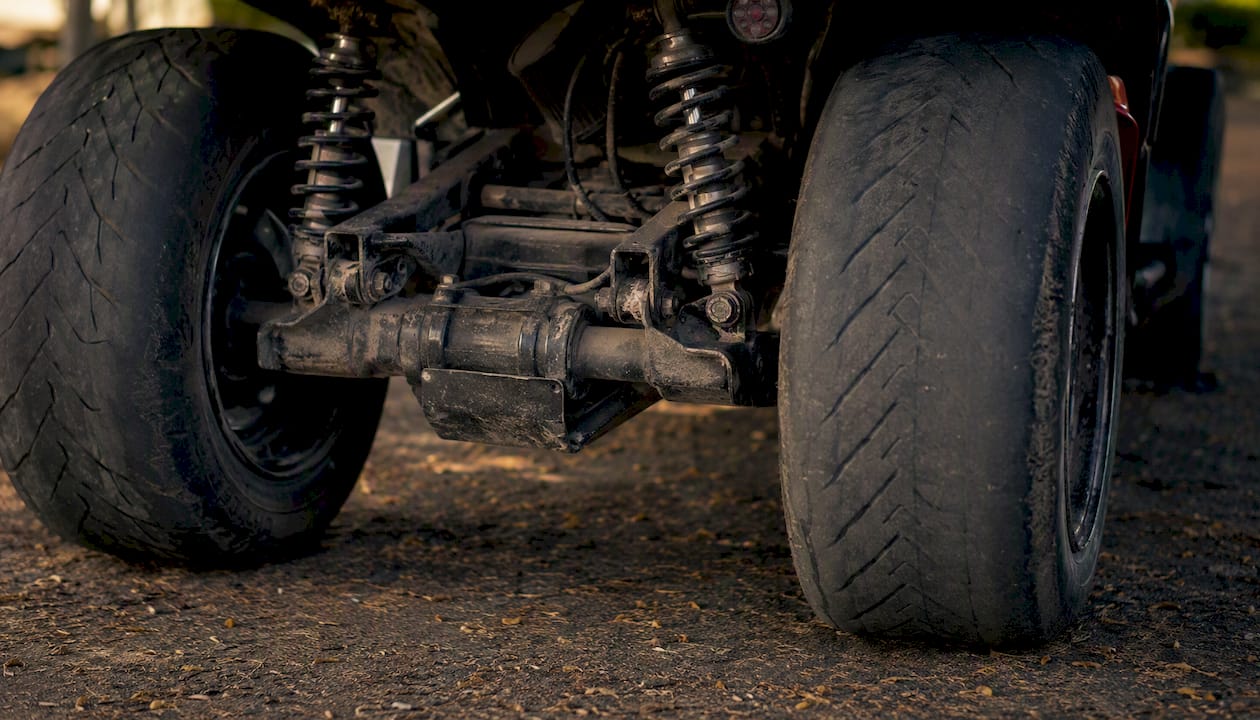
Uneven tire wear across the two rear tires is one of the clearest signs of an alignment or suspension problem unique to three-wheel geometry. If the inside edges of both rear tires are worn while the centers are fine, the rear axle geometry is off. Worn shock absorbers show as excessive bounce when you push down firmly on the rear of the trike and release. Bushings that are cracked or visibly compressed beyond their normal shape add steering vagueness and should be budgeted for replacement.
| Component | Minor Issue (Repair Est.) | Major Issue (Repair Est.) |
|---|---|---|
| Final-drive seal | $100–$300 | $800–$2,500+ (case/diff rebuild) |
| Rear axle bearing | $150–$400 | $500 (axle replacement) |
| Shock absorbers (pair) | $200–$500 | $600–$1,500 (custom/specialty) |
| Transmission synchro | $300–$600 | $1,500 (full rebuild) |
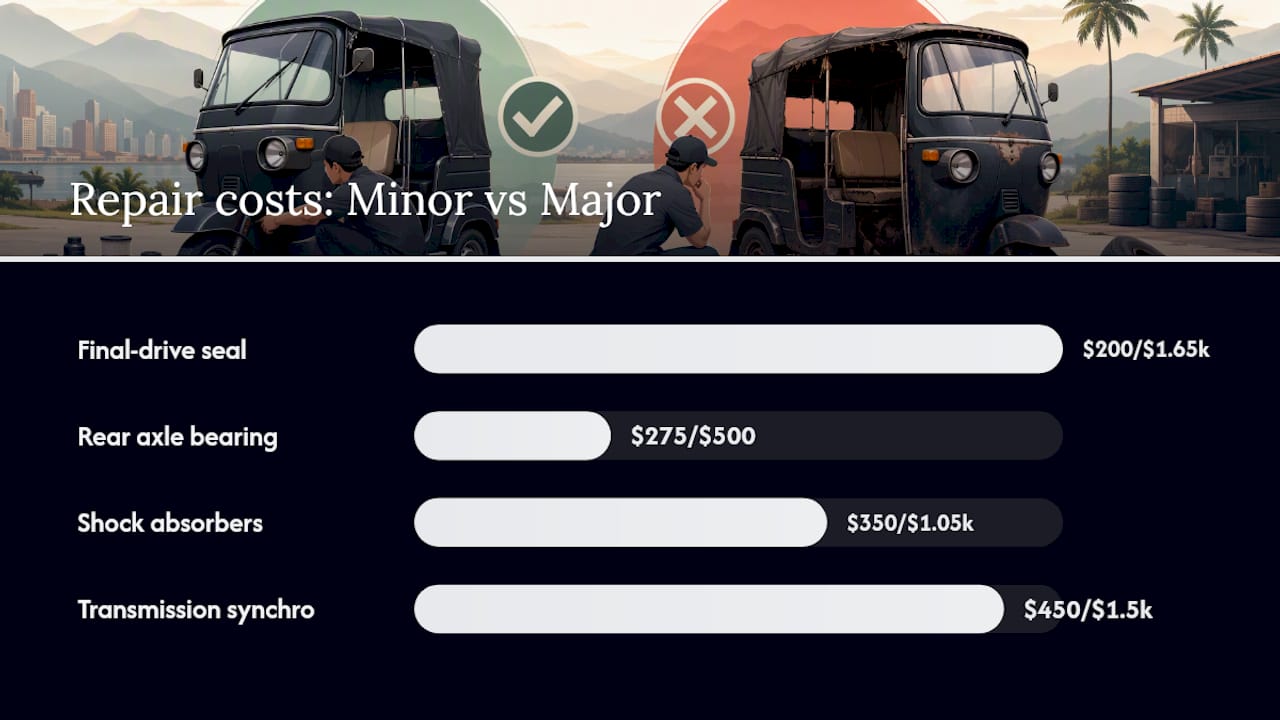
Estimates are ballpark ranges for U.S. labor and parts; specialty or imported trikes may run higher.
Pro Tip: Bring a trusted mechanic friend even for the pre-inspection visit. Having a second set of hands to rock the axle while you watch the differential housing for movement catches play that’s easy to miss alone.
What brake and steering problems should you test for?
Brakes and steering are the two systems where a problem doesn’t just cost money. It creates a safety risk on the road. Dealers recommend checking service records, testing steering and brakes, inspecting all three tires, and performing a test ride to verify handling and maintenance history before committing to a purchase.
Brake inspection
With the trike stationary, squeeze the front brake lever firmly and hold it. It should feel solid and resist without sponging toward the handlebar. A spongy lever means air in the hydraulic line or a failing master cylinder. Then:
- Visually inspect rotor thickness. Rotors worn below their minimum thickness spec (usually stamped on the rotor face) need immediate replacement.
- Look at the caliper bodies for fluid seeping from the piston seals. Even a slight wet film is a problem.
- Test the parking brake or rear hand brake for positive engagement. A brake that holds the trike on a slight incline is functioning; one that slips is not.
- Check brake fluid color in the reservoir. Dark brown or black fluid means it hasn’t been changed in years and likely contains moisture, which lowers the boiling point and accelerates corrosion inside the master cylinder.
Steering play and linkage
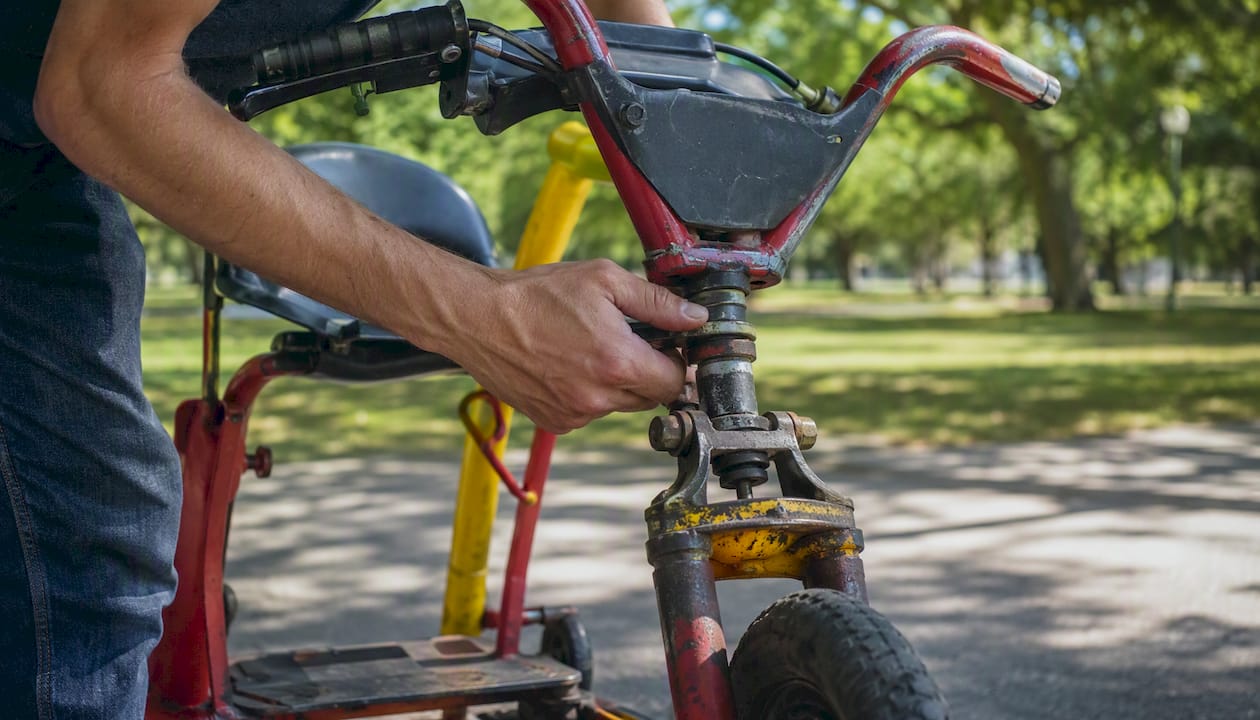
On a trike, acceptable steering play is tighter than most buyers expect. Grip the handlebars and try to move them side to side without moving the front wheel. More than about an inch of free movement at the grip end suggests worn steering head bearings or loose linkage. On a trike with a steering box or tie-rod setup (common on rear-engine conversions), check each tie-rod end for looseness by gripping it and trying to wiggle it. Any detectable play in a tie-rod end means it needs replacement before the trike is safe to ride.
Pro Tip: Brake fluid is cheap to test. A brake fluid test strip costs under $10 and tells you the moisture content in seconds. Fluid with more than 3% water content should be flushed before riding — and that’s a negotiating point with the seller.
How do you check the electrical system and battery on a used trike?
Electrical problems are the most common source of post-purchase frustration on used trikes, partly because they’re easy to mask during a short test ride and partly because the repair costs vary so widely.
Battery condition
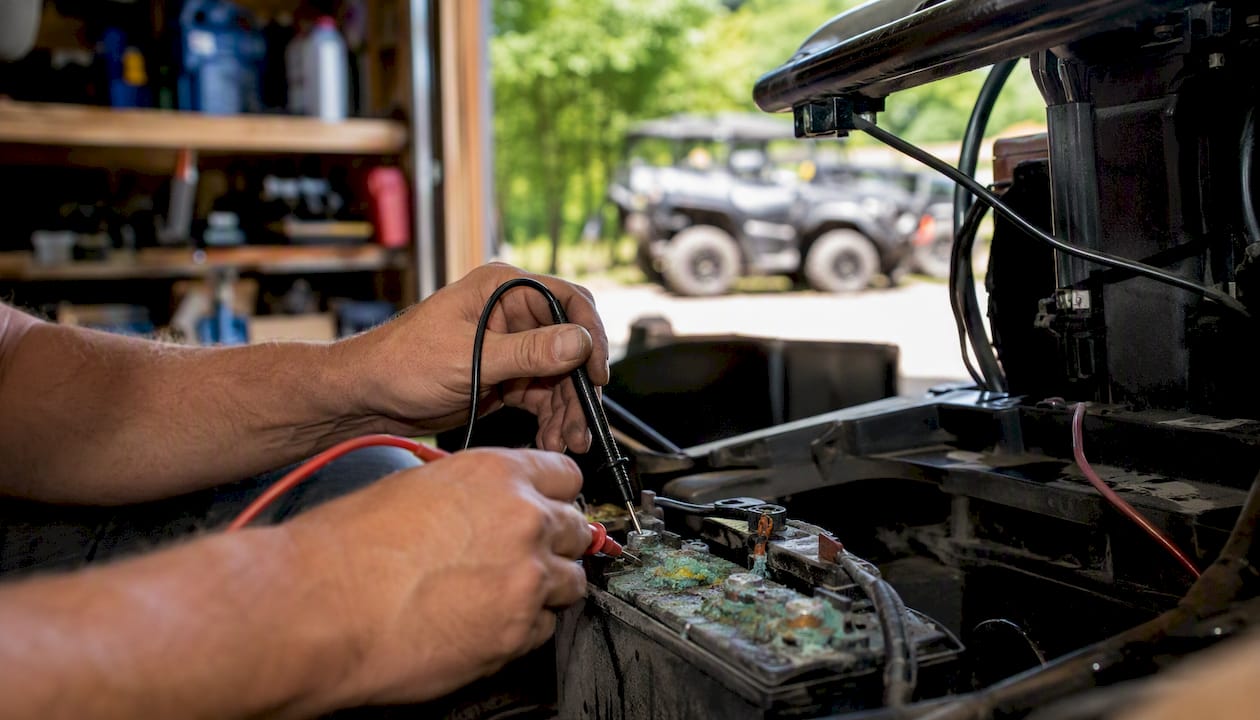
Start with the battery date code, usually stamped on the top or side of the case. A lead-acid battery older than four years is near the end of its reliable service life. Check the terminals for white or blue corrosion buildup, which signals poor maintenance and possible voltage drop under load. A healthy 12V battery should read 12.6V or higher at rest with a multimeter. Anything below 12.0V at rest suggests a battery that won’t hold a charge reliably.
For electric trikes, the battery pack is the single most expensive component on the vehicle. Ask for the original battery documentation, the number of charge cycles if the BMS (battery management system) logs it, and whether the pack has ever been replaced. Electric trike battery considerations and what to ask about capacity and documentation are worth reviewing before you inspect any electric model.
Charging system checks
On a gas trike, start the engine and measure voltage at the battery terminals with a multimeter. At idle, you should see 13.5–14.5V, which confirms the alternator or stator is charging. Below 13V at idle means the charging system is underperforming. Also look for:
- Loose or corroded connectors at the battery, fuse box, and main harness junction.
- Aftermarket wiring splices (electrical tape, wire nuts, or exposed connections) that suggest someone modified the electrical system without proper connectors.
- Intermittent dash lights or gauges that flicker during the test ride.
Pro Tip: A $20 multimeter is one of the best tools you can bring to a used trike inspection. Test battery resting voltage, charging voltage at idle, and voltage at the accessory fuse block. Three readings, five minutes, and you have a clear picture of the electrical health.
What should you watch, feel, and listen for on a test ride?
A test ride is non-negotiable. Never buy a used motorized trike without riding it, and never ride it before you’ve confirmed the VIN matches the title. Plan a route that includes a slow-speed section, a moderate acceleration run, and at least one stretch at highway speed if the trike is street-legal and conditions allow.
- Cold start behavior. Start the trike from cold and listen for the first 60 seconds. Ticking that fades as the engine warms is often normal valve lash. Knocking, rattling, or smoke that persists past two minutes is not.
- Low-speed maneuvers. At walking pace, make tight turns in both directions. The steering should feel consistent left and right. Pulling to one side, binding, or a clunk through the handlebars during a turn points to a steering or suspension problem.
- Acceleration and shifting. Run through all gears and note any hesitation, slipping, or refusal to engage cleanly. A transmission that jumps out of third gear under load is a known failure mode on some older conversions.
- Cruise stability. At highway speed on a straight road, release the handlebars briefly (where safe and legal). A well-aligned trike tracks straight. Persistent pulling left or right suggests rear axle misalignment or uneven tire pressure.
- Braking. At moderate speed, apply both brakes firmly. The trike should stop in a straight line without pulling. Vibration through the lever during braking usually means a warped rotor.
- Clunks and vibrations. Owner forums like TrikeTalk consistently highlight one practical technique: during a slow roll, nudge the body side to side and listen for catches, clunks, or rattles that suggest loose conversion mounts or worn frame joints.
- Temperature check. After 10–15 minutes of riding, park and check the engine and final-drive housing for heat. Moderate warmth is normal. Excessive heat from the differential or a burning smell from the drivetrain is not.
Always wear a helmet and protective gear for the test ride, regardless of how short the route is.
How to run title, VIN, and registration checks before you buy
Document verification is where many trike purchase pitfalls originate. A clean-looking trike with a cloudy title history can cost you far more than the purchase price in legal fees, re-titling costs, or outright loss if the vehicle turns out to be stolen or flood-damaged.
Documents to request before you meet:
- Physical title (not a photocopy) with the seller’s name matching their ID.
- Bill of sale from the previous transaction if the seller bought it used.
- Service records, receipts, and any conversion kit documentation.
- Photos of the VIN plate on the frame (not just the title).
How to run a VIN check:
- Go to Carfax or the NICB VINCheck (free) and enter the VIN.
- Look for salvage branding, flood damage notation, odometer rollback flags, title issued in multiple states, or an open lien.
- Cross-reference the VIN on the frame plate with the VIN on the title. They must match exactly, character for character.
- Contact your state DMV to confirm the title is clean and that no lien is recorded against it. Most state DMV websites offer a title status check online.
Red flags in paperwork:
- A title branded “salvage,” “rebuilt,” “flood,” or “junk” — these significantly reduce resale value and may affect insurability.
- A VIN that has been re-stamped, scratched, or partially obscured.
- An odometer reading on the title that is higher than the current dash reading.
- A seller who presents only a bill of sale and claims the title is “coming” or “lost.”
If you find a VIN or title inconsistency, the right move is to walk away or demand a corrected, clean title before any money changes hands. Your state DMV can advise on the process for resolving a title discrepancy, but that process takes time and carries no guarantee of resolution.
Pro Tip: For street-legal trike registration requirements in your state, check your DMV’s motorcycle or three-wheel vehicle category. Some states classify converted trikes differently than factory-built three-wheelers, which affects registration fees and required documentation.
What failure modes are unique to trikes versus standard motorcycles?
Trikes share many mechanical components with motorcycles, but three-wheel geometry and the conversion process introduce failure modes you won’t find on a two-wheeler. Knowing these helps you prioritize your inspection time.
- Conversion mount stress fractures. The brackets that attach a rear conversion kit to the original motorcycle frame carry significant lateral load. Hairline cracks at the weld points around these brackets are common on high-mileage or poorly installed conversions. They’re easy to miss under paint or road grime.
- Final-drive and shaft-drive seal failures. Converted trikes often run the original motorcycle’s shaft drive in a configuration it wasn’t designed for. The added weight and changed load angles accelerate seal wear. A weeping seal caught early is a $100–$300 fix. A seal that’s been leaking for months can mean a dry differential and a $1,500–$2,500 rebuild.
- Differential overheating. On older or heavily loaded trikes, the differential runs hotter than the original design intended. Look for discoloration or a burnt smell around the diff housing, and ask whether the fluid has been changed on schedule.
- Uneven rear tire wear from alignment issues. Three-wheel geometry requires precise rear axle alignment. Even a small misalignment causes one rear tire to scrub faster than the other. If the two rear tires show noticeably different wear patterns, the alignment needs professional correction before the trike is safe for highway use.
- Frame twist near rear mounting points. On some conversions, the rear subframe can develop a slight twist over time, particularly if the trike has been loaded heavily or ridden hard. Stand behind the trike and sight down the centerline. The rear axle should sit perfectly perpendicular to the frame centerline.
| Failure Mode | Early Sign | Repair Cost Range |
|---|---|---|
| Conversion mount crack | Paint crack at bracket weld | $200–$800 (weld repair + inspection) |
| Final-drive seal leak | Oil seepage at axle flange | $100–$300 (seal) / $1,500–$2,500 (rebuild) |
| Differential overheating | Discoloration, burnt smell | $150–$400 (fluid flush + cooling check) |
| Rear alignment issue | Uneven tire wear | $100 (alignment service) |
| Frame twist | Off-center rear axle | $500–$2,000+ (frame correction) |
When should you walk away, and what repair costs are acceptable?
Not every flaw is a deal-breaker. The decision comes down to whether the repair cost, combined with the asking price, still leaves you with a fair deal relative to the trike’s market value.
Immediate walk-away conditions:
- No clean title, or a title branded salvage, flood, or rebuilt.
- Visible frame cracks, bent tubes, or evidence of major collision repair.
- Conversion work with no documentation, no installer name, and no kit records.
- Active differential or final-drive leak with no service history explaining it.
- Engine that won’t start or shows signs of water intrusion (milky oil, rust inside the air intake).
- Seller refuses a pre-purchase inspection or pressures you to decide same day.
Repairable items and rough cost bands:
- Cosmetic rust, surface corrosion, minor scratches: $100–$500 depending on scope.
- Brake pad and rotor replacement: $200–$600 for a three-wheel setup.
- Tire replacement (all three): $300–$700 depending on size and brand.
- Minor seal leaks (engine, final drive): $100–$400 in parts and labor.
- Battery replacement (gas trike): $80–$200 for a standard 12V unit.
- Suspension bushings and shocks: $300–$800 for a full rear refresh.
A practical decision rule: if the total estimated repair cost exceeds 30–40% of the trike’s fair market value, you need either a significant price reduction or a written repair estimate from a shop before you commit. Conversion documentation is critical because poorly executed conversions can cause handling and safety issues that don’t show up as a line item on a repair estimate until something fails on the road.
For specialty or imported trikes, parts availability is a real factor. A differential rebuild on a common Honda or Harley-Davidson conversion has a clear parts supply chain. The same job on an obscure imported kit trike may require custom fabrication or a long wait for overseas parts.
Pro Tip: Ask the seller for the make and model of the conversion kit before you visit. Search that kit name plus “parts” and “recall” online. Some conversion kits have known failure points that are well-documented in owner forums, and knowing that before you inspect saves time.
What questions should you ask the seller, and what logistics should you confirm?
The seller conversation is as important as the physical inspection. Vague or inconsistent answers to direct questions are themselves a warning sign.
Questions to ask the seller:
- Why are you selling, and how long have you owned it?
- How many previous owners has it had?
- Where was the conversion work done, and do you have the paperwork?
- Has it ever been in an accident, dropped, or flooded?
- What is the documented service history, and do you have receipts?
- Has the odometer ever been replaced or repaired?
- Is there a lien on the title, and can I see the physical title today?
Logistics to confirm before you commit:
- Measure the trike’s width and height and compare them to your garage door opening and interior clearance. Trikes are wider and heavier than standard bikes, and many buyers discover a fit problem only after the purchase.
- Check the trike’s curb weight against your trailer’s rated capacity. Most trikes weigh 600–900 lbs or more; a standard motorcycle trailer rated for 500 lbs won’t work.
- Confirm whether your state requires notarization for the title transfer or a lien release letter if the seller financed the trike.
- For high-value transactions, use an escrow service or a cashier’s check rather than cash or a personal check.
- Get a signed bill of sale that includes the VIN, odometer reading, sale price, and a statement that the seller holds clear title.
For transport, a purpose-built carrier like the 1200LB trike motorcycle scooter carrier is rated for the weight class most motorized trikes fall into and includes the tie-down points you need for a safe haul.
How do you arrange a pre-purchase professional inspection?
A pre-purchase inspection (PPI) by a qualified mechanic is the single most effective step you can take before buying a used trike. Budget $100–$200 for a thorough inspection at most motorcycle or trike shops. That cost is trivial against the risk of a $2,000 repair you didn’t see coming.
How to find a qualified inspector:
- Search for motorcycle shops in your area that list trike service or three-wheel vehicle experience on their website.
- Call ahead and ask specifically whether the mechanic has worked on converted trikes or the brand/model you’re considering.
- If no trike specialist is nearby, a motorcycle mechanic with shaft-drive experience can cover most of the critical checks. For the conversion-specific items, a trailer or driveline shop familiar with differentials can fill the gap.
- Ask the shop what their PPI process covers and whether they provide a written report with photos.
What to ask the mechanic to inspect explicitly:
- Frame welds and conversion mounting brackets for cracks or stress fractures.
- Final-drive fluid condition and seal integrity.
- Steering geometry and brake bias across all three wheels.
- Compression test on the engine (for gas trikes).
- Battery state-of-health test (for electric trikes).
- All fluid levels and condition (engine oil, brake fluid, differential fluid).
Pro Tip: Ask the mechanic to ride the trike with you or provide a signed road-test note. A mechanic who rides it will catch shifting problems, vibration, and handling issues that a stationary inspection misses. Most shops will do a short road test as part of a PPI if you ask upfront.
Ownership and transport logistics every trike buyer should confirm
Logistics are where trike purchases go wrong after the deal is done. Buyers should verify storage and transport dimensions before purchase to avoid post-purchase complications that are entirely preventable.
Storage planning:
- Measure your garage door width and the trike’s total width including mirrors. Many trikes run 50–60 inches wide; a standard single-car garage door is 8–9 feet, but interior clearance and turning radius matter too.
- Check ceiling height if the trike has a tall windshield or roll bar.
- Confirm the floor can support the weight if you’re storing in a shed or outbuilding with a wood floor.
Trailering and transport:
- Verify your tow vehicle’s payload and hitch rating against the trike’s weight plus trailer weight.
- Use a trailer with a ramp and at least four tie-down anchor points. Trikes don’t balance on a center stand during transport the way motorcycles do.
- Confirm your auto insurance covers the trike during transport, or add a rider before pickup day.
Insurance and registration:
- Contact your insurer before you buy and confirm the trike’s classification in your state. Some states register converted trikes as motorcycles; others use a separate three-wheel vehicle category. The classification affects your premium and required endorsements.
- Ask your insurer whether a salvage or rebuilt title affects coverage eligibility. Many insurers will not write a comprehensive policy on a salvage-titled vehicle.
Title transfer steps (U.S.):
- Sign the back of the title with the seller present, or use a notary if your state requires it.
- Submit the signed title, a completed title application, proof of insurance, and the applicable fee to your state DMV within the required window (typically 10–30 days depending on state).
- If a lien appears on the title, the lienholder must sign a release before the transfer can complete.
Pro Tip: Check your state DMV’s website for the specific title transfer checklist for motorcycles or three-wheel vehicles. Some states require a VIN inspection by a DMV officer before they’ll issue a new title, which adds a step and a few days to the process.
For a broader look at what to expect from the 3-wheel motorcycle trike buying process, the Importjunkies buyer guide covers model specs and logistics in more detail.
Why extra caution matters more on trikes than on standard motorcycles
Trikes attract buyers who want comfort, stability, and a more relaxed riding experience. That’s a reasonable goal. But the used trike market has a specific problem that the used motorcycle market doesn’t: a large share of the inventory consists of converted bikes, and the quality of those conversions varies enormously.
A motorcycle that was converted in a certified shop with a documented kit is a fundamentally different purchase than one converted in someone’s garage with fabricated brackets and no alignment check. Both may look identical in listing photos. The difference shows up in the frame welds, the final-drive geometry, and the handling at highway speed. By the time you feel it on the road, you’ve already paid.
The conservative thresholds in this guide, particularly around conversion documentation, final-drive leaks, and frame inspection, exist because the cost of getting those wrong isn’t just financial. A cracked conversion mount or a dry differential doesn’t give you much warning before it becomes a roadside failure. The checklist approach, the insistence on documentation, and the pre-purchase inspection requirement aren’t excessive caution. They’re the minimum standard for a vehicle that carries you at highway speed on three wheels.
Use the checklist. Insist on the title. Get the inspection. If a seller pushes back on any of those three things, that response tells you everything you need to know.
Dealer-sourced trikes from Importjunkies reduce your inspection risk
Buying from a private seller means you carry the full inspection burden yourself. Dealer-sourced vehicles come with a known history, documented condition, and a business that stands behind the sale. The tradeoff is a higher price, but for buyers who want to skip the red-flag checklist and move straight to riding, that premium often makes sense.

Importjunkies offers a direct-to-public catalog of specialty vehicles, including three-wheel electric cargo trikes and utility vehicles, at wholesale pricing with delivery options across the U.S. Every unit in the catalog comes with documented specifications and a clear purchase process, so you’re not piecing together a history from a private seller’s memory. Even with a dealer-sourced unit, an independent inspection is still worth doing, and a VIN check before finalizing any purchase remains good practice. Browse the current Importjunkies vehicle catalog at Importjunkies to see what’s available and request details on any listing.
Sources
- Are Used Motorcycle Trikes Reliable? A Buyer’s Guide
- Buying a Second-Hand Tricycle: What to Check Before You Buy - Tomcat
- Used Trike Buying Guide | Port Charlotte, FL | Bike Dealer
Recommended
- 3 Wheel Motorcycle Trike Buyer Guide – Saferwholesale || Import Junkies || Great Sports
- Street Legal Trike Scooters: What to Know – Saferwholesale || Import Junkies || Great Sports
- Trike vehicles: features, benefits, and how they compare – Saferwholesale || Import Junkies || Great Sports
- Top Trike Uses Outdoors: Recreation, Cargo, Family & More – Saferwholesale || Import Junkies || Great Sports


