


 Location
 Login
Login
Expect to pay between several thousand dollars and a mid-range figure under twenty-five thousand dollars for an entry-level UTV, a typical mid-range price for many models, and significantly more for high-end models. Used units generally sell for less depending on hours and condition. Add taxes, dealer fees, and delivery, and your out-the-door price will land noticeably above whatever number is on the sticker.
TL;DR:
- Most entry-level UTVs cost between several thousand dollars and under twenty-five thousand dollars, with high-end models reaching significantly higher prices.
- The main price difference between low-cost and premium UTVs lies in suspension, chassis reinforcement, transmission type, and factory accessories like plows or GPS.
- Used UTVs may save money but require careful inspection of hours, service records, and modifications to avoid hidden costs.
- Out-the-door costs typically include taxes, dealer fees, delivery, and accessories, increasing the total price by up to three thousand dollars.
- Buying from online or auction channels might reduce costs but carries risks, so always request itemized quotes and consider timing purchases during sales events.
Table of Contents
- How Much Do UTVs Cost? Price Ranges by Category
- What Actually Drives UTV Prices?
- Should You Buy New or Used?
- What’s the True Out-the-Door Cost of a UTV?
- Where Should You Buy a UTV, and How Do You Save?
- Why Pricing Transparency Matters More Than the Sticker Number
- Ready to Compare UTV Prices? Here’s Where to Start
- What People Get Wrong About UTV Pricing
- Sources
How Much Do UTVs Cost? Price Ranges by Category
UTV pricing splits into three practical tiers, and knowing which one matches your use case saves you from overpaying for horsepower you’ll never use or underbuying a machine that can’t handle real work. Entry-level and high-performance models both carry the “UTV” label, but they solve very different problems.
Industry price guides show entry-level and utility-focused machines can sell for well under a mid-range figure, and sport and performance models can be significantly more expensive depending on configuration, according to SuperATV’s price comparison data. Here’s a common classification:
- Entry-level: Basic two-seat work machines with modest horsepower, standard suspension, and minimal creature comforts, suitable for property maintenance, light farm chores, and hunting camp duty.
- Mid-range: Four-seat crew configurations, upgraded suspension, more horsepower, and factory options like power steering and upgraded tires, covering most families and serious recreational riders.
- High-end: Long-travel suspension, turbocharged engines, advanced electronics like adjustable shocks, and heavy-duty drivetrain components built for racing or extreme terrain.
J.D. Power’s utility vehicle data and Kelley Blue Book’s side-by-side valuation tool both track new pricing and used market values across these tiers, and they’re worth checking before you set foot on a lot. If you’re buying for chores rather than trail runs, our guide on choosing a utility UTV for real work walks through which features in the mid-range tier actually pay for themselves.
What Actually Drives UTV Prices?
The base engine and drivetrain account for the biggest chunk of any UTV’s price, but the gap between a $10,000 machine and a $30,000 machine usually comes down to what surrounds that engine, not the engine itself. Suspension travel, chassis reinforcement, and transmission type (belt-driven CVT versus a true dual-clutch system) all add cost fast.
Factory-installed accessories layer on quickly too:
-
Plows and winches for work-ready models
-
Roofs, doors, and cab enclosures for weather protection
-
Electronic power steering and adjustable suspension packages
-
GPS and digital gauge clusters on premium trims
Beyond components, the market itself pushes prices up. UTVs are built in far lower volumes than cars or trucks, and specialized parts like long-travel suspension and high-angle driveline components cost more per unit to produce and engineer, according to buyer-guide research on UTV manufacturing economics. Brand positioning and regional demand matter too. Snowbelt states see UTV prices climb every fall as buyers gear up for plowing season.
Pro Tip: Suspension upgrades and factory-installed winches tend to hold resale value better than cosmetic packages like premium graphics or sound systems. If you’re budgeting for upgrades, prioritize function over flash.
Should You Buy New or Used?
New UTVs depreciate fastest in the first two years, similar to cars and trucks, which means a well-maintained two-year-old unit can often be purchased for significantly less than its original MSRP. Used pricing swings hard based on condition, though, so a bargain on paper can turn into an expensive repair bill.
Before buying used, run through this:
- Check engine hours, not just mileage. UTVs log hours differently than cars log miles, and high hours on rough terrain age components faster than easy trail hours.
- Ask for service records. A seller who can produce oil change and belt replacement history is far more trustworthy than one who can’t.
- Inspect for aftermarket mods. Lift kits and engine tuning can void warranties or signal a machine that’s been worked hard.
- Compare the asking price against KBB’s valuation tool to see if you’re getting a fair deal or overpaying for a machine that needs work.
Used makes sense when you’re buying a first UTV for occasional use. New makes more sense if you’re running it daily for business, where warranty coverage and predictable maintenance costs matter more than upfront savings.
What’s the True Out-the-Door Cost of a UTV?
The number on the price tag is never the number you’ll actually pay. Sales tax and registration fees vary significantly by state, so check your local rate before you budget, but plan on that alone adding several hundred dollars depending on where you live.
Buyer guides and cost breakdowns show that dealer fees, delivery, and accessory setup commonly add another $1,000 to $3,000 on top of the base price, according to detailed UTV cost breakdown data. Here’s what typically shows up on the final bill:
- Dealer setup and prep fees (often $200 to $500)
- Delivery charges if the unit isn’t picked up in person
- Accessory installation labor, separate from the parts themselves
- Extended warranty or service plan add-ons, usually optional
A simple way to estimate your real number: base price + state sales tax + dealer fees + accessories + title/registration = your out-the-door cost. Ask any seller to itemize this before you sign anything.
Where Should You Buy a UTV, and How Do You Save?
Local dealers offer hands-on inspection and financing under one roof, but they also carry the highest markup and the most room for hidden fees. Online retailers tend to run leaner overhead, which often translates into lower sticker prices, though you’ll want to verify shipping and setup costs upfront. Auctions and private-party listings can produce the steepest discounts, but they carry the most risk since there’s no dealer warranty backing the sale.
A few tactics work regardless of channel:
- Request an itemized out-the-door quote before comparing any two sellers
- Time your purchase around end-of-season promotions, when dealers discount inventory to clear lots
- Bring a trade-in appraisal from a separate source so you’re not relying solely on the dealer’s number
- Ask about financing terms early. Rates and down payment requirements shift the real monthly cost more than the sticker price does
Pro Tip: Dealers often have more flexibility on bundled accessories than on the base price itself. If they won’t budge on cost, ask what they’ll throw in for free instead.
Our guide on getting utility vehicles for less breaks down negotiation scripts that work across all four channels.
Why Pricing Transparency Matters More Than the Sticker Number
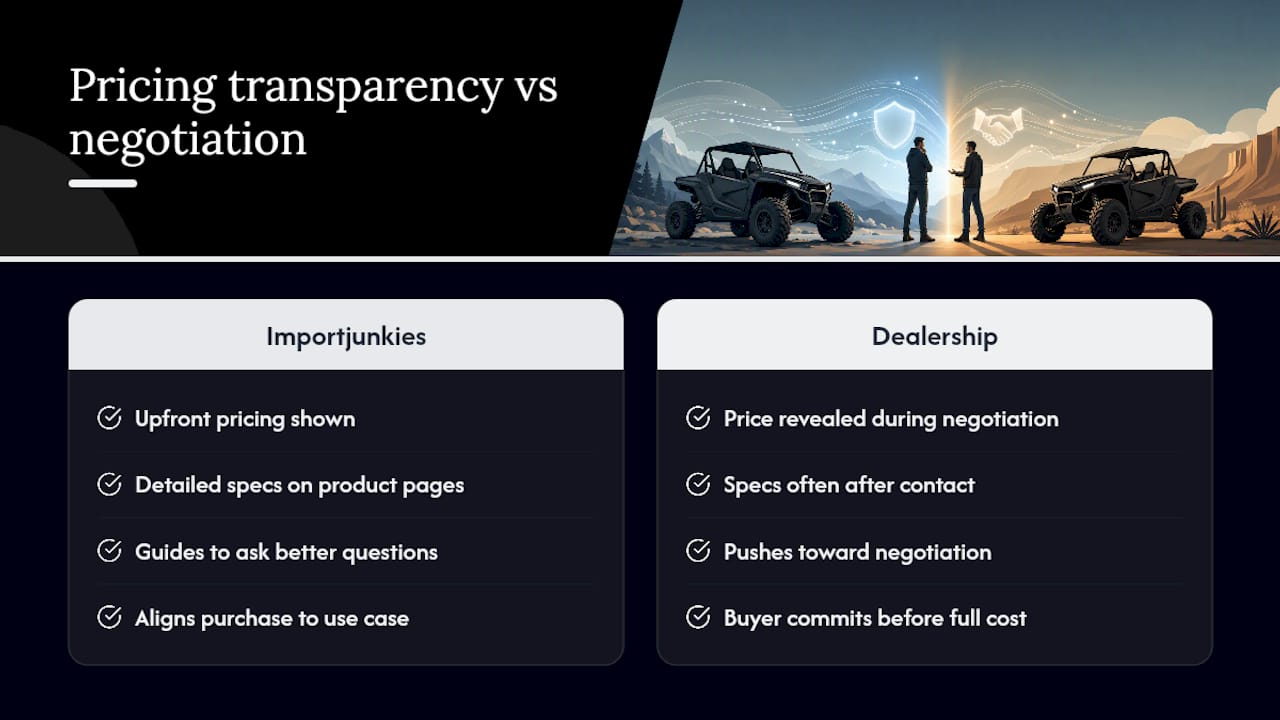
Most UTV shoppers get burned not by the base price but by what gets added after they’ve already mentally committed to buying. Importjunkies operates as a U.S.-based wholesale retailer, and its product pages list detailed specs and pricing upfront rather than pushing buyers toward a dealership negotiation that only reveals the real number at signing.
That pricing model lines up with what this entire buying decision comes down to: matching your actual use case, whether that’s property maintenance or weekend trail riding, to a machine you can afford without fee surprises. Importjunkies’ blog content, including its breakdowns on what a UTV actually is, exists to help buyers ask better questions before they spend money, not after.
Ready to Compare UTV Prices? Here’s Where to Start
If you’ve mapped your budget to one of the price bands above, the next move is comparing real product pages instead of guessing at averages. Importjunkies is a straightforward alternative to dealership markups for buyers who want wholesale pricing without the back-and-forth negotiation.
For entry-level and work-focused budgets, the 400cc 4x4 UTV with snow plow and dump bed covers property maintenance and seasonal plowing without the premium price tag of full-size performance machines. If your use case leans toward golf courses, campgrounds, or light commercial hauling rather than trail riding, the 48V electric golf cart utility UTV delivers low operating costs and no fuel spend. Both product pages list full specs and pricing upfront, so you can request a quote and compare your out-the-door number before you commit to a dealer visit. If you’re still narrowing down which category fits your budget, our page on affordable UTVs for work and weekend use is a solid next stop.
What People Get Wrong About UTV Pricing
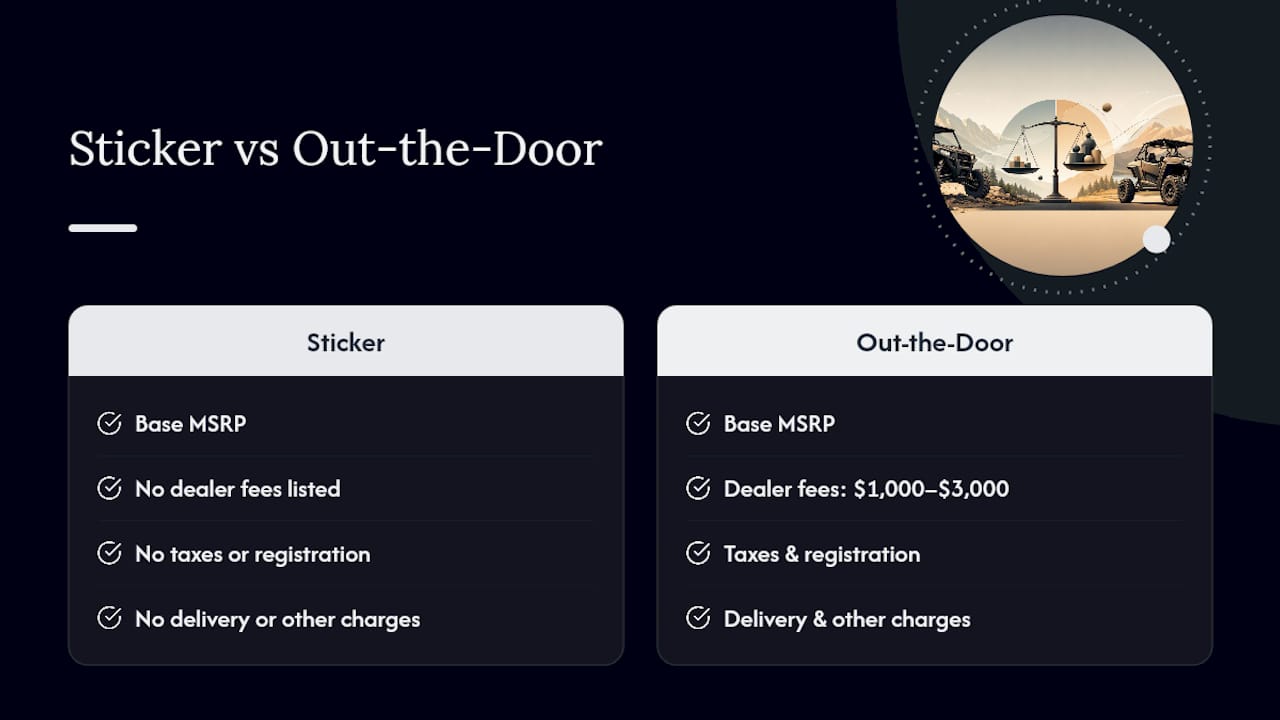
The biggest mistake buyers make isn’t overpaying for the machine. It’s underestimating everything that gets tacked on after the sticker price, then feeling blindsided at signing. That’s not a dealer conspiracy so much as a pricing structure the industry has never bothered to make transparent for first-time buyers.
The other misconception worth flagging: buyers assume more horsepower and a bigger price tag automatically mean better value. It doesn’t, not for most use cases. A four-seat mid-range UTV with solid suspension will outperform a stripped-down high-end trail machine for property work, hunting camp duty, or general utility hauling, and it’ll cost thousands less. Match the machine to the job first. Chase performance specs only after you’ve confirmed you actually need them.
Where I’d push back hardest on conventional buying advice: shoppers spend weeks comparing base MSRP across brands and almost no time comparing total out-the-door cost, which is the number that actually determines whether you got a good deal. A slightly higher sticker price with lower dealer fees and included delivery often beats a “cheaper” machine that nickel-and-dimes you at every step of the paperwork.
— Gary
Sources
- Utility Vehicles Used Values and New Prices
- Side-by-Side UTV Values & Pricing
- 2026 UTV Price Comparison Guide: Most Expensive vs Least Expensive Side-by-Sides


