


 Location
 Login
Login
The five vehicle classes that cover most U.S. campus transportation needs are electric golf carts and low-speed vehicles (LSVs), electric utility vehicles (UTVs), ADA-accessible minibuses and vans, microtransit and on-demand vans/shuttles, and e-bikes and scooters for last-mile connections. Here is the quick verdict on each:
- Electric golf carts / LSVs — best for tours, event shuttles, and short campus loops; quiet, affordable, and easy to park, but limited to 25 mph and paved surfaces
- Electric utility vehicles / UTVs — best for groundskeeping, maintenance, and deliveries; high payload, rugged, but not passenger-focused
- ADA-accessible minibuses and vans — best for fixed-route shuttles and Americans with Disabilities Act (ADA) compliance; highest capacity (12–27 seats), highest cost
- Microtransit / on-demand vans — best for safe-ride programs and demand-driven routing; flexible but require dispatch software
- E-bikes and scooters — best for last-mile connections and individual commutes; lowest cost, lowest capacity, weather-dependent
The Department of Transportation (DOT) classifies LSVs as vehicles with a top speed of 20–25 mph, which determines where they can legally operate on public roads adjacent to campus. ADA compliance is a federal obligation, not an option, for any vehicle used in a public transit role. Importjunkies carries electric golf carts and utility vehicles that fit the first two categories directly.
Key Takeaways
Matching vehicle class to campus use-case, then solving for charging, ADA compliance, and seasonal scaling, determines whether a campus fleet delivers long-term value or generates ongoing operational problems.
| Point | Details |
|---|---|
| Five core vehicle classes | Electric golf carts/LSVs, UTVs, ADA minibuses/vans, microtransit vans, and e-bikes cover most campus needs. |
| ADA compliance is mandatory | Any vehicle used in a public transit role must meet ADA boarding, securement, and communication requirements. |
| Battery specs drive total cost | Battery chemistry, warranty, and charging infrastructure matter more than sticker price over a 5–8 year lifecycle. |
| Combine fixed-route and on-demand | Pairing fixed loops with on-demand safe rides raises rider satisfaction and reduces parking pressure. |
| Importjunkies for LSVs and UTVs | Importjunkies offers electric golf carts and utility vehicles at direct-to-public pricing with no institutional contract required. |
Table of Contents
- What are the best vehicles for campus transportation needs?
- Why campuses choose electric and low-speed vehicles
- What customizations make a campus vehicle actually useful?
- Which technical specs should you compare before buying?
- How do campuses actually use each vehicle class?
- How do you select the right vehicle for your campus?
- How do you run campus vehicles efficiently at scale?
- What do real campus deployments look like?
- What most planners get wrong about campus fleet procurement
- Importjunkies has the electric golf carts and utility vehicles your campus needs
- Sources
What are the best vehicles for campus transportation needs?
Every campus runs a different mix of routes, events, and service obligations, so no single vehicle class covers everything. The practical approach is to match each class to the jobs it does well.
Electric golf carts and LSVs
Electric golf carts and DOT-classified LSVs seat 4–6 passengers and top out at 25 mph. On campus, they handle admissions tours, event shuttles between parking lots and venues, and short fixed loops between buildings. Operating costs are low: no fuel, minimal brake wear on regenerative models, and straightforward battery maintenance. The trade-off is range, typically 25–40 miles per charge on a standard 48V or 60V lead-acid pack, and legal restriction to roads posted at 35 mph or below. For campuses that need a low-speed vehicle option that is easy to deploy and store, LSVs are usually the first purchase.
Electric utility vehicles (UTVs)
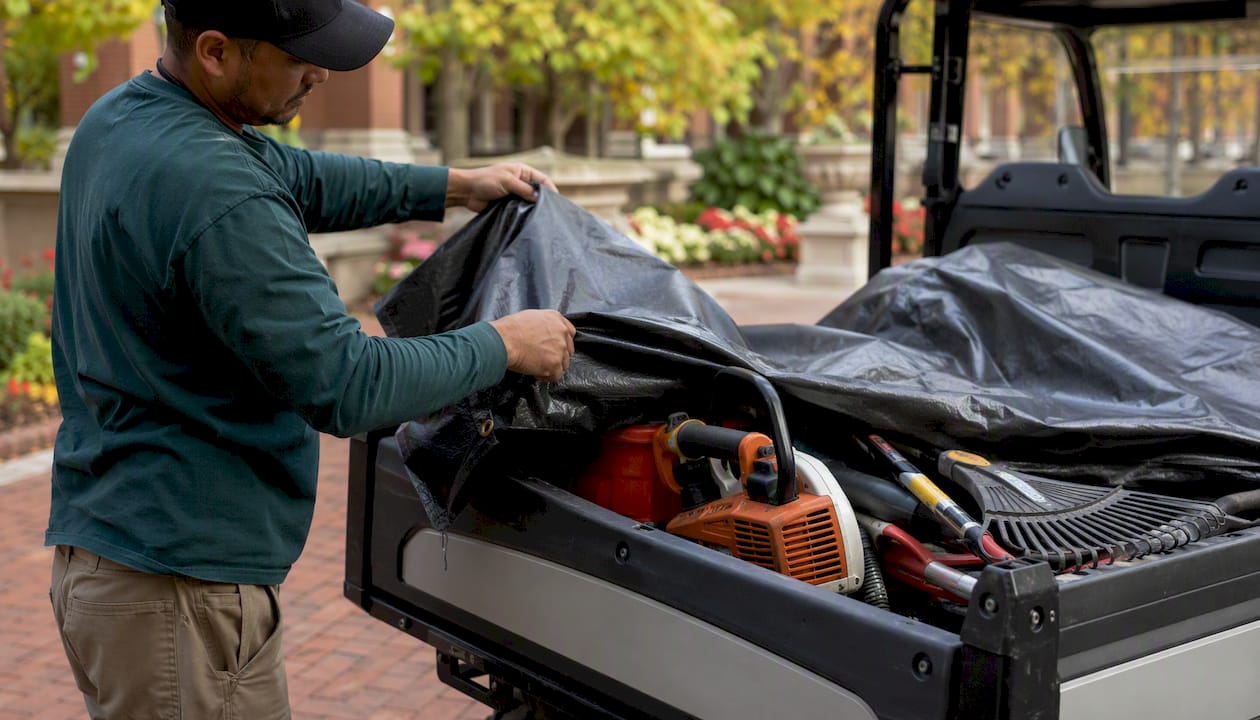
Electric UTVs prioritize payload over passengers. Facilities and groundskeeping teams use them to haul equipment, tow trailers, and move supplies across campus. Payload ratings in the utility-vehicle class commonly run from roughly 2,000 lb up to 7,500 lb depending on the platform, and manufacturer warranty periods typically run 3–4 years. They are not designed for passenger comfort on longer routes, but for maintenance operations they reduce fuel costs and cut noise near classrooms and residence halls. The operational benefits of electric utility vehicles extend beyond cost savings to quieter, cleaner campus environments.
ADA-accessible minibuses and vans
Minibuses and accessible vans seat 8–27 passengers and are the backbone of fixed-route shuttle systems. They must meet ADA boarding requirements, including ramps or lifts, securement positions, and audible/visual stop announcements. Capital cost is higher than LSVs, and they require a CDL or passenger endorsement for drivers depending on capacity. For campuses with significant distances between facilities or high ridership on core routes, leasing a hybrid or electric van is a practical and sustainable option, making this class non-negotiable via hybrid and electric van leasing.
Microtransit and on-demand vans
On-demand vans (typically 8–14 seats) run without fixed schedules, dispatched by rider request through an app. They work well for late-night safe-ride programs, ADA paratransit, and low-density routes where running a full bus is wasteful. The vehicle itself is similar to an accessible van, but the operating model requires dispatch software and driver app integration. Campus mobility experts note that combining fixed-route and on-demand models raises rider satisfaction and reduces parking pressure more effectively than either model alone.
E-bikes and scooters
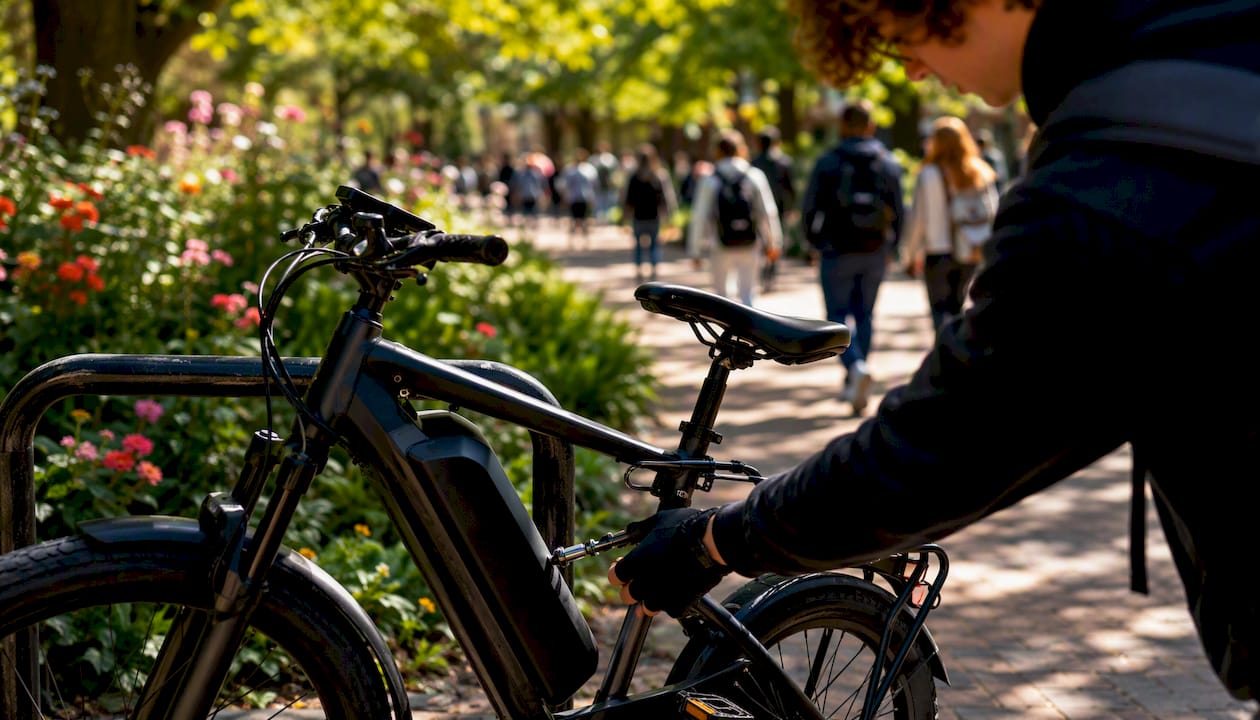
E-bikes and scooters fill the last-mile gap between transit stops and destinations. They work best on campuses with dedicated paths, mild climates, and a student population comfortable with micromobility. Per-unit cost is low, but fleet management, helmet policy, and weather limitations reduce their reliability as a primary transit solution. For course operations and light logistics, scooters also serve staff well, as covered in scooters for course operations.
Pro Tip: Before committing to a vehicle class, map your three highest-volume routes and your two most demanding ADA service obligations. Those five data points will tell you which classes you actually need versus which ones look appealing on paper.
Why campuses choose electric and low-speed vehicles
Electric and low-speed vehicles have become the default choice for most campus transport solutions, and the reasons go beyond sustainability branding.
Operational benefits:
- Lower per-mile operating cost compared to gasoline equivalents (no fuel, fewer moving parts)
- Quieter operation near academic buildings, libraries, and residential areas
- Smaller turning radius and footprint, which matters on pedestrian-heavy paths
- Simpler overnight charging at existing electrical infrastructure rather than fuel logistics
Sustainability benefits:
- Zero tailpipe emissions support campus carbon-reduction commitments
- UCLA’s campus plan explicitly targets electric vehicle adoption as a visible sustainability measure that supports recruitment and campus branding, a pattern repeated at institutions across the country
- Electric fleets generate data (energy consumption, miles driven) that feeds directly into sustainability reporting
Realistic limits you should plan for:
- Range per charge is finite. Most campus LSVs deliver 25–40 miles; larger electric vans vary widely by battery pack
- Charging time on standard Level 1 circuits runs 6–10 hours; Level 2 infrastructure cuts that significantly but requires upfront installation cost
- Cold weather reduces lithium-ion battery capacity, a real constraint in northern climates
- Rough terrain, steep grades, and heavy towing loads favor gas or diesel UTVs over electric equivalents
Regulatory callout: The DOT LSV classification applies to vehicles with a top speed of 20–25 mph. LSVs must meet Federal Motor Vehicle Safety Standard No. 500, which requires seat belts, headlights, turn signals, mirrors, and a windshield. Operating them on roads posted above 35 mph is prohibited in most states. ADA obligations under the Americans with Disabilities Act apply to any vehicle used in a public transit role, regardless of size, requiring accessible boarding, securement, and communication features.
What customizations make a campus vehicle actually useful?
A base vehicle straight from the factory rarely fits campus operations without modification. The right accessories turn a standard golf cart or utility vehicle into a purpose-built campus asset.
Common campus-ready configurations:
- Cargo beds and dump beds for groundskeeping, waste removal, and supply delivery
- Security enclosures (half-doors, full cab enclosures) for patrol vehicles and cold-weather operations
- LED light bars and strobes for security and event traffic control
- Branded signage and wraps for admissions tours and campus identity
- Heating and AC units for year-round passenger comfort in enclosed cabs
- Sprayer and groundskeeping attachments for turf management and pest control
- Tow hitches rated for trailer loads appropriate to the vehicle class
- ADA boarding ramps and lifts for vans and larger shuttle platforms
- Level 2 charging prep (onboard charger upgrades, charging port placement) to reduce overnight charge time
Modular seating is worth calling out specifically. Some platforms allow you to swap between passenger and cargo configurations, which lets a single vehicle serve tours on weekday mornings and supply runs in the afternoon. That flexibility reduces the total fleet size you need to purchase and store.
Pro Tip: Invest in a rear-facing camera and proximity sensors on any utility vehicle used in pedestrian-heavy areas. The cost is minimal at the time of purchase and avoids the liability and operational disruption of a pedestrian incident.
Which technical specs should you compare before buying?
Procurement decisions made on sticker price alone tend to produce regret. Battery chemistry, warranty terms, and real-world range at campus loads matter more to total cost of ownership than the purchase price. The U.S. Department of Energy’s overview of lithium-ion battery fundamentals explains how depth of discharge, thermal management, and cycle life directly affect real-world range and replacement timing, which is exactly the information you need before signing a purchase order.
Spec comparison dimensions
| Spec Dimension | What to Evaluate |
|---|---|
| Seating / capacity | Passengers per vehicle; ADA securement positions |
| Range per charge | Manufacturer claim vs. real-world at full load and campus terrain |
| Charging time | Level 1 vs. Level 2; depot charging vs. distributed outlets |
| Top speed / classification | LSV (20–25 mph) vs. street-legal; road posting limits |
| Payload / towing | Rated payload in lbs; trailer tongue weight rating |
| Approximate cost | Purchase price; total cost of ownership over 5 years |
| Warranty | Battery warranty separately from drivetrain; years and conditions |
| ADA compliance | Ramp/lift type; securement; audible/visual announcements |
| Sustainability metrics | kWh per mile; emissions reporting compatibility |
Must-ask vendor questions before you commit
- What is the battery chemistry (lithium-ion vs. lead-acid), and what is the battery warranty period and replacement cost?
- What is the real-world range at full passenger load on mixed terrain, not the manufacturer’s best-case figure?
- Which ADA features are standard and which are add-ons, and do they carry independent certification?
- Does the vendor offer a turnkey charging solution, including hardware, installation, and load management?
- What are the recommended maintenance intervals, and is there a local dealer or service network within your region?
- What is the current delivery lead time, and can the vendor accommodate seasonal fleet scaling (additional units for fall semester or homecoming)?
- What storage footprint does each unit require, and can the platform be stored compactly during low-enrollment periods?
How do campuses actually use each vehicle class?
Matching vehicle class to program is where procurement decisions get concrete. The table below maps common campus programs to the vehicle classes that fit them best.
| Campus Program | Best Vehicle Class | Typical Capacity | Notes |
|---|---|---|---|
| Admissions tours | Electric golf cart / LSV | 4–6 passengers | Branded wrap; quiet, low-speed |
| Event / gameday shuttles | LSV or accessible van | 6–14 passengers | High frequency; ADA access needed |
| Fixed-route campus loop | Minibus / accessible van | 12–27 passengers | CDL driver; fixed schedule |
| Maintenance and groundskeeping | Electric UTV | 1–2 operators + payload | Cargo bed; tow hitch |
| Security patrol | LSV or UTV with enclosure | 1–2 officers | Strobe lighting; radio mount |
| ADA / late-night safe rides | On-demand accessible van | 4–8 passengers | Dispatch app; ADA securement |
| Deliveries and mail | Electric UTV or cargo LSV | 1 operator + cargo | Dump bed or cargo box |
| Last-mile connections | E-bike / scooter | 1 rider | Path access; helmet policy |
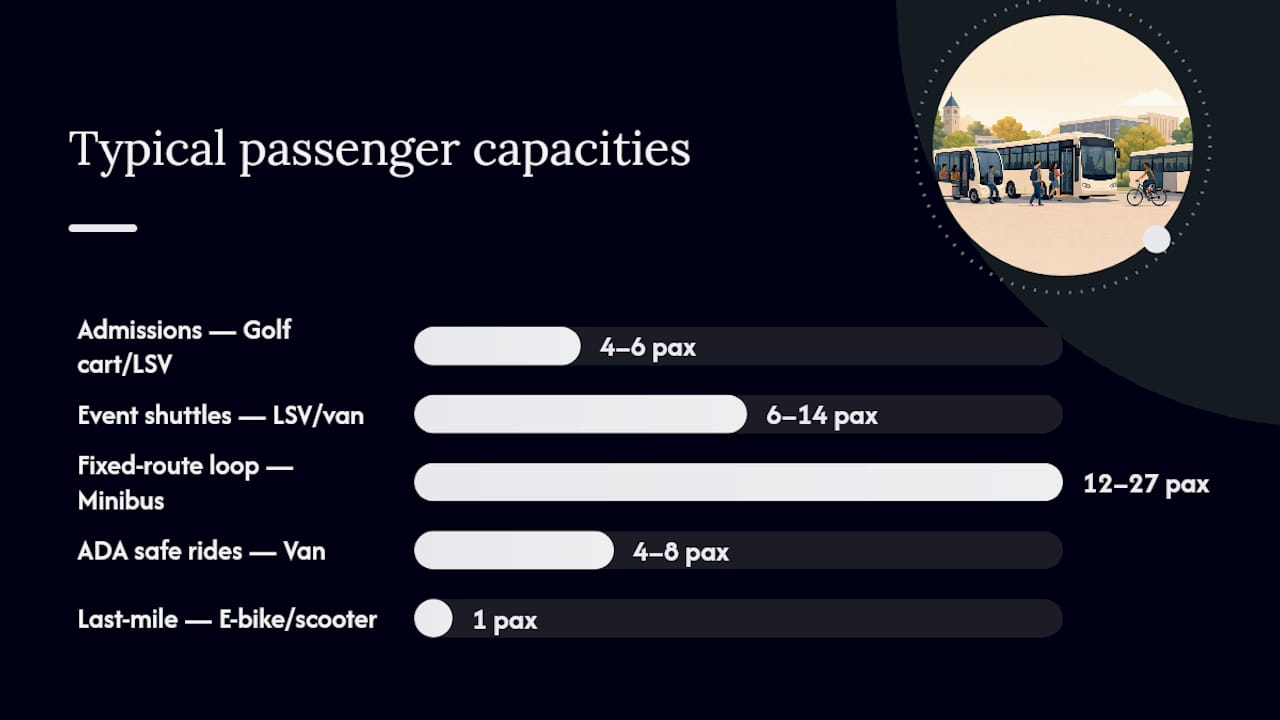
Fixed-route vs. on-demand throughput: A fixed-loop LSV running a 10-minute circuit can move roughly 24–36 passengers per hour at 4–6 seats per vehicle. An on-demand van serving the same route on request typically moves fewer passengers per hour but eliminates wait time for riders who need a specific pickup point, which is why safe-ride programs favor the on-demand model.
Seasonal scaling: Fall semester opening, homecoming, and graduation are the three peak periods most campuses face. Vehicles that store compactly and deploy quickly, without requiring year-round contracts or idle fleet costs, give you the flexibility to right-size operations. Planning for seasonal scaling at the procurement stage, rather than after the fact, is one of the more underappreciated decisions in campus fleet management.
How do you select the right vehicle for your campus?
A structured selection process prevents the most common procurement mistakes: buying on price alone, underspecifying ADA requirements, or choosing a vehicle class that does not match your actual route geometry.
Step-by-step selection checklist
- Map your routes and distances. Measure the longest route in your core network. If it exceeds 15 miles round-trip, verify that your candidate vehicle’s real-world range covers it with a 20% buffer for battery degradation.
- Identify your ADA obligations. Every vehicle used in a public transit role must meet ADA requirements. Determine how many ADA securement positions you need per vehicle and per route.
- Set your capacity targets. Use ridership data or event attendance figures to size vehicles. Undersizing forces multiple trips; oversizing wastes fuel and driver time.
- Define your terrain and weather conditions. Paved paths and mild climates favor electric LSVs. Unpaved terrain, steep grades, or harsh winters may require gas UTVs or all-wheel-drive platforms.
- Calculate total cost of ownership. Include purchase price, battery replacement (typically at 5–8 years for lithium-ion), charging infrastructure, maintenance, insurance, and driver training.
- Confirm charging infrastructure feasibility. Identify available electrical capacity at your depot or storage location before committing to an electric fleet.
- Evaluate storage and seasonal deployment. Choose vehicles that fit your storage footprint and can be deployed quickly for peak periods without long lead times.
Procurement red flags
- No ADA options listed or ADA features described as “available on request” with no certification documentation
- Vague warranty language that does not separately cover the battery pack and does not specify replacement cost
- No local dealer or service network within a reasonable distance, which means downtime when a vehicle needs repair
- Range claims based on ideal conditions only, with no real-world data at full load
- Unrealistic delivery timelines that do not account for fall semester demand spikes, when every campus is ordering simultaneously
How do you run campus vehicles efficiently at scale?
Buying the right vehicles is only half the job. How you operate them, track them, and integrate them with campus systems determines whether your fleet delivers value or sits underutilized.
Fixed-route vs. on-demand: when to combine them
Fixed routes work well for high-ridership corridors with predictable demand. On-demand microtransit works better for low-density routes, late-night safe rides, and ADA paratransit where demand is unpredictable. Via’s demand-predictive routing model illustrates how shared-ride algorithms can maximize vehicle occupancy and minimize detours, reducing both wait times and vehicle miles traveled. SHARE’s campus transit platform combines fixed-route scheduling, on-demand safety rides, real-time tracking, and dispatch automation in a single system, which reduces the duplicated work of managing separate tools. Combining both models, as Liftango’s university programs demonstrate, delivers the best balance of coverage and cost-effectiveness for most medium-size campuses.
Implementation checklist
- Deploy a rider-facing app with real-time vehicle location and ADA booking options
- Equip drivers with a driver app that handles dispatch, route updates, and incident reporting
- Install GPS tracking on every vehicle for real-time visibility and post-trip analysis
- Set up geofencing for event operations to trigger automatic route adjustments
- Configure automated performance dashboards that report utilization, on-time performance, and cost per trip
- Integrate incident reporting with campus police and emergency response protocols
KPIs to track from day one
- On-time performance (percentage of trips arriving within 3 minutes of schedule)
- Vehicle utilization (revenue hours per vehicle per day)
- Cost per passenger trip (total operating cost divided by passenger trips)
- Average wait time for on-demand requests
- Charging uptime (percentage of vehicles fully charged and available at shift start)
Pro Tip: Vehicle size directly affects route geometry. A 27-seat minibus cannot navigate the same tight campus paths that a 6-seat LSV handles easily. Map your tightest turning radius and lowest overhead clearance before finalizing vehicle dimensions, not after delivery.
What do real campus deployments look like?
Real-world examples give you benchmarks for what to expect from each vehicle class.
- LSVs for tours and events: Admissions offices at mid-size universities commonly run fleets of 4–6 seat LSVs for campus tours, replacing walking tours on larger campuses. The vehicles handle 8–12 tours per day during peak admission season with minimal maintenance downtime.
- Utility trams replacing secondary bus loops: Some campuses have replaced low-ridership secondary bus loops with electric utility trams, reducing per-trip operating costs and eliminating the CDL driver requirement for smaller routes. The operational savings come primarily from lower fuel and maintenance costs, not from capital cost reduction.
- On-demand safe-ride programs: On-demand safe-ride programs using accessible vans have reported meaningful reductions in late-night incident rates on campuses that previously relied on walking or personal vehicles. CharterUp’s campus shuttle program documentation shows how real-time dispatch visibility and route optimization enable campuses to scale these programs for events and peak periods without proportional increases in staffing.
- Maintenance fleet electrification: Facilities departments that have converted groundskeeping and delivery fleets to electric UTVs report quieter operations near academic buildings and reduced fuel procurement complexity. Payload and towing specs in the utility-vehicle class support the full range of campus maintenance tasks.
Institutional sustainability plans increasingly drive these decisions. UCLA’s published campus plan targets electric vehicle adoption explicitly, reflecting a broader pattern where fleet electrification serves both operational and reputational goals.
What most planners get wrong about campus fleet procurement
The biggest mistake I see in campus fleet procurement is treating the vehicle purchase as the end of the decision rather than the beginning. You can buy the right vehicle class and still end up with an underperforming fleet if you have not solved for charging infrastructure, operator training, and seasonal storage before the units arrive.
Pilot programs are underused. Running two or three vehicles on your highest-volume route for a full semester before committing to a full fleet order gives you real ridership data, real range data at your specific terrain and load, and real feedback from drivers and riders. That data is worth more than any manufacturer spec sheet.
Seasonal patterns also deserve more weight than they typically get. A fleet sized for fall semester opening will sit partially idle through winter break and summer sessions. Vehicles that store compactly and can be redeployed quickly for homecoming or graduation reduce the cost of idle assets. Lifecycle cost budgeting should account for battery replacement at the 5–8 year mark for lithium-ion packs, which is often the largest single cost event in a vehicle’s life and the one most commonly omitted from initial budget projections.
Pro Tip: Build operator training into your procurement contract, not as an afterthought. Drivers who understand battery management, charging habits, and ADA securement procedures extend vehicle life and reduce liability.
Importjunkies has the electric golf carts and utility vehicles your campus needs
Campus planners who need electric golf carts, LSVs, or utility vehicles without the long procurement timelines of institutional contracts have a direct option. Importjunkies sells electric golf carts and utility vehicles at direct-to-public wholesale pricing, with detailed specs, images, and pricing available online without a quote request.
The catalog includes the 48V Electric Golf Cart 4-Seater Renegade Edition for campus tours and short-loop shuttles, the LSV Four-Passenger Electric Coco Truck with AC and heat for year-round enclosed operation, and the Electric Golf Cart Limo LSV Six-Passenger Skyline Transporter for higher-capacity event and admissions use. Browse the full catalog at Importjunkies and contact the team directly to discuss procurement options for your campus fleet.
Sources
- Newsroom
- Campus Bus Software | University Safe Ride Shuttles - TransLoc
- Via Campus & Corporate Transportation
- SHARE campus transit solutions
Recommended
- How to select the best vehicles for your golf course – Saferwholesale || Import Junkies || Great Sports
- Low-Speed Vehicles on Courses: What Operators Need to Know – Saferwholesale || Import Junkies || Great Sports
- The Role of Scooters in Course Operations – Saferwholesale || Import Junkies || Great Sports
- Utility Vehicles for Resort Operations: 2026 Guide – Saferwholesale || Import Junkies || Great Sports


