


 Location
 Login
Login
TL;DR:
- Modern electric golf carts outperform common misconceptions with better performance, range, and quiet operation.
- They significantly reduce environmental impact by lowering CO2 emissions, noise, and wildlife disruption.
- Electric carts are cost-effective long-term, offering lower maintenance, energy savings, and modern features.
Most people assume electric golf carts are underpowered, short on range, and only suitable for flat fairways. That assumption is costing buyers real money and real opportunity. Modern electric carts have closed the performance gap significantly, and they bring a set of advantages that gas models simply cannot match. Zero emissions and quieter operation make them a natural fit for courses, neighborhoods, and resorts alike. Whether you’re a weekend golfer shopping for a personal cart or a course operator looking to upgrade your fleet, this guide breaks down the real-world benefits so you can make a confident, well-informed decision.
Table of Contents
- Environmental and community impact
- Performance, use cases, and convenience
- Total cost of ownership and maintenance
- Modern features and user experience
- Our perspective: Why electrics are the smart choice for most
- Ready for quiet, clean, modern driving? Explore our electric golf carts
- Frequently asked questions
Key Takeaways
| Point | Details |
|---|---|
| Zero emissions | Electric golf carts help reduce pollution and keep courses and neighborhoods greener. |
| Quiet operation | They deliver a more peaceful golfing and driving experience than gas-powered carts. |
| Lower maintenance costs | Electric golf carts cost less to maintain over time due to fewer mechanical parts. |
| Modern features | Expect advanced safety, comfort, and smart accessories with today’s electric models. |
| Ideal for most needs | Unless you haul heavy loads or traverse steep terrain, electric carts fit the bill for most users. |
Environmental and community impact
Now that we’ve set the stage, let’s look at why the environmental impact of your golf cart matters more than ever. This isn’t just about feeling good about your purchase. It’s about measurable outcomes that affect air quality, wildlife, and your relationship with the community around you.
The numbers are hard to ignore. Electric golf carts reduce CO2 by 4-5 tons per year per cart and run at only 50-60 decibels, which is roughly the volume of a normal conversation. Gas carts, by contrast, can push 70-75 decibels and emit exhaust fumes continuously during operation. On a busy course with dozens of carts running at once, that difference is enormous.
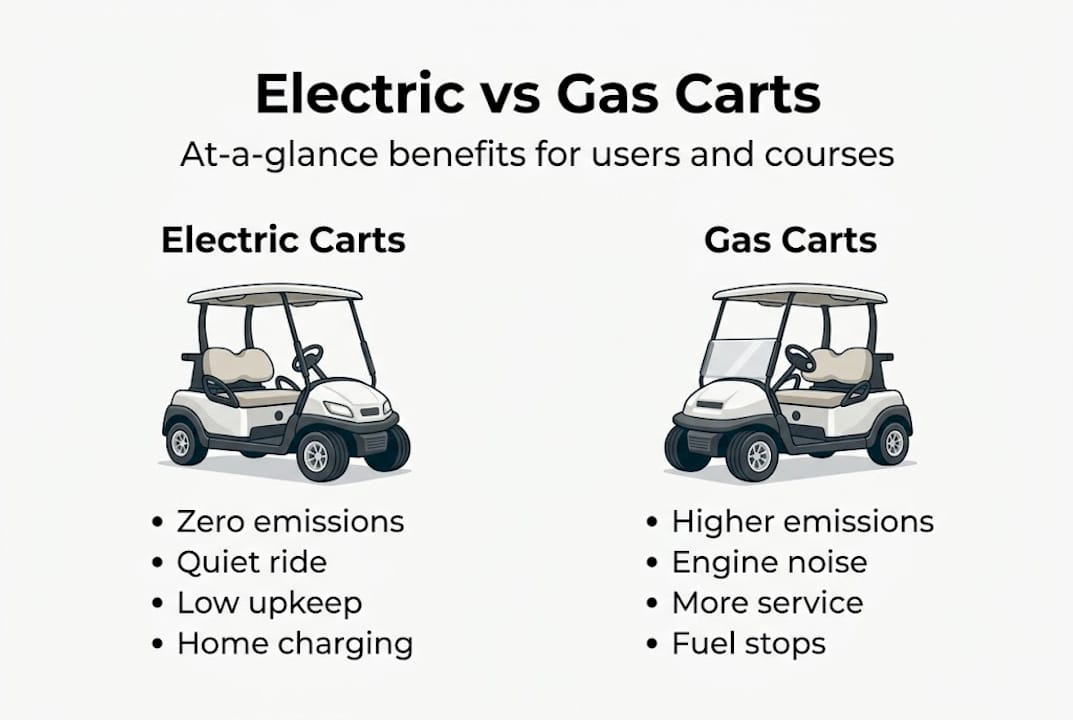
| Feature | Electric cart | Gas cart |
|---|---|---|
| CO2 emissions | Zero during operation | Ongoing exhaust output |
| Noise level | 50-60 dB | 70-75 dB |
| Air quality impact | None | Fuel combustion byproducts |
| Wildlife disruption | Minimal | Moderate to high |
The quieter operation of electric carts does more than improve the atmosphere on the course. It reduces stress on local wildlife, keeps neighbors happy if your course or community borders residential areas, and creates a noticeably more pleasant experience for golfers who want to focus on their game rather than engine noise.
“Courses that have transitioned to full electric fleets have reported dramatic reductions in both noise complaints and carbon output. Pebble Beach, for example, achieved a 62% cut in fleet emissions after switching to electric carts.”
For course operators, this kind of environmental credibility matters. Sustainability certifications are increasingly tied to fleet choices, and electric carts make it far easier to qualify for programs like Audubon International’s Cooperative Sanctuary Program. Here’s a quick look at what that shift means in practice:
- Improved air quality for staff and guests spending hours on the course
- Reduced noise pollution that benefits both players and surrounding neighborhoods
- Better standing with local regulators and environmental certification bodies
- Lower risk of fuel spills contaminating soil or water near greens and fairways
- Stronger appeal to eco-conscious golfers and corporate event clients
If you’re weighing your options, a detailed breakdown of electric vs. gas carts can help you see the full picture before you commit.
Pro Tip: If you manage a golf course, look into the Audubon Cooperative Sanctuary Program. Transitioning to an electric fleet is one of the fastest ways to earn certification points and market your course as environmentally responsible.
Performance, use cases, and convenience
Sustainability matters, but so does performance, so how do electric golf carts compare where it counts? The honest answer is: better than most people expect, especially for the most common use cases.
| Category | Electric cart | Gas cart |
|---|---|---|
| Power delivery | Instant torque, smooth | Gradual, engine-dependent |
| Typical range | 15-25 miles per charge | Unlimited with refueling |
| Top speed | 12-25 mph (model dependent) | 15-25 mph |
| Terrain handling | Best on flat to rolling | Better on steep inclines |
| Startup | Silent, instant | Engine crank required |
| Refueling/recharging | Home outlet overnight | Gas station required |
Electric carts perform best on flat terrain, short-range use, and neighborhood driving, which covers the majority of real-world applications. Here are the scenarios where electric clearly leads:
- Golf courses with flat to moderately rolling layouts where carts run multiple rounds per day
- Gated communities and neighborhoods where noise restrictions and clean air matter
- Resorts and hotels that need quiet, presentable transportation for guests
- Community centers and campuses with short point-to-point routes
- Personal recreational use where the cart stays close to home and charges overnight
One of the most underrated advantages is the convenience of home charging. You plug in at night, and the cart is ready in the morning. No trips to a gas station, no fuel storage, no worrying about running out mid-round if you plan your charge correctly. Maintenance is also simpler. No oil changes, no spark plugs, no fuel filters to replace on a regular schedule.
For families or individuals looking for the best cart for neighborhoods, electric models are almost always the right call. If you need seating for a group, electric 4-seater options offer a practical solution without the noise or emissions of gas.
Pro Tip: Before you buy, calculate your typical daily mileage. If you’re consistently under 20 miles per day, a standard 48V or 60V battery pack will handle your needs comfortably. If you push closer to 25-30 miles regularly, look for higher-capacity battery options or lithium-ion upgrades.
Total cost of ownership and maintenance
Of course, financial considerations matter, so let’s look at the true costs over time. The purchase price of an electric cart is often comparable to a gas model, but the ongoing costs tell a very different story.
Electric carts require less maintenance because they have fewer moving parts. There’s no combustion engine to service, no oil to change, and no fuel system to maintain. That simplicity translates directly into lower annual operating costs, which adds up significantly over a 5-10 year ownership period.
Here’s how the typical costs break down by category:
- Energy costs: Charging an electric cart typically costs $0.50-$1.50 per full charge depending on local electricity rates. Gas carts require regular fill-ups that fluctuate with fuel prices.
- Routine maintenance: Electric carts need battery checks, tire rotations, and brake inspections. Gas carts add oil changes, air filters, spark plugs, and fuel system service.
- Repairs: Fewer moving parts in electric motors mean fewer components that wear out or fail unexpectedly.
- Battery replacement: The one significant cost for electric owners is battery replacement every 4-6 years, which can run $800-$1,500 depending on battery type.
- Longevity: With proper care, electric carts can last 20-30 years. The drivetrain simply doesn’t wear the same way a combustion engine does.
For a cost comparison that goes deeper into the numbers, it’s worth reviewing the full breakdown before making a final decision. The upfront price difference, if any, typically evens out within two to three years of ownership.
Pro Tip: Avoid letting your battery drain completely before recharging. Keeping your charge between 20% and 80% on a regular basis extends battery life significantly and delays the cost of replacement.
Modern features and user experience
After costs, you’ll want your investment to provide modern comfort and safety, and here’s what you can expect from today’s electric golf carts. The technology has advanced considerably in the past decade, and the user experience gap between electric and gas has widened in electric’s favor.
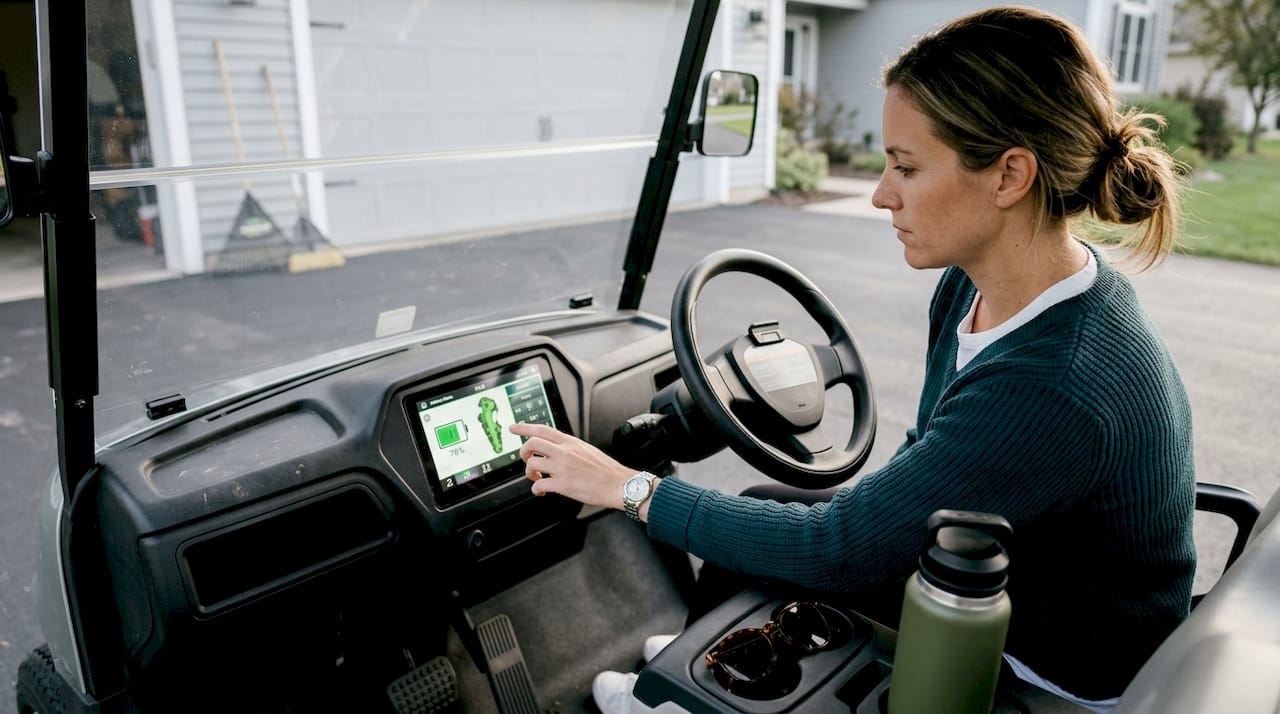
Electric carts are increasingly favored for amenities and customization options that gas models rarely offer at the same price point. Safety features like LED headlights, seat belts, and electronic speed control are now standard on many electric models. The smooth, linear acceleration of an electric motor also makes the ride more comfortable for passengers of all ages.
Here are the top five modern features you’ll commonly find on electric golf carts today:
- Electronic speed control that limits top speed for safety in neighborhoods or on crowded courses
- Integrated USB charging ports and Bluetooth audio for a connected, comfortable ride
- Custom seating configurations including 2-seat, 4-seat, and 6-seat layouts with weather enclosures
- Regenerative braking that recaptures energy on downhill stretches and extends range
- Street-legal LSV (low-speed vehicle) compliance on select models, allowing use on public roads up to 35 mph zones
For families, the quiet, smooth ride of an electric cart makes it genuinely enjoyable to use beyond the golf course. For course operators, a quiet fleet improves the overall atmosphere and reduces complaints from guests. If you’re interested in models built for road use, street-legal electric carts offer expanded versatility without sacrificing the core benefits of going electric.
Our perspective: Why electrics are the smart choice for most
Now that you know the evidence, here’s our best advice drawn from years in the industry. The conversation about electric versus gas carts used to be genuinely close. It isn’t anymore, at least not for most buyers.
The fears about range and power that once held electric carts back are largely outdated. Modern electric models handle the vast majority of recreational and fleet use cases without compromise. If your course is flat to moderately hilly, if you’re driving in a neighborhood, or if you want a cart for personal use around a resort or community, electric is almost certainly the better fit.
We’ll be honest: gas still makes sense in specific situations. Extreme elevation changes, heavy towing, or very long-range utility work are areas where a gas engine still has an edge. But those use cases represent a small fraction of buyers.
For everyone else, the combination of lower operating costs, quieter operation, simpler maintenance, and modern features makes electric the practical choice. If you want to dig deeper before deciding, our electric vs gas breakdown covers the edge cases in detail.
Ready for quiet, clean, modern driving? Explore our electric golf carts
If the benefits we’ve covered sound like what you’ve been looking for, the next step is finding the right model for your specific needs.

At Import Junkies, we carry a wide selection of electric golf carts built for golfers, families, course operators, and neighborhood drivers. The Renegade electric golf cart is a popular choice for buyers who want utility and style in one package, while the Blue Renegade X Edition adds a bold look with the same reliable performance. Browse our full inventory of golf carts to compare models, pricing, and features. Have questions? Our team is ready to help you find the right fit.
Frequently asked questions
How long do electric golf cart batteries last?
Most electric golf cart batteries last 4-6 years with proper maintenance and consistent charging habits. Lithium-ion batteries tend to last longer than traditional lead-acid options.
Are electric golf carts powerful enough for hilly terrain?
Electric carts work well on flat to gently rolling terrain, but gas models outperform on steep, demanding hills where sustained torque is needed. For most standard golf courses, electric handles the terrain without issue.
Do electric golf carts require less maintenance than gas carts?
Yes. Electric carts have fewer moving parts and eliminate the need for oil changes, spark plugs, and fuel system service, making routine upkeep simpler and less expensive.
How far can electric golf carts typically go on a single charge?
Most electric golf carts cover 15-25 miles per charge, depending on battery capacity, passenger load, and terrain. Upgrading to a larger or lithium-ion battery pack can push that range higher.
Recommended
- Electric Golf Cart vs Gas: Which Wins? – Saferwholesale || Import Junkies || Great Sports
- Lifted golf carts: benefits, types, and how to choose – Saferwholesale || Import Junkies || Great Sports
- Best Golf Cart for Neighborhoods: What to Buy – Saferwholesale || Import Junkies || Great Sports
- 48V Electric Golf Cart 4 Seater Renegade Edition Utility Golf UTV – Saferwholesale || Import Junkies || Great Sports
- How to choose golf clubs: beginner guide to smart investments - Golf Blab


