


 Location
 Login
Login
The average price of a good-quality electric bike in the U.S. lands close to $2,000, and most riders end up happiest in the $1,500 to $2,500 “sweet spot”, where battery capacity, motor reliability, and component quality finally line up. You’ll find bikes for $600 and bikes for $8,000, and both can be the wrong choice depending on how you actually plan to ride. What the sticker price never tells you is the ownership math: battery replacement, brake pads, tune-ups, and charging costs that pile up over five years. We’ll break down every price tier, the features driving those numbers, and what you should really budget once you own the thing.
Table of Contents
- Electric Bike Prices Broken Down by Tier
- What Actually Drives the Price of an Electric Bike?
- What Does an Electric Bike Really Cost Over Five Years?
- How to Save Real Money on an Electric Bike
- Which Price Band Fits Your Riding Style?
- How Import Junkies Helps Price-Conscious Buyers
- Do E-Bike Prices Vary by State?
- Does a Better Warranty Actually Save You Money?
- What This Means for Your Electric Bike Budget
- An Honest Read on E-Bike Pricing
- Ready to Compare Real Inventory and Prices?
- Frequently Asked Questions About Electric Bike Prices
- Sources
Electric Bike Prices Broken Down by Tier
Not every e-bike in a given price range delivers the same value, but tiers do a decent job predicting what you’re getting under the hood. REI’s pricing guidance puts a serviceable, reliable e-bike starting around $1,200 to $2,000, and that number holds up across most retailer catalogs we’ve looked at.
Here’s how the bands typically shake out:
- Under $800: Heavy hub motors, low-capacity batteries (often under 400Wh), mechanical rim or weak disc brakes, and warranties that barely cover 90 days. Fine for occasional flat-ground rides around the block, risky for anything else.
- $800 to $1,500: Better hub motors, batteries in the 400 to 500Wh range, hydraulic or better mechanical disc brakes, and a one-year warranty becomes common. Suitable for light commuting on mostly flat terrain.
- $1,500 to $2,500: The mid-range sweet spot. You’ll see quality mid-drive or premium hub motors, 500 to 700Wh batteries, hydraulic disc brakes, and warranties stretching to two or three years. This band handles daily commuting, moderate hills, and mixed terrain without complaint.
- $2,500 to $5,000: Full mid-drive systems from established brands, larger batteries, front or full suspension, and integrated lighting and displays. Good for cargo hauling, longer commutes, or light trail work.
- $5,000 and up: Purpose-built e-mountain bikes, high-torque motors, premium suspension, and carbon frames. This tier is for serious trail riders, not casual commuters.
Model testing from ElectricBikeReview consistently places standout commuter and utility e-bikes in that $1,500 to $3,000 window, which tracks with what we see across most legitimate retailers.
What Actually Drives the Price of an Electric Bike?
Battery capacity is the single biggest cost lever on any e-bike, and it’s measured in watt-hours (Wh), not just voltage. A 400Wh pack from an unknown cell supplier and a 500Wh pack from a recognized brand like Samsung or LG can cost the manufacturer wildly different amounts, and that gap shows up in your final price and in how many charge cycles the battery survives before it degrades.
Motor type matters just as much. Hub motors sit in the wheel, cost less to manufacture, and work fine for flat commutes. Mid-drive motors sit at the pedals, use the bike’s gears for better torque on hills, and cost more, but they’re worth the premium if you’re climbing regularly or hauling cargo. ElectricBikeReview’s testing notes that comparing miles of range per Wh, rather than raw battery size, often reveals better real-world value in mid-range bikes with efficient mid-drives and torque sensors.
Frame material, suspension, and brakes stack on top of that:
- Aluminum frames dominate the mid-range; carbon shows up mainly above $3,500 and mostly matters for weight-conscious trail riders.
- Front suspension helps on rough pavement or light trails; full suspension is really only necessary for genuine mountain biking.
- Hydraulic disc brakes cost more than mechanical but stop far more reliably, especially loaded down with cargo or riding in rain.
Component brand also drives price through integration. A bike built around a Bosch, Shimano, or Brose motor and battery system costs more upfront, but REI notes these systems reduce long-term service risk because parts and qualified repair shops are easier to find nationwide.
Pro Tip: When comparing two bikes at similar prices, check whether the battery and motor share the same brand. Mismatched off-brand components are harder to service and often fail without replacement parts available.
What Does an Electric Bike Really Cost Over Five Years?
Sticker price is only the entry fee. Annual maintenance for a well-maintained e-bike typically runs $100 to $300, covering brake pad swaps, tire replacement, chain lubrication, and the occasional tune-up. Skip these and you’ll pay more later when a neglected drivetrain wears out the motor’s gearing.
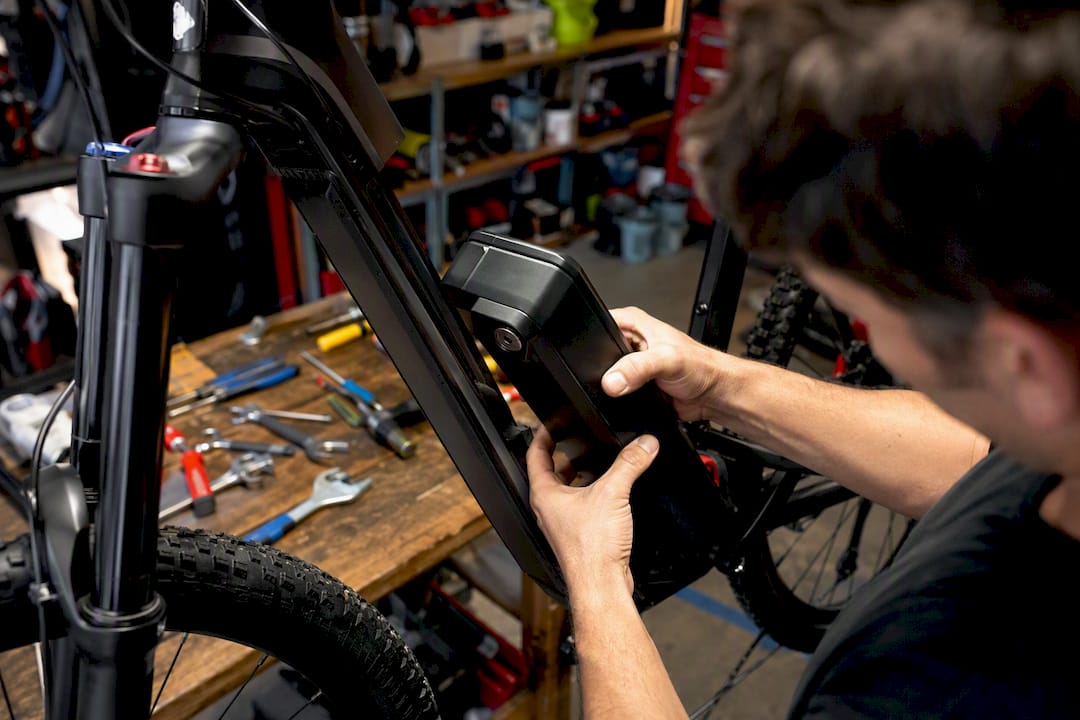
Battery replacement is the expense most new owners forget to plan for. REI’s guidance puts a replacement battery between roughly $300 and $900, and most riders need one within three to six years depending on charge habits and mileage. That’s not a maybe. It’s closer to a certainty if you’re riding several times a week.
| Ownership Cost Item | Typical Range | Frequency |
|---|---|---|
| Annual maintenance/consumables | $100 to $300 | Every year |
| Battery replacement | $300 to $900 | Once every 3 to 5 years |
| Accessories (lock, rack, lights, fenders) | $200 to $800 | One-time, expandable |
| Electricity to charge | $20 to $30 | Per year |
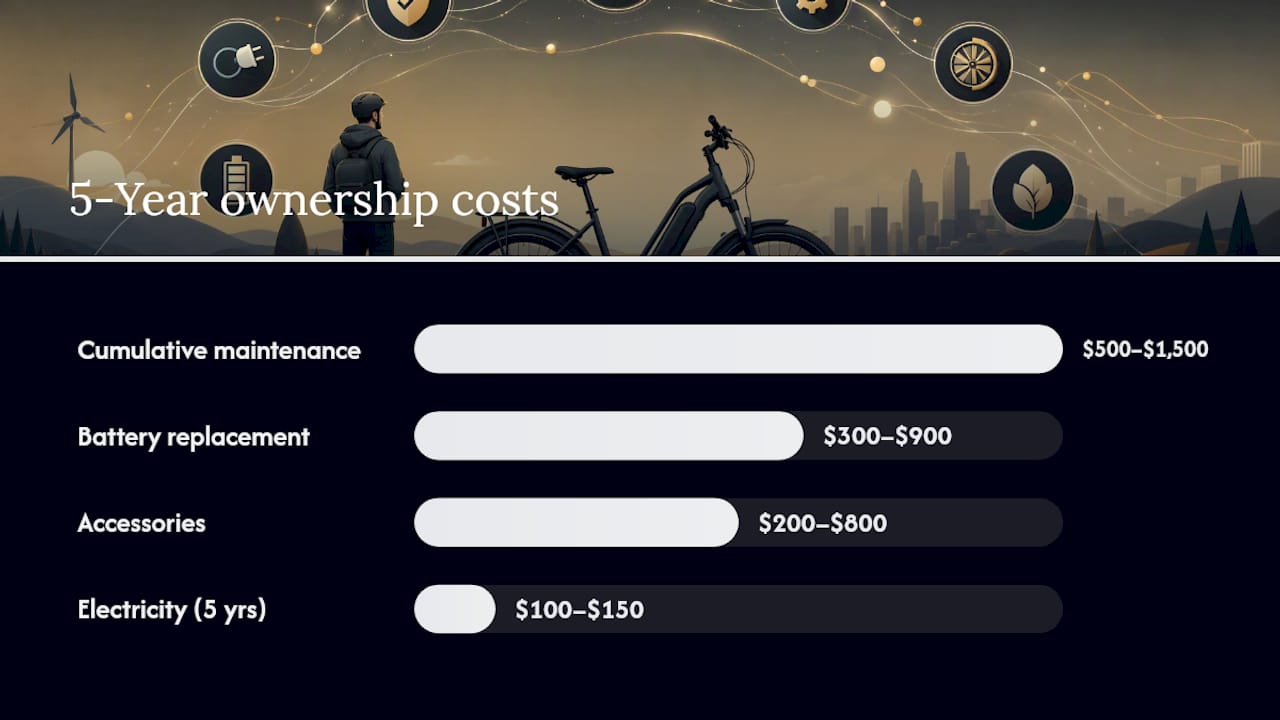
Charging an e-bike costs a fraction of fueling a car. A full charge on a 500Wh battery costs pennies at typical residential electricity rates, and even riding daily rarely pushes annual charging costs above $30. If you’re already thinking about cutting home energy costs, shifting your charging to off-peak hours can trim that even further.
Add it up over five years and a realistic projection looks like purchase price plus $200 to $800 in accessories, one $300 to $900 battery replacement, and $500 to $1,500 in cumulative maintenance. Budget for that total, not just the number on the price tag.
How to Save Real Money on an Electric Bike
Timing and diligence matter more than luck here.
- Watch for end-of-model-year clearance, typically late summer through fall, when retailers discount current-year stock to make room for next year’s lineup.
- Check certified refurbished and reseller marketplaces. Growing platforms in the U.S. are making refurbished e-bikes more accessible, often at 20 to 40% below new prices for comparable specs.
- Verify local and state rebate programs through your state energy office or utility provider before assuming you qualify; eligibility and rebate amounts vary significantly by state and even by city.
- Compare financing offers by total cost, not monthly payment. A low monthly number stretched over 36 months at high interest can cost more than paying a slightly higher monthly amount over 12.
If you’re buying used or refurbished, always ask for battery health data, test the motor under load, inspect the frame for cracks near welds, and request service records. A short test ride reveals more about motor responsiveness than any spec sheet.
Which Price Band Fits Your Riding Style?
Your use case should set your budget, not the other way around. A casual rider doing occasional errands has different non-negotiables than someone commuting 15 miles each way or hauling groceries with a cargo rack.
- Casual/recreational riders: Target $800 to $1,500. Look for at least 400Wh capacity, hydraulic or strong mechanical disc brakes, and a one-year warranty minimum.
- Daily commuters: Target $1,500 to $2,500. Prioritize 500Wh or higher batteries, hydraulic disc brakes, integrated lights, and at least a two-year warranty since you’re putting real mileage on the bike.
- Cargo haulers: Target $2,000 to $3,500. A mid-drive motor with strong torque, a reinforced frame rated for cargo weight, and hydraulic brakes are non-negotiable when you’re carrying loads.
- E-mountain bike riders: Target $3,000 and up. Full suspension, high-torque mid-drive motors, and trail-rated tires justify the added cost here.
Pro Tip: Before comparing models, write down your minimum Wh, brake type, and warranty length based on your rider type above. It keeps flashy marketing from talking you into a bike that doesn’t fit how you’ll actually ride.
How Import Junkies Helps Price-Conscious Buyers
Import Junkies carries both new and used electric bikes and related recreational vehicles, priced directly to the public through wholesale channels rather than through a traditional dealer markup. That structure matters if you’ve been pricing out mid-range e-bikes and feeling like every option assumes an unlimited budget.
If you’re still narrowing down what fits your riding style, a couple of on-site resources can help before you commit:
- The electric bike buying guide walks through matching features to your riding needs.
- How to compare e-bike models gives you a side-by-side framework before you buy.
Current inventory and pricing shift regularly, so checking product pages directly or contacting customer service is the fastest way to confirm what’s in stock at your target price point.
Do E-Bike Prices Vary by State?
The sticker price on an e-bike itself doesn’t change much state to state since most retailers, including online ones, sell at a consistent national price. What does change is what you pay on top of it.
A handful of states also treat e-bikes differently for registration purposes depending on motor class. Class 1 and Class 2 e-bikes (pedal-assist and throttle-assist, capped at 20 mph) generally don’t require registration or insurance anywhere in the U.S., but Class 3 e-bikes (assist up to 28 mph) trigger age restrictions or helmet laws in some states, and a few require registration similar to a moped. Check your state’s Department of Motor Vehicles classification rules before assuming your new bike is street legal without paperwork.
Rebate programs add another layer of regional variation. Some states and cities offer e-bike purchase incentives worth $300 to $1,500, while others offer nothing at all. There’s no federal e-bike rebate as of this writing, so any discount you find is a state, city, or utility-level program, and eligibility rules (income caps, residency requirements, purchase caps) vary enough that you need to verify directly with the issuing agency rather than trust a retailer’s blanket claim.
Does a Better Warranty Actually Save You Money?
Warranty length is one of the most overlooked variables in the price-versus-value equation. A $1,200 e-bike with a 90-day warranty and a $1,600 e-bike with a two-year warranty aren’t really $400 apart. If the battery or motor fails in month four on the cheaper bike, you’re paying full replacement cost out of pocket, which can easily exceed that $400 gap.
Most reputable mid-range and premium e-bikes now offer one to two years of coverage on the frame and electrical components, with some brands extending battery coverage separately since batteries degrade differently than mechanical parts. Read the fine print here: some warranties cover parts but not labor, which still leaves you paying a shop $50 to $100 an hour for diagnosis and installation.
Service plans, where offered, add another layer of value that’s easy to underprice mentally. A plan that includes a few free tune-ups in the first year can offset $100 to $200 in maintenance you’d otherwise pay separately. When you’re comparing two similarly priced bikes, treat warranty length and service plan inclusions as part of the actual price, not a bonus feature you’ll only think about if something breaks.
What This Means for Your Electric Bike Budget
Most riders should aim for the $1,500 to $2,500 tier, where battery capacity, motor reliability, and brake quality stop being a gamble.
| Point | Details |
|---|---|
| Target the sweet spot | Most riders get the best value between $1,500 and $2,500, balancing motor reliability and battery life. |
| Budget for battery replacement | Plan on $300 to $900 for a new battery within 3 to 5 years of regular riding. |
| Match motor type to terrain | Choose a mid-drive motor for hills or cargo hauling; hub motors suffice for flat commuting. |
| Verify state and local rebates | Sales tax and rebate eligibility vary by state, so confirm details before assuming savings. |
| Check Import Junkies inventory | Import Junkies sells new and used e-bikes at wholesale pricing directly to U.S. buyers. |
An Honest Read on E-Bike Pricing
The conventional advice treats price as the whole story: spend more, get more. That’s incomplete. What actually separates a good purchase from a bad one is whether the battery, motor, and brakes match how you’ll ride, not how much you spent to get them.
The bigger blind spot is that most buyers price the bike and forget to price the ownership. A $900 bike that needs a $600 battery replacement in year two was not actually cheap. A $2,200 bike with a Bosch or Shimano motor system that lasts eight years without a major failure probably was.
If you take one thing from this, let it be this: buy for your actual use case first, then let the price tier follow. Cargo haulers overpaying for e-mountain bike suspension and casual riders underbuying on brakes are the two most common, and most avoidable, mistakes we see.
Ready to Compare Real Inventory and Prices?
You’ve seen the tiers, the ownership math, and where the sweet spot sits. Import Junkies puts that same value logic into practice by selling new and used electric bikes and related vehicles directly to the public at wholesale pricing, without the dealer markup that inflates a lot of the mid-range options you’ll find elsewhere. For a rider watching the budget closely, that’s the difference between paying for the bike and paying for a showroom.
Browse a current option like the 500 Watt electric moped bicycle to see real specs and pricing side by side, or check the full catalog directly to compare what’s in stock against the price bands covered here. If a listed model isn’t a fit, reach out to customer service; inventory shifts often enough that the right price and spec combination for your rider type may already be available.
Frequently Asked Questions About Electric Bike Prices
How much is an e-bike on average in the U.S.? Most quality, serviceable electric bikes fall close to $2,000, with a practical mid-range sweet spot between $1,500 and $2,500 for daily commuting and mixed terrain.
What is the average ebike cost for casual, occasional riding? Casual riders can find reliable options in the $800 to $1,500 range, though anything under $800 typically sacrifices battery capacity and brake quality.
How much should I budget for electric bike maintenance each year? Plan on $100 to $300 annually for tune-ups, brake pads, tires, and chain maintenance, plus a one-time battery replacement of $300 to $900 within three to six years.
Does electric bike price 2026 differ much from prior years? Core price tiers have stayed fairly consistent, though refurbished and reseller marketplaces are expanding, giving buyers more ways to access mid-range specs below full retail.
Are electric bike prices the same in every state? The bike’s price generally stays consistent nationwide, but sales tax, registration rules for higher-speed Class 3 bikes, and available rebates all vary significantly by state.
Is a more expensive electric bike always the better value? Not necessarily. A mid-range bike matched to your actual riding needs, with a solid motor brand and adequate warranty, often outperforms an overpriced bike bought for features you’ll never use.
Sources
- How Much Do Electric Bikes Cost? | REI Expert Advice
- E-Bike Price Guide 2026: What You Get at Every Budget — EBIKE Delight
- Best electric bikes — ElectricBikeReview
- Upway launches online marketplace for refurbished e-bikes in US | TechCrunch
Recommended
- Electric bike buying guide: find the right e-bike for your ride – Saferwholesale || Import Junkies || Great Sports
- Electric Scooter Buying Guide for Better Deals – Saferwholesale || Import Junkies || Great Sports
- Electric Scooter vs Moped: Which Wins? – Saferwholesale || Import Junkies || Great Sports
- Future of Electric Vehicles 2026: What You Need to Know – Saferwholesale || Import Junkies || Great Sports


