


 Location
 Login
Login
TL;DR:
- Ensure your electric scooter has UL2272 certification for safety and fire risk reduction.
- Test ride and physically inspect the scooter to confirm comfort, build quality, and proper features.
- Focus on reputable dealers with support and clear return policies rather than solely on price or specs.
Buying an electric scooter sounds simple until you’re staring at dozens of models with conflicting specs, vague range claims, and no clear way to tell a safe scooter from a risky one. Many buyers end up with a scooter that underperforms, breaks down early, or worse, poses a fire hazard because of a poor battery. The good news is that a clear, step-by-step process removes most of that guesswork. This guide walks you through exactly what to check, what to skip, and how to shop with confidence so your money goes toward a scooter you’ll actually enjoy riding.
Table of Contents
- Understand key features and certifications
- Set your goals and budget for buying
- Test ride and inspect before buying
- Avoid common mistakes and shop smart
- Our take: Why experience beats specs when buying scooters
- Ready to find the best electric scooter for your needs?
- Frequently asked questions
Key Takeaways
| Point | Details |
|---|---|
| Prioritize certifications | Always choose UL2272-certified scooters to ensure safety and reliability. |
| Smart budgeting | Real-world range and support are worth paying for—avoid only focusing on the sticker price. |
| Test before committing | A hands-on ride and thorough inspection help you avoid disappointment or unsafe purchases. |
| Avoid common pitfalls | Steer clear of uncertified models and promises that sound too good to be true. |
Understand key features and certifications
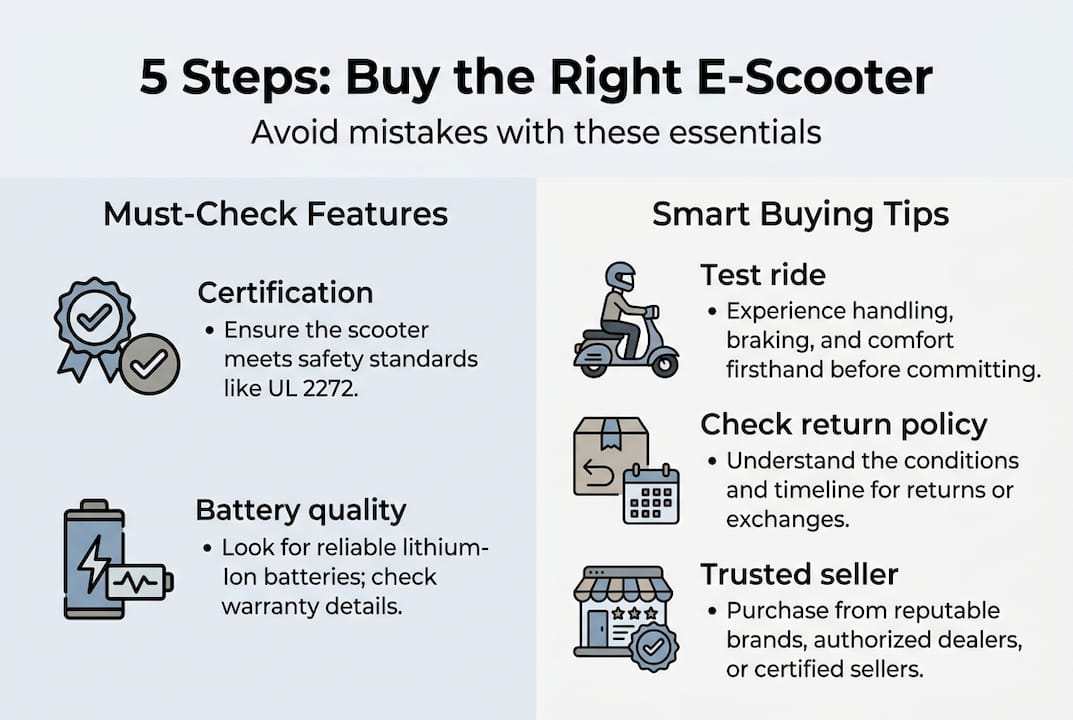
Before you look at price tags or colors, you need to understand what separates a reliable electric scooter from one that will let you down. The most important starting point is safety certification. In the U.S., the standard to look for is UL2272, a certification that covers the electrical system, battery, and charger. Certified models reduce fire risks by 78%, which is a significant margin when you consider how many battery fires involve uncertified products.
Beyond certification, battery quality is the next critical factor. Lithium-ion batteries vary widely in quality. Higher-grade cells hold their charge longer, degrade more slowly over time, and handle temperature changes better. A scooter with a cheap battery pack may claim a 25-mile range but deliver 14 miles after six months of regular use.
Range is one of the most misunderstood specs in the market. Manufacturers test under ideal conditions: flat roads, light riders, moderate temperatures, and consistent speed. Real-world riding rarely matches those conditions. A good rule of thumb is to multiply the claimed range by 0.65 to get a realistic number for your actual commute or ride.
Here are the core features worth prioritizing:
- UL2272 certification on the battery and electrical system
- Battery capacity measured in watt-hours (Wh): higher means longer range
- Tire type: pneumatic (air-filled) tires absorb bumps better than solid tires
- Suspension: front, rear, or dual suspension improves ride quality on uneven surfaces
- Braking system: disc brakes stop faster and more reliably than drum brakes
- Lighting: bright front headlights and rear brake lights are essential for visibility
You can read more about best electric scooter features to get a deeper breakdown of what each spec means in practice.
Build quality shows up in the details. Check the handlebar tightness, deck flex, and folding mechanism before you commit. A scooter that wobbles or creaks when new will only get worse over time.
Pro Tip: Never buy an uncertified scooter to save $50 upfront. Battery fires are not just a product loss; they are a safety risk to your home and family.
Set your goals and budget for buying
Now that you understand what to look for in terms of features and safety, think about what you want from your scooter and what you’re willing to spend. Getting clear on your goals before you shop prevents impulse purchases that look great online but fail in daily use.
Start by defining your primary use case. Are you commuting to work or school? Riding for fun on weekends? Running short errands around the neighborhood? Each use case points to different priorities. Commuters need reliability, range, and portability. Recreational riders may prioritize speed and ride comfort. Errand riders often need a foldable design and a basket or storage option.
Once you know your use case, calculate your actual daily distance. If your commute is 8 miles round trip, a scooter with a real-world range of 15 miles gives you a comfortable buffer. Remember the 35% reduction rule: a scooter claiming 20 miles of range realistically delivers about 13 miles under normal conditions.
Here’s a quick comparison of popular models to help you calibrate your budget:
| Model | Claimed range | Real-world range | Price |
|---|---|---|---|
| NIU KQi2 Pro | 40 miles | ~26 miles | ~$600 |
| Segway Max G2 | 43 miles | ~28 miles | ~$800 |
| Xiaomi 4 Pro | 35 miles | ~23 miles | ~$550 |
| Apollo City Pro | 38 miles | ~25 miles | ~$900 |
The Segway Max G2 delivers 32 real miles for around $800, while the NIU offers 31 miles for about $600, making both strong value options depending on your budget.
Budget planning should go beyond the sticker price. Factor in:
- Replacement tires: pneumatic tires wear out and cost $20 to $50 each
- Brake pads: disc brake pads need replacement every 6 to 12 months with regular use
- Charger replacement: OEM chargers can cost $30 to $80 if lost or damaged
- Accessories: helmet, lock, phone mount, and lights add $50 to $150
For a broader view of how electric scooters fit into the personal transportation landscape, the low-speed electric vehicle guide covers useful context on regulations and use cases.
Test ride and inspect before buying
With clear goals and a budget set, it’s time to go hands-on and make sure the scooter you’re considering is truly right for you. Reading specs is useful, but riding a scooter for even 10 minutes reveals things no product page will tell you.
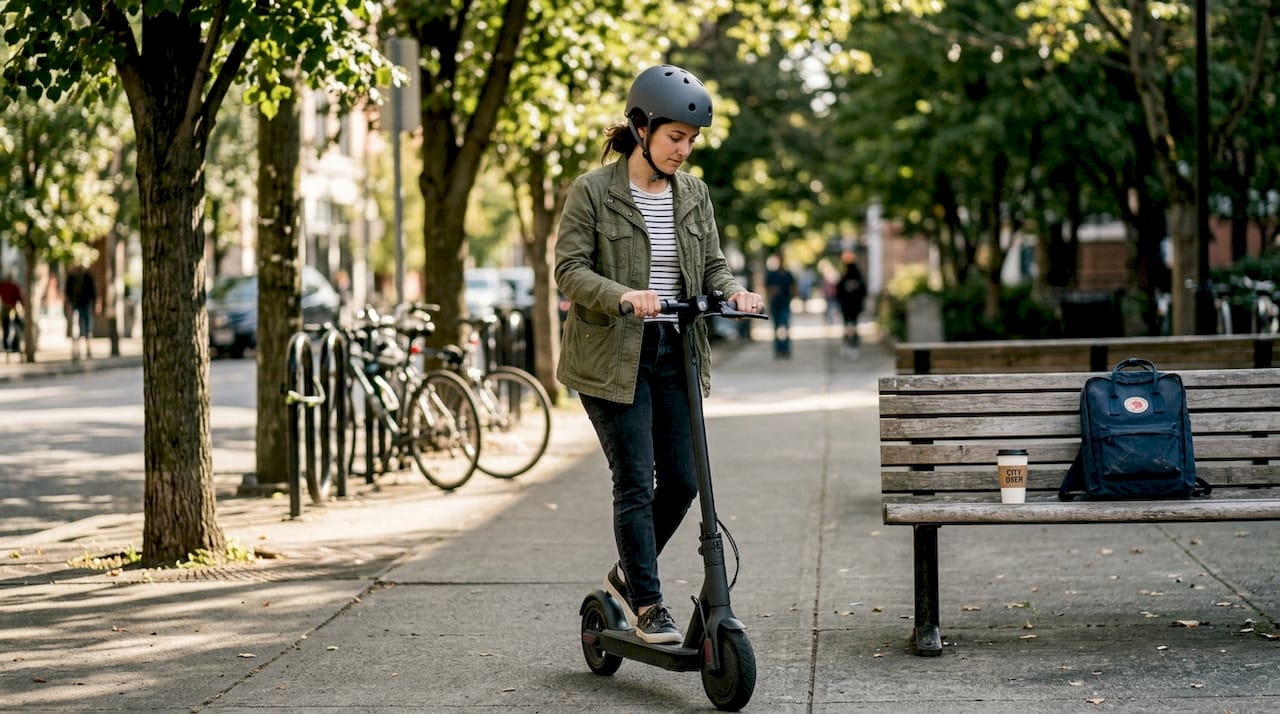
If possible, rent the model you’re considering for 24 hours before buying. Many cities now have rental fleets from brands like Bird or Lime that use scooters from popular manufacturers. A full day of riding lets you evaluate comfort over longer distances, test braking in real traffic, and feel how the scooter handles hills and rough pavement.
Here’s a step-by-step inspection checklist to run through before any purchase:
- Check the tires: Squeeze them. Pneumatic tires should have firm but slightly flexible pressure. Solid tires are harder and transmit more vibration.
- Test the brakes: Roll the scooter at walking speed and apply each brake independently. They should engage smoothly without grinding.
- Inspect the deck: Stand on it and shift your weight. There should be no flex, creak, or wobble.
- Fold and unfold the stem: It should lock securely with no play or rattle when locked.
- Check the lights: Turn on both the headlight and brake light. Dim lights are a safety issue, especially at night.
- Verify the display: Speed, battery level, and mode indicators should all function correctly.
Pro Tip: To estimate your real range, multiply the claimed range by 0.65, then reduce by another 10% if you weigh over 200 lbs or ride in temperatures below 40°F. This gives you a conservative but realistic number.
Also check the legal scooter requirements in your area before buying. Speed limits, helmet laws, and where you can ride vary by state and city. A scooter that’s perfect on paper may be restricted on your regular route.
For buyers considering used scooters, the same inspection principles from a used golf cart inspection apply: check for wear patterns, battery health indicators, and any signs of prior damage or repairs.
Avoid common mistakes and shop smart
Even after checking features and riding, the most common errors happen at the final decision and checkout. Knowing what to avoid is just as important as knowing what to look for.
The biggest mistake buyers make is choosing based on looks or a low price alone. A scooter that looks sleek in photos but lacks UL2272 certification, has no return policy, and comes from a seller with no support contact is a liability, not a deal.
Range is another area where buyers get burned. Cold weather reduces range by 20% and hills cut it by another 30%, which means a scooter that works fine in summer may leave you stranded in winter or on hilly terrain. Always account for your specific conditions, not just the average.
Here are the most common mistakes to avoid:
- Buying based on claimed range without applying the 35% real-world reduction
- Skipping certification checks: no UL2272 means no verified fire safety
- Ignoring after-sale support: if the seller doesn’t have a phone number or email, move on
- Overlooking the return policy: a 30-day return window protects you if the scooter underperforms
- Dismissing customer reviews: look for patterns in negative reviews, not just the star rating
- Choosing the cheapest option without comparing warranty terms
Warning: Uncertified electric scooters have been linked to residential fires and injuries. No price discount is worth that risk. Always verify UL2272 certification before purchasing.
Shop from dealers who specialize in certified, performance-tested scooters and who stand behind what they sell. You can also review commuter scooter mistakes to see what other buyers have learned the hard way before you repeat those errors.
Our take: Why experience beats specs when buying scooters
Spec sheets are a starting point, not a finish line. We’ve seen buyers spend hours comparing watt-hours and motor ratings, then end up disappointed because the scooter felt unstable at speed or the company ignored their support request after delivery. Numbers on a page can’t tell you how a scooter feels under your feet at 15 mph, or whether the company answers the phone when something goes wrong.
The buyers who get the most out of their scooters are the ones who test before they commit, ask about after-sale support, and buy from retailers with a real reputation to protect. Comfort features like handlebar grip quality, deck grip texture, and stem rigidity matter more in daily use than a 2-mile range advantage.
Our honest advice: spend less time obsessing over specs and more time evaluating the seller. A trustworthy retailer who carries our favorite commuter scooters and backs them with solid support is worth more than the cheapest listing you find on a marketplace with no return policy.
Ready to find the best electric scooter for your needs?
You now have the framework to shop with confidence. The next step is finding a retailer who carries certified, quality-tested scooters and supports you after the sale.

At Import Junkies, you can browse a full selection of certified electric scooters with detailed specs, honest pricing, and real customer support. Whether you’re looking for a reliable commuter or a fun weekend ride, the Import Junkies electric scooter shop makes it easy to compare models, check availability, and buy with confidence. No guesswork, no uncertified mystery brands. Just straightforward access to scooters that are built to perform and backed by people who know the product.
Frequently asked questions
What certification should I look for when buying an electric scooter?
Always choose a scooter with UL2272 certification, which covers the battery, electrical system, and charger. Certified models reduce fire hazards significantly compared to uncertified alternatives.
How do I know what range I really need on my scooter?
Calculate your daily travel distance and multiply the manufacturer’s claimed range by 0.65 to get a realistic estimate. Range claims exceed real-world results because testing happens under ideal conditions that rarely match everyday riding.
Is it okay to buy a scooter online without a test ride?
It’s best to test ride first using a 24-hour rental if possible, or buy from a retailer with a clear return policy. Test riding before purchase reveals comfort and performance issues that specs alone won’t show you.
What common mistakes do buyers make with electric scooters?
Many buyers focus only on looks or low prices and skip certification checks, range verification, and return policy review. Avoiding uncertified sources and sellers without support is one of the most important steps to a safe, satisfying purchase.
Recommended
- Street legal scooters explained: Requirements, types, and tips – Saferwholesale || Import Junkies || Great Sports
- Best Electric Scooter for Commuting – Saferwholesale || Import Junkies || Great Sports
- Low Speed Electric Vehicle Buying Guide – Saferwholesale || Import Junkies || Great Sports
- How to Choose a Dirt Bike Without Overpaying – Saferwholesale || Import Junkies || Great Sports


