


 Location
 Login
Login
TL;DR:
- Drivetrain features like selectable four-wheel drive and locking differentials are more critical to off-road performance than engine size.
- Suspension travel, ground clearance, and tire design directly influence an ATV’s capability on various terrains, requiring careful prioritization.
- Verifying payload capacity, towing limits, and the machine’s condition ensures safety and suitability, especially when purchasing used models.
An all-terrain vehicle (ATV) is defined as a motorized off-road vehicle designed to handle a wider variety of terrain than most other vehicles, and the features on your all-terrain vehicle features list determine whether it performs or fails when conditions get tough. Brands like Yamaha, Polaris, Honda, and Can-Am each build machines around a core set of specs: drivetrain type, suspension travel, ground clearance, tire design, and utility capacity. Whether you’re hauling gear across a farm, hunting remote backcountry, or riding trails for recreation, understanding these ATV features and uses before you buy is the difference between the right machine and an expensive mistake.
1. Drivetrain options and traction control systems
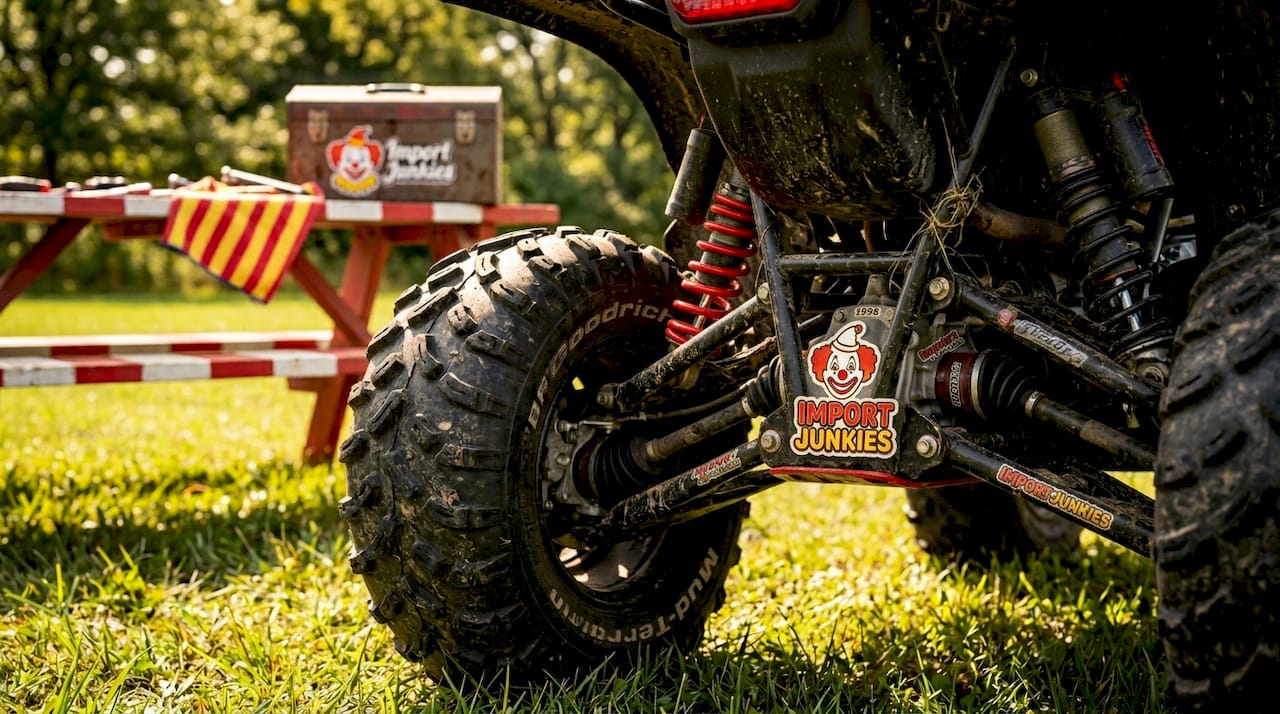
The drivetrain is the single most important feature on any off-road vehicle specifications sheet because it determines how power reaches the ground and how well you maintain control in difficult terrain. Drivetrain control systems rank higher than engine displacement for mud, water crossings, and sustained pulling performance. A 500cc ATV with a sophisticated 4WD system will outperform a 700cc machine with 2WD in technical conditions.
Here is what to look for in drivetrain and traction systems:
- Selectable 2WD/4WD: Lets you switch between rear-wheel drive for open trails and four-wheel drive for technical sections. Honda’s TraxLok system and Yamaha’s On-Command system both offer this with handlebar-mounted controls.
- Locking front differential: Forces both front wheels to turn at the same speed, which is critical in deep mud or loose sand. Can-Am’s Visco-4Lok automatically engages as slip is detected, while Polaris On-Demand AWD activates electronically.
- Limited-slip differential: A middle ground between open and locked. It allows some wheel speed difference but transfers torque to the wheel with more grip, useful on mixed terrain.
- Transmission type: Most ATVs use a belt-driven CVT (continuously variable transmission), which is smooth and low-maintenance. Honda’s DCT (dual-clutch transmission) on models like the FourTrax Foreman adds engine braking and a more connected feel on descents.
Pro Tip: If you ride in mud or steep terrain regularly, prioritize a model with a fully locking front differential over one with only limited-slip. The difference in recovery capability is significant.
2. Suspension design and travel distance
Suspension defines ride quality, traction consistency, and your ability to maintain speed over rough ground. The two main configurations are independent double A-arm suspension and solid rear axle setups, and each suits a different type of riding.
- Independent double A-arm (front and rear): Each wheel moves independently, which keeps tires in contact with the ground over uneven surfaces. This is standard on sport and premium utility ATVs from Yamaha, Polaris, and Can-Am.
- Solid rear axle: Common on entry-level utility ATVs. It is more durable under heavy loads but transmits more terrain shock to the rider.
- Suspension travel distance: More travel means the wheel can move further up and down before the frame bottoms out. The 2026 Yamaha YFZ450R delivers 9.8 inches of front travel and 11 inches of rear travel with adjustable KYB piggyback shocks. That spec matters when you’re hitting whoops or rock gardens at speed.
- Adjustable damping: Piggyback reservoir shocks allow you to tune compression and rebound settings. This is a feature found on sport quads and high-end utility models, not entry-level machines.
- Preload adjustment: Lets you stiffen or soften the spring rate to compensate for rider weight or cargo load. Useful on utility ATVs where the load changes frequently.
Pro Tip: For trail riding at speed, prioritize suspension travel over raw horsepower. A machine with 10+ inches of travel and adjustable damping will feel faster and safer than a more powerful ATV with stiff, non-adjustable shocks.
Utility-focused ATVs like the Kubota RTV-X series use independent double A-arm suspension specifically to maintain tire contact under heavy payload, which improves both traction and load stability on uneven ground.
3. Ground clearance and tire characteristics
Ground clearance is the distance between the lowest point of the frame or drivetrain and the ground, and it directly controls which obstacles you can clear without damage. Ground clearance typically ranges from about 7 to 12 inches across production ATVs. The Polaris Sportsman 570 sits at 11.5 inches, the Yamaha Grizzly EPS XT-R at 11.8 inches, and the Honda Rancher at 7.1 inches. That 4-inch gap between the Rancher and the Grizzly is the difference between clearing a deep rut and dragging your frame through it.
| Model | Ground Clearance | Best Terrain Use |
|---|---|---|
| Yamaha Grizzly EPS XT-R | 11.8 in | Rocks, deep ruts, technical trails |
| Polaris Sportsman 570 | 11.5 in | Mixed terrain, hunting, utility |
| Honda Rancher | 7.1 in | Mild trails, farm use, flat terrain |
Tires are equally important and often overlooked on a features list. Tread pattern, tire width, and air pressure all affect how the ATV handles specific surfaces:
- All-terrain tires: Balanced tread blocks for mixed surfaces. Standard on most production ATVs.
- Mud tires: Deep, widely spaced lugs that self-clean in thick mud. Brands like ITP and Maxxis make aftermarket options.
- Sand tires (paddle tires): Scoop-shaped paddles for forward thrust in loose sand. Useless on hard surfaces.
- Width classification: ATVs under 50 inches wide are classified differently than wider machines under local ordinances, which affects where you can legally ride them.
4. Utility features: payload, towing, and cargo
Utility ATVs are defined by their ability to move loads, and the numbers on the spec sheet tell you exactly what a machine can handle. The 2026 Kubota RTV-X Long Bed Standard carries a payload of 1,645 lbs and tows up to 1,300 lbs. Those figures put it in a different category from recreational ATVs, which typically top out at 400 to 600 lbs of towing capacity.
| Feature | Kubota RTV-X Long Bed | Typical Recreational ATV |
|---|---|---|
| Payload capacity | 1,645 lbs | 100-300 lbs |
| Towing capacity | 1,300 lbs | 400-600 lbs |
| Suspension type | Independent double A-arm | Varies |
| Ground clearance | 9.4 in | 7-12 in |
Beyond raw numbers, the physical cargo features matter just as much:
- Front and rear cargo racks: Standard on most utility ATVs. Rear rack capacity is usually rated separately from total payload.
- Dump bed: Hydraulic or manual dump beds on side-by-side utility vehicles speed up material handling significantly.
- Receiver hitch: A 2-inch receiver hitch allows you to connect standard trailer equipment, which is more practical than a ball-only hitch for varied work tasks.
- Electric power steering (EPS): Reduces fatigue during low-speed work tasks and improves control when towing. It is a feature worth prioritizing on any utility-focused purchase.
- Winch system: A factory or aftermarket winch rated at 2,500 to 4,500 lbs is standard equipment for serious utility and recovery work.
For buyers comparing utility vehicles, the utility vehicles checklist at Importjunkies breaks down these specs in a practical format. Keep in mind that feature lists must be paired with actual machine condition. Inspect CV boots, suspension components, and frame welds to confirm that the rated capabilities are still real on any used machine.
5. Safety and legal features for public and off-road use
Safety features and legal classifications are not optional considerations. They directly affect where you can ride and what happens when something goes wrong. Width-based ATV classification under ordinances like Cass County’s rules defines Class 1 ATVs as 50 inches or less in width with a 30 mph speed limit on county highways, and Class 2 as more than 50 inches up to 65 inches with highway-posted speed limits. Buying a machine that is 52 inches wide without knowing your county’s classification rules can restrict where you legally operate it.
Key safety features to verify before purchase:
- Hydraulic disc brakes: Four-wheel disc brakes provide consistent stopping power in wet and muddy conditions. Drum brakes on rear axles are less effective and harder to maintain.
- Handlebar-mounted kill switch: A tethered kill switch cuts the engine if you are thrown from the machine. This is a standard safety requirement in most states.
- Operator certification: Many states require ATV safety course completion before riding on public land. The ATV Safety Institute (ASI) offers nationally recognized certification.
- Helmet and protective gear requirements: Several states mandate helmets for all riders, not just minors. Check your state’s off-highway vehicle (OHV) regulations before your first ride.
- Speed limiters: Some models include adjustable speed limiters for new or younger riders, which is a practical feature for families.
Compliance with local ATV laws affects feature selection directly. Width, speed capability, and lighting equipment all factor into whether a machine qualifies for road or trail use in your area.
Key takeaways
The most capable ATV is the one whose drivetrain, suspension, clearance, and payload specs match your specific terrain and workload, not the one with the largest engine.
| Point | Details |
|---|---|
| Drivetrain over displacement | Selectable 4WD and locking differentials matter more than engine CC for technical terrain. |
| Suspension travel numbers | Look for 9+ inches of travel with adjustable damping for trail riding at speed. |
| Ground clearance range | Models range from 7.1 in to 11.8 in; match clearance to your typical obstacle height. |
| Utility payload specs | Verify towing and payload figures against your actual hauling needs before buying. |
| Legal width classification | ATVs over 50 inches wide face different speed and road-use rules under local ordinances. |
What I’ve learned about prioritizing ATV features
After spending time evaluating ATVs across hunting, utility, and recreational contexts, the pattern I keep seeing is that buyers fixate on engine size and overlook drivetrain sophistication. A 450cc machine with Polaris On-Demand AWD and a locking front differential will get you out of a mud hole that stops a 700cc ATV with open differentials cold. Traction control systems define real-world off-road capability more than raw engine output.
On suspension, my preference shifts based on use. For fast trail riding, I want maximum travel and adjustable damping. For slow utility work with heavy loads, a stiffer setup with solid rear axle geometry actually holds up better over time. Trying to buy one machine that does both perfectly usually means compromising on both.
The feature that buyers most consistently underestimate is payload and towing capacity relative to their actual use. If you plan to pull a loaded trailer or run a plow, verify the numbers against what you will actually attach. And if you are buying used, inspect the CV boots, check the frame for cracks, and test the 4WD engagement before any money changes hands. A feature list is only as good as the condition of the machine behind it.
— Gary
Find your next ATV at Importjunkies
Importjunkies carries utility and recreational ATVs built around the features that matter most for real off-road and work use.
The MSA 300cc 4x4 ATV with Snow Plow combines four-wheel drive, a front-mounted plow, and utility-style construction in one machine. For buyers who need more capacity, the 400cc 4x4 with Snow Plow and VX Dump Bed adds a hydraulic dump bed for serious material handling. Both models are available to browse, compare, and purchase directly through Importjunkies with competitive wholesale pricing. If you want a broader look at off-road vehicle types before deciding, that resource is worth reviewing first.
FAQ
What features matter most on an ATV?
Drivetrain type, suspension travel, and ground clearance are the three most critical features because they determine traction, ride quality, and terrain accessibility. Payload and towing capacity matter most for utility-focused buyers.
What is the difference between Class 1 and Class 2 ATVs?
Class 1 ATVs are 50 inches or less in width with a 30 mph speed limit on county highways, while Class 2 ATVs range from 50 to 65 inches wide and can travel at posted highway speeds under ordinances like Cass County’s regulations.
How much ground clearance do I need for off-road riding?
Most off-road riders benefit from at least 10 inches of ground clearance for technical terrain. Models like the Polaris Sportsman 570 at 11.5 inches and the Yamaha Grizzly EPS XT-R at 11.8 inches handle rocks and deep ruts without frame contact.
Are electric ATVs capable for serious off-road use?
High-end electric ATV systems reach 10,000 watts and 72V configurations, enabling speeds of 70 to 100 km/h with ranges of 30 to 60 km depending on terrain. They deliver instant torque but require careful range planning on longer rides.
How do I verify ATV features on a used machine?
Inspect CV boots, suspension bushings, and frame welds in person before purchasing. A feature listed on the spec sheet only holds value if the components behind it are in working condition, so a physical inspection is non-negotiable on any used ATV purchase.
Recommended
- Must-Have Features in UTVs: Your 2026 Buyer’s Guide – Saferwholesale || Import Junkies || Great Sports
- Your guide to every type of off-road vehicle – Saferwholesale || Import Junkies || Great Sports
- The ultimate utility vehicles checklist for smart buyers – Saferwholesale || Import Junkies || Great Sports
- Golf cart features: a complete buyer’s guide for 2026 – Saferwholesale || Import Junkies || Great Sports


