


 Location
 Login
Login
TL;DR:
- Reducing golf cart operating costs involves proactive maintenance, smart battery choices, and technology-driven management. Lithium batteries significantly lower long-term expenses by reducing maintenance and lasting longer than lead-acid options. Implementing daily routines, usage-based maintenance, and fleet management software further cuts downtime, repairs, and energy costs.
Reducing golf cart operating costs is defined as the practice of lowering total fleet expenses through proactive maintenance, smart battery selection, and technology-driven management. For golf course managers and small business operators, this is not a minor line item. Lead-acid battery maintenance labor alone can cost $500–$1,400 per month before you factor in downtime. The industry term for evaluating these expenses is total cost of ownership (TCO), and it covers everything from battery replacement cycles to emergency repair bills. Understanding TCO is the first step toward making decisions that actually save money.
What are the main contributors to golf cart operating costs?
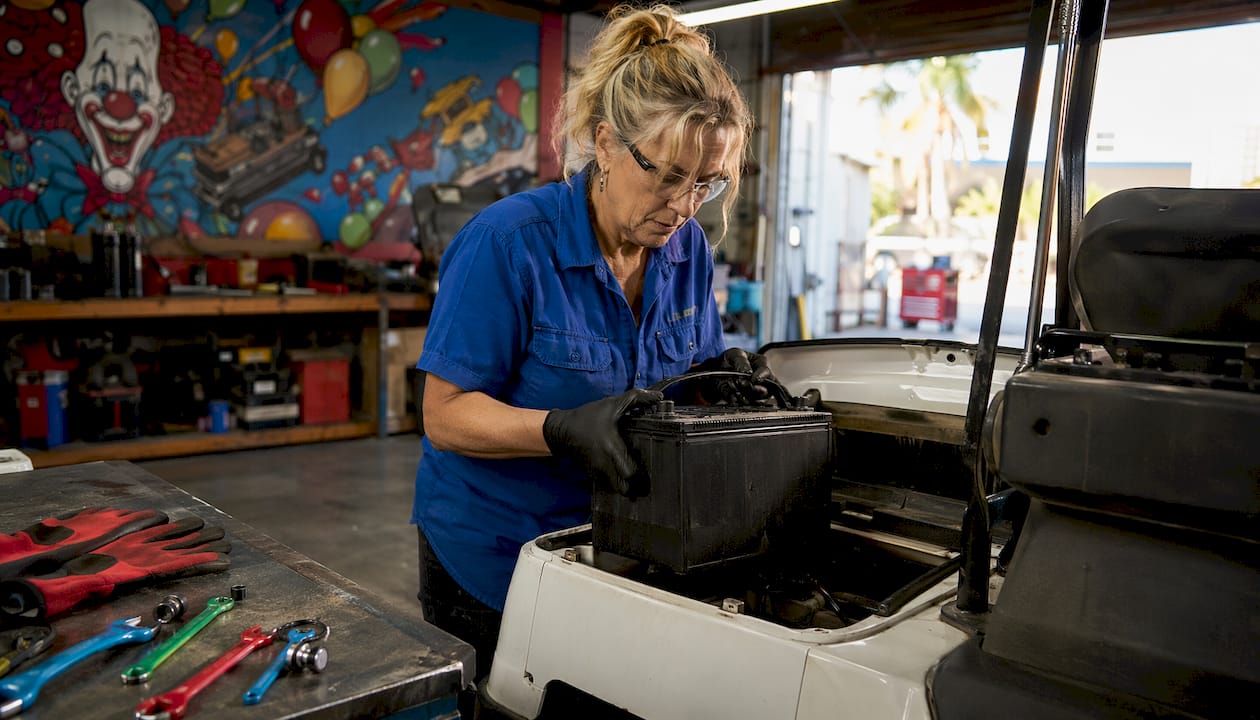
Battery maintenance is the single largest controllable cost in most fleets. Lead-acid battery upkeep for a 30-cart fleet consumes 20–40 staff hours every month. That time goes toward watering cells, cleaning corrosion, running equalization charges, and troubleshooting failures.
Beyond batteries, several other cost drivers add up fast:
- Emergency repairs: Reactive fixes cost significantly more than planned maintenance. A cart that breaks down mid-round pulls staff away from other duties and creates guest complaints.
- Downtime losses: Every cart sitting in the shop is money parked in the garage. On a busy Saturday, a single unavailable cart can mean lost rental revenue.
- Fuel and energy waste: Gas carts require ongoing fuel purchases, oil changes, and engine service. Electric carts still carry charging costs, especially with inefficient chargers or poor charging habits.
- Turf damage: Carts with worn tires or misaligned wheels cause ruts and turf damage, leading to costly course repairs.
- Labor inefficiency: Staff spending hours on battery maintenance cannot focus on guest service or other operations.
The table below shows how these cost categories compare in a typical 30-cart commercial fleet:
| Cost Category | Estimated Monthly Impact |
|---|---|
| Lead-acid battery labor | $500–$1,400 |
| Emergency repairs | Higher than planned maintenance |
| Downtime revenue loss | Varies by season and cart count |
| Fuel or energy costs | Ongoing, varies by cart type |
| Turf and equipment damage | Periodic, often underestimated |
Understanding total cost of ownership is critical here. Upfront battery price is far less important than the long-term operational costs that accumulate month after month.
How can proper maintenance and daily routines reduce golf cart downtime?
Shifting from reactive to planned maintenance is the most reliable way to cut emergency repair costs and keep your fleet available. When a problem is caught during a morning inspection, it costs a fraction of what it costs when a cart fails on the course.
A practical daily and weekly routine looks like this:
- Daily battery check: Inspect charge levels, look for corrosion on terminals, and confirm water levels on lead-acid units before the first tee time.
- Brake inspection: Test brakes on every cart before it goes out. Worn brakes create liability and accelerate mechanical wear.
- Tire pressure check: Low tire pressure increases rolling resistance, drains batteries faster, and causes uneven turf wear.
- Corrosion cleaning: Clean battery terminals weekly with a baking soda solution to prevent resistance buildup that shortens battery life.
- Fluid and belt checks: On gas carts, check oil, coolant, and drive belts weekly. Catching a cracked belt early costs $20. Ignoring it costs $200 or more.
Consistent daily routines also improve fleet availability. When you know the condition of every cart before the day starts, you can pull units for service without disrupting operations. A vehicle maintenance schedule built around your fleet’s actual usage patterns is more effective than a generic calendar-based approach.
Pro Tip: Schedule maintenance based on battery discharge cycles or mileage rather than fixed calendar dates. A cart used three times daily needs service far sooner than one used three times weekly, and treating them the same wastes money on unnecessary checks while missing real wear.
What are the cost benefits of switching to lithium golf cart batteries?
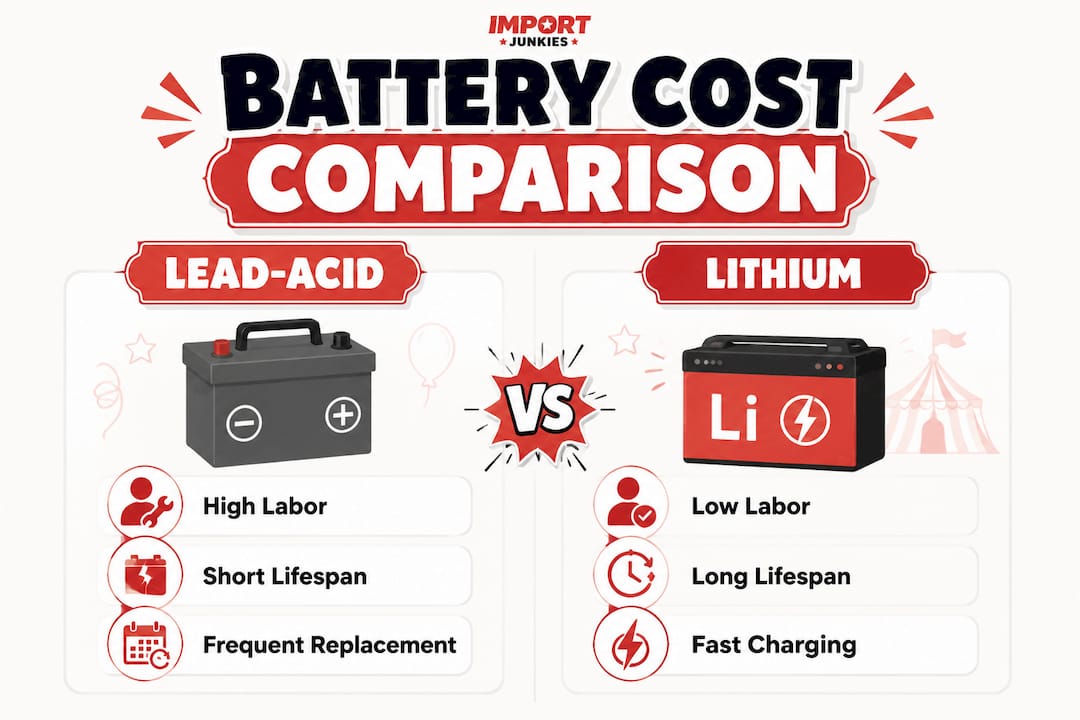
Lithium batteries deliver the largest single reduction in ongoing fleet expenses available today. Transitioning from lead-acid to lithium reduces routine maintenance labor by 70–85%, saving 15–32 labor hours monthly in a 30-cart fleet. At $25–$35 per hour labor rates, that translates to $375–$1,120 per month in direct savings.
The lifecycle math is equally compelling. Lithium conversion kits cost $1,500–$3,500 upfront but pay off within 12–18 months through savings. Lead-acid batteries last 3–5 years and cost $800–$1,500 per replacement cycle. Lithium batteries last 10–15 years. Over a decade, lead-acid expenses can exceed $4,000–$7,200 per cart versus under $3,500 for a lithium system.
| Battery Type | Lifespan | Replacement Cost | Monthly Labor | Charging |
|---|---|---|---|---|
| Lead-acid | 3–5 years | $800–$1,500/cycle | 20–40 hrs (fleet) | Requires full cycles |
| Lithium (LiFePO4) | 10–15 years | $1,500–$3,500 (one-time) | Near zero | Supports opportunity charging |
Real-world results confirm the numbers. Pelican Sands Golf Club converted 72 carts to 48V lithium batteries and reported annual labor savings over $8,400, a 93% reduction in slow cart complaints, and an 80% cut in charging time. Those are not marginal gains. They represent a fundamentally different operating model.
Lithium systems also support opportunity charging, meaning you can top off batteries between rounds without damaging the cells. Lead-acid batteries require full charge cycles to avoid sulfation damage. That flexibility alone increases fleet availability on busy days.
Pro Tip: Before converting, budget for DC-DC converters, charger compatibility upgrades, and mounting hardware. Also confirm your cart’s onboard computer is bypassed correctly. Skipping these steps is the most common and costly mistake in lithium conversions.
You can compare golf cart battery types in detail to match the right technology to your fleet’s specific usage patterns.
How can technology improve golf cart fleet management?
Fleet management software and GPS tracking have moved from luxury to practical cost-control tools for serious operators. Usage-based maintenance scheduling triggered by actual battery discharge levels or mileage replaces guesswork with data. You stop servicing carts that don’t need it and catch the ones that do before they fail.
The core technology benefits for fleet operators include:
- GPS tracking and geofencing: Real-time location data reduces theft risk and keeps carts within designated zones. Geofencing alerts you instantly when a cart leaves the property.
- Usage analytics: Identify which carts are overused and which sit idle. Rotating usage evenly extends the life of every unit in the fleet.
- Automated rental management: Digital rental systems handle transactions, track cart assignments, and log return times without adding staff. Modern fleet software extends tee times and automates rentals to improve cost efficiency without increased staffing.
- Speed limit enforcement: IoT-enabled speed controls reduce turf damage and lower liability exposure from accidents on the course.
- Maintenance alerts: Software that flags carts based on discharge cycles or mileage thresholds prevents the “I’ll check it next week” problem that leads to expensive breakdowns.
The shift to data-driven fleet management does not require a large IT investment. Entry-level fleet apps handle GPS tracking and basic maintenance logs at a low monthly cost. Enterprise platforms add analytics, automated billing, and integration with tee sheet software. Start with the features your operation actually needs.
What practical steps lower golf cart fuel and energy costs?
Electric golf carts have lower maintenance needs than gas carts because they have fewer mechanical parts, require no oil changes, and need only basic upkeep like cleaning and battery checks. Gas carts add ongoing fuel costs, oil changes, air filter replacements, and more frequent engine repairs. Choosing electric from the start is the most direct way to cut fuel expenses.
For operators already running a mixed or gas fleet, these steps reduce energy and fuel costs immediately:
- Charge during off-peak hours: Electricity rates drop significantly during overnight hours in most utility zones. Charging from 10 PM to 6 AM can reduce your energy bill without changing anything else.
- Use smart chargers: Modern chargers with automatic shutoff prevent overcharging, which degrades batteries and wastes electricity. Older trickle chargers left on indefinitely are a hidden cost.
- Maintain tire pressure: Properly inflated tires reduce rolling resistance. On electric carts, this directly extends range per charge. On gas carts, it improves fuel economy.
- Service air filters on gas carts: A clogged air filter forces the engine to work harder and burns more fuel. Replacing a $15 filter is one of the highest-return maintenance tasks on any gas cart.
- Follow seasonal storage protocols: For lead-acid batteries, proper winter storage means cleaning terminals, topping electrolyte levels, and load testing before storage. Skipping this causes permanent capacity loss and early replacement.
For gas cart fleet operators, reviewing fleet oil change intervals by usage rather than calendar months prevents both over-servicing and engine damage from neglect.
Pro Tip: For lithium battery systems, avoid charging to 100% every cycle if the carts will sit overnight. Storing lithium cells at 80–90% charge extends their usable lifespan significantly compared to consistently full charges.
Key Takeaways
The most effective approach to reducing golf cart operating costs combines proactive maintenance, lithium battery technology, and data-driven fleet management to eliminate the reactive expenses that drain budgets quietly over time.
| Point | Details |
|---|---|
| Shift to planned maintenance | Daily inspections and usage-based schedules prevent costly emergency repairs and reduce downtime. |
| Lithium batteries cut long-term costs | Lithium systems save 70–85% in maintenance labor and last 10–15 years versus 3–5 for lead-acid. |
| Technology pays for itself | GPS tracking and fleet software reduce theft, balance usage, and automate maintenance alerts. |
| Energy habits matter | Off-peak charging, smart chargers, and proper tire pressure reduce electricity and fuel costs daily. |
| Evaluate total cost of ownership | Upfront price is less important than the labor, downtime, and replacement costs over a full battery lifecycle. |
What I’ve learned after years of watching fleet operators get this wrong
Most operators focus on the wrong number. They see a $3,000 lithium conversion kit and compare it to a $900 lead-acid replacement. The lead-acid option wins on paper. It loses badly in practice.
The real cost of lead-acid is not the battery. It is the 30 hours of staff time every month, the three replacements over a decade, the acid vapor corroding the cart frame, and the revenue lost every time a slow or dead cart gets pulled from rotation. I have seen courses spend $1,200 per year on lead-acid replacements and think they are saving money, while quietly absorbing $8,000 or more in labor and downtime costs they never attributed to the battery decision.
The same blind spot shows up in maintenance. Operators who run reactive fleets always believe they are saving money by not “wasting” time on carts that seem fine. Then a cart fails on hole 14 on a Saturday morning, and the real cost becomes visible. Avoiding common fleet mistakes is not about being cautious. It is about being honest with yourself about where the money actually goes.
The operators who consistently run the lowest-cost fleets share one habit: they track everything. Charge cycles, repair hours, downtime events, and battery performance. You cannot cut costs you cannot see.
— Gary
Importjunkies’ 48V electric golf carts built for lower operating costs
If you are ready to put these cost-reduction strategies into practice, the right cart makes a significant difference from day one. Importjunkies carries a range of 48V electric golf carts designed for commercial and recreational fleet use, with features that directly reduce your ongoing expenses.
The 48V Renegade Edition utility golf cart is built for operators who need reliability, low maintenance, and efficient charging in a four-seat platform. With no oil changes, no fuel costs, and a 48V system compatible with lithium battery upgrades, it is a practical starting point for cutting golf cart expenses. Importjunkies sells direct to the public at wholesale pricing, so you get commercial-grade equipment without the commercial-grade markup. Browse the full electric cart lineup to find the model that fits your fleet size and budget.
FAQ
What is the biggest cost in running a golf cart fleet?
Battery maintenance and replacement are the largest controllable costs in most commercial fleets. Lead-acid battery labor alone can cost $500–$1,400 per month for a 30-cart fleet before downtime losses are counted.
How much can lithium batteries save compared to lead-acid?
Lithium batteries reduce maintenance labor by 70–85% and last 10–15 years versus 3–5 years for lead-acid. Over a decade, lead-acid costs can exceed $4,000–$7,200 per cart compared to under $3,500 for a lithium system.
Does GPS tracking actually reduce golf cart operating costs?
Yes. GPS and fleet management software reduce theft risk, balance cart usage to extend equipment life, and trigger maintenance alerts based on actual usage rather than fixed schedules, which prevents both over-servicing and unexpected breakdowns.
Are electric golf carts cheaper to operate than gas carts?
Electric carts cost less to operate because they require no oil changes, no fuel purchases, and fewer mechanical repairs. Gas carts add ongoing engine service, air filter replacements, and fuel costs that compound over a full season.
How do I reduce golf cart battery charging costs?
Charge during off-peak utility hours, use smart chargers with automatic shutoff, and maintain proper tire pressure to extend range per charge. For lithium systems, storing cells at 80–90% charge rather than 100% extends battery lifespan.
Recommended
- Used golf carts: Save money, go green, get more done – Saferwholesale || Import Junkies || Great Sports
- Golf Cart Buying Guide for Smart Buyers – Saferwholesale || Import Junkies || Great Sports
- Common Golf Cart Fleet Mistakes to Avoid in 2026 – Saferwholesale || Import Junkies || Great Sports
- Optimize Golf Course Vehicles: Essential Maintenance Checklist – Saferwholesale || Import Junkies || Great Sports


