


 Location
 Login
Login
TL;DR:
- Selecting the right vehicle type and acquisition method is crucial for small businesses to maximize efficiency and control costs.
- Properly evaluating total cost of ownership, timing vehicle replacements accurately, and considering electric vehicles based on operational needs are key to fleet success.
Small business vehicle selection is the process of matching your operational requirements to the right vehicle type, acquisition method, and lifecycle plan to maximize efficiency and minimize total cost. Get this wrong and you end up with a truck that’s too large for city routes, a lease that punishes high mileage, or a fleet that costs more to maintain than to replace. This guide covers the core decisions: vehicle categories, total cost of ownership, leasing versus financing, electric vehicle integration, and feature matching. Whether you run a landscaping crew, a delivery operation, or a property management company, the right vehicle choice directly affects your bottom line.
What types of vehicles best suit different small business needs?
The right vehicle category depends on three factors: payload requirement, route type, and licensing. Choosing the wrong category means you either overpay for capacity you don’t use or you push a vehicle beyond its design limits, which accelerates wear and increases downtime.
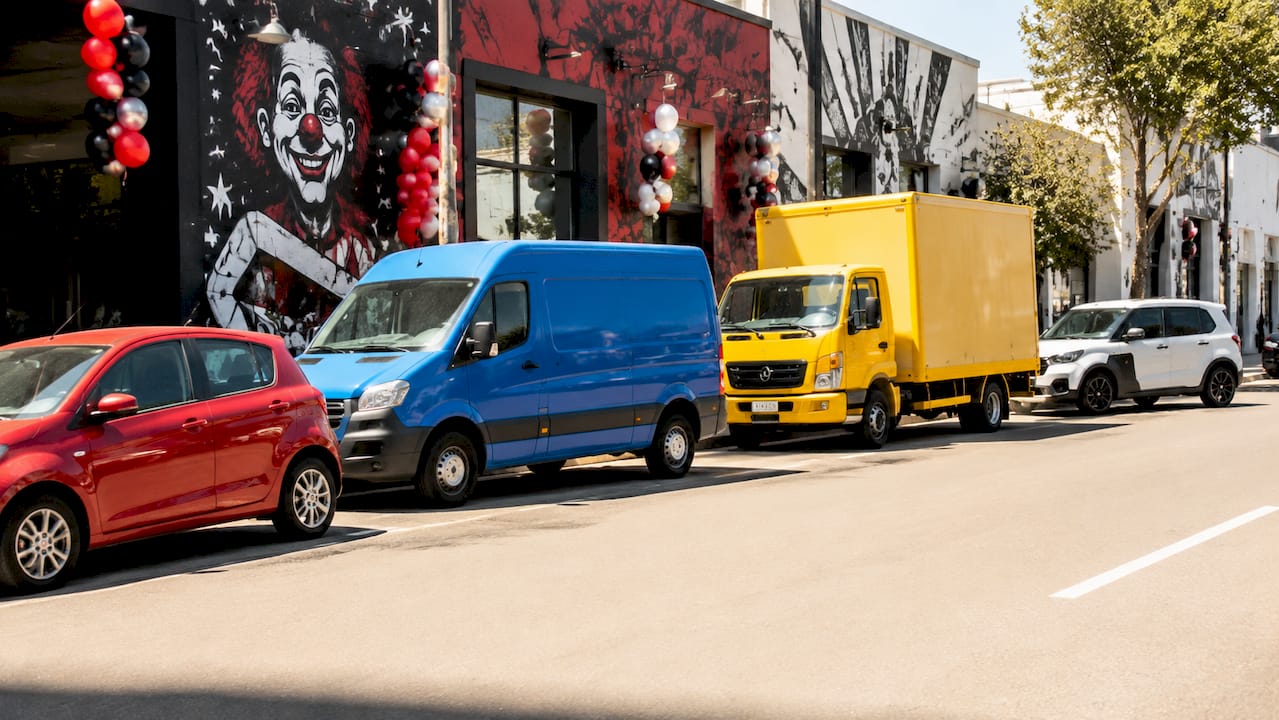
Here is a breakdown of the main categories and their ideal applications:
| Vehicle Type | Payload Range | Best Use Case |
|---|---|---|
| Sedan / Compact Car | Up to 800 lbs | Sales reps, client visits, light courier |
| SUV / Crossover | Up to 1,500 lbs | Field service, small equipment transport |
| Pickup Truck | 1,500–3,500 lbs | Landscaping, construction, towing |
| Cargo Van | 3,200–3,900 lbs | Urban delivery, trades, mobile service |
| Box Truck | 3,100–7,200 lbs | Furniture, appliances, larger freight |
| Medium-Duty Straight Truck | Up to 17,000 lbs | Heavy freight, CDL-required operations |
Cargo vans carry 3,200–3,900 lbs and fit in standard parking spots, which makes them the default choice for urban delivery and trade businesses. Medium-duty straight trucks scale up to 17,000 lbs, but they require a commercial driver’s license and are harder to maneuver in tight spaces. That licensing requirement alone eliminates them for many small operators.
Cargo vans suit frequent urban stops; box trucks handle heavier or taller loads; medium-duty trucks move very heavy freight. The step up between each category is significant in both cost and operational complexity, so only move up when your payload genuinely demands it.
For businesses operating on private property, campuses, or large facilities, utility vehicles and electric golf carts are worth considering. They cost far less than full-size commercial vehicles and handle light transport tasks efficiently. You can read a detailed comparison of utility trucks vs. golf carts to understand which format delivers more value for your specific operation.
Pro Tip: If your operation involves both road and off-road terrain, a compact UTV or utility truck often replaces two separate vehicles, cutting acquisition and insurance costs in half.
How to evaluate total cost of ownership for business vehicles
Total cost of ownership (TCO) is the standard industry framework for measuring the true cost of a vehicle beyond the purchase price. TCO components include acquisition at 30 to 45 percent, fuel or energy at 20 to 30 percent, maintenance at 10 to 15 percent, insurance at 5 to 10 percent, and administrative costs at 3 to 7 percent. That breakdown tells you something important: the sticker price is only about a third of what you will actually spend.
Fuel and maintenance together represent 30 to 45 percent of lifetime vehicle cost. This is why a cheaper vehicle with poor fuel economy or high service intervals can cost more over five years than a more expensive model with lower running costs.
Replacement timing is where most small business owners leave money on the table. Light-duty vehicles should be replaced after 5 to 7 years or 80,000 to 120,000 miles, when maintenance costs begin rising sharply. Holding a vehicle past this window feels like savings but often costs more in repairs and downtime than a replacement would.
The clearest signal to replace a vehicle is when annual maintenance exceeds a specific threshold. Replace fleet vehicles when maintenance exceeds 15 to 20 percent of the vehicle’s current replacement value. At that point, you are funding a depreciating asset rather than building operational capacity.
Pro Tip: Track maintenance costs per vehicle in a simple spreadsheet. When any single vehicle’s annual repair bill crosses 15 percent of its trade-in value, the replacement decision becomes straightforward and defensible.
Leasing vs. financing small business vehicles: which fits your needs?
Leasing and financing are the two primary acquisition methods for business vehicles, and each serves a different operational profile. Leasing is not better or worse than financing. It depends on your cash flow, mileage, and whether you want to own the asset.
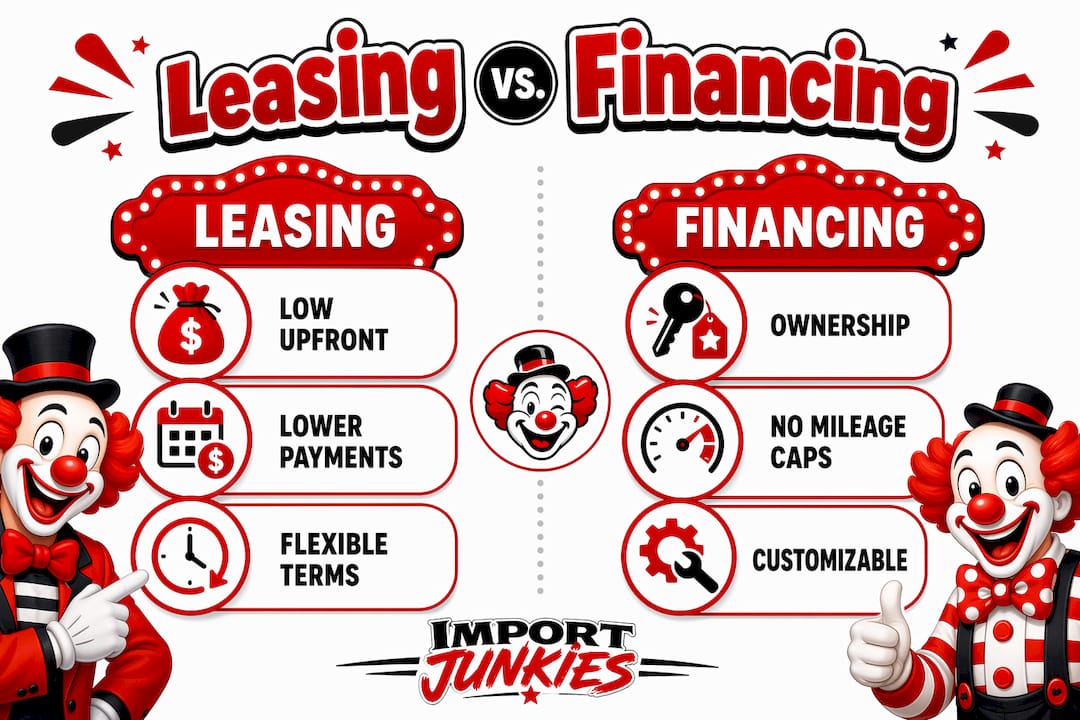
Leasing suits businesses prioritizing low upfront costs and the flexibility to upgrade every 3 to 4 years. Monthly payments are predictable, and you avoid the risk of holding a depreciated asset. For startups or businesses with seasonal cash flow, leasing preserves working capital for other expenses.
Financing suits businesses wanting ownership, no mileage caps, and the ability to customize the vehicle. Once the loan is paid off, you own an asset with residual value. For high-mileage operations like delivery or field service, financing almost always wins because lease mileage penalties can be severe.
Here is a direct comparison to help you decide:
| Factor | Leasing | Financing |
|---|---|---|
| Upfront cost | Low | Moderate to high |
| Monthly payments | Lower | Higher |
| Mileage limits | Yes, typically 10,000–15,000/year | None |
| Ownership at end | No | Yes |
| Customization | Limited | Full |
| Best for | Low mileage, frequent upgrades | High mileage, long-term use |
Leasing supports businesses needing lower capital and regular vehicle upgrades, while financing works better for high-mileage operations and asset building. Outright purchase makes sense when you have the capital and plan to run the vehicle well past the loan payoff point, particularly for utility vehicles or specialty equipment that holds its value.
One underused option is a vehicle reimbursement program. Company-owned vehicles offer control but higher cost and liability; reimbursement programs offer cost-efficient alternatives for businesses where employees use personal vehicles for work. This approach eliminates fleet management overhead entirely for smaller operations.
When and how to incorporate EVs into your small business fleet
Electric vehicles are a practical option for small business fleets in 2026, but only when the operational conditions support them. Adopting an EV without assessing your route structure and charging setup is the most common mistake in this category.
Follow these steps before committing to an EV for your fleet:
- Map your daily routes. Calculate the total miles driven per vehicle per day. EVs cut GHG emissions over 50% for daily routes under 150 miles with depot charging available. If your vehicles regularly exceed that range, current EV options may not cover a full shift without mid-route charging.
- Assess your charging infrastructure. Depot charging means vehicles charge overnight at your facility. This is the most cost-effective setup and eliminates range anxiety for predictable routes. The EV charging setup for businesses involves Level 2 chargers at a minimum, which require a 240V outlet and a licensed electrician for installation.
- Calculate the duty cycle. EV adoption requires assessing not just vehicle range but charging infrastructure duty cycle, meaning whether vehicles can complete daily operations within a single charge window. A vehicle that needs 8 hours to charge but only has a 6-hour overnight window creates a scheduling problem.
- Factor in incentives. Federal and state tax credits for commercial EV purchases can significantly reduce acquisition cost. Check current IRS Section 179 and the Commercial Clean Vehicle Credit before finalizing any purchase decision.
- Start with one vehicle. Running a single EV alongside your existing fleet lets you measure real-world performance, charging costs, and driver behavior before scaling up.
For smaller operations like golf courses, warehouses, or campuses, electric utility vehicles are a lower-risk entry point into electrification. You can see how electric vehicles transform golf facility operations as a model for how small-scale EV adoption plays out in practice.
Practical tips to match vehicle features to your business use case
Selecting the right vehicle category is only half the decision. The features, configuration, and upfit options you choose determine whether the vehicle actually works for your operation day to day.
- Apply the 20 percent payload safety margin. Businesses should add a 20% safety margin to payload requirements to extend vehicle lifespan. If your typical load is 2,500 lbs, you need a vehicle rated for at least 3,125 lbs. Running at or above rated capacity accelerates drivetrain wear and voids warranties.
- Match cargo volume to your product dimensions. A van with adequate payload but insufficient interior height creates real problems for trades carrying ladders or HVAC equipment. Measure your largest items before selecting a body style.
- Prioritize advanced safety features. Blind-spot monitoring, automatic emergency braking, and lane-keep assist reduce accident rates and insurance premiums. Mercedes-Benz Sprinter vans are favored by trades for their advanced safety technology, flexible upfit options, and driver comfort features. These are not luxury add-ons. They are risk management tools.
- Consider driver comfort as a retention factor. Premium vans like the Sprinter justify higher cost by improving driver retention, safety, and enabling specialized upfits. A driver who spends 8 hours a day in a vehicle notices seat quality, climate control, and noise levels. Discomfort leads to fatigue and turnover.
- Plan upfits before purchase. Common upfits include shelving systems, cargo partitions, refrigeration units, and ladder racks. Some upfits require specific body configurations that must be specified at order time. Retrofitting after delivery costs more and sometimes compromises structural integrity.
For fleet maintenance planning and software tools that help you track vehicle performance across multiple units, a fleet maintenance software review can help you identify the right system before your fleet grows beyond what a spreadsheet can handle.
Key takeaways
Matching vehicle type, acquisition method, and lifecycle plan to your actual operational needs is the single most important factor in maximizing your fleet investment.
| Point | Details |
|---|---|
| Match vehicle to payload | Apply a 20% safety margin above your typical load to prevent premature wear. |
| Track TCO, not just price | Fuel and maintenance represent 30–45% of lifetime cost; sticker price is only part of the story. |
| Replace at the right time | Swap vehicles when annual maintenance exceeds 15–20% of current replacement value. |
| Choose acquisition by mileage | Lease for low mileage and flexibility; finance for high mileage and ownership. |
| Assess EVs by route and charging | EVs work best for routes under 150 miles with overnight depot charging available. |
What I’ve learned from watching small businesses get this wrong
I’ve seen the same pattern repeat itself more times than I can count. A business owner buys the vehicle that looks right on paper, skips the payload math, and ends up replacing it two years early because the drivetrain couldn’t handle the actual workload. The 20 percent safety margin rule is not conservative. It’s the difference between a vehicle that lasts seven years and one that needs a transmission at year four.
The other mistake I see constantly is treating the purchase price as the total cost. A business that buys a cheaper cargo van and ignores fuel economy, service intervals, and parts availability is often spending more per mile than a competitor running a more expensive but better-specified vehicle. TCO math is not complicated. It just requires the discipline to run the numbers before signing anything.
On EVs: the businesses that succeed with electrification are the ones that start small and measure everything. One electric utility vehicle on a campus or warehouse lot tells you more about your charging habits and operational fit than any spec sheet. The businesses that struggle are the ones that commit to a full fleet conversion before they understand their own duty cycle.
Finally, don’t underestimate what a well-specified vehicle does for the people driving it. Driver retention is a real cost. A vehicle that’s uncomfortable, unreliable, or poorly equipped for the job creates turnover, and turnover is expensive. Spend the money on the right upfit the first time.
— Gary
Find the right utility vehicle for your operation at Importjunkies
If your business needs a compact, capable vehicle for on-site transport, property management, or light commercial work, Importjunkies carries a range of utility vehicles built for exactly that purpose.

The Snow Master VX utility vehicle is a 400cc 4x4 UTV with a snow plow and dump bed, built for businesses that need year-round multi-function capability. For operations focused on sustainability and lower running costs, the Renegade Edition electric golf cart is a 48V four-seater that handles facility transport without the fuel and maintenance overhead of a gas vehicle. Browse the full range at Importjunkies to find the vehicle that fits your operation and budget.
FAQ
What is the best vehicle type for a small delivery business?
Cargo vans are the most practical choice for most small delivery operations, offering 3,200 to 3,900 lbs of payload in a size that fits standard parking and urban routes. Box trucks are the next step up for heavier or taller loads.
When should a small business replace a fleet vehicle?
Replace a vehicle when annual maintenance costs exceed 15 to 20 percent of its current replacement value, or when it reaches 80,000 to 120,000 miles for light-duty models.
Is leasing or financing better for a small business vehicle?
Leasing works better for businesses with low mileage needs and a preference for upgrading every few years; financing is the stronger choice for high-mileage operations where ownership and customization matter.
Are electric vehicles practical for small business fleets in 2026?
EVs are practical for routes under 150 miles per day when overnight depot charging is available, cutting operational emissions by more than 50 percent and reducing maintenance costs compared to gas vehicles.
What is the 20 percent payload safety margin rule?
The rule states you should never load a vehicle beyond 80 percent of its rated payload capacity. Staying within this limit reduces mechanical stress and extends drivetrain life significantly.
Recommended
- Must-Have Recreational Vehicles 2026: Top Picks Guide – Saferwholesale || Import Junkies || Great Sports
- The ultimate utility vehicles checklist for smart buyers – Saferwholesale || Import Junkies || Great Sports
- Scooter types guide: Choose the right model in 2026 – Saferwholesale || Import Junkies || Great Sports
- Why Purchase Wholesale Vehicles: Save More in 2026 – Saferwholesale || Import Junkies || Great Sports


