


 Location
 Login
Login
TL;DR:
- Buying used golf carts offers significant cost savings and reduces depreciation impact.
- Used electric carts provide eco-friendly operation with zero emissions and lower manufacturing footprint.
- They are highly versatile for home, business, and recreation, easily customizable with upgrades.
Buying a golf cart doesn’t have to mean buying new. In fact, for most consumers and small business owners, a used golf cart delivers more value per dollar than a brand-new model straight off the lot. The assumption that new always equals better is one of the most common and costly mistakes buyers make in this market. Used golf carts offer real financial savings, a reduced environmental footprint, and surprising versatility across dozens of applications. This article walks you through every major advantage, gives you the inspection tools to shop confidently, and helps you understand why used might be the smartest decision you make this year.
Table of Contents
- Cost savings: Why used golf carts make financial sense
- Eco-friendly advantages and sustainability
- Utility and versatility for home, business, and recreation
- What to look for when buying used: Inspection and reliability
- Our take: The unexpected value of buying used golf carts
- Explore quality used and electric golf carts on Import Junkies
- Frequently asked questions
Key Takeaways
| Point | Details |
|---|---|
| Significant cost savings | Used golf carts save buyers money upfront and over time with lower insurance and registration costs. |
| Environmentally friendly | Choosing used, especially electric, reduces emissions and the impact of manufacturing. |
| Versatile for multiple uses | Used golf carts are practical for personal, business, and recreational purposes—offering flexible upgrades. |
| Inspection is critical | Careful evaluation ensures reliability and avoids common pitfalls when buying used carts. |
Cost savings: Why used golf carts make financial sense
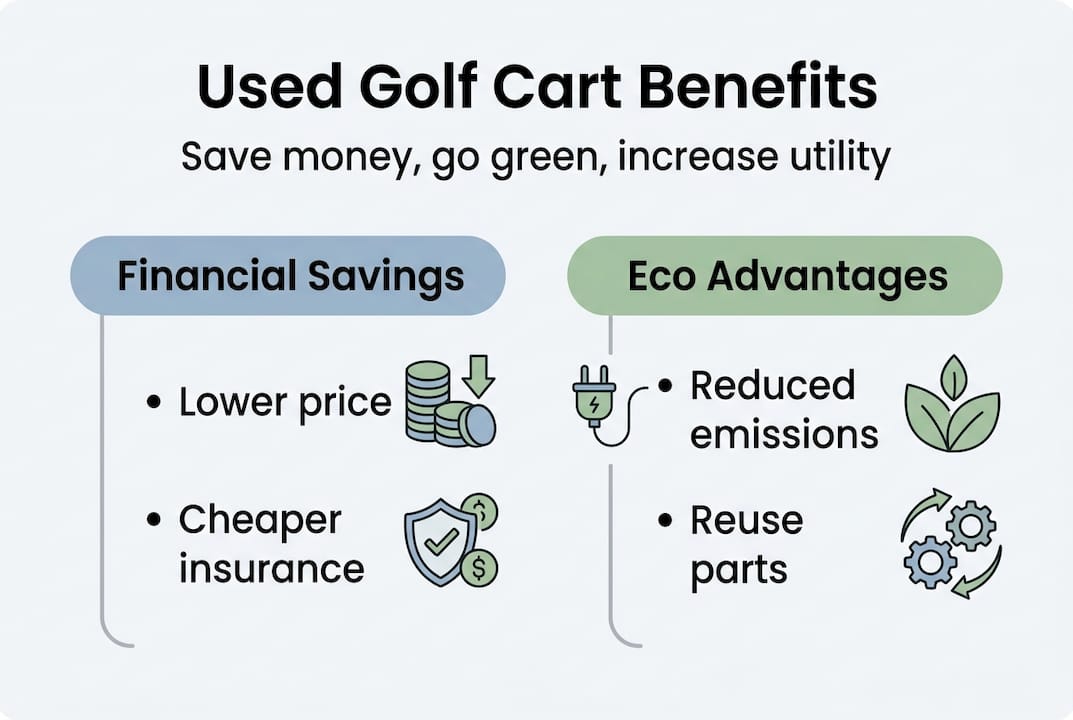
The financial case for buying a used golf cart is straightforward and backed by real numbers. A new golf cart from a major brand like Club Car, Yamaha, or EZ-GO typically sells anywhere from $7,000 to $15,000, depending on features and configuration. A comparable used model, often just two to four years old, can be found in the $3,000 to $7,000 range. That’s a savings of 40 to 60 percent on the purchase price alone.
Beyond the sticker price, depreciation works heavily in the used buyer’s favor. Golf carts, like most vehicles, lose a significant portion of their value in the first one to three years of ownership. When you buy used, you’re buying after that steep depreciation curve has already happened. The previous owner absorbed that loss, not you. This means your cart holds its resale value more predictably going forward, which matters if you ever plan to sell or trade up.
Insurance and registration costs are another layer where used buyers save consistently. Lower insurance and registration costs for used carts are directly tied to their depreciated value, since insured values and registration fees are calculated based on the cart’s current market worth. A cart valued at $4,000 will cost noticeably less to insure each year than one valued at $12,000.
If you’re thinking about financing golf carts, a lower purchase price also means smaller loan amounts and lower monthly payments. That frees up cash for upgrades, accessories, or other priorities in your budget. And if you plan to use the cart on public roads, understanding street legal requirements before you buy helps you factor in any modification costs from the start, avoiding financial surprises after the sale.
Ways to maximize financial value when buying used:
- Shop carts that are two to four years old for the best depreciation benefit
- Look for fleet carts from golf courses, which are typically well-maintained and competitively priced
- Compare total cost of ownership, not just purchase price
- Factor in battery replacement costs for electric models before finalizing your budget
- Ask for maintenance records to predict future repair expenses
| Cost category | New golf cart | Used golf cart |
|---|---|---|
| Purchase price | $7,000 to $15,000 | $3,000 to $7,000 |
| Annual insurance | $300 to $700 | $100 to $300 |
| Registration fees | $75 to $200 | $30 to $100 |
| Estimated 3-year total | $8,025 to $16,300 | $3,390 to $7,700 |
Pro Tip: Fleet golf carts sold by golf courses after two to four seasons are often among the best used buys on the market. They’re regularly serviced, mechanically sound, and priced to move quickly.
Eco-friendly advantages and sustainability
Beyond cost, environmental benefits make used golf carts a compelling choice, especially if you’re prioritizing sustainability in your purchasing decisions. The environmental equation here is simple. When you buy a used golf cart instead of a new one, you’re preventing the demand for an additional unit to be manufactured. Manufacturing any vehicle, even an electric one, requires raw materials, energy, and industrial processes that carry a carbon cost. By choosing used, you sidestep that impact entirely.
Electric used carts produce zero emissions during operation and eliminate the environmental cost of new manufacturing at the same time. That’s a double benefit that’s hard to replicate by buying new, even if the new model is electric. Understanding the full scope of electric golf cart benefits helps frame why used electric models in particular offer the strongest environmental profile.
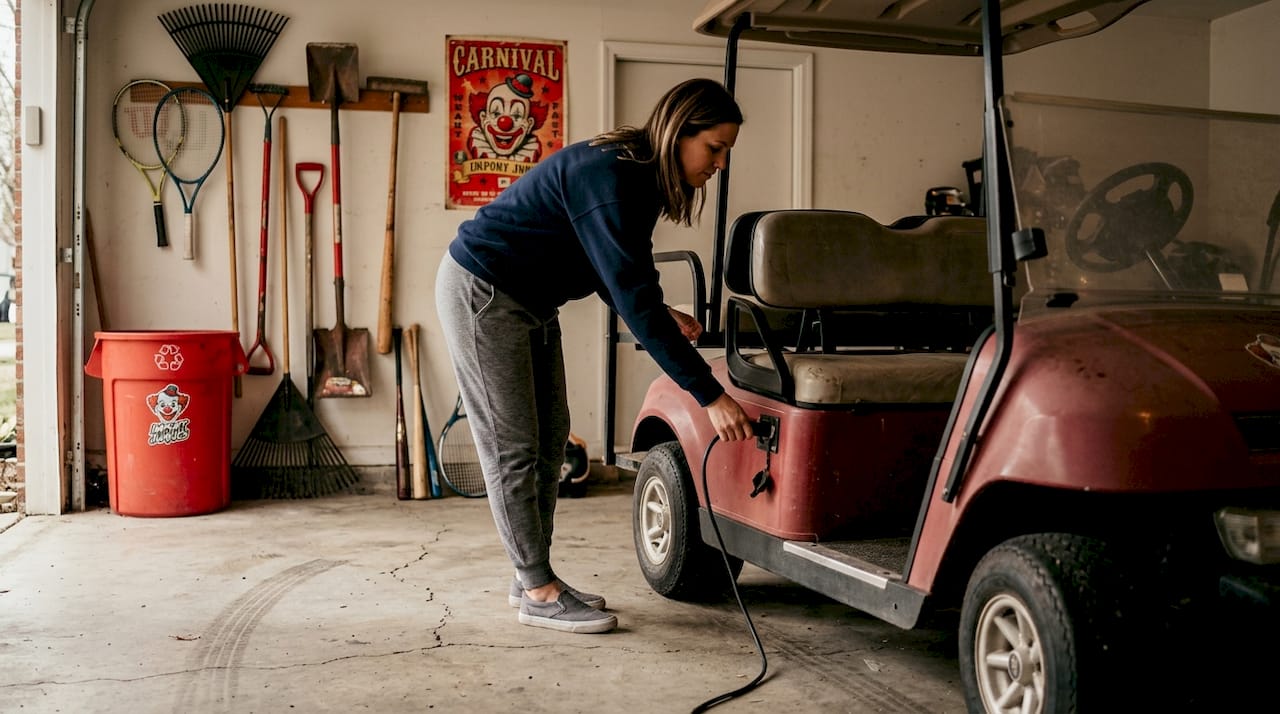
Another frequently overlooked factor is the role electric vehicles play in transforming golf facility operations. Golf courses and facilities that have transitioned to electric fleets have reduced their fuel costs and emissions substantially. When those electric carts enter the used market after a few seasons, they carry an already proven track record of low-emission operation.
Solar panel add-ons are increasingly popular among used electric cart owners. Many standard electric golf carts can be retrofitted with a small rooftop solar charging panel that extends battery range and reduces reliance on grid electricity. This upgrade typically costs between $200 and $600 installed, and for buyers who operate in sunny climates, the payoff in reduced charging costs is real.
Environmental benefits of choosing a used golf cart:
- Eliminates demand for new vehicle manufacturing and its associated carbon footprint
- Electric models produce zero direct emissions during operation
- Extends the functional life of an existing vehicle, reducing waste
- Compatible with solar charging retrofits to further reduce grid dependence
- Reduces overall resource consumption compared to new vehicle production
| Cart type | Manufacturing emissions | Operational emissions | Overall footprint |
|---|---|---|---|
| New gas cart | High | High (ongoing) | Highest |
| New electric cart | Moderate to high | Zero | Moderate |
| Used electric cart | Already absorbed | Zero | Lowest |
Pro Tip: If you’re buying a used electric cart with the goal of reducing emissions, ask the seller about the battery’s current health and charge capacity. A battery performing at 80 percent or better of its original capacity is still highly efficient and worth the investment.
Statistic to consider: The manufacturing phase of a vehicle’s life cycle can account for up to 30 percent of its total lifetime emissions. Buying used bypasses that phase entirely, which makes a meaningful difference at scale.
Utility and versatility for home, business, and recreation
Once you know the savings and eco perks, let’s look at real-world utility. This is where used golf carts genuinely surprise people. Most buyers initially picture a golf cart on a course. The reality is that a used golf cart is one of the most adaptable utility vehicles available at any price point.
For homeowners, a used cart handles everything from moving tools and materials across a large property to shuttling guests at a backyard gathering. For small business owners, the value multiplies quickly. Resorts, warehouses, campgrounds, farms, and event companies all use golf carts for internal transportation, and a well-maintained used model serves those purposes just as effectively as a new one.
“Used golf carts offer lower insurance and registration costs due to their depreciated value, which makes them a financially practical choice for businesses looking to control overhead without sacrificing utility.” Benefits of Owning a Used Golf Cart
Understanding how golf carts fit into neighborhood use helps buyers identify which models and configurations match their specific environment. And for buyers deciding between a cart and a larger vehicle, a detailed utility vehicles comparison can clarify which platform serves your terrain and task load best.
Top five practical uses for used golf carts:
- Neighborhood and community transportation in gated communities or retirement neighborhoods
- Farm and property management for moving supplies, feed, and equipment across acreage
- Campground or resort guest shuttles and staff transportation
- Warehouse and facility logistics for moving inventory between areas
- Event support for festivals, sports events, or outdoor venues that need ground transportation
Custom upgrade ideas to enhance versatility:
- Cargo bed attachments for hauling tools, materials, or equipment
- Rear seat conversions to increase passenger capacity from two to four or six seats
- Upgraded lighting packages for nighttime or low-visibility operation
- Lift kits and all-terrain tires for use on unpaved or rough surfaces
- Windshield and enclosure kits for year-round all-weather operation
The key point here is that a used cart doesn’t limit your options. In many cases, buyers find that the money saved on the purchase itself funds a round of practical upgrades that turn a basic cart into a fully customized work or recreation vehicle.
What to look for when buying used: Inspection and reliability
Now you know the why. Let’s cover the how. Buying a used golf cart is a smart move only when you go in with the right knowledge. A cart that looks clean can have underlying issues that cost you more in repairs than you saved on the purchase price. Taking a systematic approach to inspection protects your investment and helps you negotiate from a position of confidence.
Knowing how to inspect used golf carts is one of the most practical skills you can develop before entering the used market. It’s not complicated, but it does require discipline to work through each item rather than trusting surface appearances alone.
Battery condition is the single most important factor in a used electric cart. Understanding golf cart battery types helps you ask the right questions and interpret what you’re seeing when you open the battery compartment. Lead-acid batteries typically last four to six years with proper maintenance. Lithium batteries last longer but cost more to replace. The electric vs gas golf cart decision also affects which inspection points matter most to you, since gas models require attention to engine condition, fuel systems, and exhaust components instead of battery health.
Five steps to evaluate a used golf cart’s condition:
- Inspect the batteries or engine first. For electric carts, check battery age, terminal condition, and whether the charger holds a full charge cycle. For gas carts, listen for rough idle, check oil condition, and look for fuel leaks.
- Examine the frame and body. Look for rust, cracks, or signs of collision damage on the frame rails. Minor cosmetic wear is expected; structural damage is not acceptable.
- Check the tires and brakes. Tires should show even wear and have adequate tread depth. Test the brakes at low speed to confirm they engage smoothly and stop the cart without pulling.
- Test all electrical systems. Lights, horn, turn signals, and the charging port should all function correctly. Non-working accessories add cost after purchase.
- Request maintenance records. A cart with documented service history gives you confidence in how it was treated and helps you anticipate upcoming maintenance needs.
Pro Tip: One of the most common mistakes used golf cart buyers make is skipping the test drive. Always operate the cart under load, meaning with passengers or weight, before committing to purchase. Performance under load reveals issues that idle testing won’t catch.
Questions to ask sellers before buying:
- How old are the batteries, and when were they last replaced?
- Has the cart ever been in an accident or experienced major repairs?
- Where was the cart primarily used, and on what type of terrain?
- Is the original charger included, and does it still function correctly?
- Are there any known mechanical issues or upcoming maintenance needs?
Our take: The unexpected value of buying used golf carts
Here’s an honest perspective that most buyers don’t hear until after they’ve already made their decision. The obsession with buying new in this market doesn’t reflect actual reliability data or real ownership outcomes. We’ve seen customers choose new carts, encounter the same mechanical issues that used carts sometimes present, and pay twice the price for the experience. A used cart from a reputable seller, inspected properly and maintained from day one, performs as reliably as a new one in the vast majority of cases.
What used carts offer that new carts genuinely can’t match is a known quantity. The previous owner has already worked out any factory quirks, and you can verify the cart’s actual performance history rather than relying on manufacturer claims. The utility vehicle insights we’ve gathered from buyers across use cases consistently point to one finding: the people most satisfied with their golf cart purchases are the ones who bought used, spent the savings on targeted upgrades, and ended up with a customized vehicle that outperformed their original expectations.
Buying used is not settling. It’s a deliberate financial and practical decision that more buyers should make with confidence.
Explore quality used and electric golf carts on Import Junkies
Ready to apply these insights? At Import Junkies, you’ll find a selection built for buyers who know what they want and why they want it.
Whether you’re looking for a versatile electric golf cart 4 seater for neighborhoods or resort use, or a rugged gas golf cart utility vehicle built to handle demanding terrain and heavy work, Import Junkies offers options that match the practical criteria outlined in this guide. Browse the full selection at Import Junkies to compare models, pricing, and configurations. Our product listings include detailed specs and images so you can evaluate each cart before reaching out with questions or placing an order.
Frequently asked questions
Is insurance cheaper for used golf carts?
Yes, used golf carts typically carry lower premiums because insurance costs are calculated based on the cart’s depreciated market value, which is significantly lower than a new cart’s purchase price.
Are electric used golf carts more eco-friendly?
Electric used carts are the most eco-friendly option available because they produce zero operational emissions and bypass the environmental cost of manufacturing an entirely new vehicle.
How can I check the condition of a used golf cart?
Inspect battery health, frame integrity, tires, and all electrical accessories before committing to purchase, and always request maintenance records if the seller has them available.
Can used golf carts be upgraded with eco features like solar?
Yes, many used electric carts can be retrofitted with solar charging panels and other eco upgrades, making them even more energy-efficient after purchase.
What paperwork is needed for a used golf cart purchase?
You’ll need a bill of sale, registration documents, and proof of insurance to complete the transaction legally, though requirements vary by state and intended use.
Recommended
- Why choose electric golf carts? Benefits for golfers and courses – Saferwholesale || Import Junkies || Great Sports
- Electric Golf Cart vs Gas: Which Wins? – Saferwholesale || Import Junkies || Great Sports
- Best Golf Cart for Neighborhoods: What to Buy – Saferwholesale || Import Junkies || Great Sports
- How electric vehicles transform golf facility operations – Saferwholesale || Import Junkies || Great Sports


