


 Location
 Login
Login
Most standard two-seat golf carts fit safely on a 5’x9’ or 5’x10’ utility trailer, while lifted carts or ones with oversized tires do better on a 6’x10’. Four-seat carts need at least a 5’x10’, and six-seat or stretch models call for a 6’x12’. Before you haul anything, confirm your trailer’s GVWR and your tow vehicle’s rated capacity. U-Haul’s 5’x9’ rental, for example, is popular partly because it comes with a built-in ramp.
TL;DR:
- Match your cart’s actual length, width, and weight with a trailer that provides at least 20% load capacity margin to ensure safe and convenient hauling.
- A two-seat cart typically fits well on a 5’x9’ or 5’x10’ trailer, while larger or lifted carts may require at least a 6’x10’ or 6’x12’ trailer for proper clearance.
- Proper trailer features such as GVWR, axle configuration, and ramp type directly impact safety, ease of loading, and vehicle compatibility.
- Regular maintenance of tires, wiring, and structural components is essential for trailer longevity and safe operation, especially after storing unused.
- Always confirm your tow vehicle’s capacity, including gross weight and tongue load, before hauling, and check local legal requirements to avoid fines or safety issues.
Table of Contents
- Golf Cart Trailer Size by Cart Type
- How to Measure Your Golf Cart Before You Buy or Rent
- What Trailer Specs Actually Matter for Fit
- Loading and Securing Your Golf Cart the Right Way
- Confirming Your Tow Vehicle Can Handle the Load
- Where to Get Fit Confirmation and More Guidance
- Legal and Safety Rules Vary More Than You’d Think
- How Trailer Size Affects Fuel Economy and Towing Feel
- Keeping Your Golf Cart Trailer in Good Shape
- Why the Simple Rules Beat the Complicated Ones
- Finding the Right Cart and Carrier for Your Trailer Setup
- Sources
Golf Cart Trailer Size by Cart Type
Picking the right deck size comes down to matching your cart’s footprint to a trailer that gives you margin, not a trailer that just barely works. Here’s the shortlist we point customers toward, based on the most common cart configurations on the road today.
- Standard 2-seat cart: 5’x9’ or 5’x10’. Most two-seat carts run 8 to 10 feet long and 4 to 6 feet wide, and either size gives you enough deck to load and strap down without the cart hanging off the back. The extra foot on a 5’x10’ also makes tie-down placement easier since you’re not fighting for space near the ramp.
- Lifted 2-seat or oversized tires: 5’x10’ or 6’x10’. Lift kits and larger tires eat into usable deck width fast, and a trailer that felt spacious for a stock cart can suddenly feel tight. Folding trailers built for this niche often list a usable platform closer to 60 inches by 120 inches with a low deck height specifically to help these carts load without scraping.
- 4-seat carts: 5’x10’ minimum, 6’x10’ preferred. Rear-seat kits add real length, sometimes stretching a cart out to 110 inches or more, which changes both your weight distribution and your margin for error at the ramp.
- 6-seat or stretch carts: 6’x12’ recommended. These carts can be up to about 12 feet long, and a shorter trailer leaves almost no room to maneuver straps or balance the load front to back.
- 4’x8’ trailers: local moves only. They can work for a short trip across town, but they’re generally a poor choice for highway hauling since they often force awkward tailgate-down loading and leave little room for proper tie-down points.
If your cart falls between sizes, size up. A little extra deck costs you nothing on the road and saves you real trouble at the loading ramp.
How to Measure Your Golf Cart Before You Buy or Rent
Skip the guesswork and grab a tape measure. Getting these four numbers right before you shop saves you from returning a trailer that doesn’t fit.
- Measure overall length, bumper to bumper. Add at least 24 inches of margin when picking your trailer length, following the common rule of thumb that a trailer should run at least two feet longer than the cart itself.
- Measure overall width, including mirrors. You want 6 to 12 inches of clearance inside the trailer’s rails, not just inside the fenders, since usable deck width is often narrower than what’s advertised.
- Measure overall height, including any roof or antenna. If you’re using an enclosed trailer, confirm the interior height clears your cart with room to spare.
- Calculate loaded weight. Add the cart’s curb weight to batteries, a roof rack, or any aftermarket accessories, then compare that number to the trailer’s payload rating.
- Write it all down. Bring these four numbers with you to a dealer or rental counter so you’re not relying on memory.
Pro Tip: Standard carts run about 92 inches long and 48 inches wide, so if your measurements come in close to that, you’re looking at a standard-size trailer, not an upgrade. Most carts weigh between 800 and 1,100 pounds, and you want at least 20% payload headroom above that number before you commit to a trailer.
What Trailer Specs Actually Matter for Fit
Advertised trailer dimensions and usable deck space are two different things, and that gap trips up a lot of first-time buyers. Fenders and rails eat into the width you actually have to work with, which matters most when you’re hauling a lifted cart with wider tires.
GVWR and payload capacity deserve equal attention. A trailer rated for a higher gross vehicle weight rating sounds like plenty until you add a heavier cart, a full battery bank, and a rear cargo rack. Building in that 20% headroom margin means you’re not pushing the trailer to its limit on every trip, which matters even more on hills or in wind.
Axle count changes how the trailer handles, too. A single-axle trailer works fine for a standard two-seat cart, but a tandem axle setup gives you more stability and a smoother ride once you’re hauling a heavier four-seat or six-seat model, especially at highway speed.
Ramp type is where a lot of buying decisions actually get made:
- Built-in ramps fold up into the trailer bed and save you from carrying separate ramp equipment, which is part of why U-Haul’s 5’x9’ rental is such a common recommendation.
- Removable ramps are lighter and cheaper but require extra storage space and a second trip to set them up.
- Tilt-bed trailers eliminate the ramp angle problem entirely, though they cost more and add moving parts to maintain.
Open trailers work fine for most short trips, but an enclosed trailer protects your cart from weather and road debris on longer hauls, provided you’ve confirmed the interior height clears your cart’s roof.
Loading and Securing Your Golf Cart the Right Way
Getting the cart onto the trailer safely matters just as much as picking the right size. A shallow ramp angle prevents high-centering, and a longer trailer or a lower deck height gives you more margin there.
- Drive on slowly or use a winch. A slow, straight approach beats speed every time, and a winch is worth the investment if you’re loading solo on a regular basis.
- Use at least four rated tie-down straps. Cross them for added stability and connect to manufacturer-designated tie points whenever the cart has them.
- Chock or block the wheels. This keeps the cart from shifting even after the straps are tensioned.
- Recheck strap tension after a short drive. Straps settle once the load shifts slightly, so check them again at your first stop.
- Avoid common mistakes. Don’t tow with the tailgate down, don’t use straps rated below your cart’s weight, and always double-check the coupler and safety chains before pulling out.
Confirming Your Tow Vehicle Can Handle the Load
Your trailer size means nothing if your tow vehicle can’t handle the combined weight. Check your owner’s manual for towing capacity and tongue weight rating before you assume your truck or SUV is up to the job.
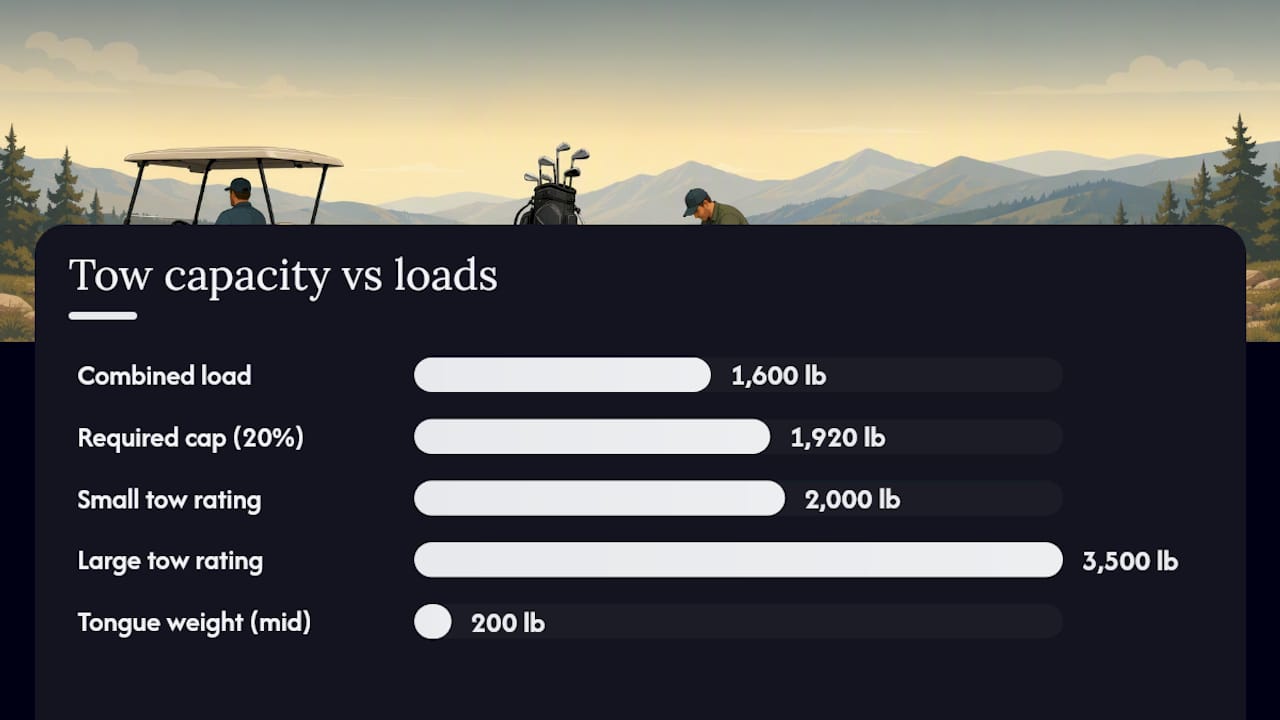
As a worked example: if your golf cart weighs 900 pounds loaded and your trailer weighs 700 pounds empty, you’re towing 1,600 pounds total, plus tongue weight typically running 10 to 15% of that figure. A vehicle rated for 3,500 pounds has comfortable room; one rated closer to 2,000 pounds is cutting it tight once you factor in accessories and a full battery pack.
Trailer brakes become relevant here too. Many states require them once a loaded trailer crosses a certain weight threshold, and a brake controller in your tow vehicle is often necessary to make them work correctly.
Before you pull out of the driveway, run through this list:
- Coupler latched and pinned
- Safety chains crossed and attached
- Trailer lights and turn signals working
- Tire pressure checked on both cart and trailer
- Load balanced front to back
- Spare tire and basic tools on board
Registration and lighting requirements for trailers vary by state, so it’s worth a quick check with your local DMV before a long haul.
Where to Get Fit Confirmation and More Guidance
If you’re still unsure which trailer matches your cart, Importjunkies sells a range of golf carts, from 4-seaters to 6-seaters, with published dimensions and weights you can compare directly against trailer specs. Our buyer’s guide walks through the measurement checklist in more depth if you want extra detail before you shop.
Specialty dealers can also confirm fit using your cart’s exact model number, as some vendors already do. Bring your model and serial numbers when you ask.
Legal and Safety Rules Vary More Than You’d Think
Trailer laws aren’t uniform across the country, and that catches a lot of first-time haulers off guard. Some states require trailer brakes above a specific gross weight threshold, others mandate breakaway systems, and lighting requirements differ depending on trailer width and whether you’re towing at night.
Weight limits on trailer axles can also affect what’s legal to tow on certain roads, particularly for tandem-axle trailers carrying a heavier four-seat or six-seat cart plus accessories. Registration requirements differ too. Some states require a title and plate for any trailer over a certain weight, while others only require registration above a higher threshold.
None of this is meant to make hauling sound complicated. It just means a quick call to your local DMV or a look at your state’s transportation department website before a long trip is worth the ten minutes it takes. Rules that applied in your home state may not match what you encounter if you’re hauling a cart across state lines for a tournament or a move, and a citation for an unregistered or improperly equipped trailer is an easy problem to avoid.
How Trailer Size Affects Fuel Economy and Towing Feel
Bigger isn’t always better, and a trailer that’s larger than you need costs you at the pump for no real benefit. A 6’x12’ trailer weighs more empty than a 5’x9’, and that extra weight, combined with more wind resistance, shows up as reduced fuel economy every time you tow it, loaded or not.
That doesn’t mean you should size down just to save gas. An undersized trailer creates its own problems, forcing you to overload the deck or compromise on tie-down angles, both of which make the tow feel less stable at highway speed. The sweet spot is matching trailer size to your actual cart, not rounding up “just in case” or down to save a few dollars in fuel.
Aerodynamics play a role too, especially with enclosed trailers, which catch more wind than an open deck design. If you’re towing regularly and fuel costs matter to you, an open trailer sized correctly for your cart will almost always out-economize an oversized enclosed one, even though the enclosed option offers better weather protection.
Keeping Your Golf Cart Trailer in Good Shape
A trailer that fits your cart perfectly still needs regular upkeep to stay safe on the road. Axle bearings take a beating from repeated loading and unloading, so a yearly repack or inspection catches wear before it becomes a roadside breakdown.
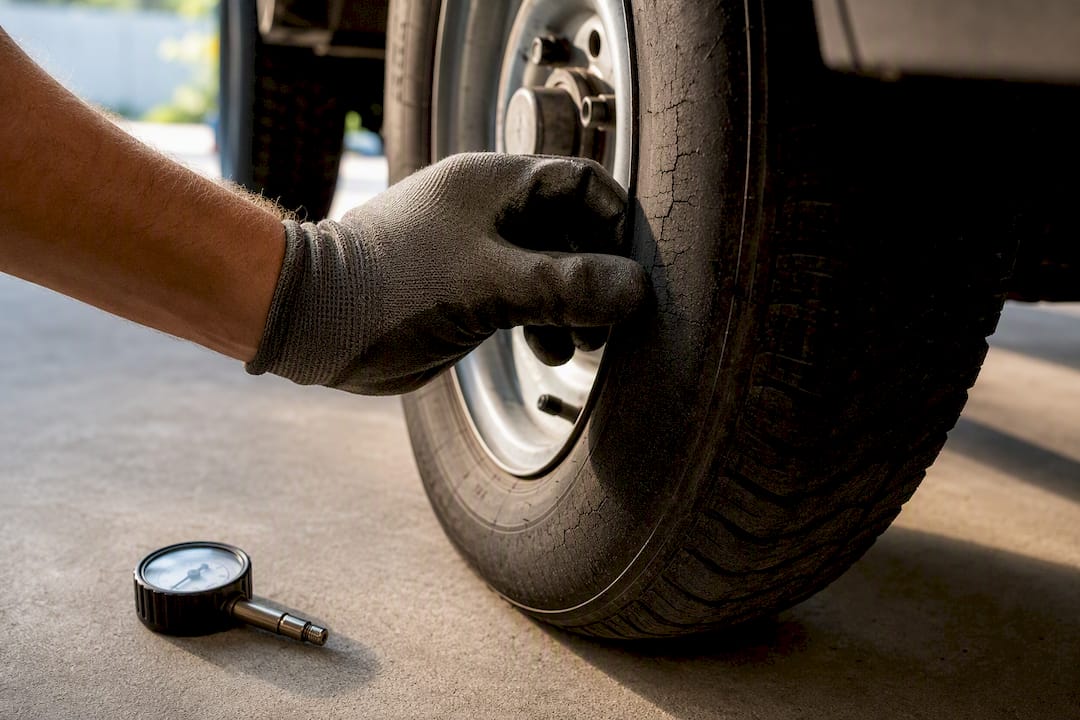
Tire care matters more on a trailer than most owners expect, since trailer tires often sit unused between trips and degrade from age and UV exposure rather than mileage. Check tire pressure before every haul, not just when you notice a problem, and replace tires showing sidewall cracking even if the tread still looks fine.
Wiring and lights corrode faster on a trailer that sees rain or gets washed with a hose, so a quick function check of brake lights and turn signals before a long trip catches problems while they’re still easy to fix. Grease the coupler and hitch ball periodically, and inspect welds and the trailer frame for rust, especially near the axle mounts where stress concentrates over time.
Why the Simple Rules Beat the Complicated Ones
Most advice on this topic overcomplicates a decision that really comes down to two numbers: your cart’s length and your trailer’s payload rating. Get those right with a reasonable margin, and almost everything else, ramp type, axle count, enclosed versus open, is a preference question, not a safety question.
Where conventional advice falls short is in treating every cart the same. A stock two-seater and a lifted four-seater with a roof rack are different hauling problems, and the “one size fits most” advice you see repeated across forums ignores that.
If you take one thing from this, prioritize measuring your actual cart before you shop for a trailer. Specs on a listing page are a starting point, not a guarantee, and the folding trailers built for lifted carts prove that usable deck space and advertised size aren’t always the same thing.
— Gary
Finding the Right Cart and Carrier for Your Trailer Setup
If you’re shopping for a new cart rather than just a trailer, picking a model with dimensions that match trailer sizes you already know work saves you a headache down the road. Some suppliers offer electric four-seaters and six-seaters with published length and weight specs, so you can match cart to trailer before you buy either one.
Our 4-seater Renegade Edition fits comfortably on a standard 5’x10’, while larger six-seat models like the lifted Renegade Edition call for the 6’x12’ range covered above. If you also haul other equipment, our 1200LB UTV carrier is worth a look for smaller loads that don’t need a full trailer setup. Browse the full lineup on the Importjunkies homepage and check the spec sheet on any cart page against your trailer’s deck dimensions before you check out.
Sources
- What Size Utility Trailer Does My Golf Cart Fit On? | U-Haul
- Golf Cart Trailer Guide: Sizing, Towing & Costs - Golfers Gist
- Compact Caddy folding golf cart trailer | Tow Smart Trailers
- Golf cart dimensions (definitive guide) | Par3NearMe


