


 Location
 Login
Login
TL;DR:
- Most scooter accidents result from skipped brake checks, overlooked local laws, or assumptions about road consistency. Following comprehensive pre-ride inspections, understanding specific city regulations, and practicing safe riding techniques significantly reduce risks and enhance confidence. Modern enforcement systems and evolving urban rules demand riders stay informed and build habits around the strictest regulations for safe, legal transportation everywhere.
Most scooter accidents happen not because riders lack skill, but because they skipped a brake check, missed a local ordinance, or assumed city roads work the same everywhere. This scooter safety guide exists to close those gaps. You will learn how to inspect your scooter before every ride, which traffic laws apply to you by location, how to share the road without putting yourself or pedestrians at risk, and which maintenance habits prevent the mechanical failures that cause most preventable crashes. Follow this from start to finish and you will ride with more confidence, fewer legal headaches, and a scooter that stays in reliable shape.
Table of Contents
- Understand your local scooter laws and riding restrictions
- Pre-ride inspections: essential safety checks before every ride
- Safe riding techniques and sharing the road responsibly
- Common safety mistakes and maintenance tips to avoid accidents
- Scooter safety in the age of smart enforcement and evolving urban rules
- Explore top utility vehicles and scooters at Import Junkies for safer rides
- Frequently asked questions
Understand your local scooter laws and riding restrictions
Your first line of defense as a rider is knowing exactly what the law requires in your city or state. Scooter regulations are not uniform across the U.S. They change block by block in some metro areas, and what’s legal in one city can earn you a fine or an impounded vehicle a few miles away. Understanding this upfront protects your wallet and keeps you riding without interruption.
Here is what most jurisdictions regulate:
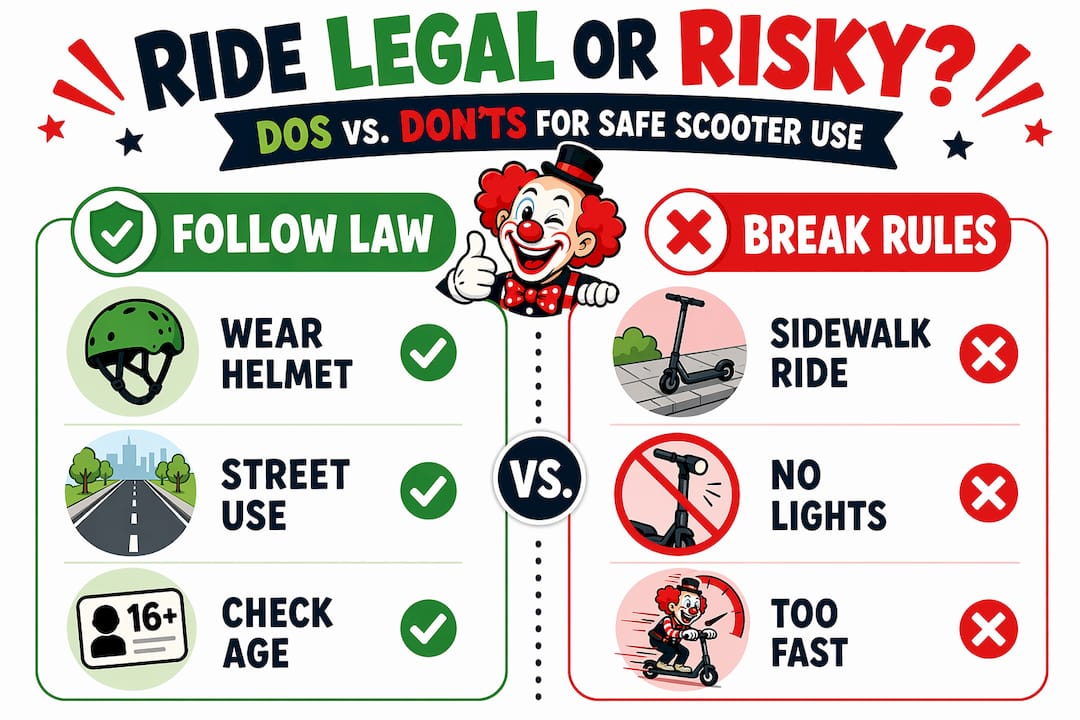
- Helmet requirements: Mandatory for riders under 18 in many states, and for all riders in some cities
- Speed limits: Commonly capped at 15 mph on public roads
- Sidewalk riding: Frequently prohibited or restricted to property access only
- Bike lane use: Required in cities where lanes exist
- Pedestrian right of way: Scooter riders must yield in virtually all jurisdictions
- Age restrictions: Minimum riding ages vary from 16 to 18 depending on location
Some city ordinances go further than state law. For example, Minneapolis scooter rules require helmets, forbid sidewalk riding entirely, and mandate riding in designated bike lanes while yielding to all pedestrians. At the state level, California Vehicle Code Section 21235 prohibits riders under 18 from operating motorized scooters without helmets, bans sidewalk riding except when entering or leaving adjacent property, and caps speed at 15 mph. In major urban centers like New York City, motorized scooter operation on public streets and parks is banned outright, with active fine enforcement.
Understanding street legal scooter requirements before you buy or ride is the most practical first step you can take. Violations can range from minor fines to full vehicle impoundment, and ignorance of local law is not a valid defense. Spend 15 minutes researching your city’s ordinances. It is time well invested.
Now that you know why laws matter, let’s review the essential equipment and checks to prepare your scooter safely.
Pre-ride inspections: essential safety checks before every ride
A mechanical failure mid-ride is far more dangerous than any traffic situation you are likely to encounter on a calm street. The good news is that most failures are preventable with a consistent pre-ride inspection routine. Think of it like checking your mirrors before pulling out of a driveway. It takes less than five minutes and can save your life.
Step-by-step pre-ride inspection:
- Test both brakes individually. Squeeze the front brake, then the rear. Each should offer firm resistance without feeling spongy or delayed. If one pulls weak, do not ride until it is adjusted.
- Check tire pressure and tread. Under-inflated tires reduce handling and increase stopping distance. Check your scooter’s manual for the correct PSI range.
- Inspect handlebars and folding mechanisms. Wiggle the handlebars to confirm they are locked and secure. Any looseness here is a safety hazard.
- Verify battery charge and electrical contacts. Confirm you have enough charge to complete your trip with margin to spare. Clean any corroded contacts to prevent power loss mid-ride.
- Test headlights and taillights. Visibility after dark or in low light is critical. A non-functional taillight makes you invisible to vehicles behind you.
- Check throttle response. Squeeze the throttle gently and confirm smooth, predictable acceleration. Any sticking or delay should be addressed before riding.
- Inspect the deck and grip tape. A slippery or cracked deck is a fall waiting to happen. Replace grip tape if it shows significant wear.
- Test suspension response. Push down on the deck firmly. The suspension should compress and rebound smoothly without grinding or clunking.
Pro Tip: Keep a small checklist card in your scooter bag and physically check each item before riding. Riders who use visual checklists catch problems twice as often as those who rely on memory alone.
Brake and lighting testing before each ride is non-negotiable because non-functional lights reduce your visibility to other drivers and brake failure puts you at direct risk of collision. If you want a broader reference, the logic behind a pre-ride inspection checklist applies across most personal vehicles.
| Inspection item | Frequency | Risk if skipped |
|---|---|---|
| Brake test | Every ride | Collision, inability to stop |
| Tire pressure | Every ride | Poor handling, blowout |
| Lights and reflectors | Every ride | Reduced visibility to drivers |
| Battery charge | Every ride | Power loss mid-trip |
| Handlebar tightness | Every ride | Loss of steering control |
| Bolts and fasteners | Monthly | Component failure while riding |
| Deck and grip tape | Monthly | Slipping and falls |
| Suspension condition | Monthly | Unstable handling on uneven surfaces |
For riders who use their scooter daily, checking out commuting scooter safety tips can help you build a routine that fits into your schedule without slowing you down.
With your scooter mechanically ready, let’s go over safe riding practices to navigate streets confidently and legally.
Safe riding techniques and sharing the road responsibly
Knowing how to ride safely is not just about protecting yourself. It directly affects the pedestrians, cyclists, and drivers around you. Good riding behavior is predictable behavior, and predictability is what keeps traffic flowing without incidents.
These core scooter riding tips apply regardless of your city or scooter model:
- Yield to pedestrians every time. Even if you have the right of way, a pedestrian who does not see you is a collision risk. Slow down near crosswalks and intersections.
- Use bike lanes when available. Riding in a bike lane is safer than riding in vehicle traffic, and many cities require it. If no bike lane exists, ride as close to the right side of the road as safely possible.
- Follow all traffic signals. Red lights apply to you. Stop signs apply to you. Blowing through a signal is both illegal and a leading cause of intersection collisions.
- Stay off sidewalks. Unless local law permits it for property access, sidewalk riding puts pedestrians at serious risk and can result in fines.
- Be visible at all times. Wear reflective clothing during low-light conditions, and always use your scooter’s lights. Being seen is the single most effective electric scooter precaution you can practice.
- Avoid reckless behavior. Skidding, jumping curbs, weaving between pedestrians, and sudden acceleration are not just dangerous. They are increasingly detectable by onboard technology that cities use for enforcement.
“Riders should yield to pedestrians, use bike lanes or ride with traffic, and follow the same traffic laws as bicyclists.” City of Minneapolis scooter riding rules
The City of Seattle takes this further. Seattle’s e-scooter enforcement uses technology to detect reckless riding behaviors like skidding or jumping, shifting enforcement from reactive ticket-writing to real-time rider alerts. If your riding style would embarrass you on a busy sidewalk in front of a police officer, it is worth reconsidering.
Pro Tip: Ride as if every driver around you does not see you. This mindset keeps you alert, positions you defensively, and reduces the chance of being caught in a collision you technically did not cause.

Understanding how to ride a scooter safely also means knowing the limits of your specific model. Different scooter types handle differently in traffic, and the safety tech built into modern electric scooters can be a meaningful asset when you know how to use it.
Now that you know how to ride safely, let’s cover common mistakes to avoid and how to maintain your scooter to keep it safe for the long term.
Common safety mistakes and maintenance tips to avoid accidents
Most scooter accidents trace back to predictable, preventable errors. Recognizing these patterns in your own habits before they become a problem is one of the best practices for scooter riding you can develop.
Most common mistakes riders make:
- Skipping brake and light checks before riding
- Riding on sidewalks in areas where it is prohibited
- Carrying a passenger on a single-rider scooter
- Riding at night without lights or reflective gear
- Overconfidence after a few weeks of riding without incident
- Ignoring early signs of mechanical wear like squeaky brakes or soft tires
“Skipping pre-ride checks leads to accidents. Regular brake and light testing is critical to safe riding.” Electric Scooter Tips
For ongoing maintenance, a monthly inspection routine adds a second layer of protection beyond your daily pre-ride checks. Here is what to cover each month:
- Tighten all visible bolts and fasteners. Vibration from regular riding loosens hardware over time. A loose stem or wheel bolt can cause sudden mechanical failure.
- Inspect brake cables and pads. Worn pads reduce stopping power. Frayed cables can snap without warning.
- Check battery health. Monitor charge cycles and capacity. A battery losing charge faster than normal may need replacement within a few months.
- Clean and lubricate moving parts. The folding mechanism, wheel bearings, and brake levers all benefit from regular cleaning and light lubrication.
- Examine tires for wear indicators. Bald tires on wet pavement are extremely hazardous. Replace tires when tread depth becomes visibly shallow.
Seattle’s data-driven enforcement also reinforces a less-obvious point: riders who think they are too careful to get caught are often the ones who are both unsafe and uninformed. The scooter safety rules that cities enforce exist because the behaviors they prohibit cause real accidents. Following them is not about avoiding fines. It is about not putting yourself or someone else in the hospital.
If you are shopping for a new model, reviewing common purchase mistakes helps you avoid buying a scooter that creates safety problems from day one.
Scooter safety in the age of smart enforcement and evolving urban rules
Here is something most safety guides do not address: the rules governing scooter use are not just stricter than they were five years ago. They are smarter. And that changes what it means to ride responsibly.
Cities like Seattle are no longer relying solely on patrol officers to catch unsafe riders. Onboard sensors now detect behaviors like sudden skidding or reckless acceleration, shifting enforcement from after-the-fact fines to real-time behavioral correction. Riders get alerts before they face consequences, which means the system is designed to change behavior, not just punish it.
This matters for how you think about scooter safety. The old model was: ride however you want unless someone is watching. The new model is: the scooter itself is always watching. For riders who treat safety rules as optional, this is a significant shift. For riders who already follow best practices for scooter riding, it is a non-issue.
There is also a broader trend worth understanding. Urban scooter regulations are tightening, not loosening. More cities are adding helmet mandates, lowering speed caps, and expanding the list of zones where scooters cannot operate. Riders who stay ahead of these changes by checking local ordinances annually will avoid surprises. Riders who assume yesterday’s rules still apply will face unexpected fines and restrictions.
The practical takeaway is this: build your riding habits around the strictest rules you are likely to encounter, not the most lenient ones. That approach keeps you legal in every city you ride in and keeps your scooter safety checklist relevant regardless of where local regulations shift next. Understanding your scooter’s built-in safety technology gives you an advantage here, because modern models are increasingly designed to work with urban enforcement systems, not against them.
Explore top utility vehicles and scooters at Import Junkies for safer rides
Knowing how to ride safely is only half the equation. The scooter you ride matters just as much as your habits behind the handlebars. A quality vehicle with reliable brakes, a solid deck, and well-tested electrical components gives your safety practices something dependable to work with.

At Import Junkies, you will find a range of electric and gas-powered scooters built for real-world use. The 500-watt electric scooter offers a practical, urban-ready option with pedal assist, while the 200cc Tryker trike scooter delivers stability and a fully automatic transmission with reverse for those who want more confidence on the road. For riders looking for a multi-passenger alternative, the 48V electric golf cart provides a safe, spacious utility option. Start your safe riding journey with reliable equipment from Import Junkies today.
Frequently asked questions
Is wearing a helmet mandatory for all scooter riders?
Helmet requirements vary by location, but many jurisdictions including California require helmets for riders under 18, and some cities extend that requirement to all ages. Always confirm your local rules before riding.
Can I ride my scooter on sidewalks legally?
In most cities, sidewalk riding is prohibited except to cross or access adjacent property. Both Minneapolis and California restrict sidewalk use, and violations carry fines, so check your local ordinances before assuming it is allowed.
How often should I perform safety checks on my scooter?
Perform brake and light checks before every single ride, and run a full monthly inspection covering bolts, cables, tires, and battery health to catch wear before it becomes a safety problem.
What are common unsafe behaviors to avoid while riding?
Avoid skidding, jumping curbs, reckless sidewalk riding, and carrying passengers on single-rider models. Seattle’s enforcement data shows these behaviors trigger safety alerts and enforcement action even when riders believe they are not being observed.
Are there speed limits I should follow on my scooter?
Yes. Many states set firm speed caps for motorized scooters, with California setting a maximum of 15 mph on public roads to protect both riders and pedestrians. Check your state’s vehicle code for the specific limit in your area.
Recommended
- How to buy electric scooters: 5 steps to avoid mistakes – Saferwholesale || Import Junkies || Great Sports
- Scooter types guide: Choose the right model in 2026 – Saferwholesale || Import Junkies || Great Sports
- How to compare scooters: a step-by-step guide to smart choices – Saferwholesale || Import Junkies || Great Sports
- Electric scooters: How they work, types, and benefits – Saferwholesale || Import Junkies || Great Sports


