


 Location
 Login
Login
TL;DR:
- Choosing the right RV depends on your travel habits, group size, and budget.
- Renting different RV types before buying helps you understand what suits your lifestyle best.
Selecting recreational vehicles is defined as matching the right motorized or towable unit to your travel habits, group size, and total budget before you sign anything. The RV market spans an enormous range, from $5,000 pop-up campers to $500,000 luxury Class A motorhomes, and the gap between those price points reflects very different lifestyles. The biggest buyer mistake is choosing based on showroom appeal rather than actual travel patterns. This recreational vehicle buying guide walks you through every decision point so you buy the right unit the first time.
What does selecting recreational vehicles guide you toward first?
The first decision in any RV selection process is choosing between motorized and towable units. Getting this right shapes every other choice you make, including budget, storage, and how you actually travel.
Motorized RVs: Class A, B, and C
Motorized RVs combine the vehicle and living space into one unit. Class A motorhomes are the largest, built on a bus or commercial truck chassis, and they suit full-time travelers or families who want maximum interior space. Class B motorhomes are converted vans, compact and easy to drive, making them the top choice for couples or solo travelers who want flexibility in urban and rural settings. Class C motorhomes sit in the middle, built on a truck cab chassis with a distinctive cab-over sleeping area, and they work well for families who want more room without the size of a Class A.
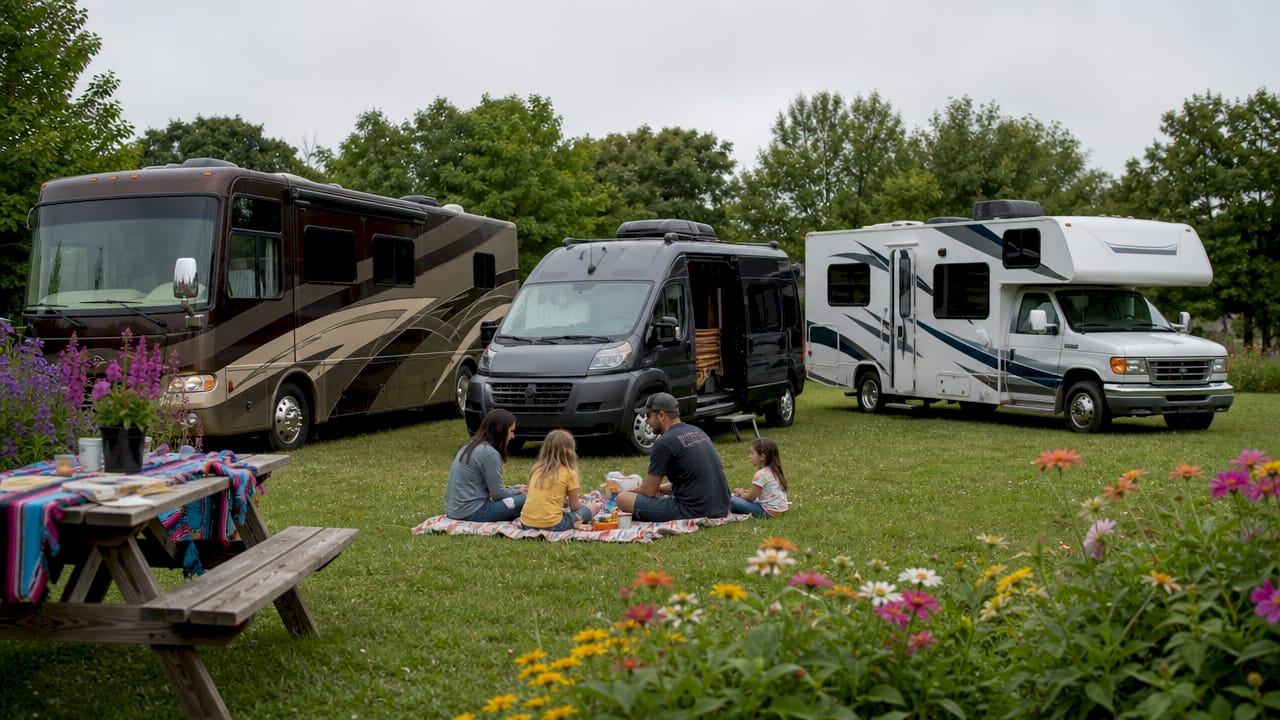
Motorized RVs offer convenience for frequent movers because you drive one vehicle and stop wherever you want. The tradeoff is that when the RV is parked, you have no separate vehicle for local errands unless you tow a car behind it.
Towable RVs: trailers, fifth wheels, and toy haulers
Towable RVs require a separate tow vehicle, which most families already own. Travel trailers are the most common type, available in lengths from under 15 feet to over 35 feet, and they hitch to a standard ball mount on most trucks and SUVs. Fifth wheels attach to a specialized hitch in a truck bed and offer more interior height and stability on the road. Toy haulers are travel trailers or fifth wheels with a rear garage section for ATVs, dirt bikes, or other gear.
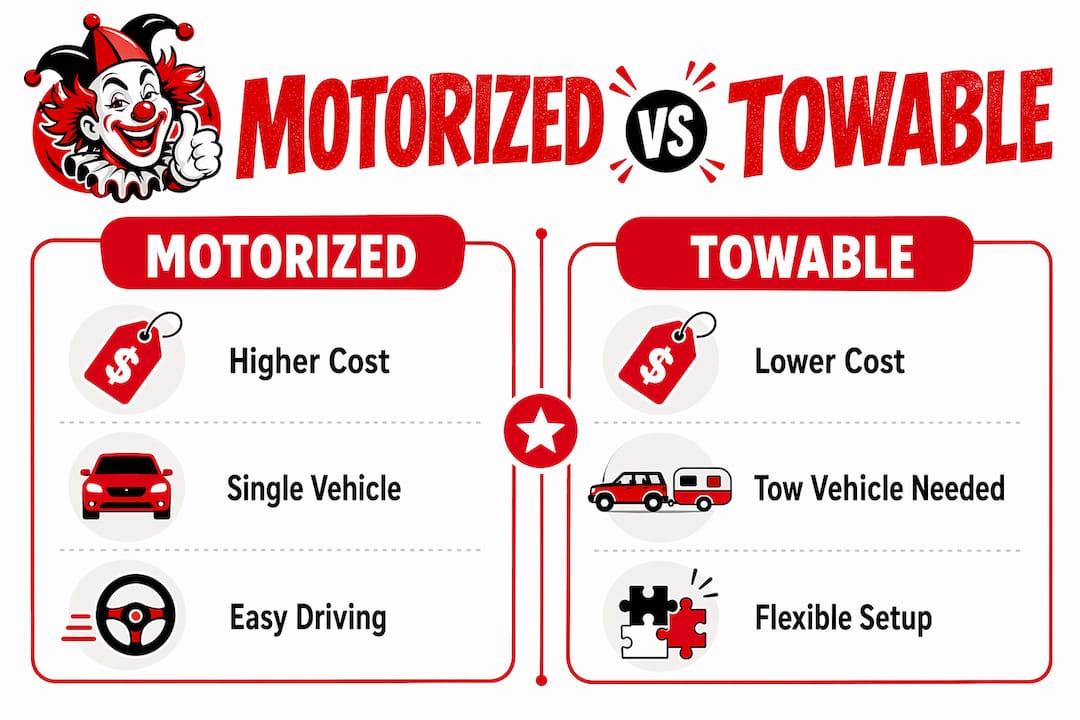
Towables provide flexibility and lower upfront costs compared to motorized units. You can unhitch at the campsite and use your truck for day trips, which is a practical advantage many families underestimate.
Pro Tip: Before you commit to a towable, check your tow vehicle’s Gross Vehicle Weight Rating (GVWR) against the fully loaded weight of the trailer, not just the dry weight listed on the sticker. Dry weight figures are misleading because they exclude water, fuel, cargo, and passengers.
| Feature | Motorized RV | Towable RV |
|---|---|---|
| Upfront cost | Higher | Lower |
| Driving complexity | One vehicle to drive | Requires towing skill |
| Campsite flexibility | Limited without tow car | Unhitch and drive separately |
| Maintenance | Engine plus living systems | Living systems only |
| Best for | Frequent movers, full-timers | Weekend campers, families with trucks |
How do you match an RV to your lifestyle and group size?
Matching the RV to your travel lifestyle is the single most reliable predictor of long-term satisfaction. A couple doing weekend trips has completely different needs than a family of five planning a three-month cross-country trip.
Start by counting your regular travelers and your realistic trip length. Sleeping capacity is non-negotiable. A travel trailer with one slide-out and a rear bunkhouse can sleep six comfortably, while a Class B van sleeps two. Floorplan matters as much as total square footage because a poorly designed layout wastes space and creates friction on long trips.
- Weekend campers and families: A Class C motorhome or a mid-size travel trailer (24–30 feet) covers most needs. You get enough sleeping space, a functional kitchen, and a bathroom without the complexity of a large rig.
- Couples and solo travelers: A Class B van or a small travel trailer under 20 feet keeps driving and parking manageable. These units also cost less to fuel and store.
- Full-time or long-term travelers: A Class A motorhome or a large fifth wheel gives you the living space and storage needed for months on the road. Prioritize build quality and four-season insulation if you plan to travel in cold climates.
- Off-grid and adventure travelers: Look for units with large freshwater tanks, solar panel compatibility, and high ground clearance. Truck campers and smaller travel trailers handle rough terrain better than large fifth wheels.
- Gear-heavy outdoor enthusiasts: A toy hauler solves the problem of transporting ATVs, motorcycles, or kayaks without a separate trailer. The rear garage doubles as a patio or extra sleeping space when the gear is unloaded.
You can learn more about types of recreational vehicles and how each category aligns with specific travel patterns before you narrow your list.
A strong framework for narrowing options includes three inputs: your primary usage (weekend, seasonal, or full-time), your budget ceiling, and any specific needs like off-grid capability or gear storage. Without those three inputs defined, you will spend hours comparing units that are wrong for you from the start.
What does an RV actually cost beyond the sticker price?
RV prices range from $5,000 for a basic pop-up camper to over $500,000 for a top-tier Class A diesel pusher. That range tells you the market is wide, but the sticker price is only part of the financial picture.
Total ownership costs include insurance, storage, maintenance, fuel, and campsite fees, and these recurring expenses can run $3,000 to $8,000 annually depending on the unit type and how often you use it. A buyer who budgets only for the purchase price often finds the ongoing costs unsustainable within the first year.
| Cost Category | Estimated Annual Range | Notes |
|---|---|---|
| Insurance | $500–$2,000 | Varies by unit value and usage |
| Storage | $600–$3,000 | Higher in urban markets |
| Maintenance | $500–$2,000 | More for older or larger units |
| Fuel | $500–$3,000 | Depends on trip frequency and MPG |
| Campsite fees | $400–$2,500 | Full hookup sites cost more |
New RVs carry a warranty and the latest features, but they depreciate quickly in the first few years. A used unit in good condition can save you $10,000 or more upfront, though you should budget for a pre-purchase inspection by a certified RV technician. Underestimating ongoing expenses is the leading cause of buyer regret in the RV market.
Pro Tip: Calculate your total cost of ownership over three years, not just the purchase price. Add insurance, storage, maintenance, fuel, and campsite fees to the purchase cost, then divide by the number of trips you realistically plan. That per-trip number tells you whether the investment makes financial sense for your family.
For buyers thinking about financing options, understanding loan terms and interest rates before you visit a dealership puts you in a much stronger negotiating position.
Why should you rent before you buy an RV?
Renting different RV types before purchasing is one of the most effective ways to avoid a costly mistake. A weekend rental costs a fraction of what you lose if you buy the wrong unit and resell it a year later.
Renting reveals things a showroom visit cannot. You learn whether a Class A feels comfortable to drive on a highway, whether the kitchen layout works for your cooking habits, and whether the sleeping arrangements actually fit your family without conflict. These are practical details that look fine on a floor plan but feel very different in real life.
- Rent a Class B van for a long weekend to test compact living and urban parking.
- Rent a travel trailer to experience hitching, backing into a campsite, and managing a towable.
- Rent a Class C for a family trip to evaluate sleeping capacity and drivability before committing to a purchase.
- Pay attention to what annoys you during the rental. Those friction points will not disappear after you buy.
Rental experiences provide hands-on learning about vehicle size, drivability, and comfort that no amount of online research can replicate. Buyers who rent first consistently report higher satisfaction with their eventual purchase. Proper vehicle storage planning is another detail worth researching before you buy, since storage costs and logistics vary significantly by region and unit size.
Key Takeaways
The right RV is defined by your real travel habits, realistic budget, and the total cost of ownership over time, not by features or size alone.
| Point | Details |
|---|---|
| Motorized vs. towable first | Decide this before comparing models; it eliminates half the market immediately. |
| Match size to actual group | Count regular travelers and realistic trip length, not your maximum possible group. |
| Budget beyond the sticker | Plan for $3,000–$8,000 in annual ownership costs on top of the purchase price. |
| Rent before you buy | A weekend rental reveals comfort, drivability, and layout fit that a showroom cannot. |
| Loaded weight beats dry weight | Always verify towing capacity against fully loaded weight, including water and cargo. |
What I have learned from watching buyers get this wrong
After years of watching buyers approach the RV market, the pattern that causes the most regret is consistent. Buyers fall in love with a unit that fits their aspirational travel life, not their actual one. A family that camps three weekends a year does not need a 38-foot fifth wheel with a residential refrigerator and a king bed. That unit becomes money parked in a storage lot for 49 weeks a year.
The buyers who end up happiest are the ones who start with an honest list of how they actually travel. Not how they want to travel. Not the dream trip they have been planning for a decade. The real answer: how many times did you camp last year, for how many nights, and with how many people?
Function beats flash every time. A smaller, well-built unit that fits your real travel frequency will deliver more satisfaction than a large, feature-heavy rig you use twice a year. I have seen buyers downsize after their first purchase far more often than I have seen them wish they had bought bigger.
The budget conversation is the one most buyers avoid until it is too late. The purchase price is the number people focus on, but the storage fee, the insurance premium, and the maintenance bill are what make people question the decision six months in. Do that math before you sign, not after.
Take your time. The right unit is out there, and the market is not going anywhere. A rushed decision in an RV purchase almost always costs more than a patient one.
— Gary
Vehicles that complement your campsite setup
Importjunkies carries a range of utility and recreational vehicles built for outdoor use, and several of them pair naturally with an RV lifestyle. A compact electric golf cart handles campsite errands, hauls gear from the parking area, and keeps kids entertained without burning fuel.
The 48V Electric Golf Cart 4 Seater Renegade Edition is a practical campsite companion, with four seats, a utility bed, and zero-emission operation that works well in campgrounds with noise restrictions. Importjunkies also carries ATVs and UTVs for buyers who want off-road capability alongside their RV setup. Browse the full selection at importjunkies.com to find the right vehicle for your outdoor setup.
FAQ
What is the best RV type for a family of four?
A Class C motorhome or a travel trailer in the 24–30 foot range suits most families of four, offering enough sleeping space, a full bathroom, and manageable drivability for occasional travelers.
What questions should I ask when buying an RV?
Ask about the fully loaded weight versus your tow vehicle’s GVWR, the age and condition of the roof and seals, and what the total annual ownership costs including storage and insurance will be.
How much does RV ownership cost per year?
Annual ownership costs typically run $3,000 to $8,000 depending on the unit type, usage frequency, and storage location, covering insurance, maintenance, fuel, and campsite fees.
Is buying a used RV a good idea for first-time buyers?
A used RV in good condition can save thousands upfront, but always pay for a pre-purchase inspection by a certified RV technician to identify roof damage, water intrusion, or mechanical issues.
How do I choose between a motorized and a towable RV?
If you move campsites frequently and want one vehicle to drive, a motorized RV fits better. If you already own a capable tow vehicle and want lower upfront costs, a towable gives you more flexibility at the campsite.
Recommended
- Types of Recreational Vehicles: Match Your Needs – Saferwholesale || Import Junkies || Great Sports
- Why Import Recreational Vehicles: Benefits and Buyer Guide – Saferwholesale || Import Junkies || Great Sports
- Your guide to every type of off-road vehicle – Saferwholesale || Import Junkies || Great Sports
- The ultimate utility vehicles checklist for smart buyers – Saferwholesale || Import Junkies || Great Sports


