


 Location
 Login
Login
TL;DR:
- Most golf course managers see scooters as guest amenities, but treating them as managed fleet assets enhances efficiency. With technology controls and clear policies, scooters improve response times, reduce vehicle wear, and boost guest experience. Proper planning ultimately maximizes their operational benefits as part of a strategic mobility solution.
Most golf course managers think of scooters as a guest perk, something you offer alongside the vending machines and the halfway house. That framing costs you money and efficiency. The role of scooters in course operations is far more strategic than that. When scooters are managed as controlled mobility assets backed by fleet technology, geofencing, and clear policies, they cut staff response times, reduce wear on larger vehicles, and measurably improve the guest experience. This article gives you the operational blueprint to make that happen.
Table of Contents
- Key Takeaways
- The role of scooters in course operations: core functions
- Fleet technology: tracking, geofencing, and controls
- Policies that protect guests, staff, and the course
- Charging infrastructure and fleet turnover planning
- How scooters compare to other course mobility options
- My take on scooters as a strategic asset
- Upgrade your course mobility with Importjunkies
- FAQ
Key Takeaways
| Point | Details |
|---|---|
| Scooters are operational tools | Treat scooters as managed fleet assets, not amenities, to unlock real efficiency gains across your course. |
| Technology controls behavior | IoT platforms with geofencing and speed limits reduce incidents without relying on rider discipline alone. |
| Policy frameworks protect the course | Registration, no-ride zones, and enforced speed limits reduce pedestrian conflicts and property damage. |
| Charging infrastructure is non-negotiable | Centralized battery monitoring and scheduled charging prevent fleet shortages during peak rounds. |
| Scooters fill a specific mobility gap | They are best used for staff mobility and light guest transport where full golf carts are impractical or inefficient. |
The role of scooters in course operations: core functions
The honest reason most courses underutilize scooters is that they deploy them without a plan. You hand someone a key and hope for the best. That is not operations. That is optimism.
Scooters serve three primary functions on a well-run course. First, they give staff rapid mobility across terrain where a full cart is either too wide or too slow to deploy quickly. A marshal can cover a cart-path loop and respond to a pace-of-play issue in a fraction of the time it takes on foot. Second, they work as efficient guest transport for lighter loads between the clubhouse, practice range, and first tee. Third, they reduce the repetitive use of larger, heavier vehicles for short runs, which extends the life of your golf cart fleet and lowers maintenance costs.
The comfort and sustainability case also matters here. Electric buggy fleets improve guest comfort and sustainability, and scooters follow the same logic at a smaller scale. They produce zero direct emissions, run quietly, and do not churn up cart paths the way gas-powered vehicles do over time.
- Staff mobility: Marshals, rangers, and maintenance crews cover the course faster with fewer resources
- Guest convenience: Short transport runs between key facilities without deploying a full four-seater cart
- Fleet preservation: Scooters handle light-duty runs so your cart fleet logs fewer cycles on high-wear trips
- Sustainability signaling: Electric scooters align with the eco-messaging your modern guests increasingly expect
Pro Tip: If your marshals are currently on foot or sharing a single cart between two rangers, replacing even one walking patrol position with an electric scooter will show you measurable pace-of-play improvements within two weeks.
Fleet technology: tracking, geofencing, and controls
This is where scooter integration in courses moves from guesswork to management. Without technology, you are dependent on rider behavior. With it, you control outcomes regardless of how experienced the rider is.
Modern IoT fleet platforms offer a set of tools that are purpose-built for exactly this situation. IoT fleet management now includes live map tracking, geofenced no-go and slow zones, battery usage monitoring, and keyless access apps. What that means practically is this: you can see every scooter on your property in real time, prevent any scooter from entering a maintenance area or a pedestrian plaza without any physical barrier, and lock down access when a vehicle is not in use.
Here is how to implement these controls in a logical sequence:
- Define your zone map. Before you configure any software, walk the property and identify three zone types: full-speed corridors (cart paths away from foot traffic), slow zones (around the clubhouse, 18th green, and any shared pedestrian paths), and absolute no-go zones (maintenance sheds, native areas, and construction zones).
- Configure speed caps by zone. Set full-speed caps at a safe operational limit for your terrain, typically 10 to 15 mph on open cart paths. Slow zones should cap at 6 to 8 mph. Geofencing as a service-design tool lets you create safer, more predictable scooter networks without relying on signage alone.
- Activate keyless access controls. App-based keyless start ties vehicle access to staff credentials or guest reservations. This prevents unauthorized use and gives you a log of every ride without manual check-in sheets.
- Set up battery threshold alerts. Vehicles falling below 20 percent battery should flag automatically so you can pull them for charging before they go offline mid-shift.
- Schedule daily maintenance checks. Use your fleet platform’s status dashboard to confirm vehicle readiness before opening each morning.
| Control Feature | Operational Benefit |
|---|---|
| Real-time GPS tracking | Full property visibility without staff monitoring each vehicle |
| Geofence no-go zones | Automatic speed cutoff in sensitive areas, no physical barrier needed |
| Speed limit enforcement | Consistent safe speeds regardless of rider experience |
| Battery monitoring | Prevents unplanned downtime during peak operating hours |
| Keyless app access | Eliminates manual check-in, ties use to accountable users |
Pro Tip: Do not wait until you have a full fleet deployment to configure geofencing. Map your zones on day one and apply them to even a small pilot fleet of two or three scooters. The data you collect in the first 30 days will guide every future fleet decision.
Policies that protect guests, staff, and the course
Technology enforces what you configure. Policy enforces what technology cannot catch. You need both, and most courses only think about one.
The most effective scooter policies on shared-use properties share a common structure. Ocean Lakes enforces scooter registration with visible registration bands, a 10 mph speed limit, prohibited sidewalk riding, and fines up to $100 for curfew violations. That model translates directly to golf course operations. The specific rules that work best at the course level include:
- Mandatory pre-use registration for any guest or staff member operating a scooter, linked to their contact information and a signed waiver
- Defined parking zones with clear signage at each facility building so scooters do not block cart staging areas or pedestrian pathways
- No-ride zones posted at ground level, using physical markers in addition to your geofencing software, because technology fails occasionally and physical barriers do not
- Helmet and protective gear recommendations posted at each checkout station, with helmets available on loan for guests who want them
- Documented consequences for policy violations, including a written warning on the first offense and scooter privilege suspension on the second
“Safety education combined with strict operational rules is the most reliable way to manage risk and maintain positive guest interactions on shared paths.” UC Riverside
The education piece is chronically underestimated. Campus safety programs that pair signage and social media messaging with in-person safety events consistently see lower incident rates than those relying on rules alone. For a golf course, that translates to a 30-second safety briefing at checkout, posted reminders at each charging station, and a single laminated card on each scooter with the three most important rules. That is not excessive. That is the minimum that actually works.
For guests with mobility needs, special accommodations for adaptive carts and scooters often require insurance verification and waivers, so build that process into your registration system before you need it.
Charging infrastructure and fleet turnover planning
A scooter program that runs out of charged vehicles at 10 a.m. on a Saturday is not a scooter program. It is a liability. Fleet availability depends entirely on how well you manage charging infrastructure and vehicle turnover.
Royal North Devon Golf Club installed six dual 7.4 kW EV chargers with centralized monitoring, which reduced vehicle downtime and supported their sustainability commitments. That is the right mindset: charging infrastructure is not an afterthought. It is part of the operational design.
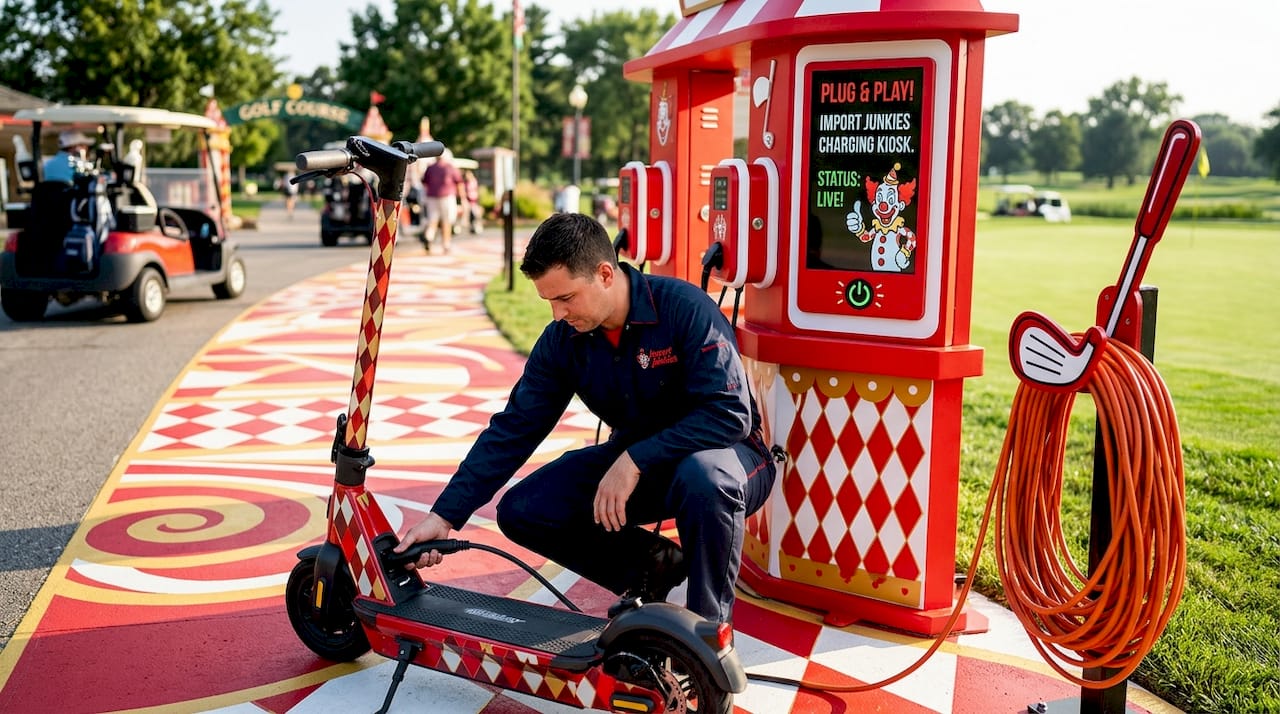
Here is what a working charging and turnover plan looks like in practice:
| Fleet Size | Recommended Chargers | Charging Cycle | Daily Ready Window |
|---|---|---|---|
| 4 to 6 scooters | 2 dual-port chargers | Overnight, 8 to 10 hours | 7:00 a.m. daily |
| 8 to 12 scooters | 4 dual-port chargers | Staggered overnight and midday top-offs | 7:00 a.m. and 1:00 p.m. |
| 15-plus scooters | 6 or more chargers | Automated schedule by IoT platform | Continuous readiness monitoring |
IoT fleet scheduling that tracks live vehicle availability and pre-schedules charging addresses the most common fleet bottleneck: vehicles sitting uncharged because no one noticed the battery dropped. When your fleet platform sends an alert, you act before the problem becomes a gap in coverage.
Handoff moments matter just as much as charging. Keyless start and app-based workflows reduce the labor and errors that come with manual check-ins. When a guest books a scooter through an app-based reservation and picks it up via keyless access, you eliminate two staff touchpoints per transaction and create a complete digital record of usage without anyone writing anything down.
Pro Tip: Build your midday charging window around your slowest operational period, typically between 11:30 a.m. and 1:00 p.m. when most rounds are either on the back nine or at the halfway house. You can rotate half your fleet through a top-off charge without ever creating a vehicle shortage.
How scooters compare to other course mobility options
Understanding where scooters fit means knowing what they are not. They are not a replacement for your golf cart fleet. They are a complement to it, and knowing the difference saves you from over-investing in one and under-utilizing the other.
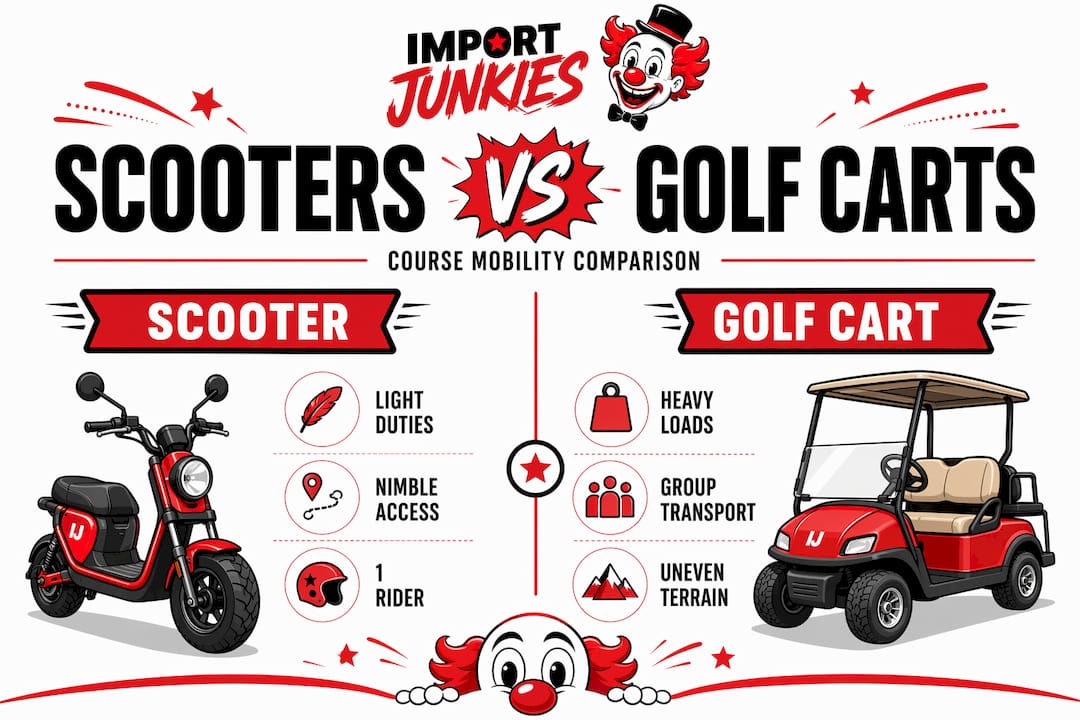
You can find a detailed comparison of electric and gas options that covers the full performance and cost picture for course operators. The table below focuses specifically on how scooters, standard electric golf carts, and electric bikes each serve different operational needs.
| Vehicle Type | Best Operational Use | Terrain Suitability | Guest Capacity | Operational Cost |
|---|---|---|---|---|
| Electric scooter | Staff mobility, single-guest light transport | Paved paths, moderate grades | 1 rider | Low |
| Electric golf cart | Group guest transport, equipment hauling | All terrain, steep grades | 2 to 4 riders | Medium |
| Electric bike | Groundskeeping patrol, fitness-forward guests | Moderate terrain | 1 rider | Low |
Golf carts handle the heavy work: transporting groups, carrying clubs, moving equipment across uneven terrain. Electric bikes for golf courses serve a slightly different niche, leaning toward active guests and groundskeeping applications. Scooters occupy a specific middle ground. They are faster to deploy than a cart, more controlled than a bike, and better suited to quick solo trips across the property.
The accessibility factor is worth noting separately. Scooters require a level of balance and coordination that not all guests can provide, which is why they should never be your only non-cart mobility option. Use them as an operational layer, not the whole solution.
My take on scooters as a strategic asset
I have watched a lot of course operators treat scooter programs the way they treat the beverage cart: set it up, hope guests like it, and deal with problems as they come. That approach works until someone rides into a green-side bunker or a vehicle goes offline at noon on a busy weekend. Then it becomes a real problem, fast.
What I have found is that the operators who get the most out of scooters are the ones who treat the technology configuration as the foundation, not the optional upgrade. Geofencing, battery monitoring, and app-based access are not premium features you add after things go wrong. They are the reason things do not go wrong in the first place. I am genuinely skeptical of any scooter deployment that skips those controls, regardless of the scale.
The policy side is equally overlooked. Clear, enforced rules create a predictable environment that guests actually prefer. Nobody wants to worry about a scooter rounding a blind corner at full speed. The courses that invest 30 minutes in a proper pre-deployment policy review avoid months of incident management later.
My honest advice: view scooters as a fleet category that requires the same operational discipline as your golf carts. Budget for charging infrastructure upfront, configure your zones before day one, and build your staff briefing around the three rules that matter most. The efficiency gains are real, but they do not happen by accident.
— Gary
Upgrade your course mobility with Importjunkies
If you are ready to build out a proper electric mobility fleet, Importjunkies carries the vehicles built for exactly this kind of operational work. For reliable group transport across the course, the Renegade Edition electric golf cart delivers 48V performance, four-seat capacity, and the utility specs that course operators need for daily use. If your terrain calls for something with more ground clearance, the Lifted Renegade+ 2.0 handles grades and uneven ground without sacrificing reliability. For solo staff mobility, the Wizzer electric scooter gives you a 500W motor in a compact, practical package that fits your cart paths and your budget.
FAQ
What is the primary role of scooters in course operations?
Scooters serve as a controlled mobility layer for staff rapid response and light guest transport, filling gaps where full golf carts are unnecessary or impractical. They work best when supported by fleet management technology and clear operational policies.
How do geofencing and IoT controls improve scooter safety?
Geofencing platforms enforce automatic speed reductions in slow zones and complete cutoffs in no-go areas, removing the reliance on rider judgment in sensitive parts of the course.
What speed limits should golf courses set for scooters?
Most managed properties cap scooters at 10 to 15 mph on open cart paths and 6 to 8 mph in pedestrian-heavy areas. Local regulations like Mesa’s 5 mph park limit show that shared-path speeds should always default toward caution.
How many chargers does a course scooter fleet need?
A fleet of four to six scooters can operate reliably with two dual-port chargers on an overnight charging schedule. Larger fleets need staggered midday charging windows and more charging stations to maintain consistent availability during peak hours.
How do scooters differ from electric golf carts for course use?
Scooters handle single-rider quick trips on paved paths, while electric golf carts manage group transport and equipment hauling across all terrain types. The two vehicle types complement each other and are not direct substitutes.
Recommended
- Street legal scooters explained: Requirements, types, and tips – Saferwholesale || Import Junkies || Great Sports
- Scooter safety guide: how to ride safely and legally – Saferwholesale || Import Junkies || Great Sports
- Electric bikes for golf courses: Boost play and sustainability – Saferwholesale || Import Junkies || Great Sports
- Scooter types guide: Choose the right model in 2026 – Saferwholesale || Import Junkies || Great Sports


