


 Location
 Login
Login
TL;DR:
- Commercial ATVs are designed with high payload, towing capacity, and utility accessories for daily work tasks. Features like reinforced cargo beds, heavy-duty hitches, and specialized powertrains ensure performance across rough terrains and demanding environments. Proper selection involves matching specifications such as payload, towing, ground clearance, and accessory compatibility to specific operational needs.
Commercial ATVs are defined by their payload capacity, towing systems, and utility-focused accessories that separate them from recreational models. In the industry, these machines are formally called utility task vehicles (UTVs) or utility side-by-sides, though “commercial ATV” is the widely used shorthand for work-grade models. The key features of commercial ATVs include reinforced cargo beds, heavy-duty hitches, drivetrain options suited for rough terrain, and either gas or electric powertrains built for sustained daily use. Models like the Kubota RTV-X, Arctic Cat Prowler XT, and Polaris Ranger XP Kinetic Premium represent the current standard for what a purpose-built commercial machine should deliver. Whether you manage a golf course, run a ranch, or oversee an industrial property, knowing which specs actually matter will save you from buying a machine that underperforms on the job.
What are the key features of commercial ATVs?
The most critical commercial ATV specifications are payload capacity, towing capacity, engine type, ground clearance, and turning radius. These are not marketing numbers. They determine whether your machine can handle the actual loads and terrain you work with every day.
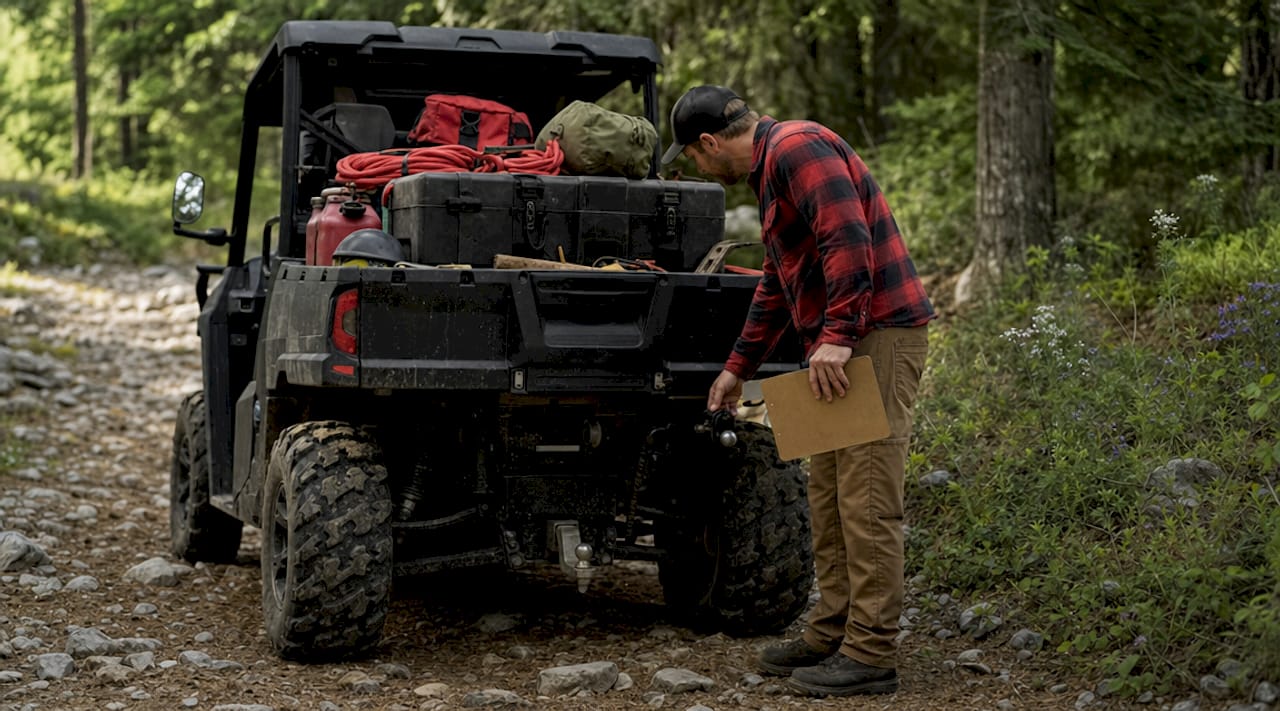
Payload and towing are the first numbers to check. The 2026 Kubota RTV-X Long Bed Standard carries a payload of 1,645 lb and tows up to 1,300 lb, with a 7.9-gallon fuel tank and a 17.1-foot turning radius. That turning radius matters on tight paths between fairways or inside warehouse corridors where a wider machine would stall your workflow.
Engine type shapes the entire operating profile of a commercial ATV. Gasoline engines offer longer range and faster refueling, making them practical for large ranches or remote sites. Electric powertrains deliver instant torque, quieter operation, and lower running costs, which makes them a strong fit for golf courses, resorts, and campuses where noise and emissions are concerns.
Ground clearance and suspension design also belong in this conversation. Dual A-arm suspension with high ground clearance keeps a loaded machine stable across uneven terrain without bottoming out. For commercial operators, stability under load is more valuable than top-end speed.
| Specification | Why it matters for commercial use |
|---|---|
| Payload capacity | Determines how much cargo or equipment you can carry per trip |
| Towing capacity | Sets the limit for trailers, attachments, and implements |
| Turning radius | Affects maneuverability in tight spaces like fairways or warehouses |
| Ground clearance | Prevents damage when crossing rough or uneven terrain under load |
| Engine/powertrain type | Shapes range, noise level, maintenance needs, and operating cost |
Pro Tip: Always verify payload and towing specs against your actual heaviest load before purchasing. A machine rated for 1,200 lb that you routinely push to 1,150 lb will wear out significantly faster than one rated for 1,600 lb doing the same job.
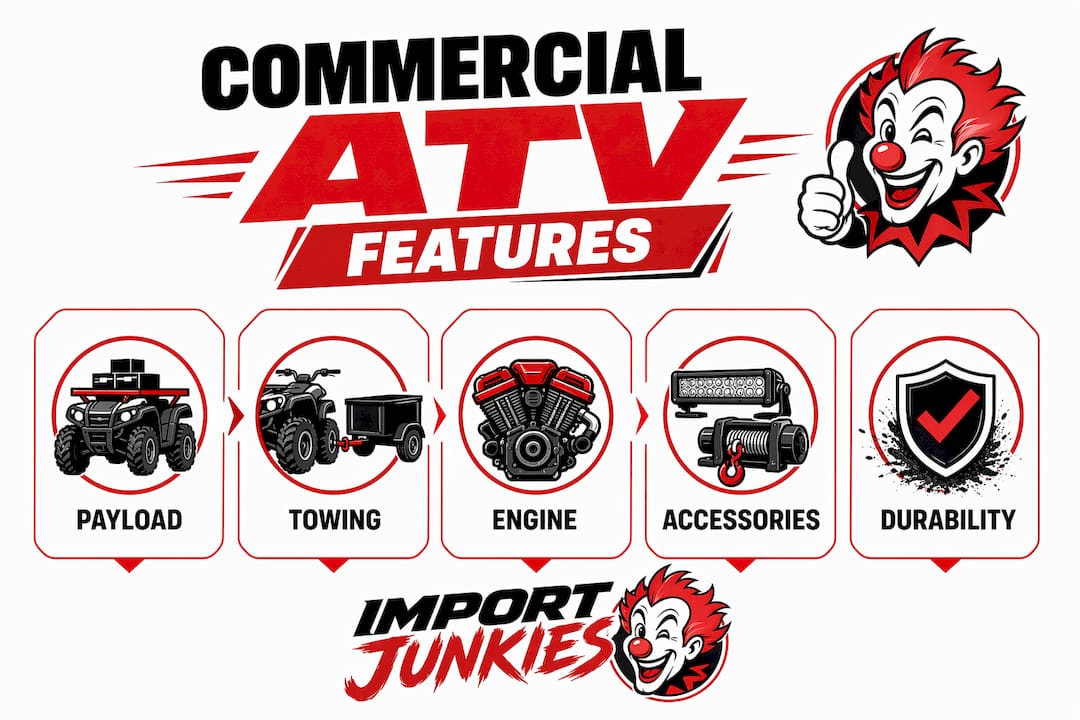
How do utility features like winches, hitches, and cargo systems enhance commercial ATVs?
Accessories are not optional upgrades on a commercial ATV. They are the systems that turn a capable machine into a productive one. The best commercial ATV features in this category include winch systems, receiver hitches, and modular cargo solutions.
Winch systems are recovery and load-handling tools. The Arctic Cat Prowler XT integrates a rear hitch with winch components including a roller fairlead and integral tie-down hooks, supporting up to 2,000 lb in payload and towing applications. A roller fairlead protects the winch cable from fraying during angled pulls, which is a detail that matters when you are recovering a stuck machine or dragging debris off a path.
Hitch systems on commercial ATVs typically use a 2-inch receiver, which is compatible with a wide range of tow-behind implements including spreaders, aerators, and utility trailers. This compatibility is a practical benefit for golf course operators who need to swap attachments throughout the day without tools or downtime.
Cargo systems are equally important. Here is what to look for when evaluating a commercial ATV’s cargo setup:
- Cargo bed volume and weight rating: A bed rated for 1,000 lb or more handles most commercial hauling tasks without modification.
- Modular locking storage: Lockable under-seat or side storage protects tools and supplies on shared or unsecured properties.
- Tie-down points: Factory-installed hooks and rails prevent shifting loads, which reduces both cargo damage and handling risk.
- Bed liner or protective coating: Bare steel beds corrode and scratch quickly under commercial use. A lined bed extends the machine’s working life.
A proper accessory ecosystem including locking cargo boxes, racks, and mounts greatly enhances multipurpose utility in commercial ATVs. Buying a machine with a strong accessory catalog from the manufacturer means you can expand capabilities without fabricating custom solutions.
Pro Tip: When evaluating winch setups, confirm the winch rating matches the machine’s gross vehicle weight. An undersized winch on a fully loaded ATV creates a safety risk, not just an inconvenience.
What benefits do electric commercial ATVs offer compared to gas models?
Electric commercial ATVs offer lower operating noise, zero direct emissions, reduced maintenance requirements, and strong low-end torque delivery. These are not minor perks. For golf courses, resorts, and urban campuses, they address real operational and regulatory concerns.
The Polaris Ranger XP Kinetic Premium is the clearest current example of what electric commercial performance looks like. It claims up to 45 miles estimated range, requires no oil changes or spark plug replacements, and comes with a 2-year total warranty plus an extended electrical component warranty. That maintenance reduction translates directly into lower annual operating costs and fewer scheduled service interruptions.
Here is how the benefits stack up for commercial operators considering the switch:
- Instant torque delivery: Electric motors produce maximum torque from a standstill, which improves performance in stop-and-go tasks like collecting debris, making deliveries, or towing carts across hilly terrain.
- Reduced noise: Electric ATVs operate at a fraction of the decibel level of gas engines. On a golf course, this means running maintenance routes during early morning hours without disturbing players or residents.
- Lower maintenance overhead: No oil, no spark plugs, no air filter replacements on the engine side. Routine service focuses on tires, brakes, and battery health checks.
- Zero direct emissions: Relevant for indoor use, enclosed facilities, or properties with environmental compliance requirements.
“Electric models are valued for low noise and reduced emissions but must ensure sufficient range to cover daily routes without recharge.” — Can-Am Outlander Electric 2026 Review
Range planning is the one area where electric ATVs require more discipline than gas models. A 45-mile range covers most golf course or campus routes comfortably, but large ranches or multi-site operations may need a charging station at each work zone. Before committing to electric, map your daily route distance and factor in elevation changes, which reduce range more than flat terrain does.
Which durability and maintenance features are critical for commercial ATV uptime?
Durability in a commercial ATV comes from drivetrain strength, suspension design, cooling capacity, and the quality of wear components like belts, tires, and brakes. A machine that breaks down during peak season is not just an inconvenience. It is lost productivity and, in some cases, lost revenue.
Suspension tuning for load-bearing is one of the most overlooked features to look for in ATVs. A suspension calibrated for a lightly loaded recreational rider will sag and handle poorly when you add 800 lb of cargo. Commercial-grade machines use stiffer spring rates and longer travel to maintain handling characteristics under full load.
Maintenance intervals based on machine hours rather than calendar months improve reliability and uptime for commercial operators. A machine used 6 hours a day accumulates wear far faster than one used on weekends. Tracking hours and scheduling service at 200-hour intervals for belts, filters, and brake inspections keeps the machine in working condition without guessing.
The key wear items to monitor on a commercial schedule include:
- Drive belts: CVT belts on utility ATVs are the most common failure point under heavy load. Inspect for cracking or glazing every 200 hours.
- Air filters: Dusty or muddy environments clog filters faster than manufacturers’ standard intervals assume. Check monthly in heavy-use conditions.
- Tires: Commercial use wears tires unevenly, especially on machines that spend time on pavement and off-road. Rotate and check pressure weekly.
- Brake pads and fluid: Frequent stopping under load accelerates brake wear. Inspect pads every 200 hours and flush fluid annually.
Pro Tip: Keep a simple hour-log in the machine or on a shared maintenance sheet. When you track hours rather than dates, you catch wear items before they become failures, not after.
How to choose the best commercial ATV for your business or golf course
Matching a commercial ATV to your operation means comparing your actual workload against the machine’s rated specifications, not just its price or brand name. The features to look for in ATVs shift depending on whether you are managing a golf course, running a landscaping operation, or working an industrial site.
For golf course maintenance, the priorities are low noise, tight turning radius, and light ground pressure to avoid turf damage. Electric models like the Polaris Ranger XP Kinetic Premium or a 48V electric utility cart fit this profile well. For ranching or landscaping, gas-powered models with higher towing capacity and longer range make more practical sense.
| Use case | Priority features | Recommended powertrain |
|---|---|---|
| Golf course maintenance | Low noise, tight turning radius, light turf impact | Electric |
| Landscaping and grounds | Payload capacity, tow hitch, cargo bed volume | Gas or electric |
| Ranch and agricultural | High towing capacity, long range, fuel availability | Gas |
| Industrial or warehouse | Maneuverability, payload, enclosed cab option | Gas or electric |
| Snow removal and plowing | Four-wheel drive, plow mount, torque at low speed | Gas |
The benefits of commercial ATVs are only realized when the machine’s specs match the job. A high-horsepower machine with poor low-end torque will struggle more in stop-and-go towing than a lower-displacement engine with strong torque output. As research confirms, low-end torque improves performance in rough terrain and towing tasks more than peak horsepower does. This is a distinction that catches many buyers off guard.
Cost, maintenance access, and parts availability should also factor into your decision. A premium brand with a dealer 5 miles away is often a better long-term investment than a cheaper machine with no local service support.
Key takeaways
Commercial ATVs deliver real productivity gains only when payload, towing, drivetrain, and accessory systems are matched to the specific demands of the job.
| Point | Details |
|---|---|
| Payload and towing specs are non-negotiable | Verify rated capacities against your actual heaviest loads before buying. |
| Accessory integration drives daily utility | Winches, hitches, and modular cargo systems turn a capable machine into a productive one. |
| Electric ATVs suit low-noise, short-route operations | Models like the Polaris Ranger XP Kinetic Premium offer up to 45 miles range with no oil changes. |
| Maintenance by hours, not months | Track machine hours and service at 200-hour intervals to prevent failures during peak use. |
| Match powertrain to terrain and route length | Gas suits long-range and remote work; electric suits campuses, golf courses, and noise-sensitive sites. |
What I’ve learned from watching buyers get commercial ATVs wrong
I have seen the same mistake made repeatedly: buyers focus on engine size and brand name, then discover six months in that the machine cannot handle their actual workload. A 1,000 lb payload rating sounds like plenty until you load it with fertilizer bags, tools, and two workers on a steep fairway. The machine bogs, the suspension bottoms out, and the CVT belt starts slipping.
The spec sheet is a starting point, not a guarantee. What matters is validating those numbers against your real conditions, including terrain grade, load weight, and daily hours of use. A Kubota RTV-X rated for 1,645 lb on flat ground will perform differently on a 15-degree slope.
I also think buyers underestimate the value of a strong accessory ecosystem. A machine with factory-supported winch mounts, cargo racks, and hitch options is worth more in daily use than a slightly more powerful machine with no accessory support. You will spend more time working and less time fabricating workarounds.
Finally, maintenance discipline separates operators who get 5 years out of a commercial ATV from those who replace it in 3. Hour-based service intervals, weekly tire and brake checks, and belt inspections after heavy-use periods are not optional. They are what keep the machine earning its keep instead of sitting in the shop.
— Gary
Find the right commercial utility vehicle at Importjunkies

Importjunkies carries a range of utility vehicles built for real work, from snow-capable four-wheel-drive ATVs to electric golf utility carts designed for property maintenance. The MSA 300cc 4x4 ATV with Snow Plow delivers four-wheel drive and plow-ready capability for year-round commercial use. For operators who need more hauling power, the 400cc 4x4 UTV with Snow Plow and Dump Bed combines payload versatility with snow removal in one machine. If your operation calls for a quieter, lower-maintenance option, the 48V electric golf utility cart handles cargo and course maintenance without the noise or emissions. Contact Importjunkies directly for personalized recommendations based on your workflow and site requirements.
FAQ
What is the difference between a commercial ATV and a recreational ATV?
A commercial ATV is built with higher payload capacity, reinforced cargo systems, and towing hardware designed for sustained daily work tasks. Recreational ATVs prioritize speed and handling over load-bearing capability.
How much payload can a commercial ATV carry?
Payload capacity varies by model. The 2026 Kubota RTV-X Long Bed Standard carries up to 1,645 lb, while models like the Arctic Cat Prowler XT support up to 2,000 lb in combined payload and towing applications.
Are electric commercial ATVs practical for golf course use?
Yes. Electric models like the Polaris Ranger XP Kinetic Premium offer up to 45 miles of range, operate quietly, and require no oil changes, making them well-suited for golf course maintenance routes and noise-sensitive environments.
How often should a commercial ATV be serviced?
Service intervals should be based on machine hours rather than calendar months. A standard guideline is to inspect belts, filters, and brake systems every 200 hours of operation, with more frequent checks in dusty or heavy-load conditions.
What accessories are most important for a commercial ATV?
The most productive commercial ATVs include a properly rated winch with a roller fairlead, a 2-inch receiver hitch, a high-capacity cargo bed with tie-down points, and modular locking storage for tools and supplies.
Recommended
- Must-Have Features in UTVs: Your 2026 Buyer’s Guide – Saferwholesale || Import Junkies || Great Sports
- What Is an ATV? Features, Types, and Uses Explained – Saferwholesale || Import Junkies || Great Sports
- Your guide to every type of off-road vehicle – Saferwholesale || Import Junkies || Great Sports
- Golf carts vs. ATVs: Choosing the best utility vehicle – Saferwholesale || Import Junkies || Great Sports


