


 Location
 Login
Login
TL;DR:
- Mini trucks are compact, cab-over utility vehicles with payload capacities around 350 kg and high fuel efficiency. Many are legally road-allowed in various U.S. states, making them ideal for urban delivery, farming, and landscaping tasks. Their small size and rugged design offer practical advantages over UTVs and golf carts in tight spaces and daily operations.
A mini truck is defined as a compact, lightweight pickup built to maximize utility within a small footprint, typically featuring a cab-over-engine layout and a gross mass under 1.8 tons. The most recognized version is the Japanese kei truck, a legally defined vehicle class with strict size and engine limits. If you’re researching what is a mini truck for the first time, the short answer is this: it’s a purpose-built workhorse that fits where full-size pickups can’t go. Models like the Suzuki Carry, Honda Acty, and Daihatsu Hijet have made this format popular worldwide, and their growing presence in the U.S. market is no accident.
What is a mini truck, exactly?
A mini truck is a small pickup vehicle designed to carry cargo in tight spaces where larger trucks cannot operate. The industry term for the most common type is kei truck, which comes from Japan’s “kei” vehicle classification system. In the U.S., buyers often use “mini truck” and “kei truck” interchangeably, but the terms are not identical. “Kei truck” refers specifically to vehicles that meet Japan’s legal size and engine standards, while “mini truck” is a broader, more casual American term that covers any compact utility pickup.
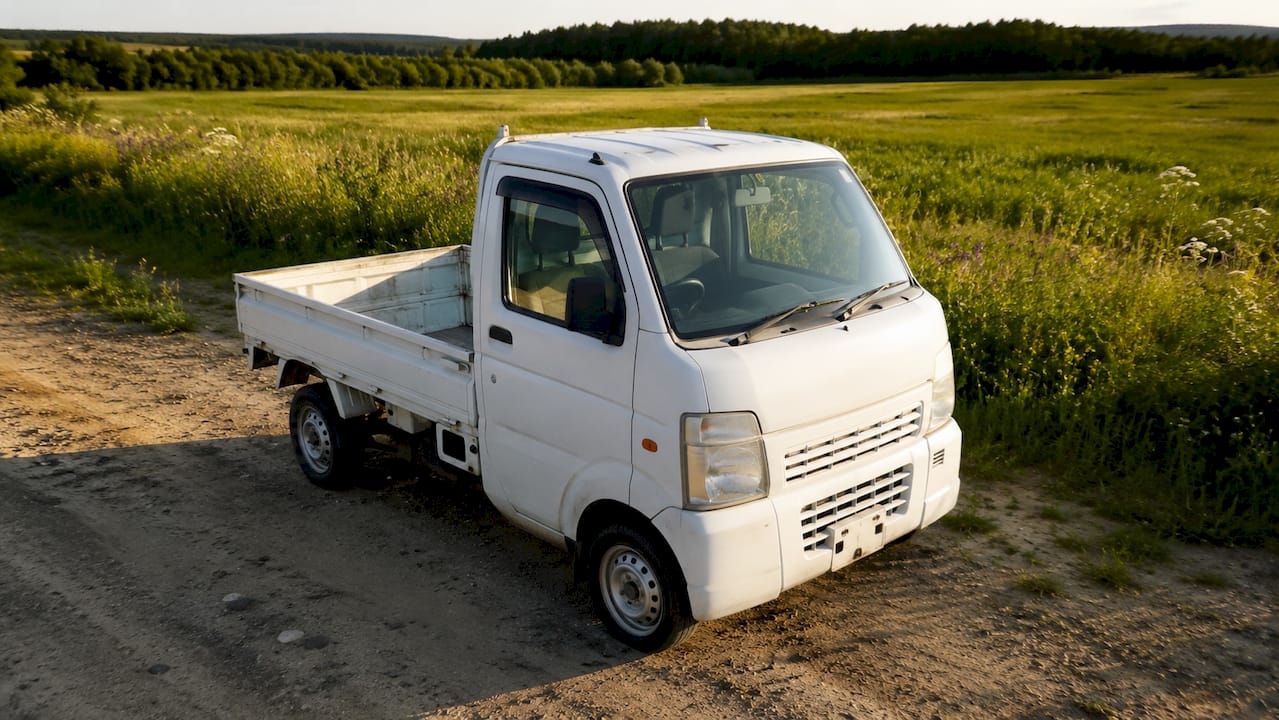
The cab-over-engine design is the feature that sets these vehicles apart from conventional pickups. By placing the cabin directly over the front axle and engine, manufacturers push the cargo bed as far forward as possible. The result is a large bed relative to the vehicle’s total length. That engineering choice is why mini trucks carry so much despite being so small.
What are the typical specs and payload of mini trucks?
Japanese kei trucks operate under strict government-set limits. According to Wikipedia’s kei truck entry, the maximum dimensions are 3.4 meters in length and 1.48 meters in width, with a maximum engine displacement of 660cc. Curb weight sits around 700 kg, and payload capacity is approximately 350 kg. That’s roughly 770 pounds of cargo in a vehicle shorter than most American sedans.
| Specification | Kei Truck Standard |
|---|---|
| Max length | 3.4 meters |
| Max width | 1.48 meters |
| Engine displacement | Up to 660cc |
| Curb weight | ~700 kg |
| Payload capacity | ~350 kg |
Fuel efficiency is another standout number. Kei trucks deliver 30–45 mpg, which is significantly better than any full-size pickup on the market. That kind of economy matters when you’re running a vehicle daily on a farm, job site, or urban delivery route. Export models sold outside Japan sometimes use larger engines above 660cc to meet different road requirements, but the cab-over layout and compact dimensions remain consistent.

Pro Tip: If you’re buying a used kei truck, check the engine displacement carefully. Some export models have been fitted with 800cc or 1,000cc engines, which affects registration classification in certain U.S. states.
Mini truck vs. UTV vs. golf cart: which is right for you?
This comparison matters because buyers often consider all three vehicle types before making a decision. Each serves a different primary purpose, and the differences are significant.
Mini trucks are road-legal in many U.S. states and offer enclosed cab comfort, a full cargo bed, and genuine payload capacity. UTVs are built for off-road performance and typically lack the cabin features or road legality that mini trucks provide. Golf carts are designed for low-speed, flat-surface transport and carry minimal cargo. For a deeper look at how UTVs stack up, the UTV complete guide at Importjunkies covers their specs and use cases in detail.
| Feature | Mini Truck | UTV | Golf Cart |
|---|---|---|---|
| Road legal | Often yes | Rarely | Rarely |
| Payload capacity | ~350 kg | 400–600 lbs | 400–800 lbs |
| Cabin comfort | Enclosed cab | Open or half-cab | Open |
| Fuel economy | 30–45 mpg | 15–25 mpg | Electric |
| Price range | $5,000–$12,000 | $8,000–$20,000+ | $4,000–$15,000 |
Mini trucks also outperform UTVs in long-term durability and daily comfort. The comparison between utility trucks and golf carts shows that purpose-built road-legal vehicles consistently deliver more value for buyers who need a practical workhorse rather than a recreational ride. The key advantages of mini trucks in this comparison include:
- Maneuverability: At roughly half the width and two-thirds the length of a full-size pickup, kei trucks fit through farm gates, warehouse aisles, and narrow urban streets.
- Operating cost: Fuel costs at 30–45 mpg are substantially lower than any gas-powered UTV or pickup.
- Road legality: Many states allow registered kei trucks on public roads, which UTVs and golf carts typically cannot access.
- Resale value: Popular models like the Suzuki Carry and Honda Acty hold value well due to consistent demand from farmers, landscapers, and collectors.
What can a mini truck do? Common uses and benefits
Mini trucks handle a wide range of tasks across multiple industries. Their small footprint and solid payload make them genuinely useful in situations where larger vehicles create problems.
- Urban delivery: Narrow city streets and tight loading zones are no obstacle. Mini trucks park where vans and pickups cannot, cutting delivery time in dense areas.
- Agriculture and farming: Carrying feed, tools, and small equipment across fields is the original purpose of kei trucks in Japan. The low ground clearance and four-wheel-drive options on many models handle uneven terrain well.
- Landscaping and grounds maintenance: Hauling mulch, soil, and equipment across residential properties is faster and less damaging to lawns than a full-size truck.
- Light industrial use: Warehouses and manufacturing facilities use mini trucks for internal transport, moving parts and materials between stations without needing a forklift.
- Recreational and custom builds: A growing community of enthusiasts imports kei trucks specifically for customization, off-road builds, and show vehicles.
The benefits of off-road vehicles extend to mini trucks as well, particularly for buyers who want a vehicle that works hard on weekdays and handles rough terrain on weekends. Imported kei trucks typically cost between $5,000 and $12,000 depending on age, condition, and drive configuration. That price point puts them well below comparable UTVs with similar cargo capacity.
Pro Tip: Four-wheel-drive kei trucks, particularly the Subaru Sambar and Daihatsu Hijet 4WD, are the most sought-after models for agricultural and off-road use. Expect to pay a $1,000–$2,000 premium over two-wheel-drive versions.
What should you know before importing or registering a mini truck?
Ownership of a mini truck in the U.S. comes with specific legal requirements that vary by state. Understanding these before you buy saves significant time and money.
- The 25-year rule: The U.S. requires imported vehicles to be at least 25 years old to be exempt from Federal Motor Vehicle Safety Standards (FMVSS). This is the primary legal pathway for importing kei trucks to the U.S. Most kei trucks available today qualify under this rule.
- State-by-state registration: Some states, including Tennessee and Alabama, classify kei trucks as off-highway vehicles, which limits where you can legally drive them. Other states allow full street registration. Research your specific state’s DMV requirements before purchasing.
- Safety limitations: The cab-over design that makes mini trucks so efficient also reduces crash protection. There are no crumple zones in front of the driver. These vehicles are best suited for low-speed, off-highway, and agricultural environments rather than highway driving.
- Parts availability: Aftermarket parts for popular models are available through specialized importers and enthusiast forums. Communities built around models like the Honda Acty and Suzuki Carry are active and knowledgeable. Connecting with these groups before you need repairs is smart ownership practice.
- Insurance: Standard auto insurance policies may not cover imported kei trucks. Specialty vehicle insurers and farm vehicle policies are the most common solutions.
For buyers considering a rebuilt title vehicle as a cost-saving option, the same state-level research applies. Title classification affects registration, insurance, and resale value regardless of vehicle type.
Key takeaways
Mini trucks are compact, cab-over-engine utility vehicles that deliver strong payload capacity, excellent fuel economy, and genuine road legality at a price point well below comparable UTVs.
| Point | Details |
|---|---|
| Core definition | Mini trucks have a gross mass under 1.8 tons and a length under 3.5 meters, with cab-over design. |
| Kei truck specs | Japanese kei trucks max out at 3.4m length, 660cc engine, and 350 kg payload capacity. |
| Fuel efficiency | Expect 30–45 mpg, making daily operational costs significantly lower than full-size pickups. |
| Import rule | U.S. buyers must follow the 25-year rule; state registration laws vary widely and affect road legality. |
| Best use cases | Agriculture, urban delivery, landscaping, light industrial, and custom recreational builds. |
Why mini trucks earn more respect than they get
I’ve spent years watching buyers overlook kei trucks in favor of UTVs or compact pickups, and most of them eventually circle back. The honest reason is that mini trucks solve a specific problem better than anything else in this price range: maximum cargo in minimum space, with the ability to drive it on a public road.
What surprises most first-time buyers is how capable these vehicles feel in real-world use. A Daihatsu Hijet with four-wheel drive handles muddy farm tracks without drama. A Suzuki Carry fits through a gate that would stop a side-by-side cold. The cab-over layout feels unusual at first, but you adapt quickly, and the visibility from that driving position is actually excellent.
The one area where I’d urge real caution is highway use. The safety limitations tied to the cab-over structure are genuine. These are not highway vehicles, and treating them as one is a mistake. Keep them in their lane, literally, and they’ll serve you for decades with minimal maintenance costs.
If you’re on the fence between a kei truck and a UTV, ask yourself one question: do you need to drive it on a public road? If yes, the mini truck wins almost every time. If you’re purely off-road, a UTV for property maintenance might serve you better. Know your use case, and the right vehicle becomes obvious.
— Gary
Find your next utility vehicle at Importjunkies
If the utility and efficiency of mini trucks appeal to you, Importjunkies carries a range of compact utility vehicles built for similar work. Whether you need something for property maintenance, off-road hauling, or a versatile recreational build, the catalog covers multiple configurations and price points.
The 48V Electric Golf Cart Renegade Edition is one of the most popular utility-focused options, offering four-seat capacity and a practical cargo setup at a competitive price. Importjunkies sells direct to the public at wholesale pricing, so you skip the dealership markup. Browse the full lineup, compare specs side by side, and reach out to the team with any questions before you buy.
FAQ
What is the difference between a kei truck and a mini truck?
A kei truck is a legally defined Japanese vehicle class with specific size and engine limits, while “mini truck” is a broader American term for any compact utility pickup. All kei trucks are mini trucks, but not all mini trucks meet Japan’s kei classification standards.
Are mini trucks street legal in the U.S.?
Street legality depends on your state. Many states allow registered kei trucks on public roads, but some classify them as off-highway vehicles with restricted use. The 25-year import rule is the primary federal requirement for bringing these vehicles into the country legally.
How much does a mini truck cost?
Imported Japanese kei trucks typically cost between $5,000 and $12,000 depending on age, condition, and drive configuration. Four-wheel-drive models and low-mileage examples command higher prices within that range.
What is the payload capacity of a typical mini truck?
Japanese kei trucks carry approximately 350 kg, or roughly 770 pounds. That capacity is competitive with many UTVs and significantly more than a standard golf cart.
Can mini trucks handle off-road terrain?
Yes, particularly four-wheel-drive models like the Subaru Sambar and Daihatsu Hijet 4WD. These vehicles handle farm tracks, muddy fields, and uneven terrain well, though they are not designed for aggressive off-road use at high speeds.
Recommended
- What Is a Specialty Vehicle? Types, Uses, and Costs – Saferwholesale || Import Junkies || Great Sports
- Must-Have Features in UTVs: Your 2026 Buyer’s Guide – Saferwholesale || Import Junkies || Great Sports
- What is an off-road utility truck? A guide for buyers – Saferwholesale || Import Junkies || Great Sports


