


 Location
 Login
Login
TL;DR:
- A side-by-side vehicle is an off-road utility vehicle with side-by-side seating, a roll cage, and car-like controls, distinct from ATVs. They are categorized as SxS, UTV, or ROV, with safety features making them safer for transporting passengers over rough terrain. Most are designed for off-road use and preferred for recreation or utility tasks, with maintenance and classification considerations being crucial before purchase.
A side-by-side vehicle is an off-road utility vehicle with two or more seats positioned next to each other, operated with a steering wheel and foot pedals, and enclosed by a protective roll cage. The industry refers to these machines interchangeably as SxS, UTV (Utility Terrain Vehicle), or ROV (Recreational Off-Highway Vehicle). They are not ATVs, despite sharing off-road terrain. Understanding what separates a side-by-side from other off-road options helps you buy the right machine for your actual needs, whether that means hauling gear on a farm or running trails with your family on weekends.
What is a side by side vehicle, exactly?
A side-by-side vehicle is defined by ANSI standards) as having at least two seats positioned side-by-side, a steering wheel, foot pedals, a roll cage, a top speed of at least 25 mph, and a cargo capacity of at least 350 lbs. Those specifications matter because they separate a true SxS from golf carts, ATVs, and other utility machines that share some but not all of those traits.
The roll cage is the most visible defining feature. It forms a protective structure around the occupants, and it works together with seat belts to keep riders secure during rollovers. This combination of safety hardware is what makes side-by-sides the preferred choice for families and work crews who need to carry passengers over rough ground.
You will also hear the term MOHUV (Multi-Occupant Human-powered Utility Vehicle) in regulatory documents, though that label rarely appears in dealerships or product listings. For practical purposes, SxS, UTV, and ROV are the terms you will encounter most often when shopping or researching.
How does a side-by-side differ from an ATV?
The core difference between a side-by-side and an ATV comes down to seating, controls, and safety design. An ATV uses a straddle seat and handlebars, requiring the rider to actively shift body weight to maintain balance. A side-by-side uses car-like controls including a steering wheel and pedals, with the vehicle’s chassis providing stability rather than the rider’s body.
Here is a direct comparison of the two vehicle types:
- Seating: ATVs seat 1–2 riders in a straddle position. Side-by-sides seat 2–6 occupants in a car-style cabin.
- Controls: ATVs use handlebars. Side-by-sides use a steering wheel and foot pedals.
- Safety: Side-by-sides include a roll-over protective structure (ROPS) and seat belts. Most ATVs do not.
- Stability: Side-by-sides provide greater seated stability without requiring active rider balancing.
- Passenger capacity: Side-by-sides comfortably carry multiple passengers. ATVs are primarily single-rider machines.
- Learning curve: Side-by-sides are generally easier for new riders to operate because the controls mirror a car.
ATVs remain the better choice for tight single-track trails where a narrow profile matters. Side-by-sides win on open terrain, work sites, and any situation where you are carrying passengers or cargo.
Pro Tip: If you plan to ride with children or less experienced passengers, a side-by-side is the safer choice. The roll cage and seat belts provide a level of protection that no ATV can match.
Understanding the terminology: SxS, UTV, and ROV
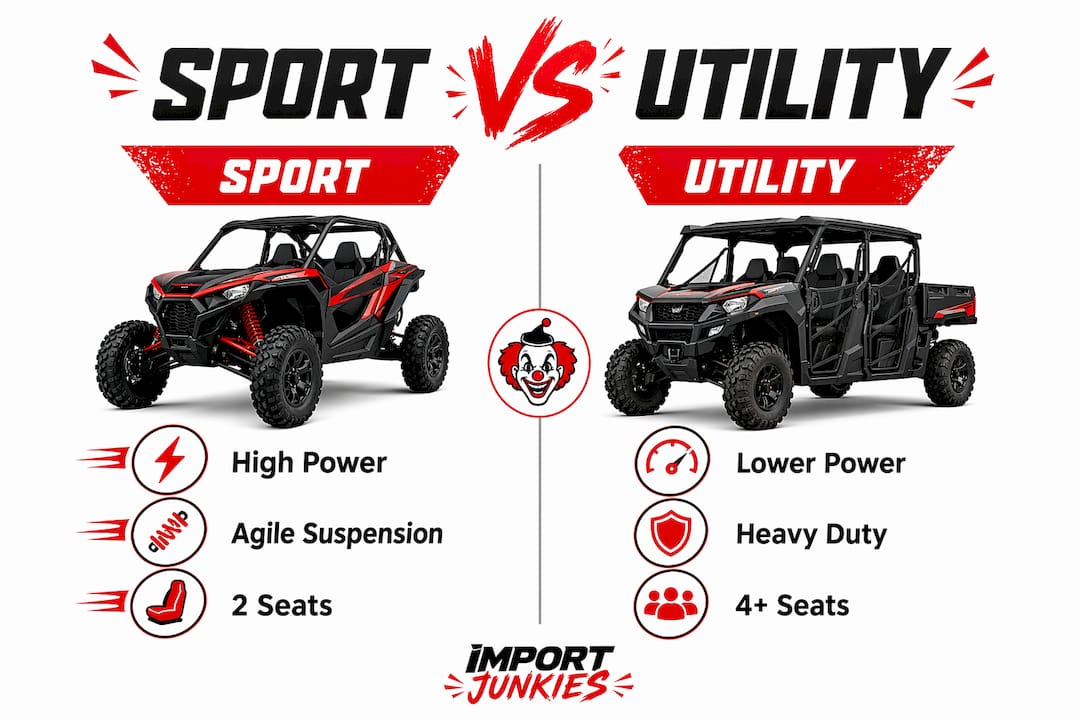
The terms SxS, UTV, and ROV all describe the same category of vehicle. The difference is mostly about branding and context. Industry naming conventions follow a loose pattern: sport-oriented models tend to be marketed as SxS or ROV, while work-focused models are more often called UTVs.
Here is how the terms break down in practice:
- SxS (Side-by-Side): The most common consumer term. Describes the seating layout and is used across both sport and utility models.
- UTV (Utility Terrain Vehicle): Emphasizes work capability. Brands like Polaris and John Deere use this label for their utility-focused lines.
- ROV (Recreational Off-Highway Vehicle): The official term used by ROHVA (Recreational Off-Highway Vehicle Association) and referenced in ANSI safety standards.
- MOHUV: A regulatory classification that rarely appears outside of standards documents.
The confusion around these labels creates real problems beyond just vocabulary. Terminology confusion is common even among dealers and insurance providers, which means the label on a vehicle can affect how it is classified for coverage purposes. Insurance premiums often differ between sport and utility models due to different risk profiles, even when the underlying chassis is nearly identical. When you are shopping or insuring a vehicle, ask for the specific ANSI classification and engine displacement rather than relying on the marketing name alone.
Pro Tip: When getting an insurance quote, specify whether your vehicle is classified as a sport SxS or a utility UTV. The distinction can change your premium even if the machines look similar on paper.
Key features and specifications of side-by-side vehicles
Side-by-sides share a core set of features that define the category, but the specs vary significantly between sport and utility models. Knowing what to look for helps you evaluate any specific machine against your actual use case.
Standard features across most models
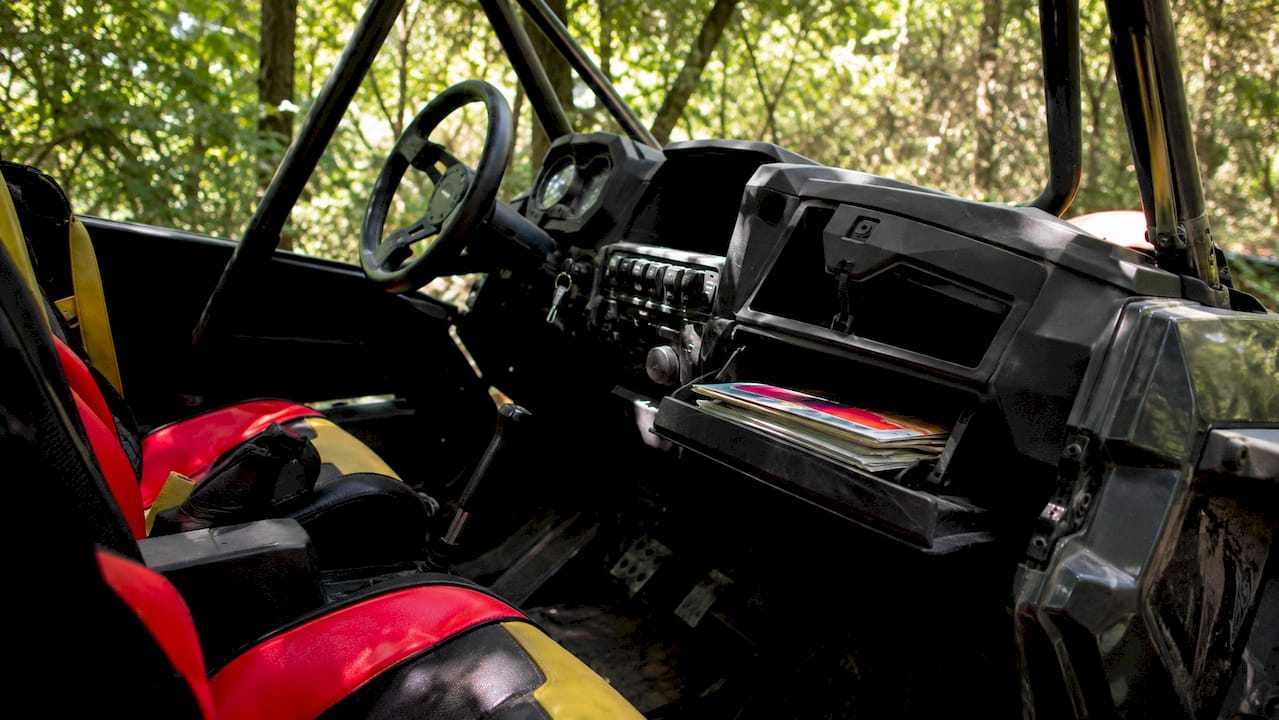
The standard feature set for a side-by-side includes a steering wheel, foot pedals, a roll-over protective structure (ROPS), and seat belts. Most models also offer optional accessories including doors, a roof, a windshield, and a rear cargo bed. Those add-ons matter more than buyers often expect because they directly affect comfort, weather protection, and hauling capability.
Sport vs. utility: a direct comparison
| Feature | Sport SxS | Utility UTV |
|---|---|---|
| Engine displacement | 800cc–1,000cc+ | 400cc–800cc |
| Seating capacity | 2 seats (typical) | 2–6 seats |
| Suspension travel | 14–18 inches | 10–14 inches |
| Cargo bed | Small or none | Standard rear bed |
| Top speed | 60–80+ mph | 25–45 mph |
| Primary use | Trail riding, dunes | Hauling, farming, work |
Sport models from brands like Can-Am (Maverick series) and Polaris (RZR series) prioritize suspension travel and top-end speed. Utility models from Polaris (Ranger series), Kawasaki (Mule series), and John Deere (Gator series) prioritize torque, cargo capacity, and towing. Choosing a sport model for utility work results in faster wear and sub-optimal performance. The same is true in reverse.
Most side-by-sides also lack the street-optimized differentials found in passenger cars. Extensive pavement driving can damage the drivetrain, so these vehicles are built for off-road use even when they carry car-style controls.
Practical uses and what to consider before buying
Side-by-sides serve two broad categories of use: recreation and utility. Understanding which category fits your needs is the single most important decision you will make before buying.
Recreational uses
Trail riding, sand dunes, hunting access roads, and family off-road outings are the most common recreational applications. For these uses, you want a vehicle with good suspension travel, comfortable seating, and enough speed to keep the ride engaging. Sport-tuned models from Can-Am and Polaris are built specifically for this purpose. If you are exploring options for outdoor adventures, reviewing a recreational vehicle guide can help you compare side-by-sides against other off-road options before committing.
Utility uses
Farm work, property maintenance, hauling materials, and hunting camp logistics all favor utility-focused UTVs. These models offer rear cargo beds rated for several hundred pounds, towing capacity in the 1,500–2,000 lb range, and lower-speed torque suited for pulling loads. John Deere Gator models and the Polaris Ranger are the most recognized names in this segment.
What buyers often overlook
- Maintenance costs: Annual maintenance) for high-performance side-by-sides can exceed $1,000–$2,000 depending on terrain and usage intensity. Belt drives, suspension bushings, and air filters are the most frequent replacement items.
- Terrain matching: A vehicle tuned for sand dunes will wear faster on rocky trails. Match the suspension and tire setup to your primary terrain.
- Operator training: Side-by-sides are easier to operate than ATVs, but rollover risk is still real on steep terrain. Many states and manufacturers recommend formal safety training before riding.
- Street legality: Most side-by-sides are not street legal by default. Some states allow limited road use with added lighting and mirrors, but check your local regulations before assuming you can drive one on public roads.
Pro Tip: Before buying, calculate your expected annual mileage and terrain type, then ask the dealer for the recommended service intervals and part costs for that specific model. A $12,000 purchase can become expensive money sitting in the garage if the maintenance budget is not planned.
Key takeaways
A side-by-side vehicle is defined by its ANSI-specified combination of side-by-side seating, automotive controls, a roll cage, and off-road capability, making it a distinct and more capable category than ATVs for passengers and cargo.
| Point | Details |
|---|---|
| Standard definition | ANSI requires side-by-side seating, steering wheel, roll cage, 25 mph minimum, and 350 lb cargo capacity. |
| SxS vs. ATV | Side-by-sides carry 2–6 passengers with car-like controls; ATVs require active balancing and seat 1–2 riders. |
| Terminology matters | SxS, UTV, and ROV describe the same vehicle; the label affects insurance classification and premiums. |
| Sport vs. utility | Match the vehicle to your primary use; mismatching causes faster wear and reduced performance. |
| Maintenance budget | High-performance models can cost $1,000–$2,000 annually in maintenance depending on terrain and use. |
Gary’s take on what buyers actually get wrong
Most buyers I talk to come in already confused about the terminology, and that confusion costs them. They see “UTV” on one listing and “SxS” on another and assume they are different vehicles. They are not. What actually matters is whether the machine is tuned for sport or utility, because that determines suspension setup, engine output, and long-term wear patterns.
The second mistake I see constantly is buying a sport model because it looks more exciting, then using it primarily for hauling or farm work. A Polaris RZR is a fantastic machine on a trail. It is not the right tool for pulling a trailer across a field every day. The belt drive will tell you that within the first season.
The safety argument for side-by-sides over ATVs is also stronger than most people realize. The mandatory ROPS and seat belts make a measurable difference in rollover outcomes. If you are riding with family members who are not experienced off-road riders, a side-by-side is not just more comfortable. It is genuinely safer. That is not a marketing claim. It is a structural reality.
My honest advice: decide on your primary use first, then pick the category. After that, compare two or three specific models within that category on maintenance cost and parts availability in your area. A brand with no local dealer support becomes a problem the first time something breaks on a Saturday morning.
— Gary
Find your next side-by-side at Importjunkies

Importjunkies carries a broad selection of utility and recreational vehicles, from compact two-seat models to six-passenger UTVs built for serious work and family use. If you are weighing passenger capacity, the six-passenger GVX Limo UTV is one of the most capable multi-seat options available at a competitive price point. For buyers who want to compare the full range of off-road and utility vehicles before deciding, the Importjunkies vehicle catalog covers everything from ATVs to electric utility carts. Browse the current inventory, check pricing, and reach out to the team directly with questions about which model fits your terrain and use case.
FAQ
What is the difference between a UTV and a side-by-side?
A UTV (Utility Terrain Vehicle) and a side-by-side are the same category of vehicle. The term UTV is typically used for work-focused models, while SxS or side-by-side is used more broadly across both sport and utility versions.
How many passengers can a side-by-side carry?
Most side-by-sides seat 2–6 passengers depending on the model. Two-seat configurations are standard on sport models, while utility UTVs often offer extended cab options with rear seating.
Are side-by-sides street legal?
Most side-by-sides are not street legal by default. Some states permit limited road use with added safety equipment like mirrors, lights, and a horn, but regulations vary by state and local jurisdiction.
What is the average maintenance cost for a side-by-side?
Annual maintenance costs) for high-performance side-by-sides can exceed $1,000–$2,000 depending on usage intensity and terrain. Common service items include belt drives, suspension bushings, and air filters.
Can you drive a side-by-side on pavement?
Side-by-sides can handle short paved sections, but extended pavement driving can damage the drivetrain because these vehicles lack street-optimized differentials. They are designed and built for off-road use.
Recommended
- Your guide to every type of off-road vehicle – Saferwholesale || Import Junkies || Great Sports
- Scooter types guide: Choose the right model in 2026 – Saferwholesale || Import Junkies || Great Sports
- What Does 4x4 Mean in Vehicles: A Clear Guide – Saferwholesale || Import Junkies || Great Sports
- How to compare scooters: a step-by-step guide to smart choices – Saferwholesale || Import Junkies || Great Sports


