


 Location
 Login
Login
TL;DR:
- Many people believe four wheelers are only for off-road enthusiasts, but they serve diverse practical purposes. They improve traction and access in challenging terrains, making them essential for work, recreation, and utility tasks. Choosing the right type and understanding their limitations ensures a purchase that truly fits your needs.
Most people assume four wheelers are strictly for hardcore off-road enthusiasts who spend weekends in the mud. That assumption misses most of the picture. Whether you’re hauling gear on a working ranch, camping in the mountains, or looking for a utility vehicle that can handle winter snow removal, the reasons why choose four wheelers expand well beyond recreation. This guide breaks down what four wheelers actually are, what each type does best, and what to watch for before you buy, so you walk away with a purchase decision that fits your real needs, not just a category.
Table of Contents
- Key Takeaways
- Why choose four wheelers: what they are and how they work
- Real benefits of four wheelers for recreation, utility, and outdoor use
- Comparing types of four wheelers by use case
- Downsides and considerations before you buy
- How to select and maintain a reliable four wheeler
- My honest take on the four wheeler question
- Find your fit at Importjunkies
- FAQ
Key Takeaways
| Point | Details |
|---|---|
| 4WD improves traction, not braking | Four-wheel drive distributes power but does not shorten stopping distances on any terrain. |
| Types match specific uses | ATVs, UTVs, and 4WD trucks serve different purposes and selecting the wrong type wastes money. |
| Fuel economy takes a hit | Engaging 4WD typically reduces fuel efficiency by 10 to 15 percent compared to two-wheel drive. |
| Maintenance matters more than price | Brand reputation, engine simplicity, and service history predict long-term reliability far better than sticker price. |
| Four wheelers suit work and play | From snow plowing to trail riding, a well-matched four wheeler handles both utility and recreation effectively. |
Why choose four wheelers: what they are and how they work
The term “four wheeler” covers several distinct vehicle types, and grouping them together without understanding the differences leads to bad buying decisions. The three categories most buyers encounter are ATVs (all-terrain vehicles), UTVs (utility task vehicles, also called side-by-sides), and 4WD trucks or SUVs. Each uses four wheels, but the mechanics, seating, payload, and intended use vary significantly.
At the core of most four wheelers is a four-wheel drive system. 4WD improves traction by distributing engine power to all four wheels simultaneously, which is why these vehicles perform so well in mud, sand, snow, and loose gravel. Two-wheel drive sends power to only one axle, which means the other two wheels are along for the ride with no added traction. In slippery or uneven conditions, that limitation shows immediately.
Key mechanical features you’ll find across most four wheeler categories include:
- Engine size: Ranges from 90cc youth ATVs to 1,000cc+ UTVs and full-size trucks with V8 engines
- Suspension: Independent front suspension or double-A-arm setups absorb trail impacts; suspension quality directly affects rider control and comfort on rough ground
- Tires: Aggressive knobby tires for off-road traction versus highway-rated all-terrain tires for truck applications
- Drive modes: Part-time 4WD, full-time 4WD, and AWD all operate differently and suit different conditions
- Differentials: Locking differentials force equal power to both wheels on an axle, essential for deep off-road situations
Understanding what 4x4 means in vehicles before you shop saves you from buying more, or less, vehicle than your situation actually requires.
Real benefits of four wheelers for recreation, utility, and outdoor use
This is where the decision gets personal. The benefits of four wheelers are not abstract. They show up in specific situations where a two-wheel drive vehicle simply cannot do the job.
Traction and terrain capability is the most obvious benefit. When you’re driving through a wet field, crossing a shallow creek, or climbing a loose gravel hill, 4WD is essential for maintaining traction and control. That capability translates directly into safety. Getting stuck in a remote area, or losing control on a slippery trail, are not theoretical risks.
Towing and hauling capacity is another major reason why buy a four wheeler makes sense for utility users. 4WD vehicles distribute engine power across all four wheels, which translates to better towing stability and control, especially on uneven ground or when pulling trailers up inclines. A UTV with a dump bed handles farm chores that would take three trips with a standard cart.
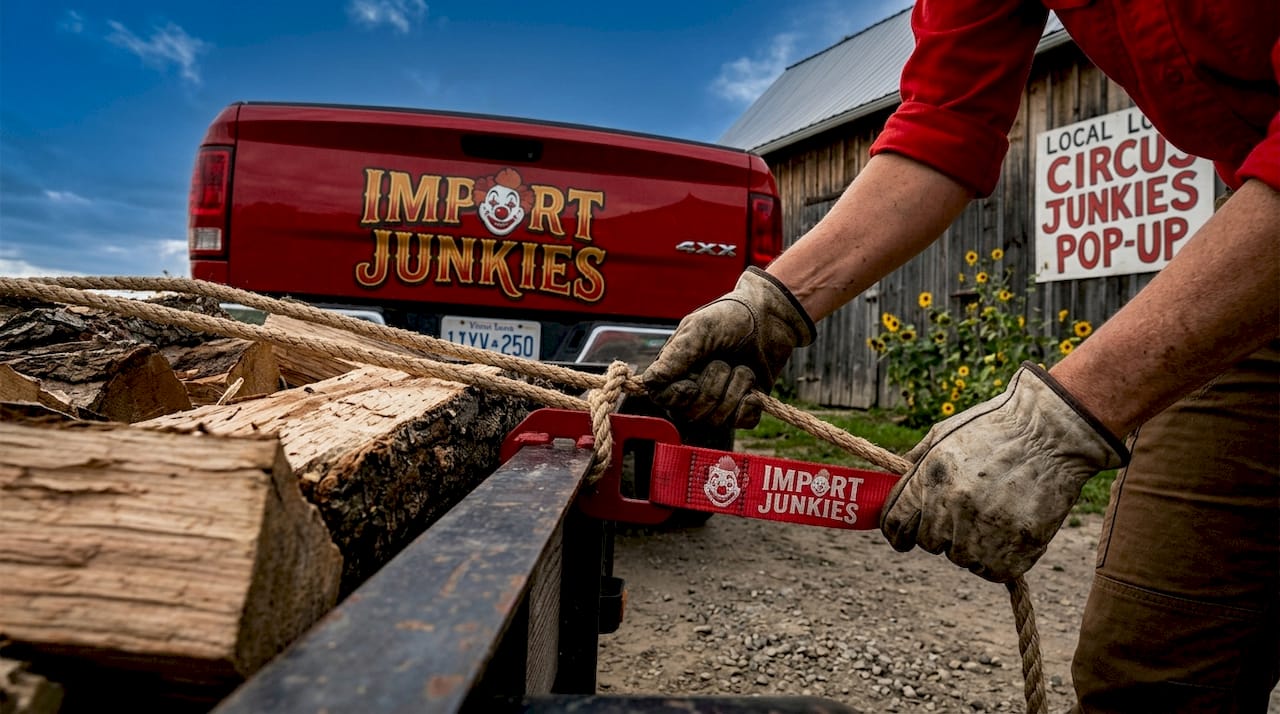
Access to remote locations is what most outdoor enthusiasts actually need. Hunting leases, backcountry campsites, and fishing spots on forest service roads are simply off-limits to a regular car. A four wheeler for off-roading opens that access without requiring you to hike several miles carrying all your gear.
Other key benefits worth knowing:
- Four wheeler SUVs and trucks are lifestyle enablers for adventurous families, not just tools, handling road trips, camping, and hauling kids plus gear reliably
- Modern 4WD electronic systems like terrain response technology automatically adjust to conditions, reducing the learning curve for first-time off-road drivers
- Stability on uneven terrain gives riders more confidence and reduces fatigue, which matters on longer trail rides or work days
Pro Tip: If you primarily drive on pavement and only need occasional off-road capability, an AWD SUV may serve you better than a part-time 4WD truck. Save the dedicated 4WD setup for buyers who genuinely need it in mud, snow, or technical off-road situations.
Comparing types of four wheelers by use case
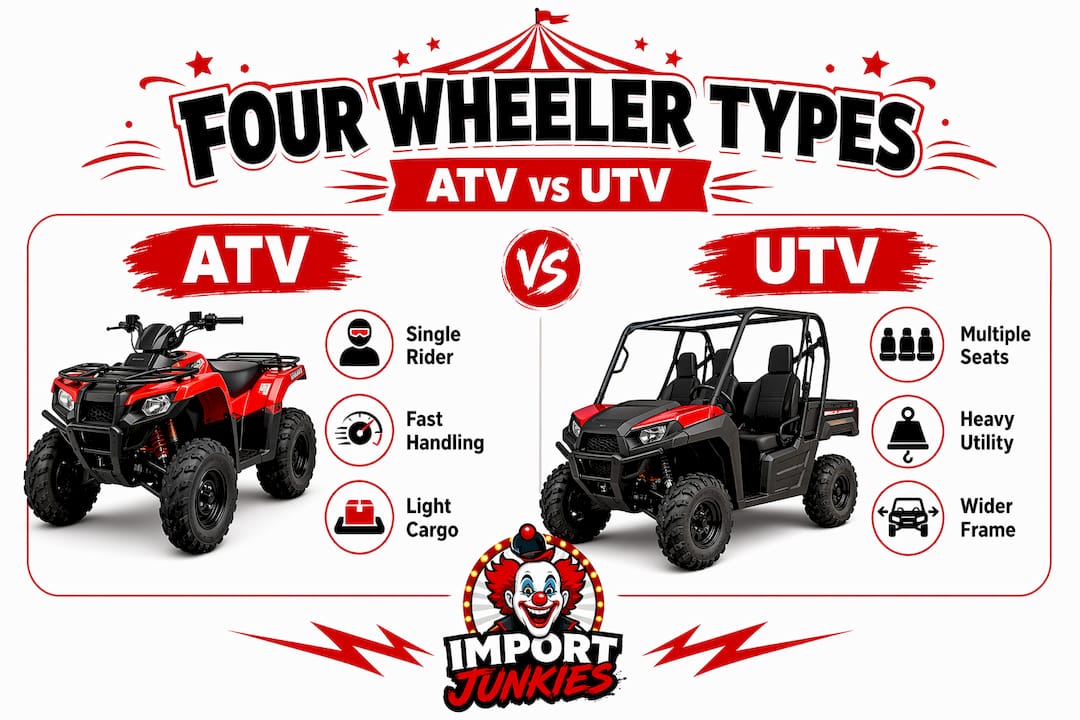
Choosing between an ATV, UTV, or 4WD truck is not just about budget. Each vehicle type has a specific design purpose, and buying the wrong one means you’ll either overpay for capability you don’t use or end up under-equipped for what you actually do.
| Vehicle Type | Seating | Best For | Payload/Towing | Trail Width |
|---|---|---|---|---|
| Sport ATV | 1 rider | Trail riding, racing, recreation | Low | Narrow |
| Utility ATV | 1 rider | Farm work, hunting, light hauling | Medium | Narrow |
| UTV / Side-by-Side | 2 to 6 riders | Hauling, farm work, group recreation | High | Wide |
| 4WD Truck or SUV | 5 to 8 passengers | Road + off-road, towing, family travel | Very High | Standard road |
Sport ATVs prioritize lightweight frames, high-revving engines, and sharp handling. They are built for fun, not freight. Utility ATVs, like the Honda FourTrax Rancher series, deliver proven durability with air-cooled engines and simpler drivetrains that stand up to daily farm work without demanding constant attention.
UTVs bridge the gap between an ATV and a full-size truck. They seat multiple passengers, accept snow plow attachments, and carry dump beds. For someone managing a property or running a small outdoor operation, a UTV is often the most practical purchase. A 4WD truck or SUV makes sense when you also need highway driving, towing a full trailer, or transporting a full family.
Pro Tip: When comparing a UTV to a utility ATV, think about how often you actually carry passengers or need a dump bed. If the honest answer is “rarely,” you may be better served by a simpler utility ATV at a lower price point.
Downsides and considerations before you buy
Knowing the advantages of four wheel drive is only half the job. A responsible purchase decision requires you to understand the real trade-offs.
- Fuel economy drops noticeably. 4WD reduces fuel efficiency by 10 to 15 percent compared to 2WD because of added system weight and mechanical drag. If you engage 4WD daily, that cost adds up over a year of ownership.
- Maintenance is more complex. 4WD vehicles carry higher maintenance costs than their 2WD counterparts. The transfer case, front differential, and front drive shafts all require periodic service that 2WD owners never deal with.
- 4WD does not improve braking. This is one of the most misunderstood facts about four-wheel drive. The added system weight actually increases braking distances, and drivers who feel overconfident on snow or wet pavement create dangerous situations for themselves and others.
- Improper 4WD use causes real damage. Engaging part-time 4WD on dry pavement causes drivetrain binding because part-time systems have no center differential. This is an expensive mistake that is completely avoidable with basic knowledge.
- Size and maneuverability trade-offs. Wider UTVs cannot fit on every trail. Larger 4WD trucks are harder to park in tight urban environments. Match vehicle width and length to where you’ll actually use it.
How to select and maintain a reliable four wheeler
Reliability does not happen by accident. It comes from choosing the right brand, understanding what to inspect, and committing to a maintenance schedule.
- Prioritize brand reputation and dealer support. Honda and Yamaha ATVs consistently lead reliability rankings because of low-maintenance engineering and strong dealer networks. Parts availability matters as much as initial build quality.
- Check the engine type before buying used. Simple air-cooled engines on models like the Honda FourTrax Rancher offer easier maintenance and proven longevity compared to more complex liquid-cooled alternatives.
- Request maintenance records. Oil change intervals and air filter replacement history tell you more about how a used four wheeler was cared for than any visual inspection alone.
- Inspect the drivetrain, not just the exterior. Look for leaks around the front differential and transfer case, listen for grinding during 4WD engagement, and check CV boot condition on ATVs and UTVs.
- Test suspension travel. Compress each corner of the suspension by hand or in a slow bounce test. Binding, clunking, or uneven travel points to worn shocks or bent components that signal a harder use history than the seller may admit.
My honest take on the four wheeler question
I’ve talked to a lot of buyers over the years who approached the four wheeler purchase as a purely mechanical decision, comparing specs and prices without thinking about how the vehicle fits their actual life. That approach almost always leads to either overbuying or underbuying.
What I’ve learned is that choosing a four wheeler is a lifestyle investment as much as a mechanical one. The family that camps twice a year and occasionally hauls firewood does not need the same vehicle as a rancher using it five days a week for fence work and livestock checks. Both buyers often look at the same UTVs and ATVs, but their needs are fundamentally different.
The other misconception I see constantly is people treating 4WD as a safety blanket that excuses aggressive driving. It does not. Four-wheel drive gets you moving in conditions where two-wheel drive cannot, but it does nothing for stopping or cornering. The riders and drivers who respect that limitation stay out of trouble. The ones who do not end up stuck in a ditch with a false sense of security.
My advice is straightforward: buy for the 80 percent of situations you’ll actually face, not the 20 percent you imagine. If you genuinely need off-road access, towing capacity, or all-season utility, a four wheeler pays for itself in capability. If you want the look without the need, you’re carrying extra maintenance costs every month for features that sit idle.
— Gary
Find your fit at Importjunkies
Importjunkies carries a selection of four wheelers built for real-world use, from utility ATVs and side-by-sides to electric UTVs that handle both work and recreation without the fuel costs.

If you need a machine that handles snow removal in winter and trail work in summer, the MSA 300cc 4x4 ATV with snow plow is a practical starting point with four-wheel drive capability and a genuine plow attachment. For buyers who want more hauling capacity and a dump bed, the 400cc 4x4 UTV Snow Master VX adds a full dump bed to that platform. Importjunkies sells direct to the public at wholesale pricing, with product pages that include full specifications, pricing, and purchasing options so you can compare models without pressure.
FAQ
What is the difference between an ATV and a UTV?
An ATV is a single-rider straddled vehicle built for trail riding and light utility work, while a UTV seats multiple passengers side-by-side and typically offers higher payload and towing capacity. UTVs are better suited for hauling, farm tasks, and group recreation.
Is a four wheeler worth it for occasional use?
If you genuinely need off-road access or utility capability a few times per month, a four wheeler pays for itself in functionality. For very occasional use, renting may be more cost-effective than absorbing the purchase price and ongoing maintenance.
Does 4WD make a vehicle safer in all conditions?
No. Four-wheel drive improves traction and helps you get moving, but it does not improve braking or cornering. Overconfidence in 4WD is a documented cause of off-road accidents.
What fuel economy impact should I expect from 4WD?
Engaging four-wheel drive typically reduces fuel economy by 10 to 15 percent compared to two-wheel drive, due to the added weight and mechanical drag of the 4WD system. Use 2WD on paved roads to preserve efficiency when full traction is not needed.
Which ATV brands are most reliable for long-term ownership?
Honda and Yamaha consistently rank highest for ATV reliability and resale value. The Honda FourTrax Rancher in particular is known for its simple air-cooled engine and low-maintenance design, making it a strong choice for buyers who prioritize dependability over top performance specs.
Recommended
- What Does 4x4 Mean in Vehicles: A Clear Guide – Saferwholesale || Import Junkies || Great Sports
- Utility Vehicles Explained: Uses, Types, and Right Fit – Saferwholesale || Import Junkies || Great Sports
- Scooter types guide: Choose the right model in 2026 – Saferwholesale || Import Junkies || Great Sports
- Your guide to every type of off-road vehicle – Saferwholesale || Import Junkies || Great Sports


