


 Location
 Login
Login
TL;DR:
- Importing recreational vehicles provides access to specialized, vintage, and commercial models rarely available domestically at lower prices. The process requires understanding regulatory standards, shipping logistics, and assessing whether long-term use justifies the import costs. It is especially advantageous for extended stays, unique configurations, or purchasing vintage vehicles exempt from EPA and DOT compliance.
Importing recreational vehicles is the most direct way to access specialized models, depreciated vintage rigs, and commercial-grade features that domestic dealerships rarely stock. The RV industry uses the term “gray market import” to describe vehicles brought in outside standard dealer channels, and understanding that distinction matters before you commit to the process. 58% of leisure travelers choose RV travel for affordability, and with 37 million Americans hitting the road in summer 2026, the demand for cost-effective options is pushing more buyers toward imports. Whether you want a vintage Japanese camper, a lithium-equipped Class B, or a utility-focused rig for commercial work, the reasons to import recreational vehicles go well beyond price alone.
Why import recreational vehicles: the core advantages
The primary case for importing an RV comes down to three factors: purchase price, feature access, and model availability. Domestic dealerships stock what sells in volume, which means rare configurations, older proven platforms, and specialized builds rarely appear on a U.S. lot.
- Lower purchase price on depreciated models. Vintage Japanese campers often carry depreciated prices yet appreciate over time due to rarity and robust engines. A 25-year-old Toyota HiAce camper conversion, for example, can cost a fraction of a new domestic Class B while offering comparable livability.
- Access to lithium battery systems and commercial-grade specs. Imported RVs frequently include lithium battery systems at price points more affordable than equivalent domestic builds. That matters if you plan extended off-grid travel or commercial fleet use.
- Unique model availability. Models popular in Japan, Australia, and Europe never reach U.S. dealers. Importing gives you access to platforms with proven track records in markets where RV engineering has taken a different path.
- Lifestyle investment value. RVs are lifestyle investments offering travel flexibility and budget control, not typically appreciating assets. The value you extract comes from experiences and freedom, not resale profit. That framing changes how you evaluate the import cost.
Pro Tip: Before you price out shipping, confirm the specific model you want against the EPA’s 25-year exemption list. Buying a rig that qualifies for the exemption eliminates one of the most expensive compliance steps in the entire import process.
The RV market in early 2026 is stabilizing, with softened prices and improved dealer inventory. That stabilization actually benefits importers. Sellers in Japan and Europe are pricing more competitively, and U.S. buyers have more negotiating room than they did during the post-pandemic surge.

You can also explore the types of recreational vehicles available before committing to an import, which helps you narrow down exactly which platform fits your travel style and budget.
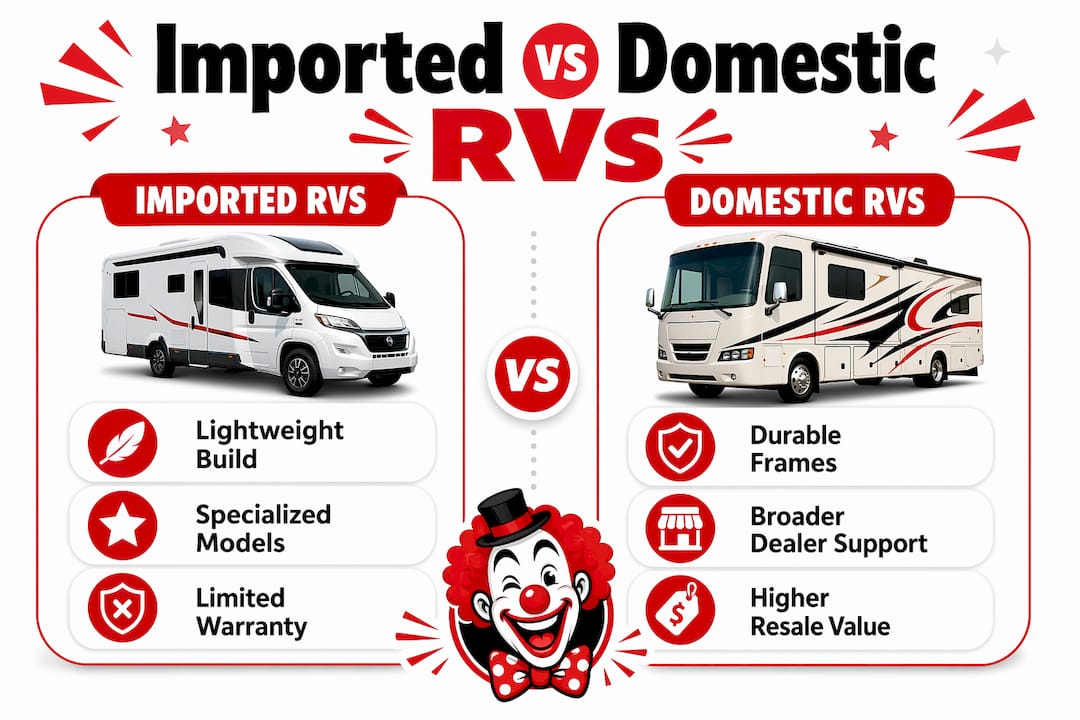
Imported vs. domestic RVs: quality, reliability, and resale value
The comparison between imported and locally built RVs is not simply a matter of one being better. The differences are rooted in where and how each was engineered.
| Factor | Imported RVs | Domestic RVs |
|---|---|---|
| Engineering focus | Lighter components for smooth roads | Heavier builds for rough terrain |
| Feature inclusion | Often include lithium systems, compact layouts | Standard builds with add-on upgrade paths |
| Warranty support | Limited or no U.S. dealer network | Full dealer and manufacturer warranty coverage |
| Resale value | Variable; rare models can appreciate | Stronger resale due to local demand and parts availability |
| Terrain suitability | May need suspension reinforcement for off-road | Built for diverse U.S. road conditions |
Imported RVs typically use lighter components aimed at smooth roads, whereas locally built RVs prioritize durability for rough terrain. That engineering difference is not a flaw in imported units. It is a design choice suited to their origin market. If you plan to travel paved highways and campgrounds, an imported rig performs well without modification. If you are heading into backcountry terrain, budget for suspension upgrades before your first serious trip.
Warranty and dealer support represent the clearest disadvantage of imports. Locally built RVs have better resale and warranty support due to local customization and dealer networks. An imported rig may have no authorized service center within 500 miles of your home base. That means sourcing parts internationally or working with independent mechanics who know the platform.
Pro Tip: Search for model-specific owner forums before purchasing any imported RV. Communities around Toyota HiAce conversions, Mitsubishi Delica campers, and similar platforms often maintain parts supplier lists and mechanic directories that make ownership far more practical.
Resale value for imported RVs depends heavily on rarity and condition. A well-maintained vintage Japanese camper in a market where collectors are active can hold or gain value. A generic imported caravan with no U.S. parts support will depreciate faster than a comparable domestic unit.
What are the logistics and regulatory considerations for importing an RV?
The RV import process involves shipping decisions, customs documentation, and U.S. federal compliance. Getting any one of these wrong can result in border denial or unexpected costs.
- Choose your shipping method. Container shipping is preferred for safety and long-term travel protection. Roll-on/roll-off (RoRo) shipping is mandatory for oversized rigs that do not fit standard containers. Lead times run a minimum of 2 to 4 weeks depending on origin port and destination.
- Verify transporter credentials. Confirm that your shipping company holds a valid FMCSA license and adequate insurance. Skipping this step exposes you to transit losses with no legal recourse.
- Understand the 25-year rule. RVs under 25 years old require EPA Temporary Import Approval before crossing the U.S. border. Vehicles 25 years or older bypass the most stringent EPA and DOT standards under the federal exemption. Failure to secure approval for a newer unit results in import denial at the border.
- Prepare your documentation. You need the original title, bill of sale, bill of lading, and any EPA approval letters. Customs will also require a formal entry filing if the vehicle’s value exceeds $2,500.
- Account for import taxes and duties. Passenger vehicles carry a 2.5% import duty. RVs classified as motor homes may fall under different tariff codes, so confirm the correct classification with a licensed customs broker before shipping.
Pro Tip: Hire a licensed customs broker who specializes in vehicle imports. The fee is typically $300 to $600 and can save you thousands in misclassification penalties or delayed clearance costs.
For buyers looking at utility-focused imports, the utility vehicle buyer’s guide at Importjunkies covers cost-reduction strategies that apply directly to the import decision.
When is importing an RV more cost-effective than renting or buying locally?
The break-even calculation for importing an RV depends on how long you plan to use it and how specialized your requirements are.
Importing RVs is cost-effective for stays from 3 to 12 months. Rentals make more financial sense for shorter trips. That range gives you a practical decision framework.
| Usage scenario | Recommended approach | Reason |
|---|---|---|
| Under 3 months | Rent domestically | Shipping costs exceed rental savings |
| 3 to 12 months | Import or buy used domestically | Import costs become rational for this duration |
| Over 12 months | Import specialized or vintage model | Full cost recovery plus lifestyle value |
| Commercial fleet use | Import commercial-grade units | Feature access and per-unit cost advantages |
The advantages of RV imports become most pronounced when you need a specific configuration that does not exist in the domestic market. A lithium-equipped camper van with a pop-top roof, a compact Japanese truck camper, or a commercial utility RV with a dump bed are all examples where importing is the only practical path.
- Shipping costs for a mid-size RV from Japan typically range from $2,000 to $5,000 depending on method and distance.
- Purchase prices for quality vintage Japanese campers start well below comparable domestic Class B motorhomes.
- Rental rates for comparable domestic units in peak season can exceed $200 per day, making a 90-day trip rental cost more than a purchased import with shipping included.
The 2026 top picks guide at Importjunkies breaks down current models worth considering if you want to compare import options against what is available domestically right now.
How to choose the right imported RV and manage after-purchase care
Selecting the right imported RV requires evaluating build quality, parts availability, and your intended use before you wire a single dollar overseas.
- Assess the engineering specs against your terrain. If you plan off-road or mixed-surface travel, prioritize units with reinforced frames and higher ground clearance. Owners often reinforce suspension or fittings when using imported RVs for rough terrain, and budgeting for that work upfront prevents surprises.
- Confirm local service availability. Search for mechanics in your area who work on the specific make and model before you buy. A Toyota-based camper conversion has far better U.S. service coverage than a proprietary European chassis.
- Source parts before you need them. Identify at least two suppliers for critical components: water pump, electrical system parts, and engine consumables. International shipping for emergency parts can take weeks.
- Budget for routine maintenance. Set aside 1% to 2% of the purchase price annually for maintenance on any imported vehicle. Older units with high mileage may require more in the first year as you address deferred maintenance from the previous owner.
- Consider technology upgrades at purchase. Adding a solar panel system, upgraded inverter, or GPS tracker at the time of import is far cheaper than retrofitting later. Many imported units already include these features, which is one of the core benefits of importing RVs from markets where off-grid capability is standard.
Pro Tip: Have any imported RV inspected by an independent mechanic before final payment. A pre-purchase inspection from a specialist familiar with the platform can identify frame rust, electrical faults, or engine wear that photos and seller descriptions miss entirely.
For buyers considering travel trailer upgrades after import, working with a regional RV service shop familiar with your terrain is the most practical way to adapt an imported unit for U.S. conditions.
Key takeaways
Importing a recreational vehicle delivers the most value when you need a specialized model, plan extended travel, or want commercial-grade features at a lower buy-in than domestic options provide.
| Point | Details |
|---|---|
| Cost advantage is real but conditional | Importing beats renting for stays of 3 to 12 months; shorter trips favor domestic rentals. |
| The 25-year rule is your compliance anchor | RVs 25 years or older bypass EPA and DOT standards; newer imports need formal approval letters. |
| Engineering differences require planning | Imported units built for smooth roads may need suspension reinforcement for U.S. off-road use. |
| Lifestyle value drives the decision | RVs are not appreciating assets; the return comes from travel freedom and budget control. |
| Logistics require professional support | Use a licensed customs broker and verify FMCSA credentials for your shipper before committing. |
My honest read on importing RVs in 2026
The post-COVID RV market taught a hard lesson: buying on hype is expensive. Prices spiked, inventory dried up, and buyers who rushed into domestic purchases paid peak prices for units that lost value fast. The market recovery in 2026 has brought more measured conditions, and that is exactly when importing makes the most sense.
What I have seen consistently is that buyers who do well with imports are the ones who know precisely what they want before they start the process. They have a specific model in mind, they understand the regulatory requirements, and they treat the import cost as part of the total purchase price rather than a surprise expense. The buyers who struggle are the ones who import impulsively based on a low sticker price without accounting for shipping, customs, and post-arrival modifications.
The lifestyle case for importing is genuinely strong. Industry experts treat RV ownership as a lifestyle choice, not a financial instrument, and that framing is correct. If the rig you want does not exist in the domestic market at a price that works for you, importing is a legitimate and often smart path. Just go in with clear eyes on the process, the costs, and the compliance requirements.
— Gary
Find your next recreational vehicle at Importjunkies
Importjunkies stocks a wide range of utility vehicles, ATVs, golf carts, and specialty rigs built for buyers who want practical performance at competitive prices. If you are working through the import decision and want a ready-to-go option without the shipping timeline, the Snow Master VX utility vehicle is a strong example of what Importjunkies carries: a 200cc gas-powered UTV with a snow plow and dump bed, priced for direct-to-public wholesale. Browse the full catalog at Importjunkies to compare models and find the right fit for your travel or commercial needs.
FAQ
What are the main benefits of importing RVs?
The primary benefits of importing RVs include lower purchase prices on depreciated or vintage models, access to specialized features like lithium battery systems, and availability of platforms not sold through U.S. dealers. Imported Japanese campers, for example, offer proven reliability at a fraction of the cost of comparable domestic Class B motorhomes.
How does the 25-year rule affect the RV import process?
RVs 25 years or older are exempt from EPA and DOT compliance standards under U.S. federal rules, making them significantly easier and cheaper to import. Newer RVs require an EPA Temporary Import Approval Letter, and arriving at the border without one results in the vehicle being denied entry.
Is it worth importing an RV for a short trip?
Importing is not cost-effective for trips under three months. Rental costs for short-term use are lower than the combined expense of purchase price, shipping, and customs fees. Importing becomes financially rational for stays of three months or longer, particularly for high-value or highly customized rigs.
What shipping method is best for importing an RV?
Container shipping is the preferred method for most RVs because it provides better protection during transit. RoRo shipping is required for oversized units that exceed container dimensions. Both methods carry minimum lead times of two to four weeks, so plan your timeline accordingly.
Do imported RVs hold their resale value in the U.S.?
Resale value for imported RVs varies by model and condition. Rare vintage Japanese campers in good condition can hold or appreciate in value due to collector demand. Generic imported caravans without U.S. parts support typically depreciate faster than comparable domestic units with established dealer networks.
Recommended
- Types of Recreational Vehicles: Match Your Needs – Saferwholesale || Import Junkies || Great Sports
- Must-Have Recreational Vehicles 2026: Top Picks Guide – Saferwholesale || Import Junkies || Great Sports
- Why Choose Four Wheelers: Benefits, Types, and Uses – Saferwholesale || Import Junkies || Great Sports
- What is an off-road utility truck? A guide for buyers – Saferwholesale || Import Junkies || Great Sports


