


 Location
 Login
Login
TL;DR:
- UTV safety involves practices and gear that significantly reduce injuries and deaths during off-road rides. Wearing helmets and seatbelts, along with pre-ride inspections, are the most effective safety measures, with most fatalities linked to gear non-use. Proper use of safety gear and vehicle maintenance greatly improve riding safety and help preserve trail access.
UTV safety is defined as the set of practices, gear requirements, and vehicle standards that prevent injuries and deaths during off-road operation. Over 101,000 people receive treatment for ATV or UTV injuries every year, with roughly 10,000 hospitalizations and more than 600 deaths. Those numbers make the importance of UTV safety impossible to ignore. The good news is that most of those outcomes are preventable. Helmets, seatbelts, pre-ride inspections, and legal awareness each cut your risk in measurable ways. This guide covers all of them, so you can ride with confidence instead of regret.
Why is UTV safety so important for every rider?
UTV safety matters because the consequences of ignoring it are severe and well documented. Helmet use alone reduces fatal head injuries by at least 40% and nonfatal brain injuries by 60% or more. That single piece of gear changes the outcome of a crash more than almost any other variable.
Utility terrain vehicles, commonly called UTVs or side-by-sides, are built for work and recreation across rough terrain. They carry passengers, haul cargo, and cover ground that trucks cannot reach. That versatility also means riders face rollover risks, trail hazards, and mechanical failures that demand serious preparation. Understanding what can go wrong is the first step toward making sure it does not.
The benefits of UTV safety extend beyond personal protection. When riders follow established UTV safety guidelines, they reduce liability, protect passengers, and help preserve trail access for the entire community. Regulators pay attention to injury data. Voluntary compliance today reduces the chance of mandatory restrictions tomorrow.
What are the most effective safety practices and gear to prevent UTV accidents?
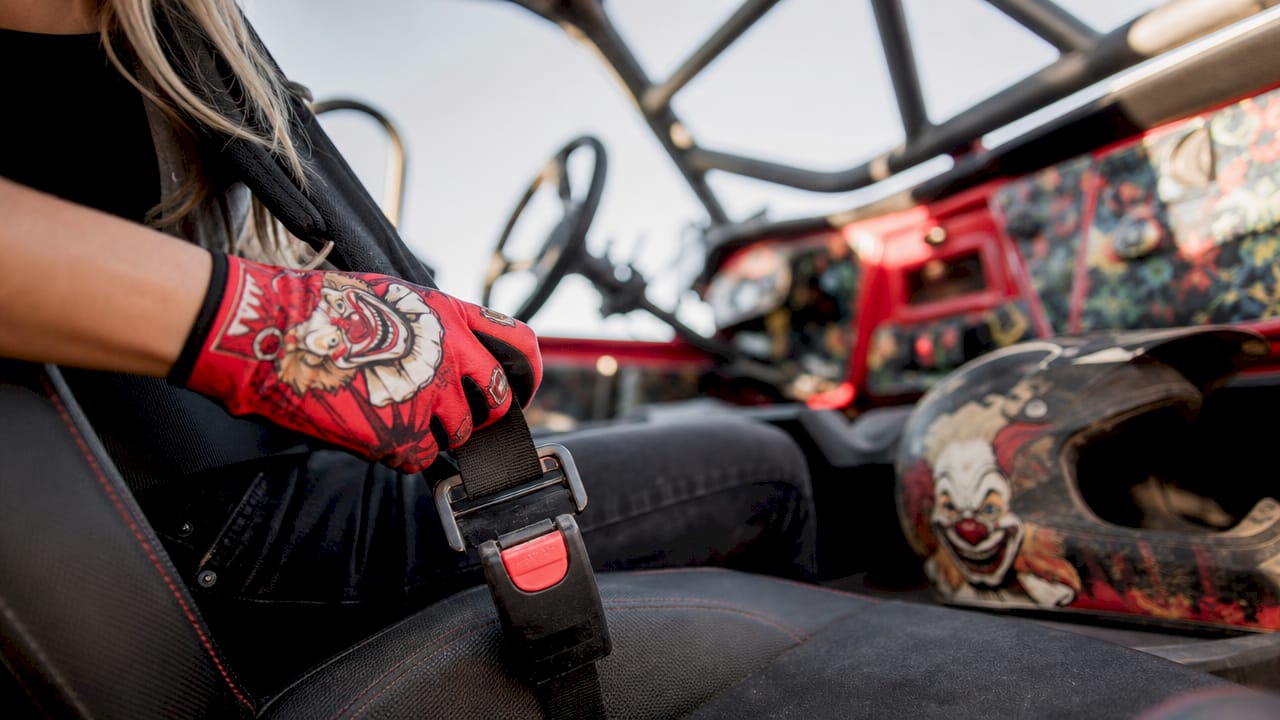
The right gear is your last line of defense when a ride goes wrong. Wearing a helmet and fastening your seatbelt before every ride are the two highest-impact UTV safety tips you can follow. Most fatal UTV crashes in Wisconsin involve riders not wearing seatbelts or helmets, which confirms that gear non-use is the primary driver of fatalities, not vehicle failure.
Helmets, seatbelts, and harness upgrades
A full-face helmet rated by DOT or Snell provides the best protection for trail riding. Standard three-point seatbelts work for casual use, but four-point and five-point harnesses distribute impact force across the chest and shoulders, which prevents ejection during rollovers far more effectively. Dragonfire Racing harnesses are a widely used example in the UTV community. If you ride aggressively or on technical terrain, a harness upgrade is a practical investment, not an optional extra.
Additional protective gear every rider needs
Beyond helmets and harnesses, a complete safety kit includes:
- Eye protection: Goggles or a full-face shield block dust, debris, and branches that can cause sudden loss of control.
- Gloves: Grip gloves reduce hand fatigue and protect against abrasions in a tip-over.
- Footwear: Over-the-ankle boots prevent ankle rolls and protect feet from pinch points near the pedals.
- Long sleeves and pants: Abrasion-resistant riding pants and jackets reduce road rash severity in low-speed slides.
Pro Tip: Audit your gear at the start of each season. Helmets degrade after impacts even when damage is not visible. Replace any helmet that has taken a hard hit, and check harness straps for fraying before every ride.
How can pre-ride maintenance and vehicle inspections improve UTV safety?
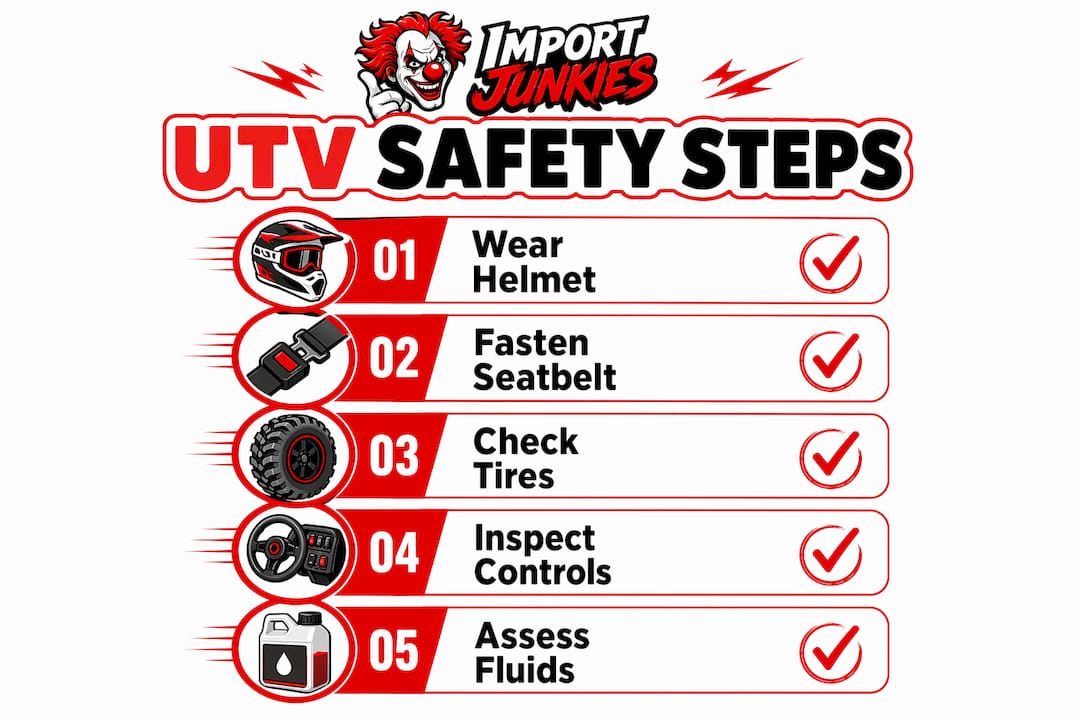
Mechanical failure causes a significant share of UTV accidents, and most failures are preventable with a consistent inspection routine. The T-CLOC checklist gives you a structured way to catch problems before they become emergencies. T-CLOC stands for Tires, Controls, Lights, Oil and Fluids, and Chassis. Running through it takes less than ten minutes and covers the systems most likely to fail on the trail.
The T-CLOC inspection in practice
- Tires: Check pressure and look for cuts, bulges, or embedded debris. Underinflated tires increase rollover risk on uneven ground.
- Controls: Test throttle response, brake feel, and steering play. Loose or sticky controls signal worn components that need attention before you ride.
- Lights: Confirm headlights, taillights, and any auxiliary lights work. Low-visibility conditions on shaded trails make lighting a safety requirement, not a convenience.
- Oil and Fluids: Check engine oil, coolant, and brake fluid levels. Low brake fluid is a direct warning sign of a leak or worn pads.
- Chassis: Inspect the frame, skid plates, and suspension linkages for cracks or loose bolts. Drive belt condition and lug nut torque are two of the most commonly overlooked details that lead to mid-trail breakdowns.
Pro Tip: Keep a small torque wrench and a tire pressure gauge in your storage compartment. Checking lug nut torque after the first few miles of a new trail is a habit that experienced riders rarely skip.
Safety enhancements worth adding
| Upgrade | Benefit |
|---|---|
| Reinforced steel bumpers | Absorbs impact during collisions with trees or rocks |
| Polycarbonate windshield | Blocks debris and wind without shattering on impact |
| In-helmet Bluetooth system | Enables clear voice communication in dusty or noisy conditions |
| Skid plate kit | Protects the undercarriage on rocky terrain |
In-helmet Bluetooth systems are particularly useful in group rides. Hand signals fail in dust clouds and tight tree lines. Voice communication keeps every rider informed about hazards ahead.
What legal compliance and trail etiquette should UTV operators follow?
Legal compliance is as much a part of how to ensure UTV safety as any piece of gear. Verifying that your planned route is legally open to UTVs before you ride is a step that many operators skip, and it creates both safety and legal exposure. Municipal and state authorities maintain current lists of approved trails. Checking those lists takes five minutes and prevents fines, vehicle impoundment, and access to terrain that may be genuinely dangerous.
Key legal and behavioral guidelines every UTV operator should follow:
- Wear required gear on public trails. Many states mandate helmets and seatbelts on public land. Check your state’s current requirements through your state DNR or department of motor vehicles. The Importjunkies state registration guide covers legal requirements by state for 2026.
- Observe posted speed limits. Speed limits on shared trails exist because blind corners and pedestrian crossings create collision risks that are not visible until you are already in them.
- Signal your intentions. Use hand signals or horn when approaching blind turns on narrow trails. Other riders and hikers cannot hear you until you are close.
- Never operate impaired. Alcohol and drug impairment dramatically increase reaction time and judgment errors. This is the single most preventable cause of fatal UTV accidents.
- Yield to other trail users. Hikers, equestrians, and cyclists have the right of way on most multi-use trails. Slowing down and giving space prevents collisions and preserves trail access for the UTV community.
Are UTVs safer than ATVs by design?
UTVs are generally safer than ATVs because of built-in structural features that ATVs lack. Roll cages, factory-installed seatbelts, and speed governors come standard on most UTVs. ATVs require the rider to balance the vehicle actively, which raises the skill threshold and the rollover risk significantly.
| Feature | UTV | ATV |
|---|---|---|
| Roll cage | Standard on most models | Not available |
| Factory seatbelts | Standard | Not available |
| Passenger seating | Side-by-side, enclosed | Rear seat only on some models |
| Speed governor | Common | Less common |
| Center of gravity | Lower, wider stance | Higher, narrower stance |
| Recommended for beginners | Yes | With significant training |
The wider stance and lower center of gravity of UTVs reduce tip-over risk on side slopes. That said, UTVs are not rollover-proof. A narrow trail combined with a steep side slope can still tip a UTV if the operator takes the angle too aggressively. Knowing your vehicle’s tilt limits and reading terrain before you commit to a line are skills that no amount of structural design replaces. For a deeper look at what separates modern UTV designs, the Importjunkies UTV features buyer’s guide breaks down the safety specifications worth prioritizing in 2026.
Key Takeaways
Proper UTV safety requires consistent use of helmets and harnesses, pre-ride mechanical inspections, and legal compliance with trail access rules and speed limits.
| Point | Details |
|---|---|
| Gear use saves lives | Helmets reduce fatal head injuries by 40% and nonfatal brain injuries by 60% or more. |
| Harnesses outperform standard belts | Four-point and five-point harnesses prevent ejection during rollovers better than three-point seatbelts. |
| T-CLOC prevents mechanical failures | Checking tires, controls, lights, fluids, and chassis before every ride catches problems early. |
| Legal compliance protects access | Verifying trail legality and following speed limits reduces accidents and preserves trail access. |
| UTVs have structural safety advantages | Roll cages, factory seatbelts, and wider stances make UTVs safer than ATVs for most riders. |
Why I think voluntary safety habits matter more than regulations
The injury numbers are not abstract to me. I have seen what happens when a rider skips the seatbelt on a “quick” ride around the property. The crashes that cause the most damage are almost always the ones nobody expected. That is the nature of off-road terrain.
What concerns me most is the pattern described by industry observers: low adoption of helmets and seatbelts remains the main barrier to better outcomes, even though the gear exists and the evidence is clear. If the UTV community does not close that gap voluntarily, increased government regulation becomes the likely response. Mandatory helmet laws and trail restrictions would follow. That outcome benefits no one.
The riders I respect most treat safety as a standard, not a suggestion. They run the T-CLOC check, they wear the harness, and they know the trail rules before they leave the truck. That discipline does not slow them down. It keeps them riding season after season. The culture around UTV safety improves one rider at a time, and the best place to start is your own pre-ride routine.
— Gary
UTVs and safety gear worth riding with
Choosing a UTV with the right safety features built in is the foundation of every safe ride. Importjunkies carries a range of utility vehicles designed for both performance and rider protection, including models with enclosed cabins, seatbelts, and stable four-wheel platforms suited for varied terrain.

The 48V Electric Renegade Edition UTV is a strong starting point for riders who want a four-seat utility vehicle with a stable, low-profile build. Importjunkies also stocks accessories and specialty vehicles across multiple categories, so you can match your gear to your terrain before your first ride. Browse the full vehicle catalog at Importjunkies to compare models, check current pricing, and find the right fit for your riding needs.
FAQ
What percentage of UTV fatalities involve riders not wearing safety gear?
Most fatal UTV crashes involve riders who were not wearing seatbelts or helmets. Wisconsin DNR data from 2026 recorded 14 UTV fatalities, with gear non-use identified as the primary contributing factor.
How much does a helmet actually reduce injury risk in a UTV crash?
Helmet use reduces fatal head injuries by at least 40% and nonfatal brain injuries by 60% or more in off-highway vehicle accidents. That makes a certified helmet the single most effective piece of safety gear you can wear.
What is the T-CLOC checklist for UTVs?
T-CLOC stands for Tires, Controls, Lights, Oil and Fluids, and Chassis. Running through each category before every ride helps operators catch mechanical issues before they cause accidents on the trail.
Do I need to register my UTV before riding on public trails?
Registration requirements vary by state, but most states require UTVs to be registered and insured before operating on public land. Check your state’s DNR or motor vehicle authority for current rules, or review the Importjunkies off-road registration guide for a state-by-state breakdown.
Are UTVs safer than ATVs for new riders?
UTVs are generally safer for new riders because they include roll cages, factory seatbelts, side-by-side seating, and a lower center of gravity. ATVs require active balance and carry a higher rollover risk, making them better suited for experienced operators.
Recommended
- Must-Have Features in UTVs: Your 2026 Buyer’s Guide – Saferwholesale || Import Junkies || Great Sports
- What is a UTV? Complete guide to utility terrain vehicles – Saferwholesale || Import Junkies || Great Sports
- ATV Buying Checklist: First-Time Owner’s Guide – Saferwholesale || Import Junkies || Great Sports
- Your guide to every type of off-road vehicle – Saferwholesale || Import Junkies || Great Sports


