


 Location
 Login
Login
TL;DR:
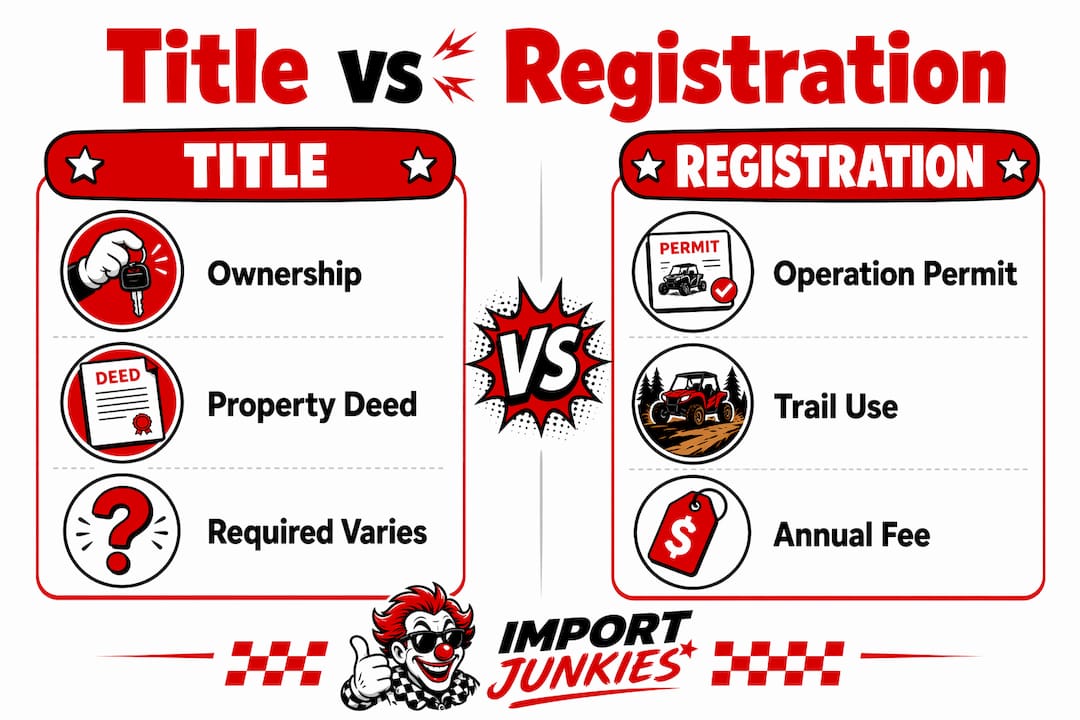
- ATV titles prove ownership, similar to property deeds, while registration permits legal operation on public lands.
- Understanding both processes ensures compliance, simplifies buying or selling, and protects your investment across states.
Title and registration for ATVs are two separate legal processes that every owner needs to understand before riding off private property. A title proves you legally own the ATV, much like a deed proves you own a house. Registration is the permit that authorizes you to operate it on public trails and lands. These are not the same thing, and confusing them is one of the most common mistakes new ATV buyers make. Knowing what is title and registration for ATVs protects your investment, keeps you legal, and makes buying or selling far simpler.
What is an ATV title and why does it matter?
An ATV title is the official legal document that proves ownership of the vehicle. It lists the owner’s name, the vehicle identification number (VIN), the make, model, and year of the ATV. Think of it as the paper record that settles any dispute about who owns the machine.
Most states require a title when you buy, sell, or finance an ATV. Even in states that do not require one for operation, getting a title strengthens your ownership claim and makes resale, insurance, and financing much easier. Without a title, a potential buyer has no way to verify you actually own what you are selling. That uncertainty kills deals and drives down your asking price.
Title laws vary by state. Some states require titling for all ATVs regardless of engine size. Others only require it above a certain displacement. A few states treat ATVs more like farm equipment and have minimal titling requirements. Checking your state’s Department of Motor Vehicles (DMV) or Department of Natural Resources (DNR) rules is the only reliable way to know where you stand.
What is a bonded title?
If you bought an ATV without a title, you are not out of options. A bonded title is a legal workaround available in most states. You purchase a surety bond, which acts as a financial guarantee against future ownership disputes, and submit it along with your application. Bonded titles add cost and waiting time compared to a standard title transfer, but they give you a legitimate ownership document when the original is missing.
- A bonded title requires a surety bond as financial protection for any competing ownership claims.
- The bond amount is typically set at a percentage of the ATV’s appraised value.
- Most states require the bond to remain active for three to five years before issuing a clean title.
- You still need to provide supporting documentation like a bill of sale or VIN inspection.
Pro Tip: Before pursuing a bonded title, run the VIN through your state’s DMV database to confirm the ATV is not reported stolen. A stolen vehicle cannot be bonded, and submitting the application creates a paper trail you do not want.
What is ATV registration and how does it work?
ATV registration is the state-issued permit that authorizes you to operate your ATV on public lands, trails, and off-highway vehicle (OHV) areas. Registration is required the moment your ATV leaves private property. Riding unregistered on public trails is a ticketable offense in most states, and some jurisdictions can impound the vehicle.
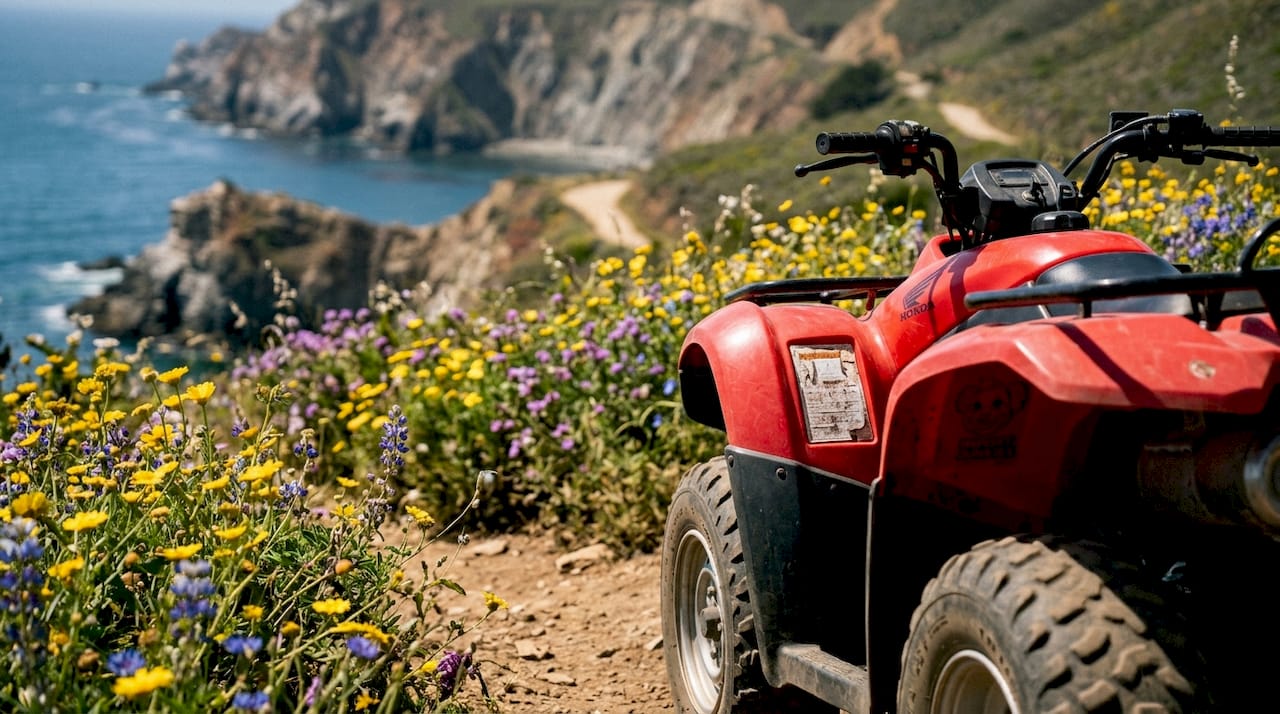
When you register, you pay a fee and receive a registration decal. That decal must be displayed visibly on the ATV, typically on the front fender or rear. Rangers and law enforcement check for it on the trail. Renewal cycles vary, but annual renewal is the most common schedule.
Here is what the registration process typically involves:
- Proof of ownership: A signed title, Manufacturer’s Certificate of Origin (MCO), or bill of sale.
- Government-issued ID: Your driver’s license or state ID.
- VIN verification: Some states require a physical inspection or photograph of the VIN plate.
- Payment of fees: Registration fees vary by state, with examples like $12.50 per year in New York and approximately $26.25 per year in Colorado.
- Decal display: After approval, you affix the decal to the ATV in the location your state specifies.
| Registration element | Typical requirement |
|---|---|
| Fee range | $12.50–$50+ per year depending on state |
| Decal placement | Front fender or rear of ATV |
| Renewal cycle | Annual in most states |
| Application channels | In person, by mail, or online |
| VIN inspection | Required in select states |
Pro Tip: New dealer purchases often handle registration at the point of sale. If you are buying from a dealership, ask them to process your registration paperwork before you leave. It saves a separate trip to the DMV or DNR.
How do title and registration requirements vary by state?
State rules on ATV ownership documents are not uniform, and the differences are significant. About 16 states impose no off-highway vehicle registration or use-permit fees at all. Those states include Alabama, Alaska, Florida, Georgia, Hawaii, Illinois, Kansas, Kentucky, Mississippi, Nebraska, North Carolina, South Carolina, South Dakota, Tennessee, Virginia, and West Virginia.
That does not mean you can ride freely in those states without any paperwork. Many of them still require a title for ownership purposes. The absence of a registration fee does not equal the absence of legal requirements.
The agency handling your paperwork also changes by state. Some states route everything through the DMV. Others use the DNR, a state parks department, or a dedicated OHV program office. Submitting your application to the wrong agency is a common mistake that causes delays.
| State category | Title required | Registration required | Administering agency |
|---|---|---|---|
| Most states | Yes | Yes (with fee) | DMV or DNR |
| 16 no-fee states | Often yes | No fee required | Varies |
| Some rural states | Optional | Optional on private land | State parks or DNR |
| Street-legal ATV states | Yes | Yes, with added inspections | DMV |
Cross-state riding adds another layer. If you register in one state and ride in another, the visiting state’s rules apply on their trails. Some states honor out-of-state registrations through reciprocity agreements. Others require a separate non-resident permit. Check trail-specific rules before you load the trailer.
What documents and steps are needed to title and register an ATV?
The title and registration process follows a predictable sequence in most states. Required documents typically include proof of identity, proof of ownership, and sometimes a VIN inspection. Having everything ready before you visit the agency saves significant time.
- Gather your proof of ownership. For a new ATV, this is the Manufacturer’s Certificate of Origin (MCO) from the dealer. For a used ATV, it is the signed title from the previous owner or a notarized bill of sale.
- Verify the VIN. Locate the VIN plate on the ATV frame. Some states require a physical inspection by a law enforcement officer or DMV agent. Others accept a photograph.
- Complete the application form. Download the correct form from your state’s DMV or DNR website. Fill it out completely. Incomplete forms are the leading cause of processing delays.
- Check notarization requirements. States like Louisiana, Montana, Nebraska, and Ohio require notarized signatures on title transfers. Missing a notary stamp is one of the most common reasons applications get rejected.
- Pay the applicable fees. Title fees typically range from $8 to $50. Registration fees are separate and vary by state. Bring a check or money order if applying in person, or use the online payment portal if your state offers one.
- Submit your application. Most states accept applications in person, by mail, or through an online portal. Online submission is the fastest option where available.
- Affix your decal. Once approved, place the registration decal in the location your state requires. Keep your registration card in a waterproof holder on the ATV or in your gear bag.
For first-time buyers, the ATV buying checklist from Importjunkies covers the full documentation process in detail, including what to verify before you hand over payment.
Key Takeaways
Title and registration for ATVs are legally distinct processes: a title proves ownership, while registration authorizes public operation, and both require separate documentation and fees that vary by state.
| Point | Details |
|---|---|
| Title proves ownership | A title functions like a property deed and is required for resale, financing, and insurance. |
| Registration authorizes use | Registration permits ATV operation on public trails and requires a visible decal at all times. |
| State rules differ widely | About 16 states charge no OHV registration fees, but many still require a title for ownership. |
| Missing notarization causes delays | States like Louisiana, Montana, and Ohio require notarized title signatures or applications get rejected. |
| Bonded titles solve missing paperwork | If you bought an ATV without a title, a surety bond process provides a legal ownership document. |
Why I always tell buyers to sort the title before anything else
Most people focus on registration because it is the one that gets you a ticket on the trail. That is understandable. But in my experience, the title is the document that causes the most long-term headaches when it is missing or incorrect.
I have seen buyers purchase ATVs at great prices, only to discover months later that the title was never properly transferred. The previous owner’s name is still on record. That creates a real problem when you try to sell, insure, or finance the machine. Getting it corrected after the fact takes far more time and money than doing it right at the point of purchase.
The bonded title process works, but it is slow and adds cost. If you are buying a used ATV and the seller cannot produce a clean title, treat that as a serious red flag. Either negotiate a lower price that accounts for the bonded title process, or walk away. A great deal on a machine with a title problem is rarely a great deal once you factor in the time and fees to fix it.
My other consistent advice: do not assume your state’s rules match what you read on a general forum. ATV registration laws change, agencies shift responsibility, and fee structures get updated. Go directly to your state’s DMV or DNR website for current requirements. That five-minute check saves you a rejected application and a wasted trip.
— Gary
Ready to find an ATV that fits your needs and your state’s rules?
Understanding the title and registration process is the first step. The second is finding a vehicle worth registering. Importjunkies carries a range of utility ATVs and off-road vehicles built for real-world use, from compact four-wheelers to full utility UTVs.
If you want a capable machine with solid documentation from the start, the 200cc ATV with snow plow is a practical option for buyers who need both trail performance and year-round utility. For those leaning toward electric utility vehicles, the 48V Electric Golf Cart Renegade Edition offers a compliant, low-maintenance alternative. Browse the full Importjunkies catalog at importjunkies.com to find the right fit for your property and your state’s requirements.
FAQ
What is the difference between an ATV title and registration?
A title is a legal document proving you own the ATV, similar to a property deed. Registration is a state-issued permit that authorizes you to operate the ATV on public trails and lands.
Do I need a title for my ATV if my state does not require registration?
Yes, in most cases. Many states that charge no registration fees still require a title for legal ownership. Obtaining a title protects your ownership rights and makes future resale or financing significantly easier.
How do I get an ATV title if I bought it without one?
You apply for a bonded title through your state’s DMV or DNR. This involves purchasing a surety bond as a financial guarantee and submitting supporting documents like a bill of sale and VIN verification.
What happens if I ride an ATV without registration on public trails?
Riding unregistered on public land is a ticketable offense in most states, and some jurisdictions can impound the vehicle. Registration decals must be visibly displayed on the ATV whenever you ride off private property.
How much does it cost to title and register an ATV?
Title fees typically range from $8 to $50. Annual registration fees vary by state, with New York charging $12.50 per year and Colorado charging approximately $26.25 per year. Some states charge no registration fee at all.
Recommended
- ATV Buying Checklist: First-Time Owner’s Guide – Saferwholesale || Import Junkies || Great Sports
- How to Register Off-Road Vehicles: 2026 State Guide – Saferwholesale || Import Junkies || Great Sports
- Why UTV Safety Matters: Your 2026 Rider’s Guide – Saferwholesale || Import Junkies || Great Sports
- How to Buy an ATV: Your Step-by-Step Guide – Saferwholesale || Import Junkies || Great Sports


