


 Location
 Login
Login
TL;DR:
- Choosing between gas and electric depends on efficiency, operating costs, environment, and climate. Gas is more cost-effective in cold climates, while electric offers lower emissions and better efficiency at the point of use. The best choice varies based on location, energy availability, and individual priorities.
Choosing between gas and electric comes down to four factors: efficiency, operating cost, environmental impact, and performance. The question of why choose gas vs electric has no single right answer. It depends on where you live, how you use your vehicle or appliance, and what you value most. Both options carry real advantages, and the 2026 data from the American Gas Association and the U.S. Energy Information Administration makes the trade-offs clearer than ever.
How do gas and electric compare on efficiency and energy costs?
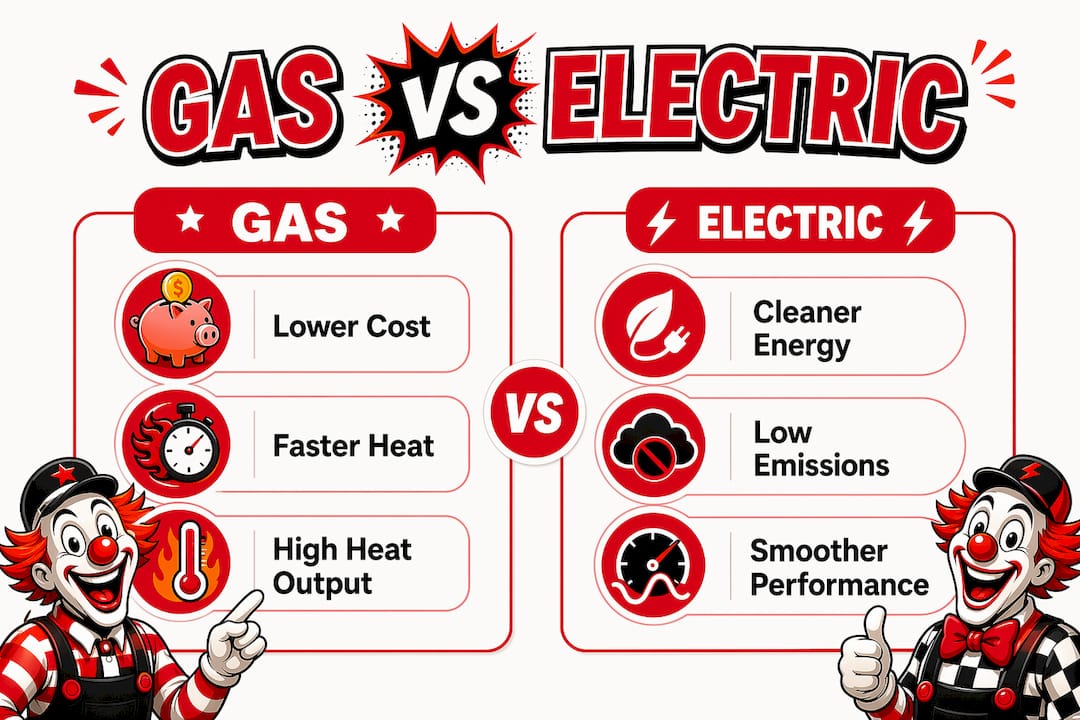
Gas and electric differ in where their efficiency shows up. Gas is efficient at the source, delivering high heat output at a lower fuel cost per unit of energy. Electric systems, especially induction cooktops and electric motors, are more efficient at the point of use, converting more of the energy they receive into actual work.

On raw operating costs, gas holds a clear edge in many U.S. regions. Natural gas homes save up to $12,000 in energy costs over 15 years compared to all-electric homes. That translates to roughly $1,030 less per year in operating expenses, which adds up fast over the life of a home or vehicle.
Fuel pricing reinforces that gap. Natural gas costs roughly $1.00 to $1.50 per therm, while electricity runs $0.12 to $0.16 per kWh. Gas furnaces cost two to three times less to run than electric resistance heaters in cold climates. That makes gas the stronger choice for buyers in northern states where heating demand is high.
Electric systems close the gap in milder climates. Electric heat pumps can match or beat gas heating costs in well-insulated homes or warmer regions. Induction cooktops also shift the efficiency math. Induction transfers up to 90% of energy directly to cookware, reducing wasted heat and keeping kitchens cooler. That level of transfer efficiency is something no gas burner can match at the point of use.
| Category | Gas | Electric |
|---|---|---|
| Annual operating cost | ~$1,030 less per year | Higher in cold climates |
| Upfront appliance cost | Generally higher | Generally lower |
| Heating efficiency | Strong in cold climates | Competitive with heat pumps |
| Cooking efficiency | Fast heat, lower transfer | Up to 90% transfer (induction) |
| Vehicle motor efficiency | Standard combustion | Up to 3x more efficient |
Pro Tip: If you live in a cold climate and rely heavily on home heating, gas will almost always win on annual operating cost. If you live in a mild climate with good insulation, run the numbers on a heat pump before assuming gas is cheaper.
What are the environmental impacts of gas versus electric energy?
Gas and electric differ sharply on emissions, both indoors and outdoors. Gas appliances and vehicles produce direct combustion byproducts. Electric options produce zero onsite emissions, though their overall footprint depends on how the grid is powered.
Indoor gas cooking emits methane and nitrogen dioxide, which affect indoor air quality. Electric stoves eliminate that concern entirely. For households with children, people with asthma, or anyone sensitive to air quality, that difference matters.
The outdoor picture is more nuanced. Key environmental considerations when comparing gas and electric include:
- Direct emissions: Gas appliances and vehicles release CO2 and other combustion gases at the point of use. Electric units produce none onsite.
- Grid dependency: Electric appliances are only as clean as the electricity powering them. Coal-heavy grids reduce the environmental advantage of going electric.
- Improving grid mix: Electric appliances contribute fewer greenhouse gases when powered by solar or wind. The U.S. grid is getting cleaner each year, which improves the long-term environmental case for electric.
- Methane leaks: Natural gas infrastructure carries a risk of methane leakage during extraction and transport. Methane is a potent greenhouse gas, and even small leaks affect the overall carbon math for gas.
- Pairing with renewables: Buyers who add solar panels or choose a green energy tariff can significantly reduce the carbon footprint of their electric appliances and vehicles.
The trend line favors electric on environmental grounds, especially as renewable energy expands. If reducing your carbon footprint is a priority, electric is the stronger long-term bet, particularly when paired with clean energy sources. For buyers focused on emissions and air quality, the shift to electric vehicles and appliances delivers measurable benefits.
How do gas and electric options differ in performance and user experience?
Performance differences between gas and electric are real and vary by application. For cooking, gas and electric each have a loyal following, and the reasons are practical.
Gas stovetops reach optimal cooking temperatures 30% faster than electric stoves. Chefs prefer gas for that reason. The flame responds instantly to adjustments, giving you precise control over heat levels. Electric induction offers a different kind of performance. It heats evenly, keeps the surface cool to the touch, and transfers energy more efficiently. Gas cooking appliances have seen a 12% market demand increase as of 2026, which reflects continued consumer preference for responsiveness.
For vehicles, the performance story shifts toward electric. Electric motors deliver instant torque and smoother acceleration compared to gas engines. Electric motors are also up to three times more efficient than gas engines. That efficiency translates directly into a more responsive driving experience, especially at lower speeds common in golf carts, ATVs, and utility vehicles.
Maintenance is another performance factor buyers overlook. Gas appliances rely on mechanical parts like igniters and valves, which are simpler and cheaper to repair than the electronic control boards found in electric units. Electric appliance failures often require control board replacements, which cost more and require specialized technicians. For long-term ownership, understanding appliance and vehicle reliability helps you plan maintenance costs accurately.
Safety trade-offs also factor into the experience:
- Gas risks: Open flames, combustion gases, and the risk of gas leaks require proper ventilation and carbon monoxide detectors.
- Electric risks: Induction surfaces stay cooler, reducing burn risk. However, residual heat on traditional electric coils can cause accidental burns. Electrical faults carry shock risk if wiring is not maintained.
Pro Tip: If you cook frequently and value heat control, gas is worth the extra upfront cost. If you prioritize safety, easy cleanup, and air quality, induction electric is the better fit. For vehicles, electric wins on responsiveness and lower maintenance complexity.
What practical factors affect choosing gas or electric at home and for vehicles?
Your home setup and location shape this decision as much as any performance spec. Before you commit to gas or electric, work through these practical steps:
- Check your existing infrastructure. Gas appliances require a gas line connection. If your home does not have one, installation adds significant upfront cost. Electric appliances need the right circuit capacity, typically 240V for ranges and dryers.
- Assess your climate. Gas heating costs less in cold climates. Climate strongly influences cost-effectiveness between gas and electric heating. In mild climates, a heat pump often closes or eliminates the cost gap.
- Evaluate charging and refueling access. For vehicles, electric charging infrastructure has expanded rapidly, but rural areas may still have gaps. Gas vehicles refuel in minutes at any station. Electric vehicles require planning around charging stops on longer trips. An electric vehicle setup guide can help you map out what home or business charging requires.
- Compare total cost of ownership, not just sticker price. Electric appliances often cost less upfront. Gas appliances typically cost less to run over time. Natural gas cooking is roughly 30% cheaper on an ongoing basis compared to electric. Factor in installation, fuel costs, and expected maintenance over 10 years before deciding.
- Look at your utility tariffs. Smart meters and flexible tariffs allow electric systems to compete effectively with gas in modern homes. Time-of-use pricing lets you charge vehicles or run appliances during off-peak hours at lower rates.
- Factor in insulation quality. A well-insulated home reduces heating demand across the board. Better insulation narrows the cost gap between gas and electric heating significantly.
Regional differences also matter. Natural gas prices vary by state, and electricity rates differ widely across utility districts. A buyer in Louisiana faces a very different cost calculation than one in New England. Running the numbers for your specific zip code gives you a more accurate picture than any national average.
Key Takeaways
Gas costs less to operate in cold climates, while electric delivers cleaner performance, lower emissions, and stronger long-term value as the grid gets greener.
| Point | Details |
|---|---|
| Gas saves money in cold climates | Natural gas homes spend roughly $1,030 less per year on energy than all-electric homes. |
| Electric wins on efficiency at point of use | Induction transfers up to 90% of energy to cookware; electric motors are up to 3x more efficient. |
| Environmental edge goes to electric | Electric options produce zero onsite emissions and improve as the grid adds more renewables. |
| Maintenance favors gas appliances | Gas units use simpler mechanical parts; electric units often need costlier control board repairs. |
| Infrastructure shapes your real options | Gas lines, electrical circuits, and local charging access determine what is actually practical for your home. |
My honest take on gas vs electric after years in the vehicle space
I have watched this debate shift considerably over the past several years, and the honest truth is that the conventional wisdom of “gas is always cheaper” no longer holds across the board. Electric technology has moved fast. The efficiency gains in electric motors, the expansion of charging networks, and the steady greening of the U.S. grid have all changed the math in ways that were not true even five years ago.
That said, I still think too many buyers get caught up in the national headlines and ignore their own situation. If you live in Minnesota and heat your home heavily from november through march, gas is almost certainly the right call on cost. If you live in Texas or California and drive a utility vehicle on a property with solar panels, electric makes more sense on every metric.
The buyers I see make the best decisions are the ones who weigh upfront cost against long-term savings honestly, account for their actual climate, and think about how they will actually use the vehicle or appliance. Hybrid or dual-fuel setups are worth considering if you want flexibility. But for most buyers, picking one and optimizing around it beats trying to cover every scenario.
The rapid advancement in electric vehicle technology is real, and it is only accelerating. If you are buying something you plan to keep for 10 or more years, the long-term trajectory of electric is hard to ignore.
— Gary
Gas and electric vehicles available at Importjunkies
Importjunkies carries both electric and gas-powered vehicles across a range of categories, from golf carts and utility vehicles to ATVs and scooters. Whether you have decided that electric fits your needs or you want the raw power of a gas engine, the catalog covers both.

The 48V electric golf cart lineup at Importjunkies includes four-seat utility models built for both personal and commercial use. For buyers who want gas-powered capability, the 200cc ATV with snow plow delivers the torque and durability needed for demanding terrain. Browse the full selection at Importjunkies to find the model that fits your priorities, your budget, and your location.
FAQ
Is gas or electric cheaper to run long term?
Gas is typically cheaper to run in cold climates, with natural gas homes spending roughly $1,030 less per year than all-electric homes. In mild climates with good insulation, electric heat pumps can close or eliminate that cost gap.
Which is better for the environment, gas or electric?
Electric options produce zero onsite emissions and carry a lower carbon footprint when powered by renewable energy. The U.S. grid is getting cleaner each year, which strengthens the environmental case for electric over time.
Do gas appliances last longer than electric ones?
Gas appliances generally last longer due to simpler mechanical parts like igniters and valves. Electric units rely on control boards that fail more often and cost more to replace.
Are electric vehicles faster than gas vehicles?
Electric motors deliver instant torque and smoother acceleration than gas engines, and they are up to three times more efficient. That makes electric vehicles more responsive, especially at the lower speeds common in utility and recreational vehicles.
Does climate affect whether gas or electric is the better choice?
Climate is one of the most important factors in this decision. Gas delivers stronger cost savings in cold regions with high heating demand, while electric heat pumps perform competitively in milder climates.
Recommended
- Golf cart features: a complete buyer’s guide for 2026 – Saferwholesale || Import Junkies || Great Sports
- Why Choose Electric Bikes for Groundskeeping in 2026 – Saferwholesale || Import Junkies || Great Sports
- Electric bike buying guide: find the right e-bike for your ride – Saferwholesale || Import Junkies || Great Sports
- Low Speed Electric Vehicle Buying Guide – Saferwholesale || Import Junkies || Great Sports


