


 Location
 Login
Login
TL;DR:
- Bulk purchasing on golf courses can reduce per-unit costs and improve cash flow, but hidden costs like storage, breakage, and labor may offset savings. Operational success relies on categorizing inventory and applying different buying strategies based on product durability, quality, and shelf life. Effective inventory management and negotiating leverage are essential for maximizing bulk purchasing benefits and avoiding stockouts or overbuying.
Bulk purchasing sounds like a straightforward win for any golf course operation, but the reality is more layered than a simple “buy more, spend less” equation. Many managers commit to large orders expecting immediate cost relief, only to find that storage constraints, product breakage, and labor overhead quietly eat into those projected savings. Understanding where bulk buying actually delivers and where it quietly costs you is what separates a smart procurement strategy from a well-intentioned budget drain. This guide walks you through the real mechanics of bulk purchasing for golf courses, from per-unit economics and hidden costs to inventory controls and negotiation leverage.
Table of Contents
- Bulk buying basics: What it means for golf courses
- Cost breakdown: Savings, hidden expenses, and operational impacts
- Inventory management: Avoiding stockouts and overbuying
- Negotiation and procurement leverage: Getting the best deals
- What most golf courses miss about bulk buying
- Explore bulk solutions for your golf course
- Frequently asked questions
Key Takeaways
| Point | Details |
|---|---|
| Bulk buys cut costs | Buying in volume reduces per-unit costs and administrative expenses for golf operations. |
| Quality impacts real savings | The actual savings from bulk buying depend on product durability and labor, not just sticker price. |
| Inventory controls prevent waste | Accurate forecasting and automated reorder points ensure you avoid both stockouts and costly overbuying. |
| Negotiation boosts value | Leveraging procurement programs and volume negotiations can yield significant discounts and rebates. |
| Smart timing optimizes rebates | Plan bulk purchases around seasonal inventory consumption to maximize program incentives. |
Bulk buying basics: What it means for golf courses
In a golf course context, bulk buying means purchasing supplies, equipment, or consumables in large quantities from a supplier, typically at a reduced per-unit cost in exchange for a higher total order commitment. It is not limited to major capital purchases. In fact, most golf operations use it for everyday consumables and maintenance materials.
Common bulk categories include:
- Golf balls (practice and course-grade)
- Golf tees (wood, plastic, biodegradable)
- Club accessories (grips, gloves, ball markers)
- Maintenance supplies (fertilizers, chemicals, course marking materials)
- Pro shop retail inventory
The core financial logic is straightforward. Bulk purchasing strategies can lower per-unit costs and improve cash flow by reducing administrative cost and logistics cost per unit when orders are consolidated. Instead of placing five separate orders throughout a season, you place one, and the overhead of each transaction is folded into a single, more efficient purchase.
On the operational side, bulk ordering keeps your course fully stocked and reduces sourcing friction for essentials like balls, tees, and accessories, whether you are opening a new facility or expanding an existing one. Running out of practice balls on a busy weekend is not just inconvenient. It is a direct service failure that affects guest experience and revenue.
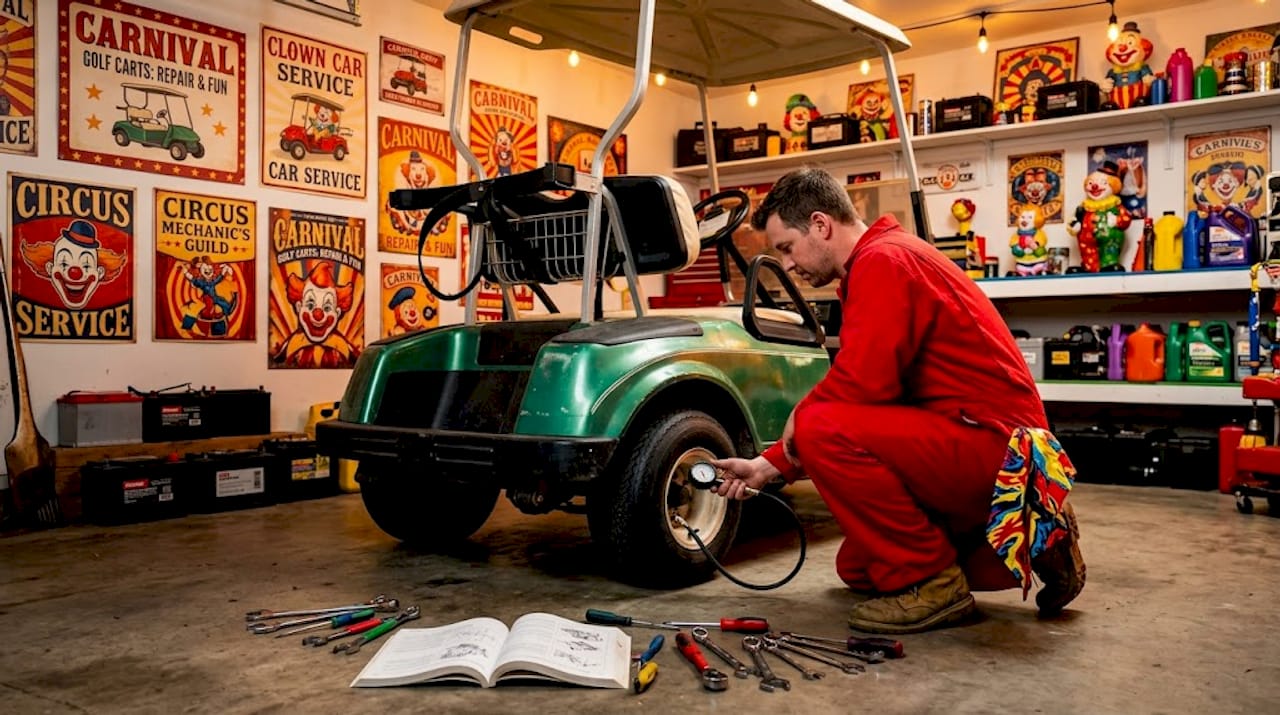
A well-structured vehicle maintenance checklist for your fleet follows the same principle: predictable demand, consistent supply, and fewer emergency procurement situations. The same logic applies to consumables.
Key takeaway: Bulk buying is most effective when you are ordering items with predictable demand, a long shelf life, and minimal quality variation across batches.
Cost breakdown: Savings, hidden expenses, and operational impacts
This is where most managers need to slow down and look more carefully. The per-unit price on a bulk invoice is not the same as the true cost per usable item, and the difference can be significant.
How volume pricing and rebate programs work
Early order and volume programs are a common bulk purchasing methodology in golf because they combine immediate discounts, volume-buy rebates, and tiered incentives. Operators can also use extended or seasonal planning to pay and receive rebates around their fiscal or seasonal cycle. This means you can time your orders to maximize both cash flow and discount eligibility.
A tiered incentive structure typically looks something like this:
| Order volume | Discount tier | Rebate eligibility |
|---|---|---|
| $500 to $1,999 | 5% off list price | No rebate |
| $2,000 to $4,999 | 10% off list price | 2% end-of-season rebate |
| $5,000 and above | 15% off list price | 5% end-of-season rebate |
These programs reward commitment, but they also require you to accurately forecast demand well ahead of your season. Overcommitting to a tier can leave you with excess inventory that ties up working capital.
Hidden operational expenses you need to account for
Bulk discounts are not automatically cheaper once you include real-world losses, storage constraints, and time and maintenance overhead. A strong example is golf tee purchasing: tee breakage and the labor involved in managing broken or unusable tees can quickly erase what looked like a solid per-unit savings on paper.
Here is a practical numbered framework for calculating your true cost:
- Start with the invoice cost. What is the total cost for the order?
- Subtract the unusable units. Account for breakage, expiration, or damage during storage.
- Add storage costs. Estimate the real cost of dedicated storage space per square foot.
- Add labor overhead. How much staff time goes into receiving, sorting, and managing the inventory?
- Divide by usable units. This is your true cost per usable item, not the per-unit price on the invoice.
Pro Tip: Before committing to any large bulk order, run this five-step calculation on a small test purchase first. Buy a quarter of the planned volume, track breakage and labor over 60 days, and then scale your model to the full order size. You will catch hidden costs before they compound.
Understanding this math will also guide decisions about your fleet. Knowing the full cost of operating used golf carts versus newer models follows the same framework, where the purchase price is only the starting point and true operational costs include maintenance, fuel or charging, and downtime. If you are evaluating golf carts for business use, this total cost approach matters just as much.
Inventory management: Avoiding stockouts and overbuying
Even the most favorable bulk pricing falls apart without disciplined inventory management behind it. Ordering in volume without systems to track consumption, set reorder thresholds, and flag excess stock is how courses end up either running short on peak days or sitting on months of unsold product.
The dual risk: Stockouts and overbuying
Both extremes carry real costs:
- Stockouts during high-traffic periods mean turning away revenue, frustrating guests, and scrambling for emergency restocking at full retail price.
- Overbuying ties up working capital in idle inventory, occupies storage space, and risks product degradation or obsolescence.
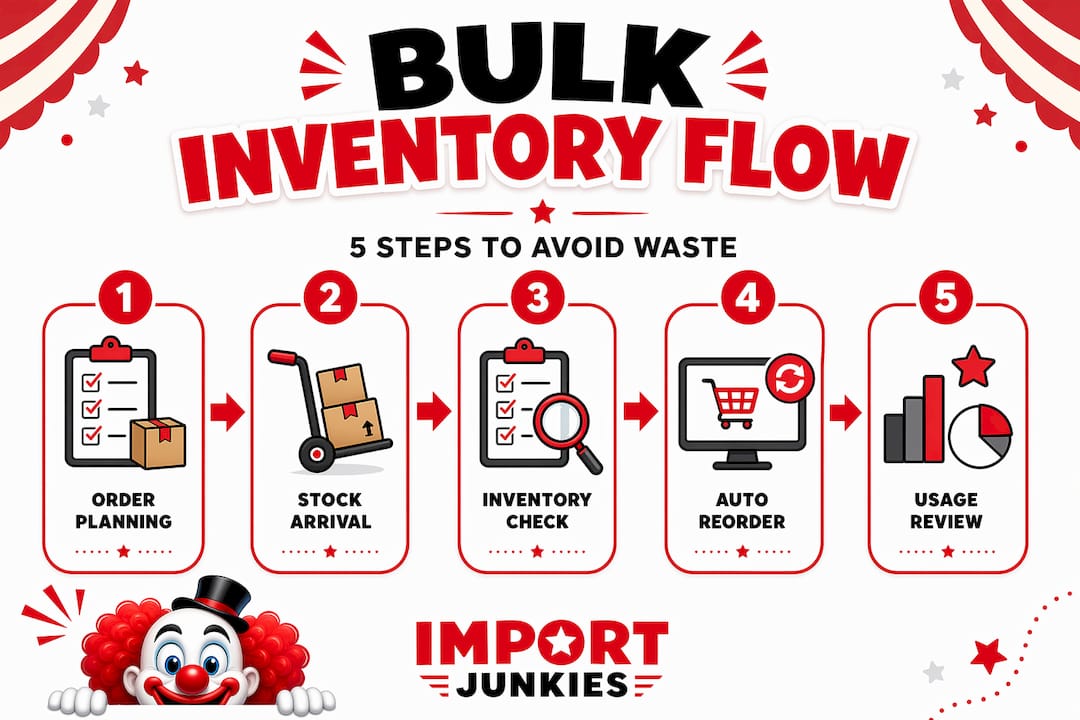
A well-tuned inventory system avoids both. Bulk purchasing decisions should be tied to inventory management controls, including reorder points, accurate counts, and centralized ordering. Golf point-of-sale systems specifically reference forecasting and auto reorder points as tools to handle bulk price changes and prevent both extremes.
How an inventory control system should flow
| Inventory action | Trigger point | Responsible system |
|---|---|---|
| Auto reorder alert | Stock falls below set threshold | POS or inventory software |
| Bulk order approval | Projected seasonal demand calculated | Manager review |
| Receiving and count verification | New inventory arrives | Staff with system entry |
| Usage tracking | Daily consumption logged | POS or manual log |
| Reorder point adjustment | Season or demand pattern changes | Manager update |
Pro Tip: Set your reorder point based on your longest supplier lead time, not your average lead time. If a supplier occasionally takes three weeks instead of the standard ten days, your reorder point needs to account for the worst case to prevent stockouts.
For a broader view of how operational planning connects across departments, reviewing a utility vehicles checklist offers a solid framework for thinking about asset readiness alongside supply readiness. The operational discipline is the same: know what you have, know what you need, and have a system that flags the gap before it becomes a problem. Courses that have invested in electric vehicles for facility operations understand this well, since fleet availability and supply availability follow the same planning logic.
Negotiation and procurement leverage: Getting the best deals
Bulk purchasing gives you leverage. Using that leverage effectively is a separate skill, and it is one that many course managers underutilize because they focus only on published catalog prices rather than negotiated terms.
What procurement leverage actually means
Procurement leverage is the ability to negotiate better pricing, terms, and service commitments because of your purchase volume or long-term supplier relationship. It goes beyond simply choosing a bulk-price tier. Effective procurement involves:
- Consolidating spend with fewer suppliers to increase your value as a customer
- Committing to multi-season agreements in exchange for price protection or guaranteed stock priority
- Bundling categories (maintenance supplies, consumables, and accessories) into single vendor negotiations
- Using competitive bids as a reference point in vendor conversations
Golf-focused procurement programs claim savings ranges from 2% to 20% on categories including maintenance equipment and supplies, using a buy in volume and negotiate methodology rather than relying solely on retail unit pricing. A 10% reduction on a $40,000 annual supply budget is $4,000 returned to your operations without any change in what you are buying.
Categories where negotiation carries the most weight
- Turf maintenance supplies: Chemicals, fertilizers, and seed are high-spend, recurring categories where even modest percentage savings compound over a full season.
- Course operations equipment: Vehicles, maintenance tools, and utility assets offer significant negotiating room on multi-unit purchases.
- Pro shop consumables: Volume commitments on retail inventory can unlock better terms and exclusivity arrangements with certain brands.
- Seasonal services: Bundling procurement of supplies with equipment servicing creates leverage with vendors who want recurring business.
Pro Tip: Never negotiate on a single order. Vendors respond to projected annual or multi-season spend. Walk into any negotiation with 12 months of historical purchase data and a projected forward commitment. That context gives a supplier a reason to extend a better rate.
For guidance on selecting the right fleet assets as part of a broader procurement strategy, understanding how to select vehicles for your golf course gives you the framework to treat vehicle purchases with the same procurement rigor as supplies.
What most golf courses miss about bulk buying
Here is the honest assessment: most managers approach bulk buying as a purchasing decision when it is actually an operational decision. The two require very different thinking.
When you evaluate a bulk order purely through the lens of the per-unit price, you are answering the wrong question. The right question is what does this item actually cost me per usable outcome? Per round of golf played. Per bucket of practice balls distributed. Per day of uninterrupted course operations. That shift in measurement completely changes which bulk deals are actually worth taking.
Even when the per-unit math looks favorable, product quality differences, including durability and breakage rates, along with labor and time impacts from managing those broken or unusable items, can make a bulk purchase a net loss unless you compute true cost per usable outcome. Cheaper tees that break at twice the rate of a slightly more expensive option do not save money. They create a labor drag that erodes every dollar of the discount.
What experienced operators eventually learn is that there are three distinct product categories when it comes to bulk buying:
- Clear bulk wins: Durable, standardized items with long shelf lives and consistent quality across price tiers. Buy these in volume without hesitation.
- Quality-dependent items: Products where cheaper bulk options degrade faster or require more labor to manage. Run the true cost calculation carefully before committing.
- Not bulk-suitable: Items with short shelf lives, high variability between batches, or low consumption rates. Buying these in bulk ties up capital without delivering savings.
The courses that consistently extract value from bulk purchasing are the ones that categorize their inventory this way and apply different purchasing strategies to each group. Treating all bulk decisions the same way is how you end up with a supply closet full of degraded product and a budget that looks good on paper but does not reflect reality. Reviewing your golf cart cost savings with this same lens, where you separate the purchase price from the true operational cost, is exactly the kind of discipline that carries over from supply procurement into fleet management.
Explore bulk solutions for your golf course
Golf course operations run on reliable equipment as much as they run on reliable supplies. When you are ready to apply bulk purchasing principles to your fleet, having access to competitive pricing on vehicles makes a real difference.
At Import Junkies, we offer a range of golf carts and utility vehicles suited to course operators looking for dependable, cost-effective options. Whether you need a 48V electric golf cart for quiet, low-maintenance transport or a 6-seater gas-powered utility vehicle for heavier operational loads, we have options that match operational needs and budget realities. Browse our full range of utility vehicles and supplies and contact us directly for multi-unit pricing and custom fleet solutions.
Frequently asked questions
How can I calculate the true savings from bulk purchasing?
Compare not just the per-unit price but also factor in product quality, breakage rates, storage costs, and labor to find your actual cost per usable item, since bulk discounts are not automatically cheaper once real-world losses and overhead are included.
What types of golf course supplies are most commonly bought in bulk?
Golf balls, tees, club accessories, and maintenance supplies are typically purchased in bulk, as bulk ordering keeps clubs fully stocked and reduces sourcing friction for the essentials that courses consume consistently throughout the season.
What inventory strategies help avoid overbuying when ordering in bulk?
Using inventory management systems with forecasting and auto reorder points prevents both overbuying and stockouts, since inventory-management controls including reorder points, accurate counts, and centralized ordering are directly tied to effective bulk purchasing decisions.
Are there programs or incentives for golf courses buying in bulk?
Yes, early-order and volume-buy programs offer discounts, rebates, and tiered incentives for large orders, with common bulk-purchasing programs in golf combining immediate discounts, volume rebates, and extended seasonal planning options.
What’s procurement leverage, and how does it save golf courses money?
Procurement leverage is the practice of negotiating better pricing by committing to higher purchase volumes, and golf-focused procurement programs demonstrate savings ranges from 2% to 20% on categories including maintenance equipment and supplies.
Recommended
- Used golf carts: Save money, go green, get more done – Saferwholesale || Import Junkies || Great Sports
- Best golf carts for business: Boost efficiency and utility – Saferwholesale || Import Junkies || Great Sports
- Electric bikes for golf courses: Boost play and sustainability – Saferwholesale || Import Junkies || Great Sports
- How to select the best vehicles for your golf course – Saferwholesale || Import Junkies || Great Sports


