


 Location
 Login
Login
TL;DR:
- Installing a lift kit increases ground clearance, allowing for larger tires and improved off-road performance. It enhances versatility, safety, and appearance, but requires proper selection, installation, and awareness of potential handling changes. Overall, a well-chosen lift kit benefits landowners and businesses needing mobility on uneven terrain.
If your golf cart isn’t keeping up with the demands of your property, business, or terrain, a lift kit might be exactly what changes that. Whether you’re managing a large property, running operations at a venue, or simply want more capability on uneven ground, adding a lift transforms how your cart performs and feels. This article covers everything you need to know—from what a lift actually does, to the types available, the real benefits, the honest trade-offs, and how to decide whether an upgrade makes sense for your specific situation.
Table of Contents
- What is a golf cart lift and why consider one?
- Major benefits of lifting your golf cart
- Comparing types of golf cart lifts
- Potential downsides and safety considerations
- Is lifting your golf cart worth it? Decision checklist
- A fresh take: Why utility and style can go hand-in-hand with lifts
- Upgrade your golf cart: Shop top lifts and accessories
- Frequently asked questions
Key Takeaways
| Point | Details |
|---|---|
| Greater ground clearance | Lifting your golf cart makes it easier to navigate challenging terrain and avoid obstacles. |
| Enhanced utility and style | Golf cart lifts boost both practical capabilities and allow for personal customization. |
| Choose the right lift | Selecting the right lift type depends on how you use your cart and your local rules. |
| Safety is critical | Upgrades add value only when installed correctly and used with proper precautions. |
What is a golf cart lift and why consider one?
A golf cart lift kit is a set of components installed between the cart’s frame and its suspension or axle system to raise the body higher off the ground. The result is more space between the undercarriage and the surface below, which is measured as ground clearance. As lift kits create more ground clearance and allow for larger wheels and tires, your cart becomes capable of handling terrain it simply couldn’t manage before.
Here’s what a lift kit typically improves:
- Ground clearance: More inches between the frame and the ground means fewer hung-up moments on rocks, roots, or uneven surfaces
- Tire size: Larger tires fit under the body, giving you more traction and a smoother ride on rough ground
- Off-road capability: Your cart can now access trails, pastures, wooded paths, and hilly terrain that would damage a stock cart
- Custom appearance: A lifted cart sits higher, looks more aggressive, and reflects a personalized style
- Versatility for business: Property managers, event operators, and maintenance crews benefit from a cart that can go anywhere on site
Use cases are wide-ranging. Golf course operators use lifted carts for grounds maintenance and perimeter checks. Small business owners on large properties use them for security patrols and equipment hauling. Homeowners on rural land use them for daily chores and recreation. In all these scenarios, the lift isn’t just cosmetic—it’s functional.
Common lift types include spindle lifts, axle lifts, A-arm lifts, and block lifts. Each suits different needs and budgets, which we’ll cover in detail later. Before you commit, though, check your local regulations. Some communities, HOAs, or golf course operators have rules about modified vehicles.
Pro Tip: Before purchasing a lift kit, call your local DMV or HOA management office to confirm what modifications are allowed, especially if you plan to operate the cart on shared paths or public roads.
Major benefits of lifting your golf cart
Now that you know what a lift kit does, let’s dig into the real-world advantages golfers and businesses gain from making this upgrade.
Increased ground clearance is the most immediate and obvious benefit. Stock golf carts typically sit about 4 inches off the ground. A lift can raise that to 6 or even 12 inches depending on the kit. That difference matters when you’re crossing drainage ditches, traveling over gravel embankments, or navigating rocky terrain that would scrape or damage a standard cart.
Larger tire compatibility goes hand in hand with the clearance gain. As noted in our lifted golf carts guide, lifted carts can accommodate larger tires for better rough-terrain handling. Bigger tires distribute weight more effectively, provide deeper tread contact with the ground, and absorb bumps that smaller tires simply transmit directly to the driver. This makes a real difference in ride comfort, especially on longer hauls across a large property.
“A lift kit isn’t just about looks. For businesses and landowners who need to move efficiently across variable terrain, it’s a practical investment that reduces wear on both the cart and the driver.”
Functional versatility is another key advantage often overlooked in lift kit conversations. When a cart can handle more terrain, it can take on more tasks. A lifted cart with a utility bed can haul fertilizer, tools, or supplies across fields that would stop a stock cart. Security teams on large campuses use lifted carts to patrol both paved paths and grassy or unpaved zones without switching vehicles.
Enhanced suspension performance is a natural companion benefit. Many lift kits, especially A-arm kits, come with upgraded suspension components that absorb shock better than the factory setup. This means a smoother, more comfortable ride for both the driver and any passengers—which matters if you’re spending several hours a day in the cart.
Additional advantages include:
- A higher seating position gives the driver better sightlines, especially useful on crowded fairways or busy worksites
- Lifted carts are often perceived as higher-value, which can improve resale prices in certain markets
- Personalization opportunities increase significantly—you can match tires, rims, and body color to create a cohesive custom look
Make sure to review golf cart safety standards before finalizing your build, since some modifications interact with safety requirements.
Pro Tip: If you’re buying a lift primarily for ride comfort, prioritize A-arm or long-travel spindle kits over basic block lifts. They offer noticeably better suspension response at a modest increase in cost.
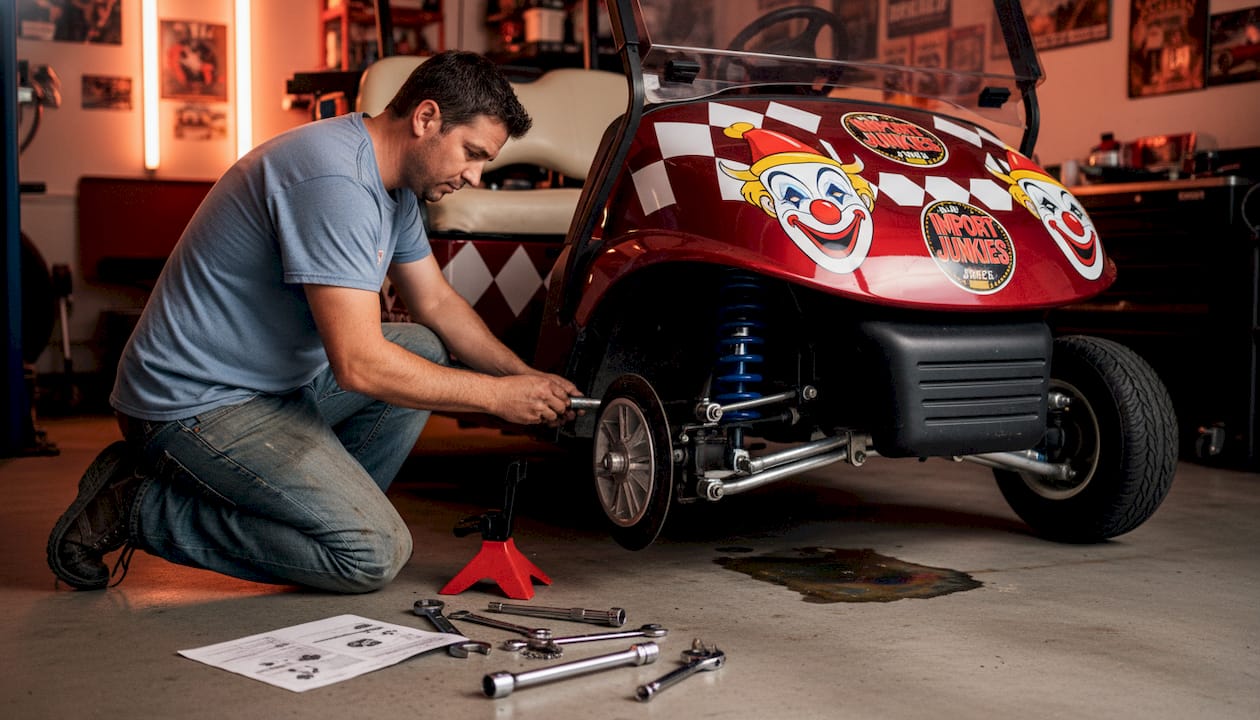
Comparing types of golf cart lifts
Once you’ve decided to install a lift, the next challenge is selecting the right type for your use case. Not all lifts are equal, and choosing the wrong one can leave you with a cart that underperforms or requires constant adjustment.
Here’s a brief overview of the four most common golf cart lift types and their practical trade-offs. There are pros and cons to spindle, axle, and A-arm lifts, depending on use case, and understanding those differences saves you from an expensive mistake.
| Lift type | Typical cost | Installation complexity | Ride quality | Max tire size gain |
|---|---|---|---|---|
| Spindle lift | Low to mid | Easy to moderate | Good | 2 to 4 inches |
| Block lift | Low | Easy | Minimal improvement | 1 to 2 inches |
| Axle lift | Mid | Moderate | Moderate | 3 to 5 inches |
| A-arm lift | Mid to high | Complex | Excellent | 4 to 6 inches |
Spindle lifts are one of the most popular options for on-course and light off-road use. They replace the factory spindle with a taller unit, raising the ride height without dramatically changing the suspension geometry. The installation is relatively straightforward, and the ride quality is solid. Good choice for golfers who want some lift without going extreme.
Block lifts are the most budget-friendly option. They add a spacer block between the spring and axle to raise the body. While they work, they don’t improve suspension performance and are really only suitable for mild terrain changes. Think of them as a starter option.
Axle lifts relocate the rear axle to a lower position on the leaf spring, effectively raising the cart body higher. They offer a meaningful clearance gain and are popular for mid-level off-road use. Installation is more involved than a spindle or block lift but manageable for experienced mechanics.
A-arm lifts replace the entire front suspension assembly with a wider, longer A-arm design. These are the most capable option, offering the best ride quality and the largest tire size compatibility. They’re ideal for serious off-road use or high-mileage business operations where comfort and durability are priorities.
Key factors to weigh when selecting your lift:
- Terrain type: Flat grass requires far less lift than rocky trails or hilly properties
- Frequency of use: Daily use demands a durable kit; occasional weekend use can get by with a simpler setup
- Budget: Factor in both the kit cost and installation labor if you’re not doing it yourself
- Maintenance access: More complex kits require more attention and periodic adjustment
Potential downsides and safety considerations
Just as important as the benefits are knowing the possible challenges and how to avoid trouble.
Installing a lift can change handling dynamics and requires adherence to safety standards. A higher center of gravity means the cart is more prone to tipping if you make sharp, fast turns. This is especially true if you pair a lift with very large tires, which raise the center of gravity further. Drivers need to adjust their speed and turning habits accordingly.
“Safety is as important as performance. A well-built lift kit loses its value instantly if it creates a hazard on the course or worksite.”
Common risks to be aware of include:
- Increased tip risk: Higher clearance raises the center of mass, making aggressive cornering more dangerous
- Warranty issues: Many cart manufacturers void warranties when non-OEM (original equipment manufacturer) parts are installed
- Legal restrictions: Some jurisdictions require inspections or registration updates for modified vehicles
- Alignment drift: Lifts can cause gradual wheel misalignment if not checked regularly, leading to uneven tire wear and steering issues
To use your lifted cart safely, follow these guidelines from our golf cart safety guide:
- Always use DOT-approved tires, especially if you plan to use the cart on public pathways
- Have alignment checked professionally after installation and every six months during regular use
- Stick to posted or recommended speed limits for modified carts, which is typically 15 to 20 mph max
- Never exceed the cart’s rated weight capacity, even with a heavy-duty lift installed
Common installation mistakes include using mismatched kit components, overtightening suspension bolts, or skipping the alignment check entirely after installation. If you’re not confident working with suspension systems, a professional installation is worth every dollar.
Pro Tip: Ask your lift kit supplier for the maximum tire size the kit supports before purchasing tires. Going beyond that limit stresses the suspension and bearings, which can lead to failure over time.
Is lifting your golf cart worth it? Decision checklist
With advantages and challenges in mind, use this checklist to determine if a golf cart lift makes sense for your goals. As different lift types and tire upgrades offer varying benefits for specific uses, the right answer depends heavily on your situation.
- Define your primary use: Will the cart mostly stay on flat paved paths, or will it cross uneven terrain regularly? Off-road use almost always justifies a lift.
- Assess your terrain: Walk or drive your property and note the worst sections. Measure any significant grade changes or obstacles that currently cause problems for your stock cart.
- Determine carrying needs: If you haul heavy equipment, supplies, or multiple passengers across rough ground, clearance and larger tires will make a practical difference.
- Set a realistic budget: Include the cost of the lift kit, any tire and wheel upgrades, installation labor, and an alignment check. A complete lift upgrade can range from $200 for a basic block kit to over $1,500 for a full A-arm setup with new tires.
- Check local regulations: Confirm with your HOA, golf course management, or local traffic authority whether modified carts are permitted on your intended routes.
- Consider your maintenance capacity: Lifted carts need slightly more attention. If you don’t have time or access to a mechanic who knows carts, factor in that ongoing cost.
- Test drive a lifted cart first: If possible, ride in a lifted cart on similar terrain before buying. Dealers and showrooms sometimes offer demos. Your choosing a golf cart lift decision will be much more confident after hands-on experience.
If you answered yes to three or more of these factors, a lift is likely worth the investment. If your use is purely on-course or on smooth pavement, you may not gain enough to justify the cost and mechanical changes.
A fresh take: Why utility and style can go hand-in-hand with lifts
There’s a persistent assumption in the golf cart community that choosing a lift means choosing between looking good and performing well—that you have to give up a smooth, comfortable ride to get serious off-road capability. That assumption deserves to be challenged.
Modern lift technology has advanced to the point where a well-selected kit doesn’t force a compromise. A-arm lifts, paired with correctly sized tires and a quality suspension tune, can actually ride smoother than some stock setups, especially on varied terrain where the original factory springs weren’t designed to perform. More on lifted golf carts shows how today’s options span a wide range of performance and style goals simultaneously.
What we see consistently is that buyers who research first and buy intentionally end up with carts that turn heads and handle demanding daily use without constant maintenance headaches. The ones who buy based on looks alone often end up with a kit that looks great in photos but rattles, handles poorly, or wears out faster than expected.
The key insight is this: utility and style aren’t opposites in the lifted cart world. They’re two outputs of the same decision made well. When you match the right lift type to your terrain, pair it with the right tires, and have it installed correctly, you get a cart that serves your practical needs and reflects your personal standards. Small business owners especially benefit from this framing—a lifted cart that handles their property efficiently also communicates professionalism and attention to detail to anyone who sees it in operation.
Upgrade your golf cart: Shop top lifts and accessories
Ready to upgrade your own cart? Here’s how Import Junkies can help you get started.
At Import Junkies, we carry a range of lifted golf carts ready to perform right out of the gate, so you don’t have to source kits, find a mechanic, and coordinate parts yourself. Our inventory includes purpose-built models like the lifted Renegade+ golf cart, which combines 48V electric power with a lifted stance and utility-ready design for buyers who want it all in one package.

If you’re looking for something with a sharper look and strong off-road utility, the Renegade X lifted golf cart delivers a premium lifted setup with four-seat capacity and serious curb appeal. Our team is available to answer questions, help you match a model to your terrain, and guide you through every step of the buying process. Browse our full selection online or reach out directly for personalized support.
Frequently asked questions
Does lifting a golf cart affect its speed?
Lifting a golf cart can slightly reduce top speed if larger tires are used, but the cart gains meaningfully in terrain handling ability and off-road capability that more than compensates for most users.
Are lifted golf carts safe to use on the street?
Lifted golf carts can be safe on the street when built to local standards and operated at appropriate speeds. Always review safety and regulatory standards for your specific jurisdiction before using a modified cart on public roads or shared paths.
Can any golf cart be fitted with a lift kit?
Most golf carts are compatible with lift kits, but proper kit selection based on your cart’s make and model is essential. Professional installation is strongly recommended to ensure alignment, safety, and performance are all handled correctly.
Do lift kits require extra maintenance?
Yes, lifted carts need additional attention, particularly for suspension components, wheel alignment, and tire wear. Staying on top of routine maintenance is critical to keeping a lifted cart safe and reliable over time.
Recommended
- Lifted golf carts: benefits, types, and how to choose – Saferwholesale || Import Junkies || Great Sports
- Why choose electric golf carts? Benefits for golfers and courses – Saferwholesale || Import Junkies || Great Sports
- Best golf carts for business: Boost efficiency and utility – Saferwholesale || Import Junkies || Great Sports
- Used golf carts: Save money, go green, get more done – Saferwholesale || Import Junkies || Great Sports


