


 Location
 Login
Login
TL;DR:
- A four post lift uses four vertical columns and drive-on runways to support vehicles by their tires, offering stability for storage and alignment. It enables vehicle stacking, provides accurate alignment with loaded suspension, and handles heavier vehicles easily, but requires proper installation and sufficient ceiling height. The choice depends on your specific work needs, space, and whether you prioritize ease of use or full undercarriage access.
A four post lift is defined as an automotive lifting system with four vertical columns and two drive-on runways that support a vehicle by its tires during lifting. Unlike frame-contact lifts, this design keeps the suspension fully loaded, which is critical for alignment work and stable storage. Lifting capacity ranges from 8,000 to 60,000 lbs, with most home and shop models rated between 9,000 and 14,000 lbs. If you own trucks, SUVs, or multiple vehicles and want a lift that handles storage and precision service, a four post model is the right starting point.
What is a four post lift and how does it work?
A four post lift operates by connecting four steel columns with two parallel runways. You drive the vehicle onto those runways, and a hydraulic or electric motor raises all four columns simultaneously, lifting the car while it rests on its tires. That tire-contact design is what separates it from a two post lift, which grips the vehicle by its frame rails and leaves the wheels hanging free.
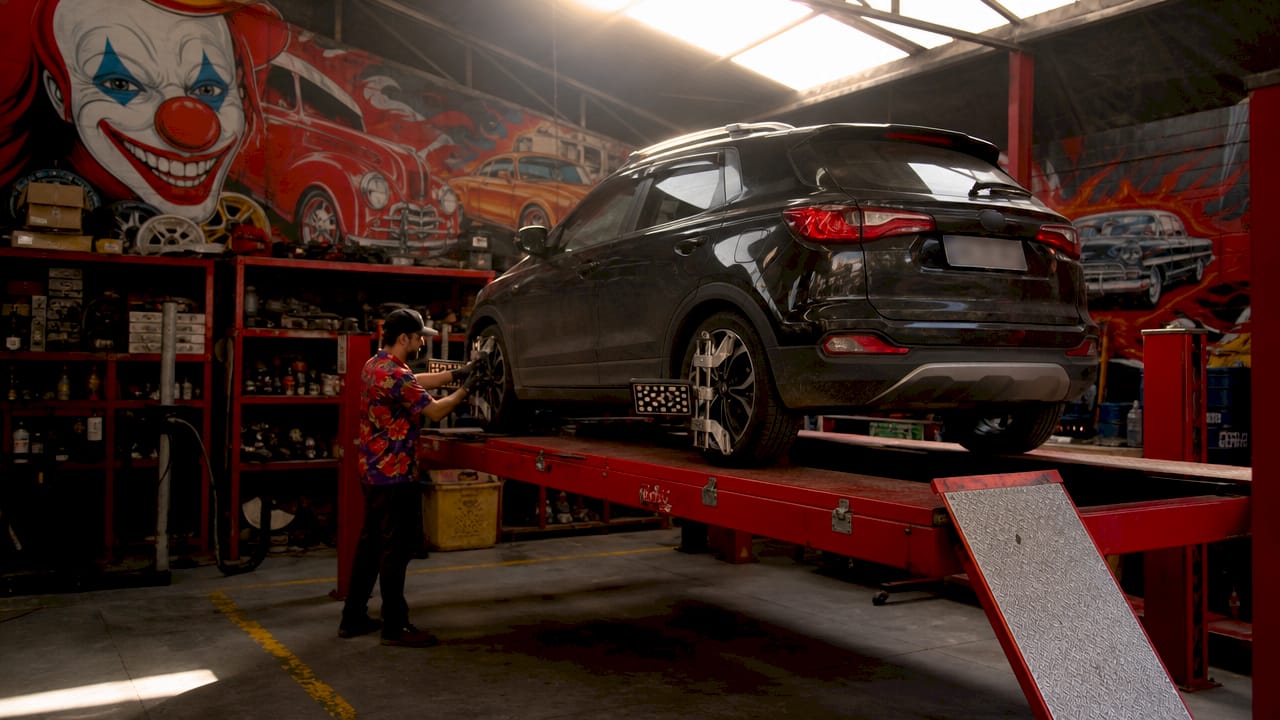
The structural logic is straightforward. Four contact points spread the vehicle’s weight evenly, which reduces the risk of tipping during service. Two post lifts concentrate load on two arms, which works well for most undercarriage work but creates instability with heavier or longer vehicles.
Key structural features include:
- Four vertical columns anchored or positioned at each corner of the vehicle
- Two steel runways that span the length of the vehicle and carry the full load
- A hydraulic power unit that raises and lowers all columns in sync
- Safety locks that engage automatically at preset heights to prevent accidental descent
- Drive-up ramps at one or both ends to allow easy vehicle entry
Loading takes roughly 30 seconds because the vehicle simply drives on. That speed advantage matters in busy shops where time per vehicle directly affects revenue.
Pro Tip: Measure your garage ceiling before ordering. Four post lifts require 11–14 feet of ceiling clearance to stack one vehicle above another. If your ceiling is lower, you can still use the lift for service work, but vehicle stacking will not be possible.
Installation requires a concrete slab that is 4–6 inches thick at 3,000 PSI to handle the combined weight of the lift and vehicle. Thinner or weaker slabs can crack under repeated loading, which creates a serious safety risk.
What are the benefits of using a four post lift?
Four post lifts cover a wider range of tasks than most buyers initially expect. The tire-contact design is not just a convenience feature. It is the reason these lifts dominate alignment bays and vehicle storage applications.
Alignment accuracy
Alignment work requires a loaded suspension, meaning the wheels must bear the vehicle’s weight during measurement and adjustment. A two post lift unloads the suspension by letting the wheels hang, which distorts camber, caster, and toe readings. A four post lift keeps the tires on the runways, so technicians can place turn plates and slip plates under each wheel to measure and correct suspension geometry accurately. For anyone doing performance builds or coilover alignment tuning, this is not optional equipment. It is the only lift type that produces reliable results.
Vehicle storage and parking efficiency
Four post lifts allow you to stack one vehicle above another, effectively doubling the parking capacity of a single garage bay. That benefit is significant for collectors, enthusiasts with seasonal vehicles, or small shops with limited floor space. A single bay that holds one car at ground level can hold two with a four post lift installed.
Handling heavier vehicles
Trucks, full-size SUVs, and vans often exceed the rated capacity of standard two post lifts. Four post models rated at 12,000 to 14,000 lbs handle these vehicles without issue. The runway design also makes loading a lifted truck straightforward, since there are no arms to position under frame rails. You simply drive on and raise the lift.
Speed and ease of use
The drive-on design reduces setup time to under a minute. Two post lifts require 2–5 minutes of arm positioning to locate the correct lift points under the frame. For shops running high vehicle volume, that time difference adds up across a full day of service.
What are the limitations of a four post lift?
Every lift type involves trade-offs. Four post lifts offer stability and speed, but they come with real constraints that affect both budget and workflow.
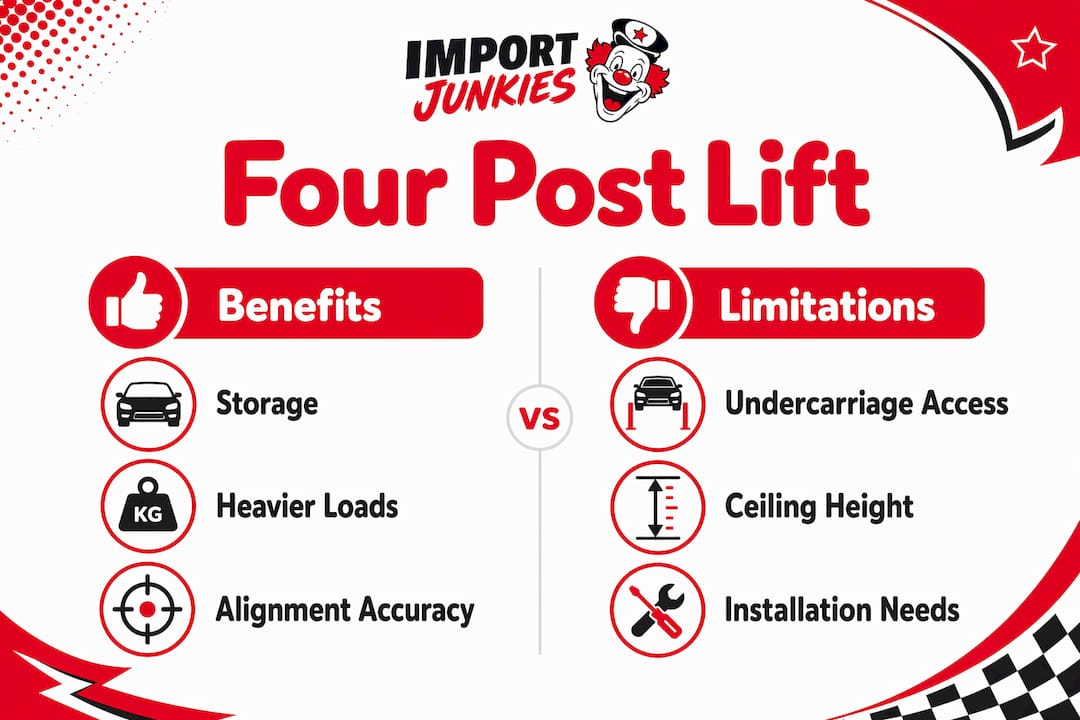
- Limited undercarriage access. The runways sit under the vehicle’s tires and block the center of the undercarriage. Exhaust work, transmission service, and suspension repairs require the vehicle to be lifted off its tires using a rolling bridge jack placed on the runways.
- Extra cost for wheel-off work. Rolling bridge jacks cost $500 to $1,200 and are not included with most lifts. If you plan to do brake jobs, tire rotations, or suspension work regularly, budget for this accessory from the start.
- Higher purchase price. Four post lifts cost roughly 20–60% more than equivalent two post lifts, with typical prices ranging from $2,700 to $9,000. Two post lifts generally run $2,000 to $7,000 for comparable capacity.
- Larger floor footprint. Runways and ramps extend 3–5 feet beyond the vehicle’s length, so the total floor space required is significantly larger than the vehicle itself. Measure your available bay length carefully before purchasing.
- Ceiling height requirements. Stacking vehicles demands 11–14 feet of clearance. Standard residential garages with 8-foot ceilings cannot accommodate vehicle stacking.
Pro Tip: Even if the manufacturer lists a four post lift as freestanding, anchoring to concrete is strongly recommended for stability during loading and heavy service work. Unanchored lifts can shift when a heavy truck drives onto the runways at an angle.
| Consideration | Four post lift | Two post lift |
|---|---|---|
| Undercarriage access | Partial (runways block center) | Full (wheels hang free) |
| Alignment suitability | Yes (suspension stays loaded) | No (suspension unloads) |
| Vehicle stacking | Yes | No |
| Loading speed | ~30 seconds | 2–5 minutes |
| Typical price range | $2,700–$9,000 | $2,000–$7,000 |
| Rolling jack required | Yes, for wheel-off work | No |
How does a four post lift compare to other lift types?
The right lift depends on intended use, not on which type sounds more capable. Four post and two post lifts each solve different problems, and choosing the wrong one creates frustration that no accessory can fully fix.
When a four post lift is the better choice
Choose a four post lift when storage is a primary goal, when you service heavier vehicles regularly, or when alignment work is part of your workflow. The drive-on design also suits owners who want a lift that family members or less experienced drivers can use safely, since there is no arm positioning required.
When a two post lift is the better choice
A two post lift gives you full access to the undercarriage, which makes it the better tool for intensive repair work including brake service, suspension rebuilds, and exhaust replacement. Two post lifts also take up less floor space and cost less upfront. For a dedicated repair shop focused on high-volume service rather than storage, a two post lift is the more practical investment. Check the auto lift buying guide for a full breakdown of capacity, pricing, and feature comparisons across lift categories.
Matching the lift to your actual workflow
Many buyers make the mistake of choosing based on price alone. A cheaper two post lift that cannot handle your truck’s weight or your alignment needs will cost more in the long run than buying the right four post model from the start. Review the types of auto lifts available before committing to any single category.
Key Takeaways
A four post lift is the correct choice for vehicle storage, alignment work, and heavier vehicles, but it requires rolling bridge jacks, adequate ceiling height, and a properly rated concrete slab to function safely and effectively.
| Point | Details |
|---|---|
| Core design | Four columns and two drive-on runways support the vehicle by its tires. |
| Alignment advantage | Loaded suspension on runways allows accurate geometry measurement with turn plates. |
| Storage efficiency | Stacking capability doubles parking capacity in a single bay. |
| Hidden costs | Budget $500–$1,200 for rolling bridge jacks if you plan wheel-off service work. |
| Installation requirements | Concrete slab must be 4–6 inches thick at 3,000 PSI; anchoring is strongly recommended. |
What I’ve learned from watching buyers choose the wrong lift
I’ve seen the same mistake repeated more times than I can count. A buyer picks a four post lift because it looks more stable and professional, then spends the next year frustrated that they can’t do a simple brake job without a rolling bridge jack they didn’t budget for. The lift isn’t wrong. The planning was.
The most honest advice I can give you is this: write down every service task you expect to perform in the next three years, not just the ones you do today. If that list includes brake work, suspension rebuilds, or tire rotations more than twice a year, factor in the cost of rolling bridge jacks before you buy. If the list is mostly oil changes, alignment checks, and storage, a four post lift is genuinely the better tool.
Professional installation matters more than most buyers admit. I’ve seen freestanding lifts shift during loading when a truck drives on at a slight angle. Anchoring to a properly rated slab is not optional for heavy vehicles. It’s the difference between a safe shop and a liability. The lift safety standards guide covers the anchoring specs and compliance requirements worth reviewing before installation day.
One more thing: don’t underestimate ceiling height. Measure twice. A lift that can’t stack vehicles in your garage is still useful, but you’ll wish you had planned for the full capability when you’re moving cars around a crowded driveway every winter.
— Gary
Four post lifts and automotive gear at Importjunkies
Importjunkies carries a range of automotive lifts and related equipment for enthusiasts who want professional-grade capability at home or in the shop. The GSI 8,000 lb four post lift is a strong starting point for storage and light service work, built for residential and light commercial use with a portable design that doesn’t require permanent anchoring.

Importjunkies also stocks ATVs, utility vehicles, and specialty equipment for owners who need more than just a lift. Whether you’re outfitting a home garage or a small shop, the product catalog covers the tools and vehicles that make the work practical. Browse the full selection at importjunkies.com to find the right equipment for your setup.
FAQ
What is a four post lift used for?
A four post lift is used for vehicle storage, wheel alignment, and servicing heavier vehicles like trucks and SUVs. Its drive-on runway design keeps the suspension loaded, which is required for accurate alignment work.
How much weight can a four post lift hold?
Most standard four post lifts are rated between 9,000 and 14,000 lbs, with heavy-duty commercial models reaching up to 60,000 lbs. Always verify the rated capacity against your heaviest vehicle before purchasing.
Do I need a rolling bridge jack with a four post lift?
Yes, if you plan to remove wheels for brake or suspension work. The runways block center undercarriage access, so rolling bridge jacks are required to lift the vehicle off its tires while on the lift.
What is the difference between a four post and a two post lift?
A four post lift supports the vehicle by its tires on runways, while a two post lift grips the frame rails and lets the wheels hang free. Four post lifts are better for alignment and storage; two post lifts provide full undercarriage access for intensive repairs.
How much ceiling height does a four post lift require?
Vehicle stacking requires 11–14 feet of ceiling clearance. For service work without stacking, standard ceiling heights may be sufficient, but confirm the lift’s maximum raised height against your available clearance before installation.
Recommended
- Auto Lift Buying Guide 2026: Choose Right, Work Safe – Saferwholesale || Import Junkies || Great Sports
- GSI - 8000 lb 4 Post Auto Lift Heavy Duty Automotive Portable Storage – Saferwholesale || Import Junkies || Great Sports
- What Is a Scissor Lift? A 2026 Guide for Pros – Saferwholesale || Import Junkies || Great Sports
- Lifted Six Passenger Golf Cart Buying Guide – Saferwholesale || Import Junkies || Great Sports


