


 Location
 Login
Login
TL;DR:
- Wholesale automotive sales involve dealer-to-dealer transactions that exclude the consumer and operate under specific licensing rules. It offers lower costs and access to dealer-only inventory but requires obtaining a license, managing market fluctuations, and building strong industry relationships. Success depends on understanding market cycles, maintaining fast inventory turnover, and developing expertise in specific vehicle types.
Wholesale automotive sales is defined as a business-to-business model where licensed dealers buy and sell vehicles exclusively to other licensed dealers, not to the general public. This model operates under NAICS code 42311, covering new and used autos, trucks, SUVs, and motor homes. If you are an individual or small business owner researching wholesale vehicle purchasing, understanding how this market works gives you a real advantage. The pricing, access, and inventory opportunities are fundamentally different from anything you will find at a retail lot.
What is wholesale automotive sales and who participates?
Wholesale automotive sales is the industry term for dealer-to-dealer vehicle transactions that bypass the retail consumer entirely. Wholesalers serve as critical intermediaries in the automotive supply chain, connecting dealerships that need to move inventory with buyers who can absorb it quickly. This is not a gray market or informal practice. It is a regulated, licensed segment of the automotive industry with its own legal structure, auction networks, and pricing benchmarks.
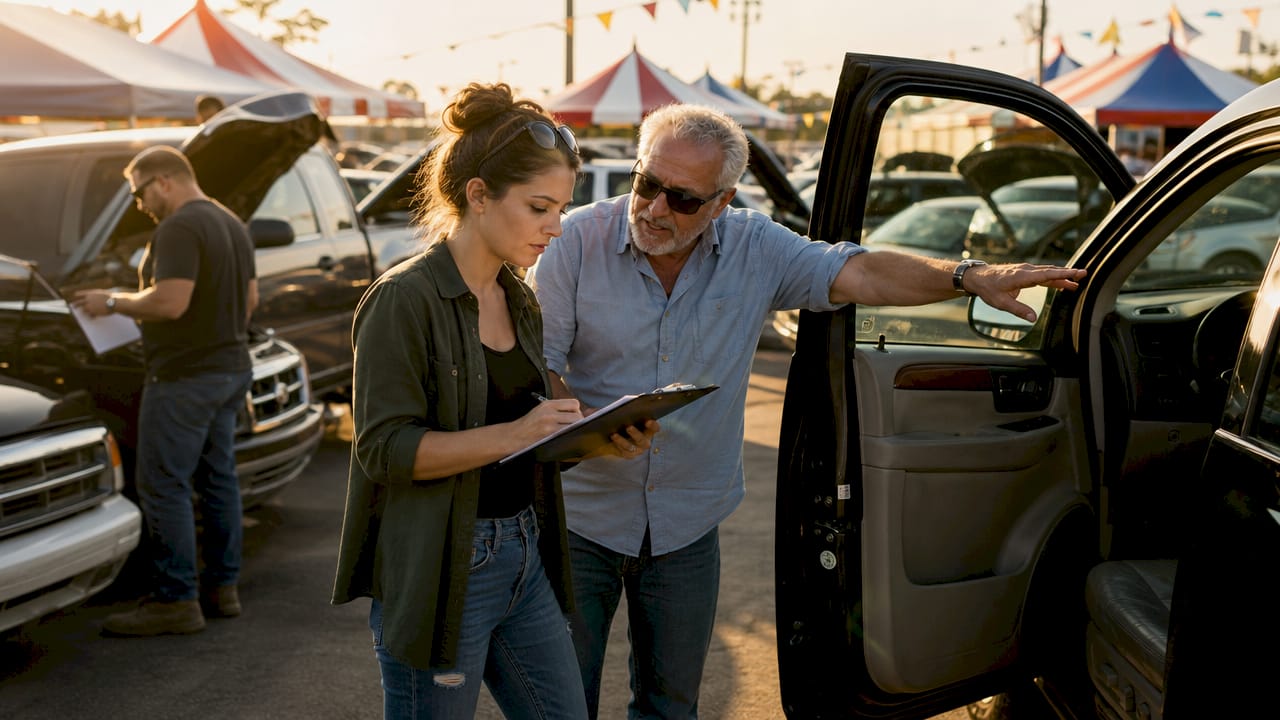
The key distinction from retail is simple. A retail dealer sells to the public. A wholesale dealer sells only to other licensed dealers. Wholesale car dealers cannot sell to the general public and face serious penalties, including license loss, for violations. That separation keeps the wholesale market efficient and price-competitive in ways retail cannot match.
What does it take to become a licensed wholesale automotive dealer?
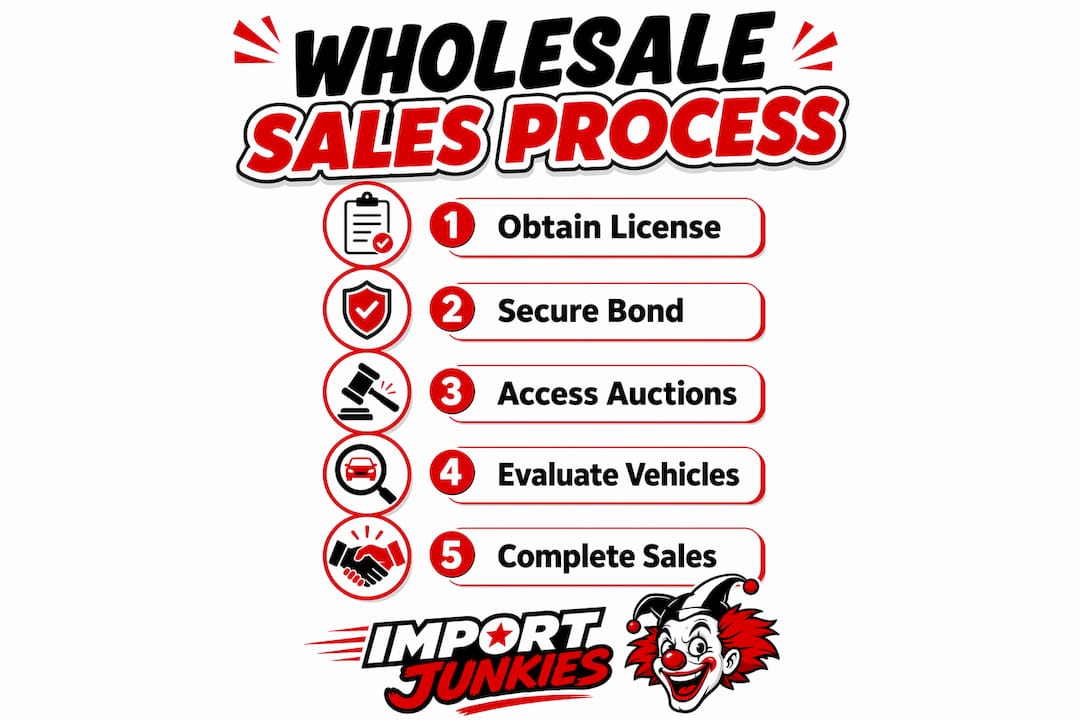
Becoming a licensed wholesale dealer requires meeting state-specific requirements that vary significantly across the country. Most states follow a similar framework, but the details matter.
The core requirements typically include:
- State dealer license application: Each state has its own licensing authority. You submit an application, pay a fee, and pass a background check.
- Surety bond: Surety bonds typically range from $10,000 to $50,000, with your premium determined largely by your credit score. Better credit means lower annual bond costs.
- Business address and zoning: You need a verifiable business location that meets local zoning rules. Wholesale licenses generally require less stringent physical lot requirements than retail licenses.
- Background check: Most states screen for financial crimes and fraud history.
- Proof of business registration: An LLC or corporation filing is standard.
One underappreciated advantage of the wholesale license over a retail license is overhead. Wholesale dealer licenses require less stringent physical requirements than retail dealerships, which means lower startup costs. You do not need a showroom, a large lot, or a full service department. That makes the wholesale path more accessible for small business owners working with limited capital.
Pro Tip: Check your state’s DMV or dealer licensing board website before budgeting. Bond requirements and application fees vary widely, and some states require pre-licensing education courses that add time to the process.
How are wholesale vehicle prices determined?
Wholesale vehicle pricing is the baseline price a dealer pays at auction or accepts as a trade-in. It is consistently lower than retail because it does not include reconditioning costs, dealer profit margin, or the overhead of a retail sales operation.
The table below shows the main factors that push wholesale prices up or down:
| Pricing factor | Effect on wholesale value |
|---|---|
| Seasonal demand | Higher demand in spring and summer raises prices at auction |
| Fuel prices | Rising fuel costs lower demand for trucks and SUVs, reducing their wholesale value |
| Interest rates | Higher rates reduce dealer buying power, softening wholesale prices broadly |
| Vehicle condition | Mechanical issues or cosmetic damage reduce value below book price |
| Market supply | Oversupply of a specific model drives auction prices down quickly |
Wholesale value fluctuates with seasonal demand, interest rates, and fuel prices, which means the same vehicle can carry a meaningfully different price depending on when and where it sells. A pickup truck that commands a strong wholesale price in january may sell for less in july if fuel costs spike. Understanding these cycles is one of the most practical skills a new wholesaler can develop.
Reconditioning is the other major factor separating wholesale from retail pricing. A dealer buying a vehicle wholesale expects to spend money on detailing, mechanical repairs, and safety inspections before putting it on a retail lot. That anticipated cost gets subtracted from what they are willing to pay at the wholesale level. Dealers decide between retail and wholesale based on market conditions and local demand, and high inventory of a specific model often pushes those units into the wholesale channel at reduced prices.
Pro Tip: Use published wholesale pricing guides like Black Book or NADA as a starting benchmark, then adjust for local auction results. Regional demand differences can shift actual transaction prices by hundreds of dollars from national averages.
Where and how do wholesale automotive sales typically occur?
Wholesale vehicle transactions happen through several distinct channels, each with its own access requirements and pricing dynamics.
The most established venues are dealer-only physical auctions. Manheim and ADESA are the two largest auction networks in the United States. Both require a valid dealer license to participate. Vehicles sell quickly at these auctions, often within minutes, so buyers need to know their numbers before they walk in.
Beyond physical auctions, wholesale transactions occur through:
- Digital auction platforms: Online wholesale platforms have transformed the market by increasing price transparency and geographic reach. Digital auction platforms have increased efficiency, access, and price transparency for dealers who previously had to travel to physical locations.
- Direct dealer-to-dealer sales: A dealer with excess inventory contacts a known buyer directly. These transactions happen outside of auction fees and can be faster for both parties.
- Fleet and rental company disposals: Large fleet operators and rental companies sell vehicles in bulk at the end of their service cycles. These sales often represent strong value because the vehicles are well-documented and sold in volume.
- Manufacturer and factory programs: Some manufacturers sell program vehicles, demos, and fleet returns directly to licensed dealers through wholesale channels.
- Trade-in wholesaling: Dealers regularly receive trade-ins they cannot retail profitably. Those vehicles move into the wholesale channel quickly to recover capital.
Wholesalers buy used vehicles at auctions or from dealers struggling to retail them, then resell at a profit, facilitating quick turnover and reducing holding costs. The ability to source from multiple channels is what separates experienced wholesalers from beginners who rely on a single auction.
What are the benefits and challenges of wholesale automotive sales?
Wholesale automotive sales offers real advantages for small business owners, but the model also carries specific challenges that catch newcomers off guard.
Benefits worth understanding:
- Lower purchase prices. Buying at wholesale gives you access to vehicles below retail market value. That margin is your operating room.
- Access to dealer-only inventory. Wholesale dealer licenses provide access to dealer-only auctions and dealer plates, opening inventory sources the general public cannot reach.
- Lower overhead than retail. No showroom, no sales staff, no advertising budget for walk-in traffic. The cost structure is leaner by design.
- Faster inventory turnover. Wholesale sales enable dealers to quickly move aged units off lots, freeing capital while minimizing loss. Speed is the core operating principle.
- International export opportunities. A wholesale license opens the door to exporting vehicles, which expands your buyer pool beyond local markets.
Challenges to plan for:
- Licensing costs and timelines. Getting licensed takes time and money upfront. Budget for the bond, application fees, and any required coursework.
- Market knowledge requirement. Buying blind at auction is expensive. You need to know vehicle values, common mechanical issues, and local demand before spending real money.
- Competition from established dealers. Experienced wholesalers have relationships and speed advantages that new entrants lack.
- Cash flow management. Vehicles sitting in inventory cost money every day. Speed is critical in wholesale automotive sales; slow turnover ties up capital and erodes margin.
Successful wholesalers emphasize that the business depends on networking and building reliable relationships with suppliers and buyers. The vehicle itself matters less than the network around it.
Key takeaways
Wholesale automotive sales is a licensed, dealer-to-dealer market where pricing, access, and speed determine profitability far more than individual vehicle selection.
| Point | Details |
|---|---|
| Legal restriction | Wholesale dealers can only sell to other licensed dealers, not the general public. |
| Licensing requirements | Most states require a surety bond of $10,000–$50,000, a business address, and a background check. |
| Pricing drivers | Wholesale value shifts with seasonal demand, fuel prices, interest rates, and vehicle condition. |
| Key sales channels | Dealer-only auctions, digital platforms, fleet disposals, and direct dealer-to-dealer sales all serve the wholesale market. |
| Speed is the strategy | Fast inventory turnover minimizes holding costs and protects profit margins in wholesale operations. |
What I have learned about entering the wholesale market
The wholesale automotive market looks straightforward from the outside. Buy low, sell to a dealer, repeat. The reality is that your first six months will teach you more than any guide can.
The licensing process is manageable, but the surety bond requirement trips up a lot of new entrants with thin credit histories. Fix your credit before you apply. A better credit score directly lowers your bond premium, and that savings compounds over time. I have seen buyers spend more on bond premiums in year one than they made on their first three deals.
The bigger lesson is about relationships. The success of wholesale operations depends less on the vehicle itself and more on building and maintaining strong dealer networks. If you walk into an auction without knowing at least two or three buyers who will take your call the same day, you are carrying too much risk. Build those relationships before you need them.
For small business owners, the wholesale model makes the most sense when you have a specific vehicle type you understand well. Generalists get burned at auction. Specialists who know, for example, exactly what a 2019 utility vehicle should sell for in their region can move inventory confidently. Start narrow, build expertise, then expand your range as your network grows. Check out the small business vehicle selection guide for practical frameworks on matching vehicle type to business need.
— Gary
Importjunkies carries wholesale-priced utility vehicles for business buyers
Importjunkies operates as a wholesale retailer selling directly to the public, which means you get dealer-level pricing without needing a dealer license. The inventory includes golf carts, ATVs, electric utility vehicles, and specialty trucks built for commercial and recreational use.
If you are a small business owner looking for a utility vehicle at a price that makes operational sense, the 48V Electric Golf Cart 4 Seater Renegade Edition is a strong starting point. For heavier work applications, the utility vehicle selection covers purchasing strategies that align with wholesale buying principles. Importjunkies makes it straightforward to shop, compare, and purchase without the friction of a traditional dealership.
FAQ
What is the automotive wholesale definition in simple terms?
Wholesale automotive sales is the practice of buying and selling vehicles exclusively between licensed dealers, not to the general public. It operates as a business-to-business model under NAICS code 42311.
Can an individual buy a car at wholesale price?
Individuals cannot buy directly at dealer-only auctions without a valid wholesale dealer license. Some wholesale retailers, like Importjunkies, sell to the public at wholesale-level pricing without requiring a license.
How do I sell cars wholesale legally?
To sell cars wholesale legally, you must obtain a state-issued wholesale dealer license, secure a surety bond, and maintain a registered business address. Transactions are restricted to other licensed dealers only.
What is the difference between wholesale and retail vehicle pricing?
Wholesale price is the baseline dealers pay at auction or for trade-ins, before reconditioning and profit margin are added. Retail price reflects those added costs plus the overhead of running a consumer-facing dealership.
How does wholesale vehicle pricing change over time?
Wholesale vehicle prices shift with seasonal demand, fuel costs, interest rates, and local market supply. The same vehicle can carry a noticeably different wholesale value depending on the time of year and regional demand conditions.
Recommended
- Small Business Vehicle Selection Guide for 2026 – Saferwholesale || Import Junkies || Great Sports
- Why Purchase Wholesale Vehicles: Save More in 2026 – Saferwholesale || Import Junkies || Great Sports
- How to get utility vehicles for less: a buyer’s guide – Saferwholesale || Import Junkies || Great Sports
- Electric Vehicle Setup Guide for Homes and Businesses – Saferwholesale || Import Junkies || Great Sports


