


 Location
 Login
Login
TL;DR:
- Electric bikes reduce soil compaction, lower operational costs, and improve crew safety in groundskeeping.
- They outperform gas vehicles on short, detailed, and noise-sensitive tasks, especially in tight spaces and sensitive environments.
If you are still relying on gas-powered UTVs and trucks for every groundskeeping task, you are likely spending more than you need to on fuel, maintenance, and operator downtime. Understanding why choose electric bikes for groundskeeping matters right now because the economics have shifted, the technology has matured, and the operational advantages are real and measurable. From reducing soil compaction on sensitive turf to cutting noise complaints near schools and hospitals, electric bikes offer groundskeepers a purpose-built alternative that traditional vehicles simply cannot match on every type of job.
Table of Contents
- Key Takeaways
- Why electric bikes work better on the ground
- The cost breakdown: electric vs. gas
- Operator health and day-to-day comfort
- Environmental benefits and client expectations
- Practical limitations and how to manage them
- My take on electric bikes in professional groundskeeping
- Electric utility vehicles for your groundskeeping operation
- FAQ
Key Takeaways
| Point | Details |
|---|---|
| Efficiency gains are real | E-bikes outperform trucks on short-haul, stop-and-go groundskeeping tasks with lower overhead and faster site access. |
| Cost savings accumulate quickly | Lower fuel, oil, and maintenance costs give electric bikes a strong total cost of ownership advantage over time. |
| Operator health improves | Zero exhaust, lower vibration, and reduced noise directly cut fatigue and improve on-site communication. |
| Environmental benefits matter to clients | Reduced emissions and noise help you meet sustainability goals and reduce complaints in sensitive environments. |
| Cold weather requires planning | Battery capacity drops in winter, so charging infrastructure and operational adjustments are necessary for year-round use. |
Why electric bikes work better on the ground
The assumption that bigger equipment means better performance does not hold up on large, detail-oriented grounds. Trucks and full-size UTVs create soil compaction on turf, which damages root systems, affects drainage, and increases the time your crew spends on repair work down the line. Electric bikes carry a far lighter footprint, both literally and operationally.
Access is another area where e-bikes win consistently. Narrow garden paths, hedgerow corridors, muddy service routes behind flower beds, tight spaces near ornamental features — a utility e-bike fits where a truck cannot. You spend less time repositioning, less time parking, and less time making multiple trips between a distant vehicle and your work area.
Consider how much of a groundskeeper’s day involves short-haul transport: moving tools, fertilizer, seed, or supplies from one point to another across a property. E-bikes outperform trucks in exactly this kind of stop-and-go, curb-to-destination work, where parking ease and maneuverability translate directly into faster task completion.
Here is what operational efficiency looks like in practice with electric bikes for outdoor maintenance:
- Tighter access routes: Reach areas inaccessible to four-wheel vehicles without creating workarounds or secondary paths.
- Faster turnaround on short runs: No engine warm-up, no parking distance, no waiting for a full-size vehicle to reposition.
- Lower ground pressure: Reduces turf damage and protects soft or wet terrain after rain.
- Tool and cargo capacity: Purpose-built utility e-bikes carry meaningful payload via integrated racks or cargo systems.
- Simplified parking logistics: Reduces the time crews spend managing vehicle placement across a complex site.
Pro Tip: If your grounds include gravel paths, garden beds, or maintained turf areas, look for a utility e-bike with fat tires and adjustable suspension. These features prevent slippage and reduce surface damage on soft or uneven terrain.
The cost breakdown: electric vs. gas
The upfront cost of an electric utility bike is higher than a basic gas-powered alternative. That is a fact worth acknowledging directly. But the comparison changes substantially when you account for total operating costs over a season or a year.
Fuel is the most obvious variable. Gas prices fluctuate, and volatile fuel prices have made budgeting for combustion vehicles unpredictable. Electricity costs are more stable and significantly lower per mile traveled. For a crew running multiple vehicles across a property five or six days a week, that difference compounds.
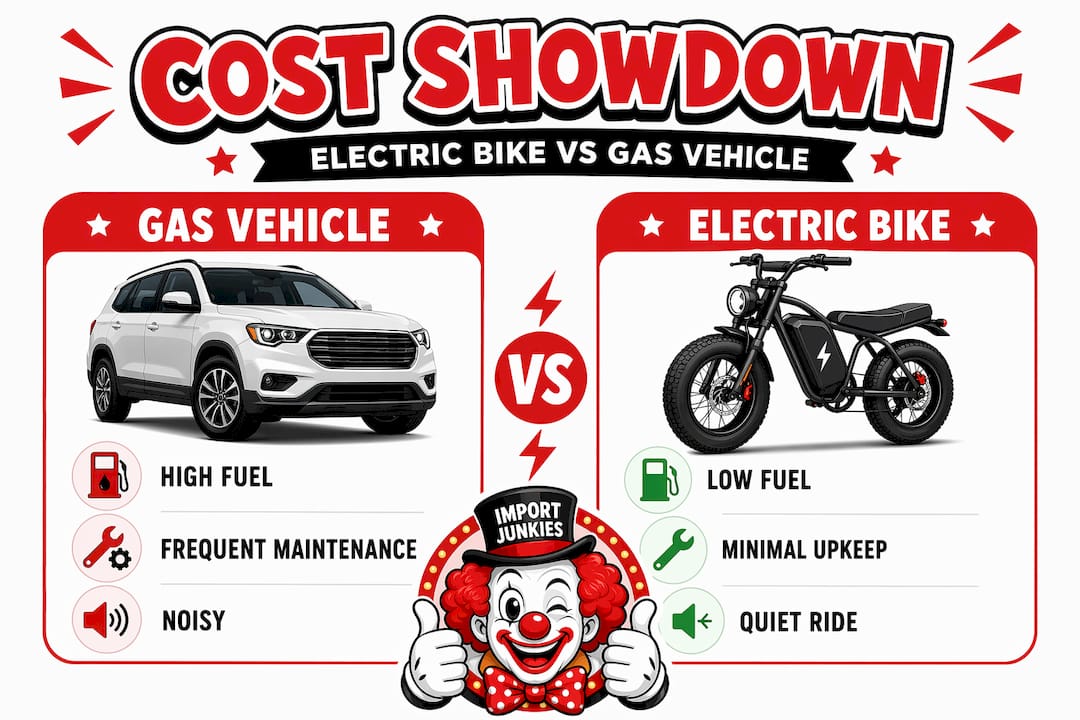
Maintenance is the quieter savings. Electric motors have fewer moving parts. There are no oil changes, no spark plugs, no air filters, no carburetor adjustments, no exhaust system repairs. Your downtime for mechanical service drops considerably, which keeps your crew productive and your schedule intact.
| Cost Factor | Gas-Powered Vehicle | Electric Utility Bike |
|---|---|---|
| Fuel cost per month | High, price-volatile | Low, stable electricity rate |
| Oil changes and filters | Every 50-100 hours | Not required |
| Engine maintenance | Regular tune-ups needed | Minimal motor servicing |
| Brake wear | Standard | Reduced via regenerative systems |
| Estimated annual savings | Baseline | Hundreds to thousands of dollars |
Pro Tip: Track your current fuel and maintenance spend per vehicle over one quarter. Even a rough calculation usually reveals that the payback period on a quality electric utility bike is shorter than most buyers expect, often within one to two seasons of regular use.
When you factor in the electric vs. gas comparison for similar utility vehicles, the numbers consistently favor electric over any period longer than six months of active use.
Operator health and day-to-day comfort
Your crew’s wellbeing is directly tied to the quality of their tools. This is often overlooked in fleet decisions, but it has a measurable effect on retention, performance, and the quality of finished work.

Electric equipment reduces fatigue by removing exhaust fumes and lowering vibration and noise at the operator level. Crews running electric bikes and electric groundskeeping tools report fewer headaches, less end-of-day burnout, and better communication on site because they can actually hear each other without shouting over engines.
The benefits of electric bikes for landscaping operators extend beyond just how they feel at the end of the day:
- Zero exhaust fumes: No carbon monoxide exposure during extended use near structures, enclosed areas, or in dense vegetation.
- Lower vibration: Reduces hand-arm vibration syndrome risk for operators running the bike daily over rough terrain.
- Quieter operation: Crews can communicate clearly without stopping equipment, improving safety and coordination.
- Fewer stress indicators: Employees prefer electric options after a brief adoption period, with crew leaders playing a key role in that transition.
- Better focus on detail work: A quieter, lower-fatigue workday improves attention to the precision tasks that define quality grounds maintenance.
The advantages of electric bicycles for gardeners and groundskeepers extend to crew retention as well. Experienced operators are harder to replace than equipment. If switching to electric vehicles helps you hold onto skilled workers longer, the indirect financial benefit adds up fast.
Environmental benefits and client expectations
The eco-friendly transportation for groundskeeping conversation has moved beyond just image management. More institutional clients, including corporate campuses, golf courses, schools, and healthcare facilities, now include sustainability metrics in their service contracts. Your equipment choices directly affect how you perform against those metrics.
Electric bikes lower noise pollution at property boundaries, which matters enormously near schools during class hours, medical facilities during patient care, and office buildings during working hours. Companies that made the switch report fewer noise complaints and smoother ongoing client relationships as a direct result.
On the emissions side, the numbers are not trivial. A single gas-powered utility vehicle running daily over a growing season produces meaningful amounts of carbon monoxide, hydrocarbons, and particulate matter. Scaling your operation to include electric bikes for outdoor maintenance reduces that output proportionally, and electric fleet adoption aligns your service with client sustainability goals without requiring any change to their infrastructure or operations.
For groundskeepers working on certified sustainable properties or public lands, this alignment is not optional. It is a requirement for continued service contracts. Getting ahead of that expectation now puts you in a stronger position for contract renewals and new business development. You can learn more about how this plays out in detail in electric bikes on golf courses, where the operational and sustainability overlap is particularly clear.
Practical limitations and how to manage them
Are electric bikes good for landscaping in every situation? Not universally, and being clear about that upfront saves you from operational surprises.
Cold weather significantly reduces battery capacity, sometimes by 20 to 40 percent in freezing temperatures. This is not a reason to avoid electric bikes altogether, but it does require deliberate planning if you operate year-round in colder climates.
Here is how to manage the practical side of electric bike operations effectively:
- Establish a dedicated charging area. Charging discipline is critical for commercial daily use. A consistent, sheltered charging location extends battery life and prevents the unplanned downtime that comes from ad-hoc charging habits.
- Store batteries above freezing when not in use. Cold storage drains lithium batteries passively. Keeping bikes in a heated or insulated space overnight in winter protects capacity and extends battery lifespan.
- Match the bike to the job scope. Not every task requires a utility e-bike with maximum payload. Review your e-bike selection criteria to match motor output, cargo capacity, and terrain handling to your specific property type.
- Check for safety certifications. UL 2849 certification covers fire and electrical safety for commercial e-bike systems. This is not a minor detail for fleet procurement. It matters for insurance and liability purposes.
- Plan for hybrid fleet operation. For heavy hauling, large debris removal, or snow plowing, traditional utility vehicles still make sense. A hybrid fleet approach using electric bikes for light transport and gas vehicles for heavy work currently delivers the best overall efficiency.
Pro Tip: Before investing in a full electric bike fleet, run one or two units for a full season alongside your existing equipment. Track fuel savings, maintenance hours, and operator feedback. The data from a real-world trial on your own property beats any spec sheet.
My take on electric bikes in professional groundskeeping
I have watched a lot of operations make the mistake of treating electric bikes as a PR move rather than a genuine operational decision. That approach leads to underutilization and disappointment. The ones that get real value from this shift are the operations that deploy e-bikes where they actually outperform gas vehicles, specifically on short-haul transport, detail access, and noise-sensitive properties.
In my experience, the biggest hesitation from groundskeepers is not cost. It is the fear that electric bikes cannot handle the physical demands of the job. That concern fades quickly once operators spend a week on a quality utility e-bike with proper cargo capacity and terrain-appropriate tires. The feedback I consistently hear is that crews do not want to go back.
What I have also learned is that cold weather planning is the step most teams skip. They buy the bikes, do great work in spring and fall, then get caught flat-footed when winter drops battery capacity by a third. Building a charging and storage protocol before the first frost is not optional. It is the difference between a successful fleet integration and an equipment purchase that sits idle for four months.
The gradual adoption path is the right one. Start with one or two bikes on the tasks that make the most sense, measure what changes, and expand from there. The why use e-bikes for groundskeeping question answers itself once you have real data from your own operation.
— Gary
Electric utility vehicles for your groundskeeping operation
If you are ready to put electric bikes and utility vehicles to work on your grounds, Importjunkies stocks a range of options suited to professional outdoor maintenance needs. Whether you need a compact electric bike for short-haul tool transport or a full electric utility golf cart for larger property management tasks, there are options at competitive, wholesale-direct pricing. For operations that need heavy-duty versatility alongside electric options, the utility vehicle lineup covers both ends of the spectrum.

Explore the full selection at Importjunkies, where you can compare models side by side, check current pricing, and contact the team directly with questions about matching the right vehicle to your specific groundskeeping setup.
FAQ
Why choose electric bikes over gas vehicles for groundskeeping?
Electric bikes cause less soil compaction, cost less to operate daily, and produce zero exhaust, making them more practical than gas vehicles for frequent short-haul and detail access work on maintained grounds.
Are electric bikes good for landscaping in all weather conditions?
Battery capacity can drop 20 to 40 percent in cold weather, so electric bikes work best in temperate conditions. With proper storage and charging infrastructure, they can be managed effectively in winter climates.
What features matter most in an electric bike for lawn care?
Payload capacity, tire type, motor torque, and electrical safety certification such as UL 2849 are the features that matter most when selecting an electric bike for professional groundskeeping use.
How much can groundskeepers save by switching to electric bikes?
Exact savings vary by operation size, but eliminating oil changes, reducing fuel spend, and cutting mechanical downtime typically delivers measurable cost reductions within the first season of regular use.
Do electric bikes for outdoor maintenance require special charging setup?
A dedicated, sheltered charging area is strongly recommended for commercial daily use. Consistent charging habits extend battery life and prevent unplanned downtime during active groundskeeping operations.
Recommended
- Electric bikes for golf courses: Boost play and sustainability – Saferwholesale || Import Junkies || Great Sports
- How electric vehicles transform golf facility operations – Saferwholesale || Import Junkies || Great Sports
- Electric bike buying guide: find the right e-bike for your ride – Saferwholesale || Import Junkies || Great Sports
- Best UTV for Property Maintenance – Saferwholesale || Import Junkies || Great Sports


